The London Borough of Brent is a major administrative and cultural district in Northwest London, established in 1965 through the merger of the municipal boroughs of Willesden and Wembley. While international visitors often prioritise Central London landmarks, Brent contains a dense concentration of architectural, environmental, and historical assets that function as significant cultural hubs for residents and domestic travellers. These “hidden gems” include the first traditional Hindu mandir in Europe, Grade II listed cinemas, and vast country parks that preserve the ancient landscape of Middlesex.
- What is the best place to see traditional architecture in Brent?
- Where can nature lovers find quiet spaces in Northwest London?
- Which cultural venues in Brent offer a unique alternative to the West End?
- Why is Gladstone Park a significant historical landmark in Dollis Hill?
- What historical insights can be found at the Willesden Jewish Cemetery?
- How does the development of Brent Cross Town affect local tourism?
- What makes Kilburn High Road a destination for food and heritage?
What is the best place to see traditional architecture in Brent?
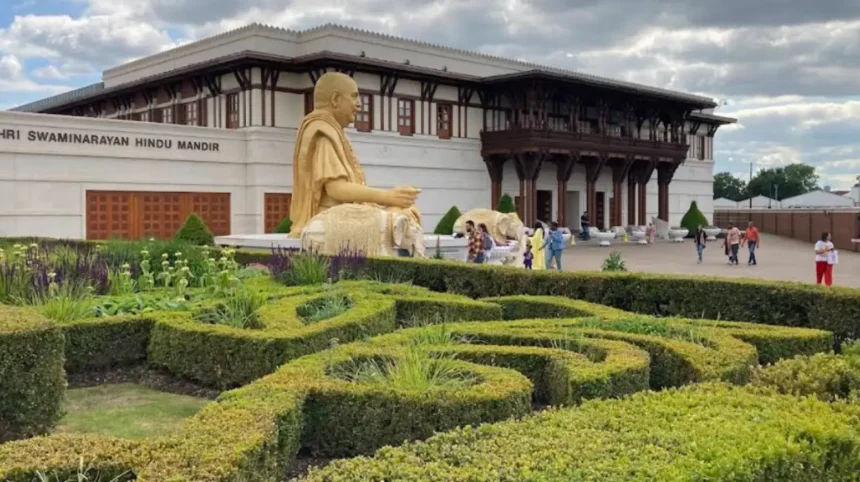
The BAPS Shri Swaminarayan Mandir in Neasden is the premier site for traditional Indian architecture in Brent, constructed using 5,000 tonnes of Italian Carrara marble and Bulgarian limestone. It serves as a masterpiece of ancient Hindu design and a major spiritual centre.
The BAPS Shri Swaminarayan Mandir, commonly known as the Neasden Temple, was inaugurated in 1995 and remains a definitive example of traditional Hindu craftsmanship. The structure was assembled according to the Shilpa Shastras, ancient Sanskrit texts on architecture that prohibit the use of structural steel or lead. Instead, the temple relies on a complex system of interlocking stone. The exterior limestone is designed to withstand the British climate, while the interior is finished in intricate, hand-carved marble.
Beyond its aesthetic value, the Mandir operates as a significant cultural institution. It houses a permanent exhibition, “Understanding Hinduism,” which details the history and values of the faith. For tourists, it offers a visual and educational contrast to the Victorian and Edwardian architecture prevalent in the rest of London. The site also includes a cultural centre, a gymnasium, and a vegetarian restaurant, making it a self-sustaining community hub. As you explore the modern site, you are crossing land with a deep heritage. Read about the full [History of Neasden and its Industrial Growth] to understand its origins.
Where can nature lovers find quiet spaces in Northwest London?
Fryent Country Park and the Welsh Harp Reservoir provide over 400 acres of protected green space for nature enthusiasts in Brent. These sites offer diverse ecosystems, including ancient woodland, wildflower meadows, and significant wetlands for migratory bird species.
Fryent Country Park is a designated Site of Metropolitan Importance for Nature Conservation, covering 103 hectares of rolling hills and traditional Middlesex countryside. Unlike the manicured parks of Central London, Fryent preserves an “old-field” system with hedgerows that date back to the 14th century. It is a critical habitat for the kestrel, the common lizard, and various species of butterflies. The park is managed to maintain its rural character, offering tourists a glimpse of the landscape before the suburban expansion of the 20th century.
Adjacent to the northern border of the borough lies the Brent Reservoir, colloquially known as the Welsh Harp. Constructed in 1835 to supply water to the Regent’s Canal, it has evolved into a primary site for ornithology. The reservoir is a Site of Special Scientific Interest (SSSI) due to its population of great crested grebes and other waterfowl. It provides a unique intersection of industrial history and ecological preservation, serving as a vital “green lung” for the surrounding urban environment.
Which cultural venues in Brent offer a unique alternative to the West End?
The Kiln Theatre in Kilburn and the Lexi Cinema in Kensal Rise are leading independent cultural venues in Brent that prioritise community engagement and social impact. They offer world-class theatrical productions and cinematic experiences in intimate, historically significant settings.
The Kiln Theatre, formerly known as the Tricycle Theatre, underwent a major renovation in 2018 to become a state-of-the-art performance space. It is renowned for its commitment to diversity and showcasing stories that reflect the multicultural demographic of Brent. The theatre often premieres works that later transfer to the West End, providing high-calibre art at a more accessible price point for tourists and residents.
In Kensal Rise, the Lexi Cinema operates as a unique social enterprise. It is a boutique independent cinema that donates 100% of its profits to a sustainability charity in South Africa. The venue is housed in a renovated Edwardian building and features a high-end bar and a volunteer-led staff model. For digital nomads and leisure travellers, it provides a sophisticated social space that differs from the commercial chains found in the city centre. These venues represent the “Micro-Culture” movement, where small-scale institutions drive local economic and social value.
Why is Gladstone Park a significant historical landmark in Dollis Hill?
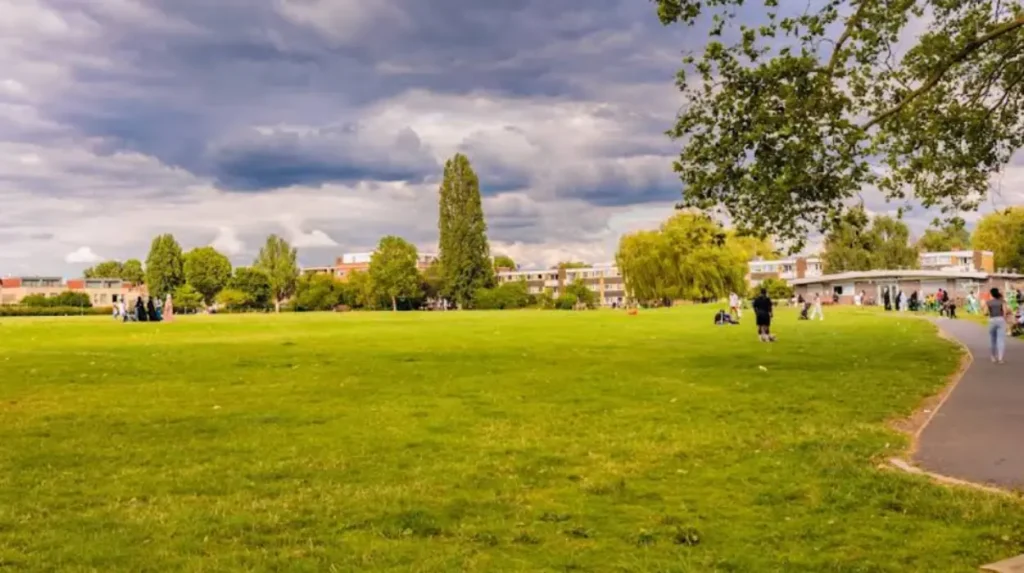
Gladstone Park is a 35-hectare public park in Dollis Hill that served as a frequent retreat for Prime Minister William Gladstone. It contains the remains of Dollis Hill House and offers panoramic views of the London skyline.
Gladstone Park was opened to the public in 1901 and is named after William Ewart Gladstone, who often stayed at the nearby Dollis Hill House. During the late 19th century, the house was a meeting point for prominent political and literary figures, including Mark Twain, who described the location as a peaceful refuge from the city. Although the house was largely demolished following fires in the 20th century, the park remains a preserved example of Victorian landscaping.
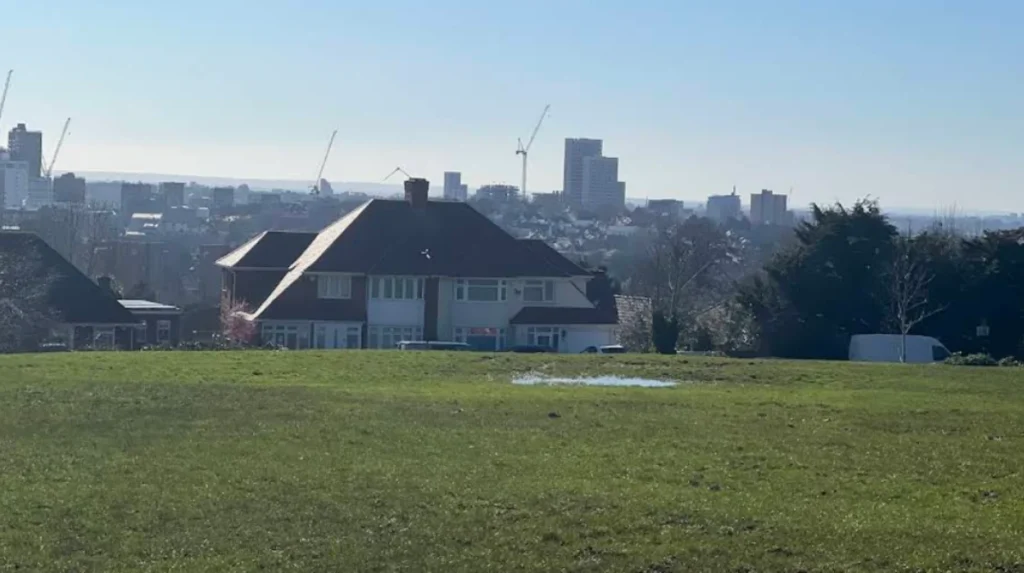
The park is topographically significant, sitting on a high ridge that allows for clear views of Wembley Stadium to the west and the Shard to the southeast. It features formal gardens, a duck pond, and extensive sports facilities. For the secondary audience of business travellers, the park provides a high-quality outdoor space for exercise and mental recovery between meetings. It serves as a physical reminder of the borough’s transition from a collection of private estates to a public municipal district.
What historical insights can be found at the Willesden Jewish Cemetery?
The Willesden Jewish Cemetery, known as the “Cemetery of the Aristocracy,” is a Victorian-era burial ground that houses the remains of many prominent figures in British Jewish history. It is a Grade II listed site of significant architectural and genealogical importance.
Established in 1873, the Willesden Jewish Cemetery was designed to be the Jewish equivalent of the “Magnificent Seven” cemeteries of London. It was the preferred burial site for the United Synagogue’s most affluent members, including members of the Rothschild family, Sir Israel Gollancz, and the founders of major British retailers like Marks & Spencer and Tesco (Walter, 2013). The cemetery’s architecture reflects the Victorian “Cathedral Synagogue” style, with ornate funerary monuments that demonstrate the social standing and assimilation of the Jewish community during that era (Jacobs, 2008).
In 2020, the cemetery opened as a “House of Life” heritage site, offering guided tours and an educational visitor centre. It provides a quiet, reflective environment for tourists interested in Anglo-Jewish history and Victorian funerary art. The site is a primary example of how Brent preserves the multi-faith heritage of London, documenting the movement of communities from the East End to the more affluent northwest suburbs (Pearson, 1988).
How does the development of Brent Cross Town affect local tourism?
Brent Cross Town is a massive 180-acre carbon-neutral development that is transforming the northern edge of the borough into a “15-minute town.” It introduces new parklands, sustainable infrastructure, and commercial hubs that enhance the area’s appeal for digital nomads.
Brent Cross Town represents one of the largest regeneration projects in Europe, aiming to create 6,700 new homes and 3 million square feet of office space. For the modern traveller, the development is significant because it prioritises “active travel” and green connectivity. New pedestrian links and cycle paths connect previously isolated parts of Brent, making it easier for tourists to navigate between attractions like the Welsh Harp and the local shopping districts.
The development also focuses on creating high-quality public squares and “third spaces”—locations that are neither home nor work but serve as community social hubs. This makes Brent an increasingly attractive destination for digital nomads who require work-friendly environments with reliable infrastructure and proximity to nature. The project’s commitment to being carbon-neutral by 2030 positions Brent as a leader in sustainable urban tourism, attracting a demographic of travellers who prioritise environmental responsibility.
What makes Kilburn High Road a destination for food and heritage?
Kilburn High Road is a historic Roman road (Watling Street) that serves as one of London’s most vibrant multicultural thoroughfares. It is famous for its diverse culinary scene, historic pubs, and its status as the “Music Mile” for Irish and Caribbean culture.
Kilburn High Road has historically been the heart of London’s Irish community, often referred to as “County Kilburn.” This heritage is still visible in the numerous traditional pubs and social clubs that line the street. However, in recent decades, the area has evolved to include a vast array of international cuisines, particularly from Ethiopia, Afghanistan, and the Caribbean. This makes it a primary destination for “foodie” tourists seeking authentic global flavours outside of the central tourist zones.
The road also features significant Victorian architecture, such as the Gaumont State Cinema. When it opened in 1937, it was the largest cinema in Europe, with 4,004 seats. Although it is now a place of worship, its massive Art Deco tower remains a landmark of the North London skyline. For tourists, walking Kilburn High Road is an exercise in observing the layers of London’s migration history, where each storefront represents a different wave of the city’s demographic expansion.
What are the best hidden gems in Brent, London?
Popular hidden gems in Brent include:
BAPS Shri Swaminarayan Mandir
Fryent Country Park
Brent Reservoir
The Lexi Cinema
Kiln Theatre
Gladstone Park