Key Points
- The Green Party has formally taken control of Haringey Council with a new minority administration, ending Labour’s 55-year hold on the borough
- Green Party councillor Mark Blake was appointed as the new leader of the council after Labour and Liberal Democrat councillors abstained from the key vote at Tottenham Town Hall
- Labour officially lost control of Haringey Council for the first time since 1971, marking a historic political shift
- The Labour group was significantly reduced at the May 7, 2026 local elections, losing 23 of 44 councillors
- Incumbent council leader Peray Ahmet lost her seat representing Noel Park ward to the Greens in what witnesses called the election’s “Portillo moment”
- The decision was made at a full council meeting on Wednesday, the first meeting since the local election
- Green Party councillor Simon Matthew Clark was among the 14 candidates who stood in the Noel Park ward election
- The Greens now operate as a minority administration without an overall majority on the council
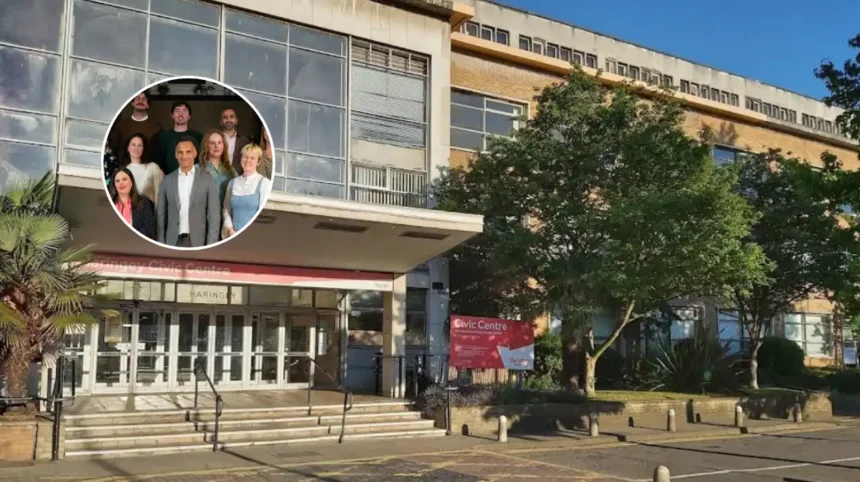
Haringey Council (North London News) May 22, 2026 – The Green Party has formally taken control of Haringey Council with a new minority administration, marking a historic political shift that ends Labour’s 55-year dominance of the borough. Green Party councillor Mark Blake was appointed as the new leader of the council on Wednesday at Tottenham Town Hall, after Labour and Liberal Democrat councillors abstained from the key vote and put no alternative name forward. This decision at the full council meeting—the first since the May 7, 2026, local elections—means Labour officially loses control of the council for the first time since 1971.
- Key Points
- How did Labour lose 23 of 44 councillors in Haringey’s local election?
- Why did Labour and Liberal Democrats abstain from Blake’s leadership vote?
- What does “minority administration” mean for Haringey Council governance?
- How significant is this shift compared to Labour’s previous control since 1971?
- Background:
- Prediction: How This Development Can Affect Haringey Residents and North London Communities
- Political Knock-on Effects Across North London
- Economic and Investment Implications
How did Labour lose 23 of 44 councillors in Haringey’s local election?
As reported by political correspondents covering the 2026 London local elections, the Labour group were significantly reduced in size at the election, losing 23 of 44 councillors.
The Welsh news outlet Yahoo News specifically described the 2026 Haringey local elections as having their own “Portillo moment” when then council leader Peray Ahmet lost her seat.
Ahmet, who had served as Leader of the Council representing Noel Park ward, was defeated by the Greens in what became one of the most closely watched results of the election cycle.
The electoral data shows that 14 candidates stood in the Noel Park ward alone, including Peray Ahmet from the Labour Party and Simon Matthew Clark from the Green Party.
This competitive field reflected the broader political realignment happening across London boroughs, with YouGov’s MRP (Mortality Risk Polling) of the 2026 London local elections showing close races in many boroughs and predicting that Greens and Reform UK were set to make major gains in the capital.
Why did Labour and Liberal Democrats abstain from Blake’s leadership vote?
The voting dynamics at Tottenham Town Hall revealed a fractured political landscape in Haringey. According to reporting from the Evening Standard, Green Party councillor Mark Blake became the new leader of the council after Labour and Liberal Democrat councillors abstained on the key vote for his appointment.
The abstention was significant because both parties put no alternative name forward themselves, effectively allowing Blake’s appointment to proceed without opposition.
This voting pattern demonstrated the new mathematical reality on Haringey Council. With Labour losing more than half its councillors, the party no longer held the numbers to contest leadership effectively. The Liberal Democrats, who held 7 seats according to the 2022 local election results, also chose not to challenge Blake’s appointment.
Explore More Haringey Council News
Haringey £500 Litter Fine Cancelled Over Cigarette Butt (2026)
Haringey 2026 Election: Peray Ahmet Loses to Greens in Noel Park
What does “minority administration” mean for Haringey Council governance?
The Greens now operate as a minority administration without an overall majority on the council. This governance structure means that Green Party councillor Mark Blake and his administration must negotiate with other parties to pass legislation and make decisions on council matters.
Unlike a majority administration where one party controls more than half the seats, a minority administration requires building coalitions or securing abstentions from other parties on key votes.
The 2026 London local elections saw all London borough councillor seats up for grabs, with local elections in London held on May 7, 2026, as part of the broader 2026 United Kingdom local elections.
This context is important because Haringey’s political shift was part of a wider trend across the capital, with BBC News reporting that Labour lost 450 London seats across the boroughs.
Explore More Haringey Council News
Haringey 2026: Greens Lead Labour Poll in Tight Race Haringey 2026
Ann Graham Named ADCS President for Haringey 2026
How significant is this shift compared to Labour’s previous control since 1971?
The significance of this development cannot be overstated in London political history. Labour officially losing control of Haringey Council for the first time since 1971 represents a 55-year era ending.
This length of continuous control is exceptionally rare in London borough politics and suggests a fundamental realignment of voter preferences in North London.
The BBC’s coverage of London election results 2026 showed Green Party supporters celebrating at the count in Lewisham, indicating that Haringey was not an isolated case but part of a broader Green surge across London. The reaction from political analysts included the observation that
“Labour took Lewisham for granted,”
suggesting that complacency may have contributed to losses across multiple boroughs including Haringey.
Explore More Haringey Council News
Haringey Socialist Alliance Slams Labour Cuts Haringey 2026
Haringey Culture at Heart: Ahmet’s Vision 2026
Background:
The path to the Greens taking control of Haringey Council began with the 2026 London local elections held on May 7, 2026. These elections were part of the 2026 United Kingdom local elections where all London borough councillor seats were contested.
The electoral landscape had been changing in Haringey for some time, with the Southgate and Wood Green Constituency including four wards located in the London Borough of Haringey: Bounds Green, Noel Park White Hart Lane, and Woodside.
Peray Ahmet had served as Leader of the Council for Labour, representing Noel Park ward, with surgery details showing she held monthly surgeries on the second Wednesday of each month from 15:00–17:00 at River Park House, 225 High Road, Wood Green, London N22 8HQ. Her contact information was publicly listed as peray.ahmet@haringey.gov.uk, and she held the title of Leader of the Council within the Labour Party.
The 2022 local election results showed Labour Party holding 50 seats with Liberal Democrats holding 7 seats in Haringey, with an overall turnout for Haringey of 34.44%. By 2026, this configuration had dramatically changed, with Labour reducing to just 21 councillors after losing 23 of their 44 councillors.
The Noel Park ward election became the focal point of the political shift, with 14 candidates standing in what became Haringey’s “Portillo moment”.
Simon Matthew Clark from the Green Party was among these candidates and ultimately defeated incumbent Labour leader Peray Ahmet.
Prediction: How This Development Can Affect Haringey Residents and North London Communities
Residents of Haringey can expect significant changes in council governance under the new Green minority administration led by Mark Blake. As a minority administration, the Greens will need to negotiate with other parties for every major decision, which could lead to both more collaborative governance and potential legislative delays.
The need to build coalitions may result in policy compromises that differ from traditional Labour approaches to council services including housing, transport, and education.
The 55-year shift from Labour to Green control suggests voters in Haringey are demanding different policy priorities. Green Party policies typically emphasize environmental sustainability, social justice, and community-focused governance. Residents may see increased focus on green spaces, cycling infrastructure, climate action plans, and affordable housing initiatives that align with Green Party platforms.
Political Knock-on Effects Across North London
The Haringey result is unlikely to be isolated. With YouGov’s MRP predicting Greens and Reform UK making major gains across London capital, and BBC reporting Labour lost 450 London seats, other North London boroughs may see similar political shifts in future elections.
This could fundamentally change how North London communities are governed, with potential implications for cross-borough cooperation on issues like transport, housing development, and environmental initiatives.
For political activists and community organizers in North London, the Haringey result demonstrates that Labour’s traditional dominance can be challenged.
This may encourage more competitive elections across North London constituencies, potentially increasing voter engagement and political participation in communities that have long taken Labour control for granted.
Economic and Investment Implications
The political uncertainty during the transition to minority administration could affect local business confidence and investment decisions in Haringey. Businesses may want to monitor how the new administration develops its working relationships with other parties and whether policy direction remains stable. The Greens’ emphasis on sustainable development could attract certain types of businesses while potentially creating challenges for others that don’t align with environmental priorities.
The historical nature of this shift—ending 55 years of Labour control—means the new administration will face scrutiny and high expectations from residents who have watched the political transformation unfold. Residents should expect active engagement from the new council leadership as they establish their governance approach and demonstrate how minority administration can effectively deliver council services.
The full impact on daily life for Haringey residents will become clearer as the new administration develops its policy agenda and begins implementing decisions. The test of whether minority administration can deliver effective governance will determine whether this political shift represents a temporary realignment or a lasting change in Haringey’s political landscape.