Ibiza is known as the ‘Island of Fragrance’, ‘Balsam Island’, ‘Island of Pines’, Island of Pleasure’, and ‘Island of Endless Parties’. These titles derive from the island’s aromatic plants and flowers, pine trees, and nightlife. It is the third largest Balearic Island in the Mediterranean Sea in terms of geographical area, but the second largest in terms of population. It is also home to many writers, lyricists, novelists, poets, and other creative artists. Historically, Ibiza has witnessed the arrival of Phoenician settlers, Assyrian invaders, and the colonial occupation of the Carthaginians and Berbers, as well as the Crown of Aragon and Punic-Roman traditions. It finally came under the control of King Philip V of Spain before transitioning to the democratic autonomy of the island from the 1970s onward. Such historical and pluralistic transitions have established cultural and social diversity on the island, where indigenous culture continues to survive all the oddities of history. The contemporary Ibiza is a blend of culture and cosmopolitanism.
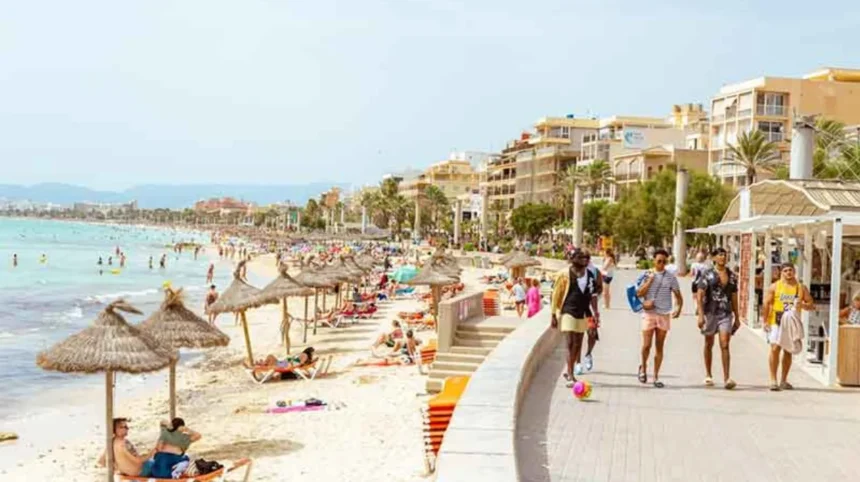
The cosmopolitan culture and serenity of Ibiza attract an average of 3.7 million tourists every year, generating around $5.29 billion USD in annual tourism revenue. The island’s natural beauty, nightlife, and music scene draw young tourists from all over the world. Ibiza is a paradise for pubbing, clubbing, and music festivals. The economic contribution of the tourism industry dominates government policy planning for the island and its people. However, overtourism places pressure on the island’s water, environment, and other infrastructure. As a result, political leaders and policymakers are shifting their approach from mass tourism to class tourism, focusing on sustainability and ultra-luxury exclusivity in order to reduce visitor numbers to the island.
The imposition of a sustainable tourism tax from 2016, along with restrictions on cars and a cap on annual tourist numbers from 2026 onward, reveals a rent-seeking nature in policy rather than genuine solutions. This shift will generate more revenue from tourism with fewer ultra-rich tourists visiting the island, but it will not solve the problem of overtourism or its impacts on local infrastructure, water, and the environment. Class tourism demands greater investment, which will reduce the revenue surplus in the tourism industry and increase housing prices due to investment in extra luxury accommodations on the island aimed at attracting wealthy tourists. Such a class-based approach to tourism will destroy tourist diversity and create a tourist monoculture centered on the hedonism of a few ultra-rich visitors.
Hedonism is integral to all forms of tourism and to the ideas and actions around holidays. The twin Epicurean hedonistic features of ataraxia (tranquility) and aponia (freedom from pain) are central not only to the tourism of holidaymakers but also to the everyday lives of human beings. The desire to be in a tranquil place for pleasure is central to holidays. There is a bit of self-indulgence during holidays. Working people wait for their holiday time to get away from the ugly realities of the capitalist workplace and its alinating toxic culture. Ibiza provides plenty of serene and tranquil places for the pleasurable experience of holidaymakers. Holidays, in both their individual and group forms (family and friends), can carry the culture of hedonism, where the pursuit of happiness, peace, and pleasure depends on the material foundations of holidaymakers. In this context, all-inclusive holidays in Ibiza are not extravagant but carry the frugality of Epicurean pleasure based on basic necessities (accommodation, food and drinks). There is something for everyone in Ibiza, based on the economic abilities of holidaymakers. The International Music Festival in Ibiza brings music lovers from all walks of life.
However, under the new plan of capping tourist numbers and promoting Ibiza as an elitist holiday destination, an ultra-luxury exclusivity culture of holidays is curated for super-rich holidaymakers. Such a transformation promotes a hedonism of self-indulgence at the cost of the majority of people, where a few enjoy themselves by depriving many holidaymakers for whom Ibiza becomes a desired destination that is impossible to achieve due to the costs involved. The hedonistic craving for Ibiza and its exclusivity becomes a cycle of desire and hollowness. Hedonistic hollowness based on desire is crucial for capitalism, which destroys a need-based society and transforms it into a desire-based society, where the idea of self-indulgence during holidays and tourism becomes difficult to realize and therefore becomes a source of pain. The channeling of holiday pleasure as consumption aids in the commodification of place, people, and pleasure. This breeds profit but undermines collective and individual human happiness in the cosmopolitan tourism industry on the island.
Policymakers are fueling the hollow hedonism of capitalism, which is based on desire-driven consumption by the super-rich, by cutting off access for the majority of holidaymakers to Ibiza, making its hippie trails a thing of history. The idea of selling Ibiza as a luxury holiday destination is selling the island and its distinctiveness, which comes from various sources, including the diversity of its visitors. The distinctiveness of the place ends once a culture of elite enclosures develops in the name of luxury tourism. Such an approach is neither sustainable nor a viable option. Capitalist hedonism destroys the place and its people by creating a meaningless, monetized culture of consumption and the commodification of nature, all in the name of rent seeking sustainable tourism.
Ibiza for all—welcoming and warm—is the only way forward, where the state and local government can create infrastructures to facilitate the pleasurable experiences of holidaymakers. The rent-seeking and class-based approach to tourism destroys the very principle of happiness for all within the universalistic culture of tourism. The capitalist approach to holidays is merely about rest and recovery for greater productivity of labour, which is narrow and reductionist. Holidays are about leisure time free from all worries, for self-cultivation, and to develop new ideas and plans for a better tomorrow. Hedonistic hollowness is not holidays but the consumerism of self-indulgence, whereas hippie hedonism is about self-indulgence for self-recovery and discovery by engaging with people and place. Let Ibiza flourish as an island of happiness for the people of the island and their visitors.