
Politics is a tool for the social, political, economic, and cultural transformation of individuals, families, societies, states, governments, and institutions toward a progressive path of human emancipation from poverty, marginalisation, inequality, deprivation, and exploitation, as well as other forms of oppression created by feudal, patriarchal, capitalist, and imperialist power structures. The struggle against dominant powers not only produces mass leaders but also strengthens and deepens democracy across the world.
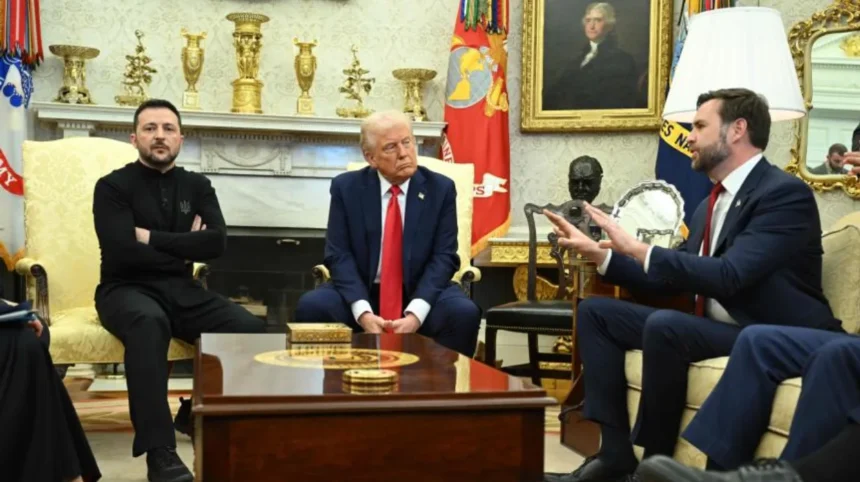
Politics is not a show business, spectacle or a form of entertainment; it is a process of deep thinking about public welfare and the rational use of resources for the greater social and common good. If these are the fundamental requirements of politics and political leadership, how did people manage to elect political figures such as Boris Johnson, Volodymyr Zelensky, Donald Trump, Narendra Modi, Nigel Farage, and many others whose leadership styles are often criticised as theatrical or populist? Such leadership, critics argue, has reduced politics to a form of theatrical performance and a disgrace to demcoratic politics. How did these politically driven apolitical and anti political clowns rise to power and come to govern nations? Was it merely accidental, or is there a deeper method behind this style of political demagoguery?
It appears that bourgeois media, along with its ruling-class propaganda, has managed to convince people to prefer political spectacle over substantive politics. Performative politics has displaced the politics of performance based on participatory interaction. These so-called “clowns” are products of the politics of depoliticization and the anti-politics machinery of the bourgeoisie, which convinces people that the politics of social and economic transformation is a dirty business. At the same time, it promotes these clowns on its media platforms as genuine alternatives.
Therefore, these clowns are not apolitical; rather, they are political agents of global capitalist classes who serve their masters through the tool of demagoguery. These figures play both sides. They present themselves as anti-establishment leaders pursuing the interests of the people. People forgive their mistakes, assuming these individuals lack experience and are not real politicians—while simultaneously undermining real politicians who speak about the everyday material issues affecting people’s daily lives.
Historically, Hitler used the Swiss clown Grock to entertain German wounded soldiers, while the Spanish clown Charlie Rivel provided crucial support in normalizing the Nazi cause among the general public. All authoritarian and undemocratic regimes have used clowns both for public entertainment and to endorse dictators. There are many further historical antecedents that help us understand the role of clowns in twenty-first-century bourgeois politics.
In the Kanika kingdom—a prominent princely state in present-day Rajkanika, in the Kendrapara district in the eastern Indian state of Odisha—the king used to organize circuses to distract people from their everyday pain, which was a product of his feudal exploitation accelerated by sixty-four different types of taxes (most of which continue to exist under modern states across the world). These circus shows, organized by the Kanika king, worked strategically to divert people’s attention from the exploitative systems the king had established for his own luxury and pleasure, at the cost of people. Similarly, modern-day clowns have moved from circuses to parliaments to divert the politics of change and uphold the established power structure—a structure that is concomitant with the requirements of capitalism and its exploitative system.
The tragic farce of these clowns helps the governing classes maintain power without any form of accountability. These clowns continue to develop and propagate their anti-politics banter as a form of anti-establishment positioning, while simultaneously pursuing an anti-political machinery to depoliticize people and divert the radical promises of progressive politics. Thus, clowns in politics are not accidental but rather a strategic design of the governing classes.
These clowns are not artists or actors, but well-crafted stage managers who have managed to uphold right-wing populism through their curated comic performances. In doing so, they help authoritarian and reactionary forces, normalizing their rule with laughter and without any form of resistance to conditions of deprivation. A struggle against such a mass culture of capitalism—and its governing class operating through entertainment and endorsement—is crucial to expose and ultimately defeat the clowns in politics.