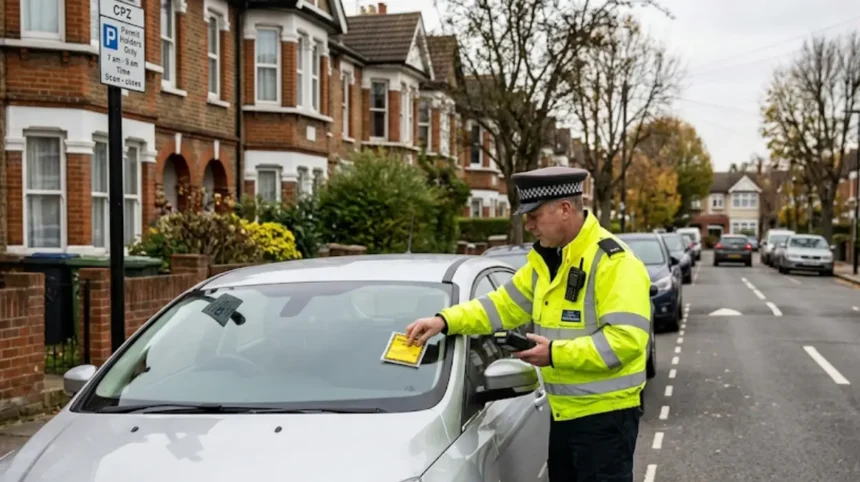
A parking ticket in Enfield residential zones is issued when a vehicle breaches Controlled Parking Zone (CPZ) or permit parking rules, such as overstaying, lacking a valid resident permit, parking outside permitted hours, or violating road markings and signage.
- What is a parking ticket in Enfield residential zones?
- Why are parking tickets issued in Enfield residential zones?
- How do Enfield residential parking permit zones work?
- What are the most common reasons for parking tickets in Enfield residential areas?
- What types of parking zones exist in Enfield residential areas?
- How do enforcement officers detect parking breaches in Enfield?
- What information is shown on a parking ticket in Enfield?
- What happens if you do not pay or challenge a parking ticket in Enfield?
- How can you appeal a parking ticket issued in Enfield residential zones?
- What steps should drivers take after receiving a parking ticket in Enfield?
- How does Enfield Council ensure fair and consistent parking enforcement?
- What future changes could affect parking ticket issuance in Enfield residential zones?
What is a parking ticket in Enfield residential zones?
A parking ticket in Enfield residential zones is a Penalty Charge Notice (PCN) issued by Enfield Council or its enforcement partner when a vehicle is found in breach of local parking rules, including missing permits, overstaying, or parking in restricted areas.
In Enfield, these tickets are legally known as Penalty Charge Notices under the Road Traffic Act 1991 and related traffic legislation. They are issued both on-street in Controlled Parking Zones and in council-managed off-street parking. The ticket states the alleged contravention, the location, the time, and the amount payable.
Enfield Council operates a range of permit parking schemes across residential streets, particularly in areas like Palmers Green, Southgate, and New Southgate. These schemes restrict parking to vehicles with a valid resident permit, visitor vouchers, or specific authorisations. When enforcement officers (often from NSL Limited, the council’s contracted parking operator) detect a vehicle that does not comply, they issue a PCN.
Why are parking tickets issued in Enfield residential zones?
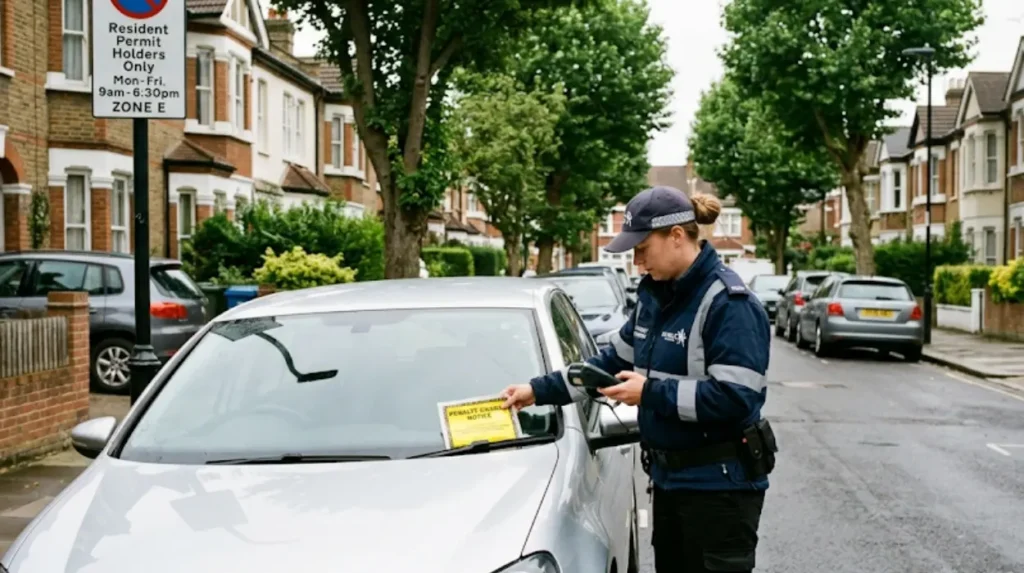
Parking tickets are issued in Enfield residential zones primarily because vehicles are parked without a required permit, exceed time limits, park during restricted hours, or violate road markings and signs that control access and safety.
The core reason is the enforcement of local traffic orders that create Restricted Parking Zones and Controlled Parking Zones. These orders are made under the Road Traffic Act 1991 and the Road Safety Act 2006, and they give the council powers to restrict parking to reduce congestion, improve safety, and prioritise residents.
In practice, enforcement officers patrol CPZs and residential permit zones. They check each vehicle against visible permits, virtual permits in the council’s system, and parking signs. If a vehicle fails to meet the conditions, a PCN is issued. Common triggers include:
- Parking in a resident permit bay without displaying a valid permit or virtual permit.
- Overstaying the maximum allowed time in a 1-to-4 hour zone.
- Parking outside permitted hours (for example, before 7 am or after 6 pm in some zones).
- Parking on yellow lines, double white lines, or in front of drain covers where loading or parking is prohibited.
These breaches are recorded, and the ticket is issued as evidence of the violation.
How do Enfield residential parking permit zones work?
Enfield residential parking permit zones are Controlled Parking Zones where only vehicles with a valid resident permit, visitor voucher, or authorised exemption can park during restricted hours, and any other vehicle is liable to receive a parking ticket.
The council designates specific streets as CPZs and then introduces permit schemes within those zones. The scheme is set out in a traffic order, which defines the zone boundaries, permitted hours, and the types of permits allowed. Once the order is made, enforcement begins and parking tickets can be issued for non-compliance.
Resident permits are available to people who live within the CPZ and keep their vehicle at that address. To prove eligibility, residents must provide:
- The vehicle registration document showing the address within the CPZ.
- A recent utility bill (within the last three months) for the same address.
Permits are valid for one year and are tied to a specific vehicle. They can be paper (physical) or virtual (electronic). Virtual permits are live immediately after payment and are matched to the vehicle registration in the council’s system.
Visitor permits are provided as vouchers that residents can buy for their guests. Visitors must scratch off the start date and time on the voucher and display it in the vehicle. Without a valid voucher or permit, a visitor’s vehicle is treated as unauthorised and may receive a PCN.
What are the most common reasons for parking tickets in Enfield residential areas?
The most common reasons for parking tickets in Enfield residential areas are: no resident permit in a permit zone, overstaying time limits, parking outside permitted hours, and parking in prohibited locations such as on yellow lines or in loading restrictions.
Enfield Council issued 121,429 PCNs in the 2025/26 period, a 71% increase compared with the previous year. This surge reflects both expanded enforcement activity and stricter detection of breaches in residential CPZs. The rise is linked to more officers, more technology, and more active monitoring of permit zones.
Specific common contraventions include:
- No permit in a resident permit zone – A vehicle parked in a bay or zone that requires a resident permit but displays no permit or virtual permit.
- Overstaying – Remaining parked longer than the maximum time allowed, for example more than 4 hours in a 1-to-4 hour zone.
- Outside permitted hours – Parking when the zone is active but the vehicle does not hold a permit or voucher valid for that time.
- Prohibited parking – Parking on double yellow lines where waiting is banned, on single yellow lines during restricted periods, or in areas marked “No Loading” or “Restriction on Parking.”
Each of these breaches is a clear violation of the traffic order and can result in a PCN.
What types of parking zones exist in Enfield residential areas?
Enfield residential areas include several types of parking zones: standard Controlled Parking Zones, resident permit zones, 1-to-4 hour restriction zones, all-day restriction zones, and loading or no-waiting restrictions, each with its own rules and ticket risks.
Controlled Parking Zones (CPZs) are areas where general parking is restricted during specified hours. Within some CPZs, additional permit schemes are introduced. These permit schemes create “resident permit zones” where only authorised vehicles can park.
Two main types of resident CPZs are used:
- 1-to-4 hour restriction zones – These allow parking for between one and four hours, depending on the sign. Visitors must use vouchers for the appropriate duration. Residents with a permit can park for the full allowed time.
- All-day restriction zones – These restrict parking for the entire controlled period (often from early morning until evening). Only vehicles with a valid resident permit or authorised exemption may park.
In addition, many streets have specific road markings:
- Double yellow lines – No waiting at any time (unless local signs say otherwise).
- Single yellow lines – No waiting during restricted periods shown on signs.
- White bay markings – Indicate permit bays or timed bays.
Parking in any of these zones without meeting the conditions leads to a PCN.
How do enforcement officers detect parking breaches in Enfield?
Enforcement officers in Enfield detect parking breaches by physically patrolling CPZs and permit zones, checking vehicle registration numbers against the council’s permit database, and verifying visible permits, vouchers, and signage compliance.
Enfield Council contracts NSL Limited to operate parking services, including enforcement. Officers patrol known CPZs and permit areas, often on foot or in vehicles. They use handheld devices or mobile systems to check registrations against the council’s permit database. If a vehicle is not registered with a valid permit for that zone and time, the officer records the breach and issues a PCN.
Officers also:
- Check for displayed paper permits, ensuring all details are visible through the windscreen.
- Verify virtual permits by running the registration in the system.
- Inspect time plates on visitor vouchers to confirm correct start dates and times.
- Observe road markings and signs to confirm whether waiting, loading, or parking is prohibited.
This process is designed to be objective and factual. The officer records the location, time, vehicle registration, and the specific contravention code. The PCN is then issued, either on the spot or sent later by post in some cases.
What information is shown on a parking ticket in Enfield?
A parking ticket (PCN) in Enfield shows the vehicle registration, the location and time of the alleged breach, the contravention description, the penalty amount, the discounted amount if paid early, and details on how to pay or appeal.
The PCN includes:
- Vehicle registration number and make/model if recorded.
- The exact street or bay where the vehicle was parked.
- The date and time the breach was observed.
- A description of the contravention, for example “Parking without a valid resident permit in a permit zone.”
- The full penalty charge and the reduced amount if paid within a specified period (often 14 or 21 days).
- Instructions for payment (online, by phone, by post) and for challenging the notice.
The notice also states the legal basis for the charge and the deadline for payment or appeal.
If the PCN is issued by post (for example, after a camera capture or office review), it will include similar information but may also reference a reference number and instructions for contacting the council. The ticket is not a criminal fine but a civil penalty under traffic legislation.
What happens if you do not pay or challenge a parking ticket in Enfield?
If you do not pay or challenge a parking ticket in Enfield, the council can increase the charge, issue a Notice to Owner, register the debt at court, and potentially enforce the debt through bailiffs or vehicle seizure.
Initially, the PCN has a standard charge and a discounted charge if paid within the specified period. If no action is taken, the council sends a Notice to Owner (NtO) to the registered keeper. The NtO gives a final opportunity to pay or make a formal representation (appeal). If still no action is taken, the council can create a Criminal Infringement Order or register the debt.
Enfield Council can then:
- Increase the penalty charge to the full amount plus any additional costs.
- Register the debt at the High Court or County Court.
- Use enforcement agents (bailiffs) to collect the debt.
- In some cases, impound or remove the vehicle if it is found in a CPZ without a permit and the owner has not addressed previous PCNs.
The 71% increase in PCNs in 2025/26 has been accompanied by a rise in impound actions, indicating that enforcement is becoming more aggressive for repeat or unresolved cases.
How can you appeal a parking ticket issued in Enfield residential zones?
You can appeal a parking ticket in Enfield residential zones by submitting a formal representation to the council, providing evidence such as photos of signs, proof of a valid permit, or details showing the notice was incorrect, and following the official appeal process.
The first step is to read the PCN carefully and identify the stated reason. You then check whether:
- The details on the notice are correct (vehicle registration, location, time).
- You had a valid permit or voucher for that zone and time.
- The signage or markings were unclear, faulty, or missing.
- You were not the owner of the vehicle at the time.
- The vehicle was stolen.
If one of these grounds applies, you can prepare evidence and submit an appeal.
The appeal process in Enfield generally involves:
- Gathering evidence: photos of the parking area, signs, bay markings, and any relevant documents (permit, voucher, registration, utility bill).
- Submitting the appeal via the council’s website or the contact details on the PCN, including a clear explanation and attachments.
- Waiting for the council’s decision, which may take several weeks.
If the appeal is rejected, you may be able to challenge the decision at an independent tribunal (Traffic Penalty Tribunal in England).
What steps should drivers take after receiving a parking ticket in Enfield?
After receiving a parking ticket in Enfield, drivers should read the notice carefully, verify the details, check whether they had a valid permit or voucher, decide whether to pay or appeal, and act within the stated deadlines to avoid higher charges or enforcement.
The immediate actions are:
- Read the notice to understand the alleged breach and the evidence provided.
- Check all details: vehicle registration, location, time, and contravention code.
- Confirm whether you held a valid resident permit, visitor voucher, or other authorisation for that zone and time.
- Decide whether to pay the discounted amount (if within the deadline) or to prepare an appeal.
If you choose to appeal, follow the official process and provide clear evidence. If you pay, use the channels listed on the notice to ensure the payment is recorded. Ignoring the notice leads to increased charges and potential enforcement.
Explore More Help & Resources
How to appeal a parking PCN in Enfield?
How to report unsafe pedestrian crossings in Enfield?
How does Enfield Council ensure fair and consistent parking enforcement?
Enfield Council ensures fair and consistent parking enforcement through contracted enforcement partners, standardised contravention codes, clear signage and markings, and an independent appeal process that allows drivers to challenge PCNs.
The council uses NSL Limited to carry out on-street enforcement and administrative processing. Enforcement officers follow a set procedure: observe the vehicle, record the breach, check the registration against the permit database, and issue the PCN. This process is designed to be consistent across all CPZs and permit zones.
Signage and road markings are placed according to national standards and local traffic orders. Before a new scheme is introduced, the council typically runs a consultation and publishes notices. This gives residents and drivers time to understand the rules. The council also provides a clear appeal route, including the possibility of independent tribunal review, which acts as a check on fairness.
What future changes could affect parking ticket issuance in Enfield residential zones?
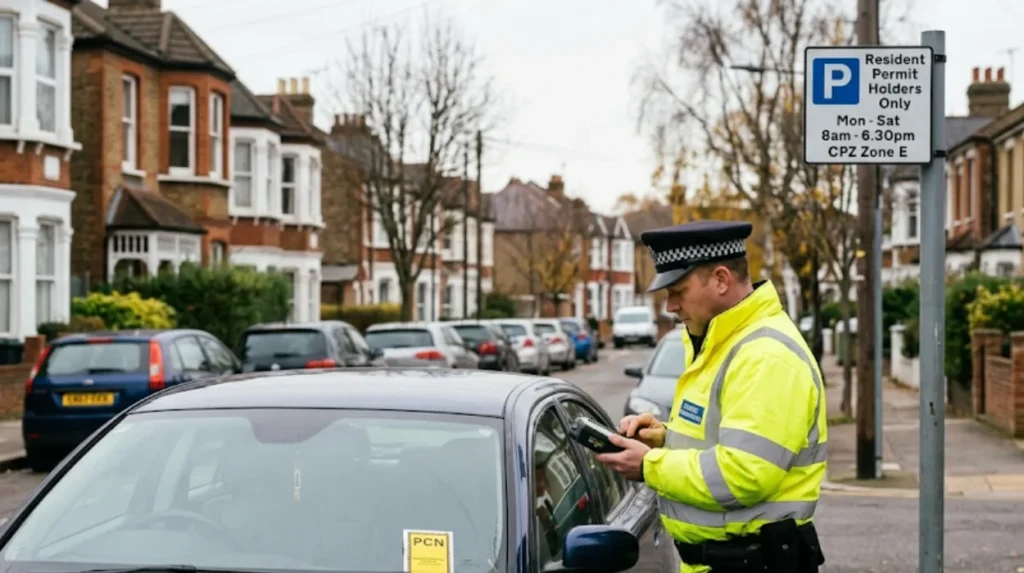
Future changes that could affect parking ticket issuance in Enfield residential zones include expanded CPZs, new permit schemes, increased enforcement technology, and policy shifts aimed at reducing congestion, improving safety, and supporting active travel.
Enfield has already introduced new permit schemes, such as the proposed Palmers Green East Controlled Parking Zone, which aims to balance parking demand on narrow residential streets. As more zones are created and more permits are required, the number of potential breaches increases, which can lead to more PCNs.
The council is also investing in enforcement capacity and technology, which has contributed to the 71% rise in PCNs in 2025/26. This trend suggests that enforcement will remain strong and may intensify in areas with high parking demand. Future policy may also focus on:
- Reducing car dependency in residential areas.
- Prioritising residents over non-residents.
- Supporting pedestrians and cyclists by limiting parking in key locations.
These changes could result in more frequent ticket issuance in residential zones where parking rules are stricter.
What is a parking ticket in Enfield residential zones?
A parking ticket in Enfield residential zones is a Penalty Charge Notice (PCN) issued by Enfield Council when a vehicle breaches parking restrictions, such as parking without a valid resident permit, overstaying a time limit, or parking during restricted hours in a Controlled Parking Zone (CPZ).