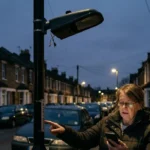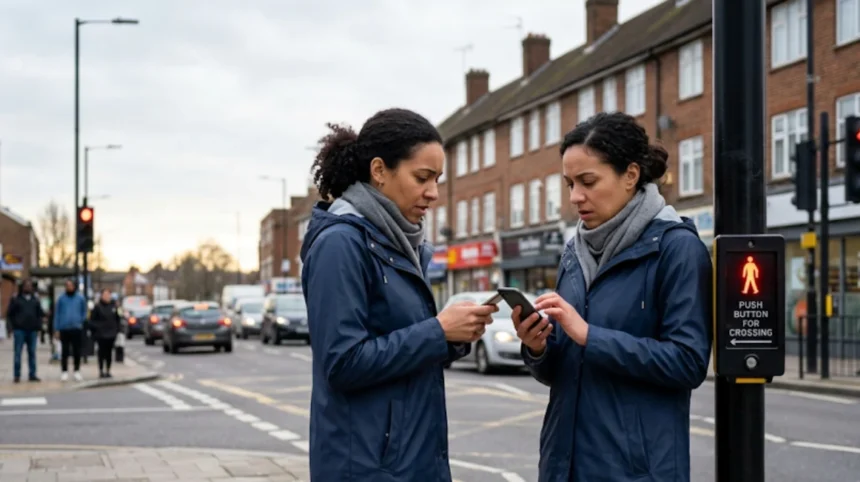
Residents in Enfield who identify unsafe pedestrian crossings can report them directly to either Enfield Council or Transport for London (TfL), depending on the crossing type and location. Enfield Council manages most local roads and pedestrian facilities, while TfL oversees major roads and signalised crossings on its network. Using the correct route ensures your report is logged, assessed, and acted on efficiently.
- Who is responsible for pedestrian crossings in Enfield?
- How to report unsafe pedestrian crossings to Enfield Council
- How to report unsafe crossings to Transport for London
- What information do you need to report a crossing?
- How to report faults with crossing lights and equipment
- How to report unsafe behaviour at crossings
- What happens after you report an unsafe crossing?
- How to track the status of your crossing report
- When should you report a crossing as a safety emergency?
- How to report unsafe crossings near schools and residential areas
- How citizen reports influence crossing improvements in Enfield
- Best practices for reporting unsafe pedestrian crossings in Enfield
Who is responsible for pedestrian crossings in Enfield?
Pedestrian crossings in Enfield are managed by two bodies: Enfield Council for local roads and TfL for major roads. The responsible authority determines which reporting route you must use.
Enfield Council, the local borough authority for the London Borough of Enfield, is responsible for maintaining and improving most local roads, footways, and pedestrian infrastructure within the borough. This includes uncontrolled crossings, informal crossing points, and many signalised crossings on non-TfL roads. The council’s Journeys and Places team (formerly Healthy Streets) handles walking and cycling infrastructure, safety improvements, and incident reporting related to those schemes.
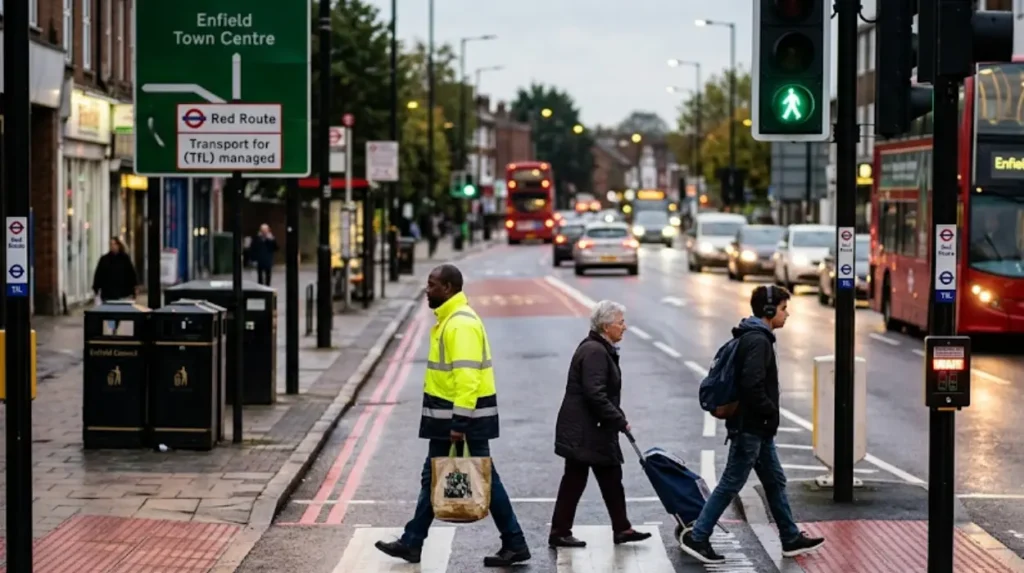
Transport for London (TfL) is the integrated transport authority for Greater London. It manages the “Red Route” network and other major roads, including many signalised crossings such as pelican, puffin, and toucan crossings on those routes. Where a crossing is on a TfL road, faults, lighting issues, or safety concerns must be reported to TfL, not the council. TfL’s Streetcare tool is the primary channel for these reports.
The division of responsibility is based on road classification, not just location. A crossing on a local street in Enfield is council-managed; a crossing on a major arterial in Enfield may be TfL-managed. Knowing which body is responsible ensures your report reaches the right team and avoids delays.
How to report unsafe pedestrian crossings to Enfield Council
To report unsafe crossings to Enfield Council, use the “Report an incident” form on Let’s Talk Enfield for accidents, or email journeysandplaces@enfield.gov.uk for general safety concerns about crossings.
Enfield Council’s “Let’s Talk Enfield” platform includes a dedicated incident reporting form for walking and cycling infrastructure. This form is designed to capture details of incidents such as collisions, trips, or falls related to paths or crossings introduced through the Cycle Enfield programme or Journeys and Places projects. All fields must be completed, and detailed location information is required so the Journeys and Places team can review and, where necessary, follow up.
For concerns that are not tied to a specific incident (for example, “this crossing feels too fast” or “the footway is too narrow”), the council advises residents to send general comments and enquiries to journeysandplaces@enfield.gov.uk rather than using the incident form. This email route ensures that safety concerns about crossing design, visibility, or speed are recorded and assessed by the team responsible for walking infrastructure across the borough.
When reporting, include:
- The exact location (road name, nearest landmark, or address)
- The type of crossing (signalised, uncontrolled, school crossing, etc.)
- A clear description of the issue (e.g., “vehicles do not stop,” “visibility is poor,” “footway is obstructed”)
- Any relevant dates, times, or incident details if you witnessed or experienced a problem
This level of detail enables the council to locate the crossing, assess risk, and consider engineering or enforcement options.
How to report unsafe crossings to Transport for London
For crossings on TfL roads in Enfield, use the Streetcare tool to report faults, lighting problems, or safety concerns, or call 0343 222 1234 for urgent issues.
Streetcare is TfL’s online reporting system for streets and road issues, including pedestrian crossing problems. It allows users to report issues such as knocked-down or unlit crossing lights, malfunctioning push buttons, and other safety concerns. Streetcare also shows whether an issue has already been reported, helping avoid duplicate entries and improving tracking.
To use Streetcare:
- Visit the TfL “Contact us about streets and road issues” page.
- Select the relevant category (e.g., “Pedestrian crossing light problem” or similar).
- Provide the location, description of the problem, and any supporting details.
- Submit the report.
For urgent safety problems—such as a crossing that is completely non-functional and creating immediate danger—TfL also accepts phone reports via 0343 222 1234. This is appropriate when the issue requires rapid attention rather than routine maintenance.
TfL’s responsibility typically includes crossings on major roads passing through Enfield, such as those on the A10, A406, or other Red Routes. If the crossing is signalised and on a main road, it is likely under TfL jurisdiction. Confirming this before reporting ensures your report is routed correctly.
What information do you need to report a crossing?
A strong report includes the crossing location, type, specific problem, and supporting details such as times, photos, or incident history. This information allows the authority to assess risk and act.
Authorities need precise location data to identify the crossing. Provide the road name, direction of travel, and a nearby landmark (e.g., “near Enfield Town station,” “by St. Margaret’s School,” “opposite the bus stop on Smith’s Green”). If the crossing has a name or number, include that as well. Specificity reduces ambiguity and speeds up site visits.
Describe the crossing type and the exact issue:
- Type: signalised (pelican/puffin/toucan), uncontrolled zebra, school crossing, informal crossing, etc.
- Problem: “cars do not stop at zebra,” “push-button not working,” “light not illuminated,” “footway too narrow,” “visibility blocked by parked cars,” “speed appears too high,” “no tactile paving for disabled users.”
Include dates and times when the issue occurs, especially if it is intermittent (e.g., “mainly during rush hour,” “mostly at night”). If you have experienced or witnessed an incident (trip, near-miss, collision), note the date, time, and outcome. This can be critical for risk assessment and prioritisation.
Supporting evidence strengthens your report:
- Photos showing the crossing, footway, signage, and obstructions
- Short video clips if movement or behaviour is relevant
- Notes on how the issue affects different users (children, older people, disabled pedestrians)
Council and TfL teams use this information to decide whether to inspect the site, adjust signals, improve signage, enforce parking, or plan a redesign.
How to report faults with crossing lights and equipment
Faults with crossing lights, push buttons, or illuminated signs should be reported to the authority that maintains the crossing: TfL for signalised crossings on its roads, Enfield Council for local crossings.
For push-button controlled crossings on TfL roads, TfL maintains the lights, push buttons, and associated equipment. If a light is not working, a button is stuck, or the signal sequence is incorrect, report this via Streetcare. TfL typically addresses minor faults and bulb replacements within seven days, though power supply issues can take longer and may require utility involvement.
For crossings that do not have pedestrian-operated lights (such as some uncontrolled crossings or non-signalised junctions), Enfield Council may be responsible for damaged poles, light fittings, or broken bulbs if lighting is present. These faults should be reported via the council’s general road and pavement reporting channels or by emailing journeysandplaces@enfield.gov.uk with location and problem details.
When reporting equipment faults:
- State whether the fault affects safety (e.g., “drivers cannot see the crossing at night”).
- Describe the exact component (push button, light head, signal arm, tactile paving).
- Note if the fault is constant or only at certain times (e.g., “only after dark”).
This helps maintenance teams prioritise urgent safety issues over cosmetic ones.
How to report unsafe behaviour at crossings
Unsafe behaviour such as speeding, not stopping at crossings, or dangerous parking near crossings should be reported to the police for enforcement, while design issues are reported to the council or TfL.
If drivers are routinely failing to stop at zebra crossings, speeding through signalised crossings, or parking in ways that block visibility, these are enforcement matters. For immediate dangers or traffic offences, contact the police on 999. For non-emergency concerns, use the police non-emergency line or online reporting tools to log patterns of behaviour. Enforcement alone may not solve design-related problems, but it is essential for addressing repeat violations.
Design-related issues that encourage unsafe behaviour should be reported to the relevant authority:
- “The crossing is too far from the junction, so drivers don’t expect pedestrians.”
- “There is no refuge island, so pedestrians must cross two lanes at once.”
- “Parked cars block the view of the crossing.”
These are matters for Enfield Council or TfL, depending on the road. They can lead to engineering changes such as relocating the crossing, adding refuges, erecting signage, or implementing parking restrictions.
Providing examples of behaviour (e.g., “during school rush, multiple cars ignore the zebra”) helps authorities understand the risk and coordinate with enforcement partners.
Explore More Help & Resources
How to report dangerous potholes in Enfield roads?
Why are communal bin areas poorly maintained in Enfield estates?
What happens after you report an unsafe crossing?
After submission, your report is logged, reviewed, and if necessary inspected by the relevant team. Outcomes can include maintenance, engineering changes, signage, enforcement, or no action if risk is low.
Enfield Council logs all incidents submitted via Let’s Talk Enfield and routes them to the Journeys and Places team for review. The team may follow up directly with the reporter, especially if more information is needed. Reported data is used to identify locations where accidents occur more frequently and to prioritise monitoring and changes.
TfL’s Streetcare system also logs reports and allows users to see whether an issue has already been reported. TfL engineers or street operations teams may inspect the site, assess risk, and decide on actions such as:
- Repairing or replacing lights, buttons, or signage
- Adjusting signal timings
- Adding or relocating crossings
- Introducing road markings or barriers
- Coordinating with enforcement partners for speeding or parking issues
Not all reports result in structural changes. Some issues may be resolved through maintenance, signage updates, or enforcement. If the risk is assessed as low, the authority may decide no further action is required. In such cases, you may receive a notification explaining the decision.
How to track the status of your crossing report
You can track some reports via Streetcare’s online system for TfL issues, while Enfield Council may update you by email or phone if you provided contact details.
When using Streetcare for TfL-road crossings, you can often check whether an issue has already been reported and, in some cases, view its status. The system is designed to reduce duplicate reports and improve transparency. For specific status updates, you may need to refer to any confirmation email or reference number provided after submission.
Enfield Council does not always provide a public tracking portal for individual reports. However, if you included contact details, the Journeys and Places team may follow up directly, particularly for incident reports or complex safety concerns. For general enquiries, email journeysandplaces@enfield.gov.uk and reference your original report location and description to help them locate your submission.
If you need urgent confirmation that a report has been received, follow up by email or phone with the relevant authority, citing the location and date of your original submission.
When should you report a crossing as a safety emergency?
If a crossing failure creates immediate danger—such as non-functioning lights at night with no alternative safe route—contact the police for urgent safety or use TfL’s phone line for fast response.
Some crossing faults create immediate risk, especially at night or in high-speed areas. For example:
- A signalised crossing with no working lights, making it impossible for drivers to see pedestrians.
- A broken push button that leaves pedestrians unable to request a safe phase.
- A collapsed or obstructed crossing that forces pedestrians into the road.
In such cases, if the situation poses immediate danger to life or safety, call the police on 999. For urgent but non-life-threatening issues on TfL roads, use TfL’s contact phone line (0343 222 1234) to request faster attention than the standard online route.
For less urgent but still serious concerns (e.g., “visibility is poor but not completely blocked”), use the standard reporting channels (Let’s Talk Enfield, Streetcare, or email). These will be assessed and prioritised based on risk, but they may not trigger an immediate response.
How to report unsafe crossings near schools and residential areas
Crossings near schools and residential areas can be reported to Enfield Council’s Journeys and Places team or, if on TfL roads, to TfL via Streetcare, emphasising child and vulnerable-user safety.
School crossings and crossings near residential streets often involve children, older people, and other vulnerable users. When reporting, highlight:
- The proximity to schools, nurseries, or playgrounds
- Peak times (e.g., “before and after school”)
- Observed issues such as speeding, parking that blocks views, or inadequate signage
For crossings on local roads, email journeysandplaces@enfield.gov.uk or use the Let’s Talk Enfield incident form if an accident or near-miss has occurred. For crossings on TfL roads, use Streetcare and specify that the issue affects school-age or vulnerable pedestrians. Both authorities take such reports seriously, as they relate to higher-risk groups.
Enfield Council also works with schools on road safety initiatives, including school crossing patrols and walking buses. If your concern relates to these programmes, mention this in your report. The council may coordinate with local schools or safety partners to address the issue.
How citizen reports influence crossing improvements in Enfield
Citizen reports provide the data that authorities use to identify high-risk locations, prioritise inspections, and plan engineering or enforcement improvements for crossings in Enfield.
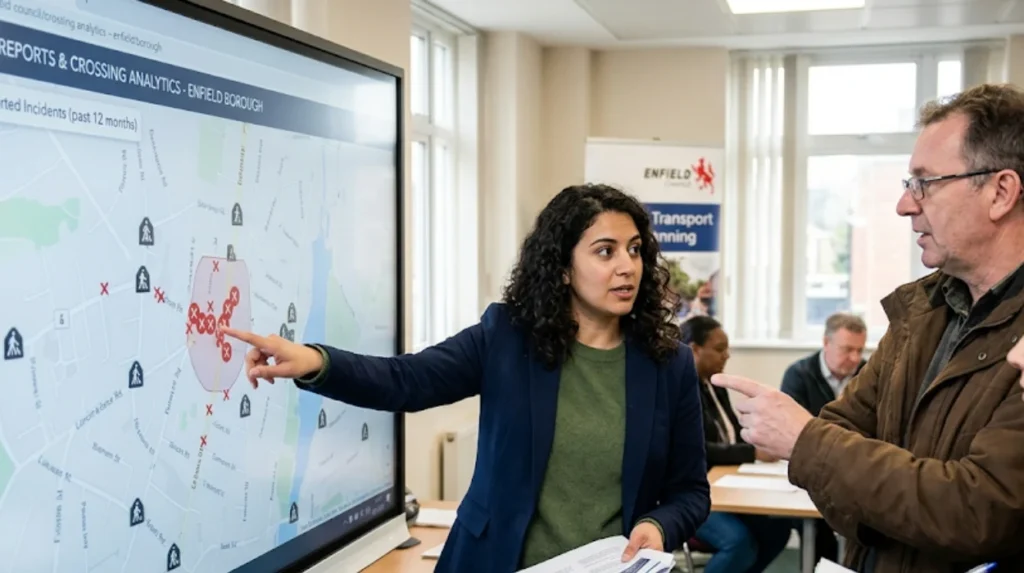
Enfield Council explicitly states that incident reports are used to identify specific locations in the borough where accidents occur more frequently. This data informs monitoring and targeted changes, such as redesigning crossings, adding signage, or adjusting traffic flows. Without resident reports, some problematic sites might remain undetected until a serious incident occurs.
TfL similarly uses reported data to prioritise maintenance and safety improvements. Patterns of reports about a particular crossing (e.g., repeated complaints about signal timing or visibility) can trigger engineering reviews and, where justified, structural changes. Citizen input is therefore a key part of the evidence base for crossing upgrades in Enfield and across London.
Regular, detailed reporting from residents helps authorities build a more accurate picture of risk across the borough. Clear, factual reports with location, time, and behaviour details are more likely to lead to action than vague complaints.
Best practices for reporting unsafe pedestrian crossings in Enfield
To maximise the impact of your report, be specific, factual, and detailed: include exact location, crossing type, issue description, times, and supporting evidence where possible.
Use the correct channel for the crossing: Enfield Council for local roads, TfL for major roads. Provide a clear location with road name and landmark. Describe the crossing type and the exact problem. Include dates, times, and any observed behaviour or incidents. Add photos or short videos where relevant. Avoid vague language such as “this crossing is bad”; instead, say “vehicles regularly exceed 30 mph and do not stop at the zebra during rush hour”.
Submit one report per crossing rather than multiple variations. If the issue is ongoing, you can update your original report by contacting the relevant team with new information. Consistent, high-quality reporting from multiple residents strengthens the evidence and increases the likelihood of timely improvements.
Who is responsible for pedestrian crossings in Enfield?
Enfield Council is responsible for most pedestrian crossings on local roads, while Transport for London (TfL) manages crossings on major roads and the Red Route network. Responsibility depends on the classification of the road rather than the location of the crossing.