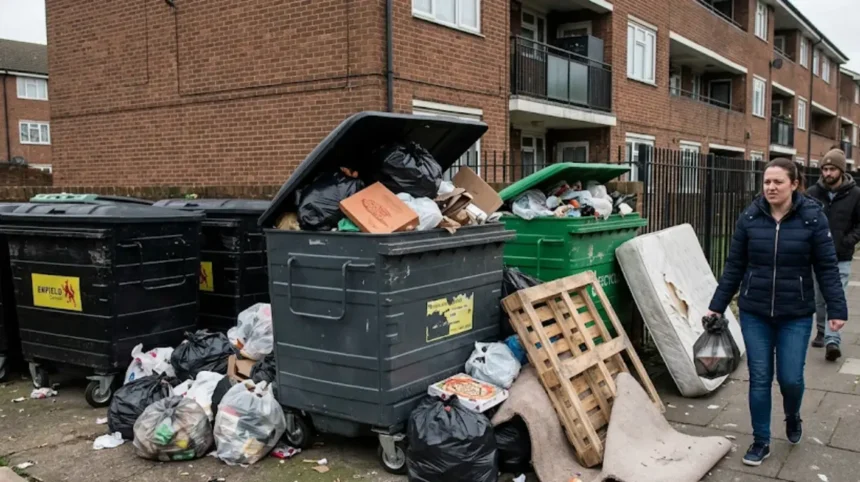
Communal bin areas in Enfield estates are poorly maintained because of overcrowding, misuse, weak access control, limited cleaning, and waste systems that do not always match how residents live in flats. Enfield Council has linked some removals and changes to persistent fly-tipping, vermin risk, and fire safety concerns, which shows the issue is both operational and behavioural.
- Why do communal bin areas in Enfield estates become neglected?
- What causes poor bin-area maintenance on estates?
- How does fly-tipping affect communal bins?
- Why do some estates struggle with cleaning and repairs?
- What role does housing design play?
- What evidence shows this is a wider Enfield problem?
- How do fire safety and vermin shape decisions?
- What impact does this have on residents?
- What should a well-run estate bin system include?
- How can Enfield estates improve bin-area maintenance?
- Why does this issue matter beyond Enfield?
Why do communal bin areas in Enfield estates become neglected?
Communal bin areas become neglected when demand, access, and enforcement do not match the number of residents using them. In Enfield, shared bin spaces serve flats where occupants generate mixed waste, recycling, food waste, and bulky items in the same location, and that pressure quickly creates overflow, contamination, and dumping.
Enfield Council has said some communal bin areas need improvement because flats with shared bins can face poor or non-existent recycling facilities in communal spaces. When bin stores are too small, poorly sited, or hard to use, residents leave waste beside the bins rather than inside them, and the area degrades fast.
A further problem is that estate waste systems often rely on shared responsibility. If one group leaves cardboard, mattresses, black bags, or loose rubbish near the store, the area becomes a dumping point for others. That pattern turns a maintenance issue into a repeat contamination problem.
What causes poor bin-area maintenance on estates?
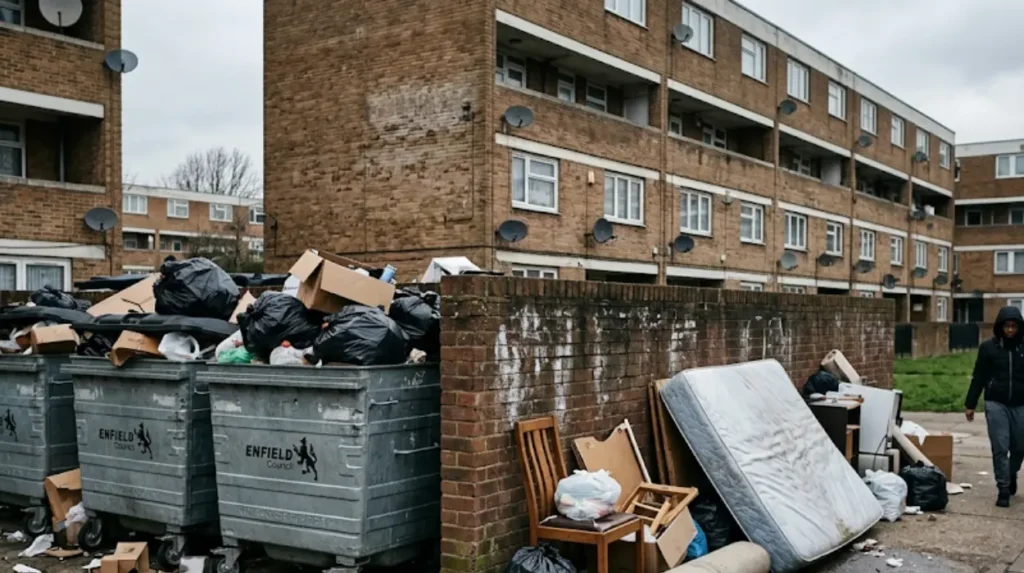
The main causes are capacity gaps, contamination, fly-tipping, access problems, and inconsistent estate management. Enfield-related reporting and council statements point to persistent misuse, rubbish left outside containers, and bin areas becoming focal points for dumping.
One cause is simple overuse. Shared bin stores on estates serve many households, so one full collection cycle can leave bins overflowing if the store is undersized or if collections are delayed. Another cause is contamination, where non-recyclable waste goes into recycling bins and forces rejection or extra cleanup.
Access problems also matter. Some estates have poorly designed bin rooms, awkward routes, or changes such as removed chutes and relocated bins, which create extra barriers for residents with disabilities, mobility issues, or young children. When access is difficult, misuse rises and maintenance gets worse.
How does fly-tipping affect communal bins?
Fly-tipping turns communal bin areas into dumping sites and accelerates deterioration. Enfield Council has repeatedly described some bin locations as places where bulky waste and illegal dumping collect, especially where bins are abused or left open to misuse.
Fly-tipping is not only visual clutter. It blocks access for residents, attracts more dumping, and creates hygiene risks around shared housing. The council has said persistent misuse in one Enfield case created risks relating to vermin and fire safety, which is why communal bins were removed and replaced with an interim arrangement.
Once one estate store becomes known as a dumping point, the problem often repeats. That happens because the visible waste signals that the area is unmanaged, so more people add waste there rather than using proper disposal routes.
Why do some estates struggle with cleaning and repairs?
Some estates struggle because cleaning schedules, caretaker capacity, and repair response times do not keep pace with waste volume. Communal bin stores need regular cleaning, washing, lock checks, pest control, and prompt replacement of broken lids, wheels, or damaged containers.
When bins break or the store is damaged, waste spreads onto the ground and maintenance becomes harder. A damaged bin with broken wheels or a missing bung also slows collection and increases overflow risk. In shared blocks, even minor faults create visible mess very quickly.
Management responsibility matters too. Enfield’s own improvement messaging says managing agents should keep bin stores clean and accessible, remove contamination when bins are rejected, and provide enough capacity. Where those standards fail, the estate becomes visibly neglected even if collections still happen.
What role does housing design play?
Housing design shapes how easy it is to keep communal bin areas clean. Many Enfield estates and flat blocks use shared bin rooms, external bin stores, or former chute systems, and each design creates different risks.
Where rubbish chutes were removed, residents had to travel farther, wait for lifts, or carry waste outdoors to new bins. That extra effort matters in real life, especially for disabled residents, older people, or families with children, because it changes whether waste is placed correctly or left in corridors, by doors, or near the bin area.
Design also affects supervision. A concealed or narrow store can hide dumped waste until it has already built up. A poorly lit or unlocked store can encourage misuse. In dense estates, the physical layout directly affects cleanliness, access, and monitoring.
What evidence shows this is a wider Enfield problem?
The evidence shows the issue is borough-wide, not limited to one block. Enfield reporting has covered communal bin removals, chute closures, and flat-block recycling changes across different estates, which shows recurring pressure on shared waste systems.
Enfield Council has also removed street litter bins in some locations because they became a focal point for fly-tipping, showing that waste misuse affects both public spaces and estate bin areas. The same logic appears in estate management: when a bin point becomes a dumping site, the council or landlord often responds by altering the layout rather than simply cleaning more often.
The borough’s waste strategy also places emphasis on raising recycling performance in flats and estates, which indicates that communal waste provision has not been working well enough in many places. That policy focus exists because flat blocks face structural waste-management challenges that individual houses do not.
How do fire safety and vermin shape decisions?
Fire safety and vermin risk drive many bin-area decisions in Enfield estates. Council statements have directly linked communal bin removal to persistent misuse, vermin risk, and fire safety concerns.
Waste build-up increases the chance of pests, especially when food waste, black bags, and bulky items sit near bin stores for long periods. It also increases fire risk because loose rubbish can accumulate in enclosed or semi-enclosed areas, especially if the space is poorly managed.
These risks explain why councils sometimes close chute rooms or move bins away from blocks. The aim is to reduce hazards, but the outcome often creates new access problems for residents if the replacement system is less convenient or less inclusive.
What impact does this have on residents?
Poorly maintained communal bin areas affect health, dignity, access, and daily routine. Residents face smells, pests, blocked walkways, and extra effort every time they dispose of rubbish.
For disabled residents, the impact is stronger. Enfield reporting shows residents challenging bin removals under the Equality Act because they lost access to waste facilities they could use safely and independently. That makes waste management not just a cleanliness issue but also an equality and service-access issue.
Families and older residents also carry a heavier burden. If bins are placed farther away or collections are inconsistent, waste can accumulate inside homes, near front doors, or in communal walkways. That weakens estate cleanliness and worsens resident trust in the landlord or council.
What should a well-run estate bin system include?
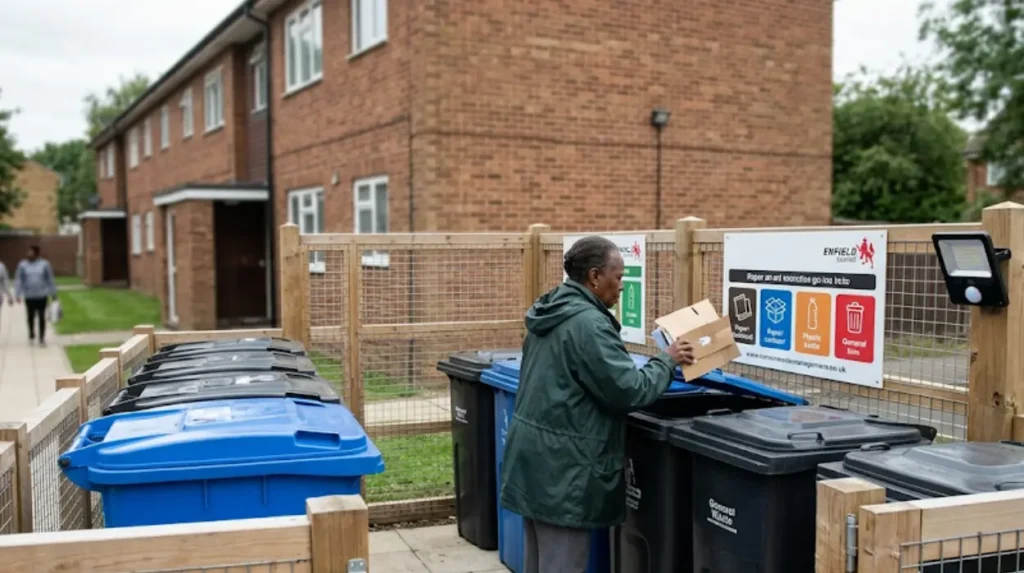
A well-run estate bin system includes enough capacity, easy access, regular cleaning, quick repairs, clear rules, and support for disabled residents. Enfield’s own recycling guidance for flats stresses clean and accessible bin stores, removal of contamination, and adequate provision.
Good practice also needs correct bin sizing and prompt replacement of damaged units. Guidance from another local authority on communal bins shows that broken lids, missing bungs, damaged wheels, and missing containers all require attention, because small failures quickly become bigger hygiene problems. The same principle applies on Enfield estates.
A stronger system also needs communication. Residents need clear instructions about where to place waste, what goes in recycling, and what to do if bins are full or missing. Without that, even a functional system starts to fail through misuse and confusion.
Explore More Help & Resources
Why does Enfield Council miss rubbish collections frequently?
What to do if bins are not collected in Enfield?
How can Enfield estates improve bin-area maintenance?
Enfield estates improve when landlords treat bin areas as core infrastructure rather than as leftover space. That means matching bin capacity to occupancy, increasing inspections, and acting early when dumping starts.
A practical approach includes faster removal of dumped waste, clearer signage, better lighting, and stronger enforcement against repeat offenders. It also includes estate-specific arrangements for residents with mobility needs, because one standard disposal route does not work for every household.
Longer term, better design matters. Estates with shared bins need locations that are visible, secure, and easy to reach, while high-density blocks need enough containers for actual use patterns. Enfield’s recent focus on flats with shared bins shows that service design is now central to the borough’s waste-management debate.
Why does this issue matter beyond Enfield?
This issue matters because it reflects the wider challenge of managing waste in dense urban housing. Flat blocks and estates across London rely on shared bin systems, and the same problems appear wherever capacity, access, and enforcement fall out of balance.
Enfield is useful as a case study because it shows how estate bin problems connect to multiple public priorities at once: cleanliness, recycling, fire safety, disability access, and anti-fly-tipping enforcement. When one part fails, the others usually fail too.
For North London readers, the key lesson is that bin-area maintenance is not a cosmetic issue. It is part of housing management, public health, and local service delivery. Where shared waste systems are weak, the visible result is the same: overflowing bins, dumped rubbish, and estates that are harder to live in.
Why are communal bin areas in Enfield estates often poorly maintained?
Communal bin areas become poorly maintained because many households share the same facilities, increasing pressure on capacity, cleaning schedules, and collection services. Overflowing bins, contamination, fly-tipping, restricted access, and limited estate maintenance all contribute to waste building up quickly in shared areas.