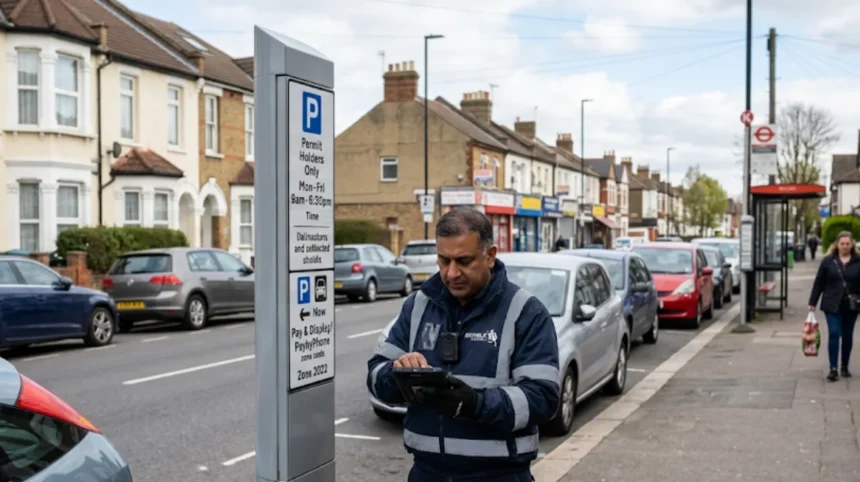
Parking restrictions in Enfield borough are changing to improve traffic flow, increase road safety, support local businesses, and make off‑street parking more affordable and accessible for residents and visitors. The changes combine updated zone designs, new event‑day rules, revised charges, and stronger enforcement to create a more consistent and sustainable parking system across the borough.
- What is driving the changes to parking restrictions in Enfield?
- How are controlled parking zones being updated?
- Why are parking charges and permits being revised?
- What new event‑day parking rules have been introduced?
- How do parking restriction changes affect residents?
- What impact do the changes have on visitors and local businesses?
- How are parking enforcement and penalties changing?
- What are the future implications for parking in Enfield?
- How can people stay informed about parking changes in Enfield?
What is driving the changes to parking restrictions in Enfield?
Enfield Council is changing parking restrictions to reduce congestion, improve safety near schools and busy streets, support town centre vitality, and align charges with current enforcement and maintenance costs. Revenue from parking is used to fund civil enforcement officers, road improvements and local transport measures.
The primary drivers are chronic traffic congestion in key areas, rising demand for parking near shops and transport hubs, and pressure to make roads safer for pedestrians and cyclists. Historical data from Controlled Parking Zones (CPZs) shows that certain streets consistently exceed capacity during peak hours, leading to queuing traffic and blocked driveways.
Enfield’s parking strategy also responds to wider Greater London Authority guidance on reducing car dependency, promoting active travel, and ensuring that parking policy supports net‑zero transport goals. Changes to restrictions are therefore not isolated tweaks but part of a coordinated approach to manage demand, discourage unnecessary car trips, and free up space for buses, cycles and pedestrians.
New enforcement resources, including increased numbers of civil enforcement officers, are being funded through revised parking and penalty charges. This allows the council to enforce restrictions more consistently, which in turn makes updated restrictions more effective and credible for drivers.
How are controlled parking zones being updated?
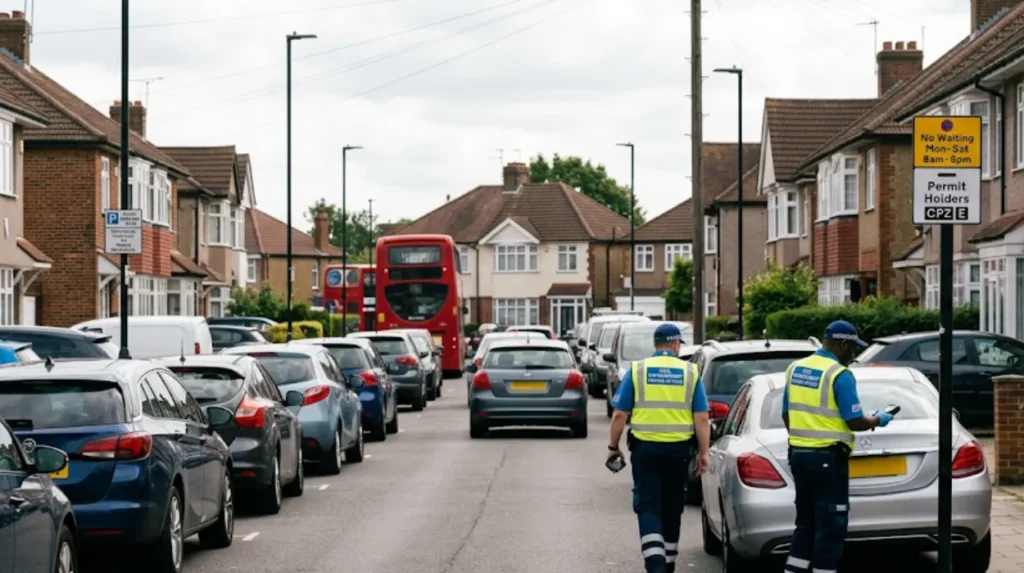
Controlled parking zones in Enfield are being expanded, redesigned and re‑timed to match current demand patterns. Some CPZs now operate longer hours, include additional streets, or introduce new bay types such as resident, visitor and short‑stay bays to better balance local and business needs.
Controlled Parking Zones (CPZs) are areas where parking is restricted during set hours, and drivers must use marked bays or hold a valid permit. Enfield currently operates multiple CPZs covering town centres, residential clusters and transport corridors. Recent updates adjust boundary lines so that streets with recurring congestion or parking conflicts fall inside the zone, while streets with lower demand may be removed.
Hours of operation are being recalibrated to reflect actual usage. For example, some CPZs now run from early morning until evening on weekdays, with extended hours on Saturdays in busy shopping areas. This reduces the period when drivers can park illegally on restricted streets without cost or consequence.
New bay configurations are introduced to meet specific needs. Examples include:
- Resident parking bays for households within the zone, often with permit requirements.
- Visitor parking bays for short visits, sometimes with time limits.
- Short‑stay or “business” bays to support customers visiting shops, cafes and services.
- Electric vehicle bays with charging points where infrastructure exists.
These changes aim to reduce all‑day parking by non‑residents in residential streets, improve turnover for local shops, and give clearer guidance on where different types of users can park.
Why are parking charges and permits being revised?
Parking charges and permit fees in Enfield are being revised to reflect the cost of enforcement, administration and maintenance, and to manage demand more effectively. Higher charges for some users help discourage long‑stay parking in busy areas while keeping residential permits affordable for eligible households.
Enfield’s on‑street and off‑street parking charges are set through a formal charging policy that considers operational costs, demand management objectives and fairness across user groups. Over recent years, the cost of staffing enforcement, maintaining equipment such as ticket machines and cameras, and managing administrative systems has increased. Without adjustments to charges, the parking service would face a shortfall that could weaken enforcement or reduce service quality.
Revised charges also serve a demand‑management role. For example:
- Higher rates for longer stays in town centre CPZs encourage shoppers to visit multiple nearby businesses rather than occupying one bay all day.
- Differentiated pricing for residents versus non‑residents helps protect local access while limiting commuter parking in residential zones.
- Increased fees for multi‑storey car parks, such as the Palace Gardens multi‑storey, are used to balance capacity with turnover and to fund improvements.
Permit fees for residents, including disabled and resident car‑permit schemes, are adjusted less aggressively to maintain affordability for households that rely on parking near their homes. The council still requires eligibility criteria and proof of residence to prevent misuse.
The additional revenue generated from revised charges is allocated to recruiting more civil enforcement officers, upgrading enforcement technology and supporting road safety and transport projects. This creates a direct link between what drivers pay and the quality of parking management and enforcement they experience.
What new event‑day parking rules have been introduced?
Enfield has introduced event‑day parking zones around venues and major locations, where standard restrictions are temporarily altered to manage high demand during football matches, festivals and other large events. These measures include time‑limited bans, special permits, and redirected parking to prevent congestion and protect local residents.
Event‑day parking zones are temporary restrictions activated when a specific event is expected to generate significant traffic and parking pressure. In Enfield, such events include football matches at nearby stadiums, community festivals, and large public gatherings. The council uses public notices to announce when these zones will operate, which streets are affected, and what the precise rules are.
Typical event‑day measures include:
- Temporary no‑parking or no‑waiting restrictions on streets that would otherwise allow parking.
- Short‑stay bays reserved for event staff, emergency vehicles or authorised permit holders.
- Clearway‑type rules that forbid stopping entirely during peak arrival and departure times.
- Signage that explains when the restrictions start and end, often tied to the event schedule.
These rules prevent visitors from occupying residential streets for the entire day, reduce bottlenecks on approach roads, and ensure that emergency services and local residents can still move safely. They also help discourage “park and walk” behaviour from distant areas that could overload nearby transport networks.
Event‑day parking zones are reviewed after each use to assess impact on traffic, complaints from residents and compliance levels. Adjustments are made to timing, boundary streets and signage based on this feedback, ensuring that the system remains effective and fair over time.
How do parking restriction changes affect residents?
Residents in Enfield affected by parking changes may see new permit requirements, altered bay types, longer CPZ hours, or temporary event‑day restrictions on their streets. However, they retain access to resident parking bays, can apply for permits where eligible, and benefit from improved enforcement and reduced visitor parking pressure.
For households living in or near updated CPZs, the most immediate impact is the need to hold a valid parking permit if they wish to park in resident bays or on certain restricted streets. Enfield offers resident car permits for eligible households, with specific rules about vehicle registration, address proof and number of permits per household.
Changes may also affect daily routines:
- Streets previously open for free parking may become part of a CPZ with restricted hours.
- Parking bays may be reclassified from unrestricted to resident‑only or short‑stay only.
- Event‑day restrictions may temporarily remove parking on some residential roads during matches or festivals.
At the same time, residents gain benefits from the changes. Stronger enforcement reduces all‑day parking by non‑residents, freeing up space for local households. Better‑designed zones and clearer signage reduce confusion about where permits are required. Increased numbers of enforcement officers help ensure that violations such as overstaying in bays or parking in resident areas without a permit are addressed consistently.
Residents who are eligible for disabled parking permits or other special schemes can continue to apply through the council’s parking services. The council maintains separate processes for these permits, with additional considerations for accessibility and medical needs.
What impact do the changes have on visitors and local businesses?
Visitors and local businesses face revised parking charges, updated time limits, and new bay types designed to encourage shorter, more frequent visits rather than long all‑day stays. The changes aim to increase turnover of parking spaces, support footfall for shops and cafés, and reduce congestion around town centres.
For shoppers, diners and customers of local services, the revised system means that:
- Short‑stay bays with time limits are more common in town centre CPZs.
- Charges for longer stays are higher, making it less attractive to park in one spot for the entire day.
- Clearer signage and mapping help visitors identify where they can park legally and for how long.
This structure supports local businesses by increasing the number of different customers who can access parking during busy periods. Instead of one car occupying a bay for several hours, multiple shoppers can use the same space over the course of a day, improving overall capacity without requiring new roads or car parks.
Businesses benefit indirectly through:
- Reduced congestion on approach roads, making it easier for customers and delivery vehicles to reach premises.
- More predictable parking patterns, which help with staffing and logistics planning.
- Improved streetscape safety and accessibility, which can increase footfall and patronage.
Enfield also coordinates parking changes with other transport improvements, such as bus priority measures and cycle routes, to create a more integrated system. This supports a shift towards multimodal travel, where visitors combine short car trips with walking, cycling or public transport.
How are parking enforcement and penalties changing?
Parking enforcement in Enfield is becoming more consistent and visible due to increased numbers of civil enforcement officers and updated penalty charges. Higher penalties for violations encourage compliance, while revenue from fines supports further enforcement capacity and road safety measures.
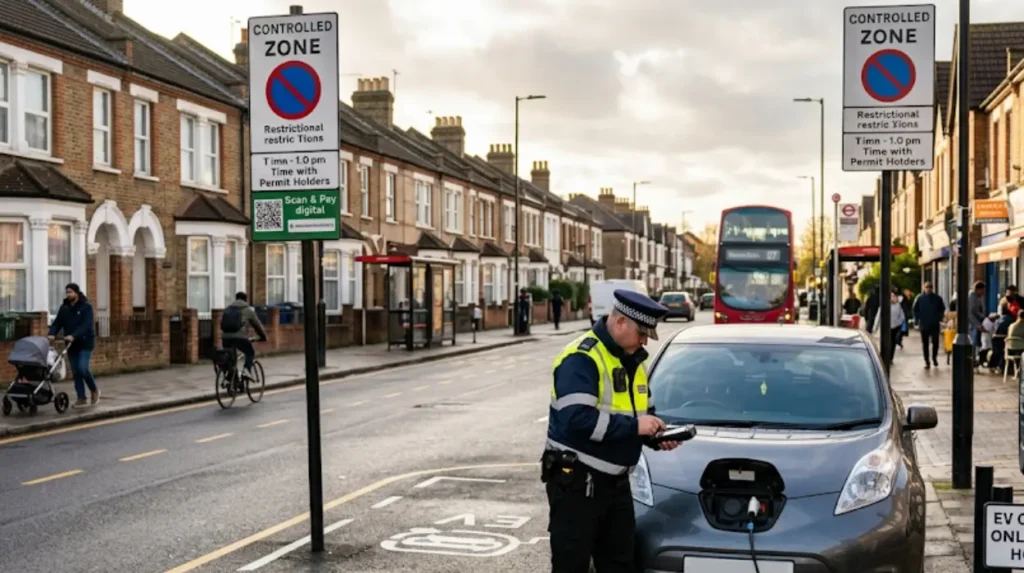
Civil enforcement officers (CEOs) are responsible for monitoring on‑street parking restrictions, issuing parking tickets (Penalty Charge Notices) for violations, and ensuring that bays and permits are used correctly. Enfield has announced plans to increase the number of CEOs, funded by revised parking and penalty charges. This expansion allows the council to cover more streets, respond more quickly to reports of violations and maintain a higher standard of enforcement across CPZs.
Penalty charges for common violations have been adjusted to align with national guidance and local cost realities. Typical offences include:
- Parking outside a marked bay or in a no‑waiting area.
- Overstaying the permitted time in a short‑stay bay.
- Parking without a valid resident or disabled permit where required.
- Blocking driveways or access points where restrictions exist.
Higher penalties increase the cost of non‑compliance, which in turn encourages drivers to check signage, apply for permits where eligible and respect time limits. The revenue generated from these penalties is not used as profit but is reinvested into the parking service, including enforcement staff, technology and road safety initiatives.
Appeal processes remain available for drivers who believe a penalty was issued unfairly. Enfield provides a formal procedure for challenging Parking Charge Notices, with independent review options if the initial appeal is rejected. This ensures that enforcement remains fair and accountable while maintaining overall compliance.
Explore More Help & Resources
How to appeal a parking PCN in Enfield?
How to report unsafe pedestrian crossings in Enfield?
What are the future implications for parking in Enfield?
The changes to parking restrictions set the foundation for a more demand‑managed, safety‑focused and financially sustainable parking system in Enfield. Future developments will likely include further CPZ adjustments, integration with active travel schemes, and possible expansion of electric vehicle parking and digital permit systems.
The updated parking framework aligns Enfield with broader London transport strategies that prioritise reduced car dependency, improved air quality and safer streets. By managing parking demand through restrictions, charges and enforcement, the council can free up road space for buses, cycles and pedestrians without large‑scale road construction. This supports long‑term goals such as net‑zero emissions and healthier neighbourhoods.
Potential future developments include:
- Further expansion or redesign of CPZs in response to changing traffic patterns and development projects.
- Integration of digital systems for permit applications, payment and validation, making it easier for residents and visitors to manage parking electronically.
- More electric vehicle bays with charging infrastructure as EV adoption grows.
- Coordination with highway improvements, school street schemes and cycle routes to create integrated transport zones.
These changes will continue to evolve as Enfield monitors usage data, public feedback and wider transport policy. The council is expected to review parking performance regularly and adjust restrictions, charges and enforcement levels to maintain balance between local access, business needs and sustainable transport goals.
How can people stay informed about parking changes in Enfield?
Residents and visitors can stay informed about parking changes through Enfield Council’s official website, parking notices, local news outlets and community consultations. The council publishes updates on CPZ modifications, charge revisions, event‑day rules and enforcement activities in accessible formats.
Enfield Council provides detailed information on its parking services webpage, including maps of CPZs, permit application forms, charge schedules and guidance on restrictions. Users can search for specific streets or zones to see current rules and hours of operation. The council also issues public notices for significant changes, such as new CPZ boundaries or event‑day restrictions, which are published on official notice portals and local announcement sites.
Community engagement is part of the process for major parking changes. The council may hold consultations, meetings or online surveys to gather feedback from residents, businesses and other stakeholders before implementing new restrictions. This allows affected parties to raise concerns, suggest alternatives and understand the rationale behind decisions.
Local news outlets and neighbourhood forums also report on parking updates, enforcement trends and community responses. Following these sources helps residents and visitors anticipate changes, plan their travel accordingly and participate in discussions about the future of parking in Enfield.
By combining official information channels with local media and community input, Enfield ensures that parking restriction changes are transparent, understandable and responsive to the needs of the borough.
Why is Enfield changing its parking restrictions?
Enfield Council is updating parking restrictions to reduce congestion, improve road safety, support local businesses, manage parking demand more effectively, and encourage sustainable travel across the borough.