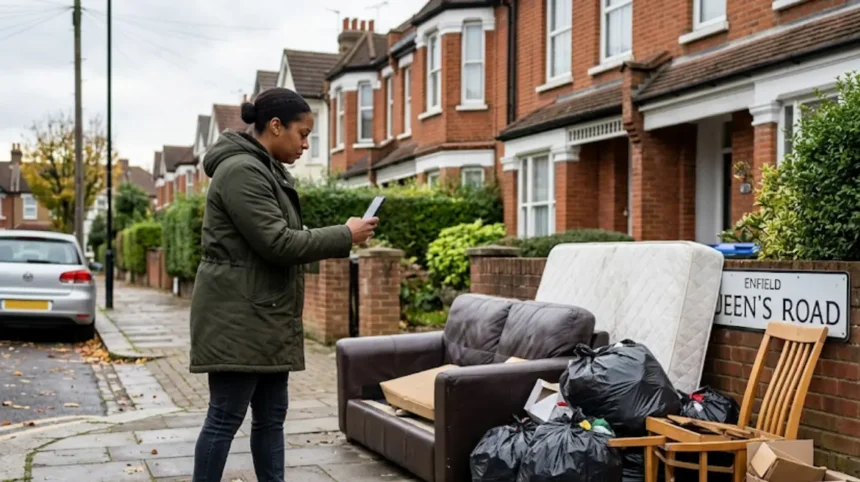
Fly-tipping in Enfield residential areas is reported through Enfield Council’s online reporting form, by phone, or via the FixMyStreet app; residents must provide location, description, time, and any evidence such as photos or vehicle details. For hazards like asbestos or discs in waterways, reports go to specialist teams or the Environment Agency instead.
- What is fly-tipping and why does it matter in Enfield homes?
- How do you report fly-tipping in Enfield residential streets?
- What evidence should you include when reporting fly-tipping in Enfield?
- Where can you report fly-tipping if it is not on Enfield Council land?
- How does Enfield Council investigate and enforce against fly-tipping?
- What happens after you report fly-tipping in an Enfield residential area?
- How can residents help prevent fly-tipping in Enfield residential neighbourhoods?
- When should you call the Environment Agency instead of Enfield Council for fly-tipping?
What is fly-tipping and why does it matter in Enfield homes?
Fly-tipping is the illegal deposit of waste on land or water without a licence, and in Enfield it stains streets, harms health, and costs residents council-tax money for clean-ups.
Fly-tipping is defined in UK law under section 33 of the Environmental Protection Act 1990 as the unlawful disposal of “controlled waste”. Controlled waste includes household rubbish, garden waste, furniture, construction materials, and small amounts of hazardous waste such as asbestos or industrial liquids. In Enfield, fly-tips appear on residential streets, in alleyways, behind garages, in pocket parks, and near bus stops, turning quiet neighbourhoods into dumping zones.
The impact on Enfield homes is direct. Untipped waste attracts pests, blocks drains, creates fire risks, and lowers property appeal. Council teams spend thousands of hours clearing illegal loads instead of improving parks or recycling services. Large or hazardous tips can also cause pollution in local rivers such as the Moselle or lanes leading to the Lee Valley. Reporting each tip helps Enfield Waste Enforcement Officers identify patterns, seize vehicles, and issue fines or prosecutions.

How do you report fly-tipping in Enfield residential streets?
To report fly-tipping in Enfield residential areas, use Enfield Council’s online form, call the council, or submit via FixMyStreet; include exact location, waste type, time, and any photos or vehicle details.
Enfield Council operates a dedicated fly-tipping reporting page where residents complete a structured form. The form asks for the address or landmark, a description of the waste, the date and time it was seen, and contact details if the council needs follow-up information. Reports created this way are logged in the council’s waste enforcement system and routed to street-cleansing or enforcement teams depending on the site and size of the tip.
Residents can also call Enfield Council’s general contact line and ask for the waste enforcement or street cleansing team to log a fly-tip by phone. This route is useful when residents cannot access the website or need immediate advice about hazardous items. The council aims to clear reported fly-tips on public land within 24 hours, though larger or complex loads may take longer. Each report is treated as evidence; incomplete reports with no location or time may delay action or prevent enforcement.
What evidence should you include when reporting fly-tipping in Enfield?
When reporting fly-tipping in Enfield residential areas, include the exact location, date and time, description of waste, and any photos, licence plates, or vehicle types; more evidence increases the chance of enforcement.
Enfield Waste Enforcement Officers use reports to build cases against fly-tippers. A report that states “bag of rubble behind 42 Maple Street, seen 10 July 2026 at 19:30, red van with partial plate ‘LX2’” is far more actionable than “rubbish near my street”. Photos show the type and volume of waste, help confirm whether it is household or construction material, and can support identification of tools, bin labels, or markings linked to a business.
Video evidence is also valuable. Enfield Council’s “Can You Help?” initiative publishes CCTV clips of suspected fly-tipping and asks residents to identify people or vehicles. If a resident has door CCTV, dashcams, or mobile footage of a vehicle dumping waste, they should note the time, reference the clip if available, and submit it via the council’s form or by email to waste enforcement. Details such as vehicle colour, make, model, trailer type, and any logos or stickers help officers match tips to seized vehicles or fixed-penalty cases. Hazardous items like asbestos sheets, gas cylinders, or medical waste must be flagged clearly so the council arranges specialist clearance rather than standard street sweeping.
Where can you report fly-tipping if it is not on Enfield Council land?
If fly-tipping is on private land, near waterways, or on land outside Enfield, report to the landowner, the Environment Agency, or the relevant local authority; Enfield Council only clears tips on public land in its borough.
Enfield Council states it is not responsible for clearing fly-tips on private land; that duty falls to the landowner(s). Residents who see waste dumped in a private yard, behind a closed shop, or on a housing association’s private estate should contact the owner or management company and encourage them to report to Enfield Waste Enforcement for possible enforcement notices. The council can serve notices requiring landowners to clear land and may enter and clear it at the owner’s cost if they refuse.
For fly-tipping in or near rivers, streams, canals, or their paths and banks, the correct reporter is the Environment Agency, not the local council. The Agency’s 24-hour incident hotline is 0800 80 70 60, and it handles pollution risks, large industrial loads, and waste in waterways across England. If the tip is just outside Enfield, for example in Barnet, Waltham Forest, or Haringey, residents must use that borough’s council reporting system, as Enfield has no enforcement power beyond its boundaries. Crimestoppers (0800 555 111) can also take anonymous reports of serious or organised waste crime, especially when large loads, repeated dumping, or dangerous materials are involved.
How does Enfield Council investigate and enforce against fly-tipping?
Enfield Council investigates fly-tipping using reports, CCTV, and Waste Enforcement Officers who can seize vehicles, issue £400 fixed penalty notices, and prosecute offenders under the Environmental Protection Act 1990.
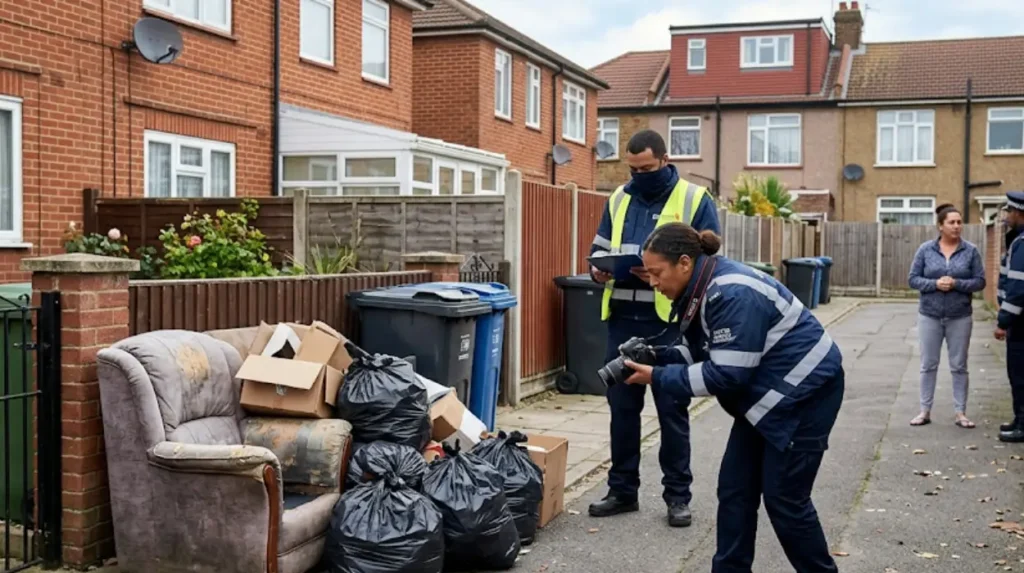
Once a report is logged, Enfield’s Waste Enforcement Unit reviews the location, waste type, and any evidence provided. Officers may visit the site, photograph the tip, and compare it with known patterns or previous incidents in the area. The council uses CCTV cameras fixed along streets, in pocket parks, and near known hotspots to capture vehicles and individuals dumping waste. Identified offenders in Edmonton and other residential zones have received £400 fixed penalty notices (FPNs) and faced prosecution where evidence is strong.
Enfield has statutory powers to seize any vehicle, trailer, or mobile plant believed to be used for waste crimes such as fly-tipping. Seized vehicles are held while investigations proceed, and owners may face fines, court costs, and up to five years imprisonment if convicted under section 33 of the Environmental Protection Act 1990. The council can also issue enforcement notices to landowners who allow repeated dumping on their land and seek reimbursement for clearance costs. These powers make accurate resident reports critical: without clear location, time, and evidence, officers cannot link a tip to a specific vehicle or person.
What happens after you report fly-tipping in an Enfield residential area?
After reporting fly-tipping in Enfield residential areas, the council logs the incident, assigns it to street cleansing or enforcement, and aims to clear public land tips within 24 hours while investigating offenders if evidence exists.
Enfield Council’s system records each report with a reference number and categorises it by site type (street, park, private land boundary) and risk (normal waste, hazardous waste, waterway risk). Standard tips on public land are passed to street-cleansing teams for removal; hazardous or large loads may require specialist contractors and longer clearance times. If the report includes vehicle details, photos, or CCTV matches, the case is also flagged to Waste Enforcement for investigation.
Residents who provided contact details may receive updates if officers request additional information or if the case leads to an FPN or prosecution. The council does not always inform reporters of outcomes due to privacy and legal constraints, but repeated reports from the same street help build statistical evidence for targeted enforcement campaigns. Persistent fly-tipping in a neighbourhood can lead to increased CCTV coverage, signage, and community “Tip-offs” operations where officers visit the area and speak directly with residents about statements.
Explore More Help & Resources
How to check council housing status in Enfield?
Why are temporary accommodations used in Enfield so often?
How can residents help prevent fly-tipping in Enfield residential neighbourhoods?
Residents can help prevent fly-tipping in Enfield by reporting tips quickly, sharing evidence, supporting “Can You Help?” campaigns, using licensed waste carriers, and avoiding giving waste to unverified collectors.
Quick reporting reduces the time waste sits on streets and increases the chance that officers capture offenders on CCTV or during patrols. Sharing photos, vehicle details, and timings with Enfield Waste Enforcement strengthens individual cases and helps build patterns across the borough. The “Can You Help?” initiative relies on residents recognising people or vehicles in published CCTV clips and submitting identifications via the council’s form.
Householders also play a role by ensuring waste goes only to licensed carriers or council services. Passing waste to an unlicensed carrier that later fly-tips it can result in a fixed penalty notice of up to £600 for the Householder. Residents should ask waste collectors for their waste carrier registration number, check it on the Environment Agency’s public register, and keep copies of receipts. Community groups, schools, and housing associations can organise clean-up days, install better bin storage, and promote reporting channels to reduce temptation for opportunistic dumpers.
When should you call the Environment Agency instead of Enfield Council for fly-tipping?
Call the Environment Agency instead of Enfield Council when fly-tipping is in or near rivers, streams, canals, or involves large-scale or hazardous waste crime; the Agency’s hotline is 0800 80 70 60.
Enfield Council handles most small-scale fly-tips on public land within the borough, such as bin bags, furniture, or garden waste on streets and in parks. The Environment Agency takes responsibility for larger, more serious, or organised illegal waste crimes and for any waste deposited in or by waterways, including river paths and banks. This includes loads of construction material, industrial waste, tyres, or hazardous substances that risk pollution in the Moselle, Lee, or other local watercourses.
The Agency’s 24-hour incident hotline allows immediate reporting of dangerous or rapidly spreading pollution risks. Reports can be anonymous, and the Agency coordinates with local councils, police, and water companies when sites cross boundaries or involve multiple agencies. For householders unsure whether a tip is small-scale or large-scale, the rule is: if it is near water, looks industrial, or involves hazardous materials like asbestos, chemicals, or gas cylinders, contact the Environment Agency first, then inform Enfield Council if the site is also on a public street.
What is fly-tipping in Enfield?
Fly-tipping is the illegal dumping of waste on land or in waterways without permission. In Enfield, this can include household rubbish, furniture, mattresses, garden waste, construction materials, tyres, and hazardous items such as asbestos. Fly-tipping is a criminal offence under the Environmental Protection Act 1990.