Key Points
- Islington Council has completed 46 new council homes on the Elthorne Estate.
- The homes are council-owned and described as genuinely affordable.
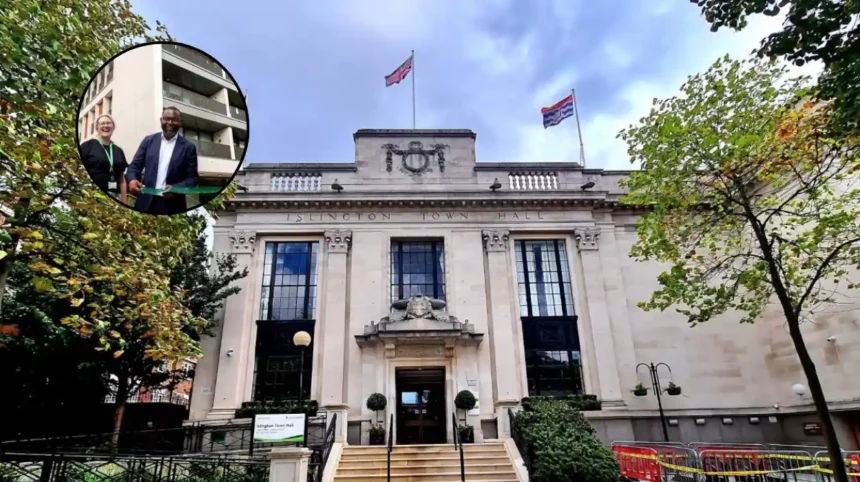
- A ribbon-cutting ceremony marked the completion of the project this week.
- One of the first residents, Ebru, has moved into a fully accessible home after years in unsuitable accommodation.
- The scheme also includes a new community space.
- Improvements have been made to Zoffany Park as part of the wider development.
- Cllr Jason Jackson said each of the 46 properties represents a new home for Islington families.
Islington (North London News) July 27, 2026 – Islington Council has marked the completion of 46 new council homes on the Elthorne Estate, alongside a new community space and improvements to Zoffany Park, in a development the authority says will help local people access secure and affordable housing.As reported by the council, 46 new homes have been finished on the Elthorne Estate and celebrated with a ribbon-cutting ceremony this week. The homes are all council owned and are being presented as genuinely affordable, which places them within Islington’s wider effort to expand social housing provision. The project is also intended to deliver benefits beyond the housing itself through a community space and landscape improvements.
The completion matters because the council says the scheme directly responds to housing demand in the borough.
In a city where secure and affordable homes are often limited, the addition of 46 council properties is a notable local development. The council’s message is that each property adds to the stock available for families who need a stable home.
Who has moved in so far?
Among the first residents is Ebru and her family, who have moved into a fully accessible home after years of living in unsuitable accommodation. She said:
“We love it. I still can’t believe it. I will be here all my life.”
That quote underlines the personal impact that housing completion can have, especially for households with accessibility needs.
The council has highlighted this example to show how the scheme is not only about numbers, but also about matching homes to residents’ circumstances.
A fully accessible property can make a major difference for a family that has previously struggled in accommodation that did not meet their needs. Ebru’s comments suggest the move has brought both relief and a sense of permanence.
What did Cllr Jason Jackson say?
Cllr Jason Jackson, Executive Member for Homes and Neighbourhoods, said:
“It’s so heartwarming to see residents moving into these fantastic new homes on the Elthorne Estate. We know how challenging the housing crisis is, and how it’s affecting people across our borough. Each and every one of these 46 properties represents a new home for Islington families.”
His remarks place the scheme within the broader housing pressures facing the borough. They also show the council’s intention to frame the project as part of a response to the local housing crisis rather than simply a property handover.
The emphasis on “Islington families” suggests the homes are being positioned as a local resource for people with borough ties and housing need.
Why does the wider estate matter?
The development is not limited to the homes alone, because the council says it has delivered a new community space and improvements to Zoffany Park.
That means the project has been designed as a wider neighbourhood upgrade rather than a single-purpose housing block. Such additions can affect how residents use and experience the estate over time.
Community spaces often support social activity, neighbour interaction, and local services, while park improvements can improve the appearance and usability of shared outdoor areas.
In this case, the council is presenting the project as one that benefits both new residents and the surrounding community. The combination of housing and public realm improvements is a key part of the story.
How does this fit Islington’s housing approach?
The completion of 46 council homes suggests Islington remains focused on adding housing it can directly control and allocate. Council-owned homes are significant because they are kept within the public housing system rather than being sold on the open market. That can help preserve longer-term affordability and local access.
The council’s language also points to the pressure of housing demand in the borough. By highlighting the number of homes completed and the accessibility of at least one property, the authority is signalling that the scheme has both scale and practical value.
The Elthorne Estate project therefore fits into a wider pattern of local authorities trying to increase supply where the housing need is greatest.
What is the public interest in this story?
This development is relevant to residents because housing remains one of the most immediate public concerns in London boroughs such as Islington.
New council homes can affect waiting lists, temporary accommodation pressures, and the availability of secure tenancies. For families in need, even a relatively small number of homes can make a material difference.
There is also interest in the accessibility element of the scheme. Fully accessible homes are important for people whose accommodation needs are not being met elsewhere, and the example of Ebru’s family gives the project a human dimension.
The combination of housing supply, accessibility, and neighbourhood improvements makes this a story with both social and practical significance.
Explore More Islington Council News
Islington Pension Fund Members Back Divestment Proposals Islington 2026
High Court Upholds Paradise Park Nursery Closure: Islington 2026
Background of the development
The Elthorne Estate scheme forms part of a local response to long-running housing shortages and the need for genuinely affordable council housing in Islington.
Local authorities across London have faced pressure to provide more secure homes while also improving the estates and public spaces around them.
In that context, the completion of 46 new homes is not just a building milestone but part of a wider policy approach.
The inclusion of a community space and changes to Zoffany Park shows the council is treating housing regeneration as a neighbourhood project rather than a standalone construction exercise.
Prediction
For local families on housing lists or living in unstable accommodation, the completed homes could offer a real chance of longer-term security.
The accessible housing element may also be especially valuable for residents with mobility or care needs, because suitable accommodation is often harder to find than standard housing.
The wider estate improvements may strengthen the community feel of the area over time, although the scale of the impact will depend on how the council allocates homes and maintains the shared spaces.
If similar schemes continue, residents may see more visible estate-led regeneration across Islington, but the demand for affordable housing is likely to remain high.