
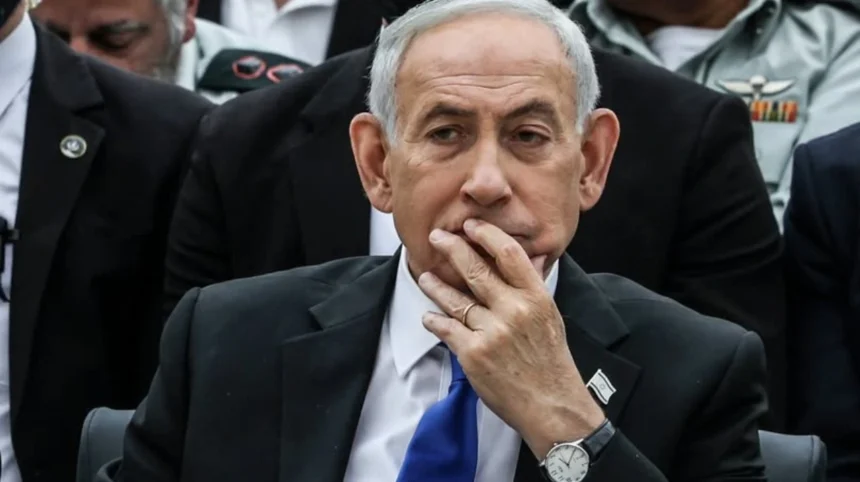
The rejection of the peace plan by Israeli Prime Minister Netanyahu is no surprise to anybody who has some understanding of the design of the military-industrial conglomerates of both countries. Eugenia Yosef and Tim Lister wrote an article in CNN World News entitled “
Israel Rejects Trump’s Peace Plan, Saying No Withdrawal Until Hamas Disarm.”
They underlined Netanyahu’s statements in giving reasons for the rejection.
Last month, Trump declared triumphantly that his peace plan is a monumental step on the pathway to peace in Gaza. He also was on record saying Israel was “very happy” about the U.S.-backed plan. Surprisingly, the deadliest attacks were mounted on Gaza in the days following the announcement of the peace plan. In his first comment addressing the plan, the Israeli Prime Minister said,
“I want to be precise here: Israel rejects the 15-point document.”
He further asserted,
“As long as I am Prime Minister, no Palestinian state will be established—not in Gaza and not in the West Bank.”
“The Israeli military wouldn’t withdraw at all until Hamas is genuinely disarmed and will continue to thwart threats against our forces and citizens,” he added.
He said,
“Contrary to all those who preach to us, we do what must be done for Israel’s security, and we can and will stand our ground even against our best friend when necessary.”
He defied Trump’s definition of disarmament by interpreting “real disarmament” as meaning giving up all heavy and light weapons, calling lesser measures fictitious. He insists that its military will not leave Gaza to block threats against its citizens and soldiers, rather than follow the phased withdrawal timeline proposed by the Board of Peace.
Netanyahu further added that Israel is “talking to the Americans about this issue.”
“They have ideas, some of which are acceptable to us and some are not acceptable to us, and we know how to stand firm on these things,”
the Prime Minister stated. Netanyahu’s statements raise questions for Palestinians about the path out of hostilities. The rejection has put the sequencing into question.
In recent months, Israeli forces have continued encroaching deeper into Hamas-controlled territory in Gaza, increasing their share of land from more than 50 percent last October to more than 60 percent. Netanyahu is said to have given orders to push further to 70 percent. The ambivalent attitude of Israel is evident right from the beginning of the announcement of the peace plan. The Israeli rejection of the Gaza plan needs to be viewed in the context of the upcoming Israeli election on October 27, 2026. This election is going to be tough for Netanyahu, as successive surveys show a nosedive in his popularity. His right-wing government therefore looks at the peace plan as controversial and problematic. Al Jazeera’s Hani Mahmoud, reporting from Gaza, told that most people in the war-battered coastal enclave “expected” Israel to reject the plan. He reported,
“The only concern that people have right now is that this is translating into greater uncertainty and that the plan was meant to provide more structure and a framework.”
His report raises further doubts, saying:
“There are important elements that were part of the plan in terms of security: Israeli withdrawal from the area that it has been occupying over the past years across Gaza, known as the ‘Yellow Line,’ the disarmament of Hamas, as well as the entry of international stabilization forces. Now, the full rejection here puts the sequencing and the steps to complete that into serious question. It translates into no clear end to hostilities and wars.”
Political analyst Xavier Abu Eid has raised a pertinent point, saying that from the very beginning it was clear that the 20-point plan of President Trump and the 15-point disarmament and implementation plan that followed were more about meeting Israeli interests than the Palestinian right to self-determination. He further added,
“Justice for Palestinians is something that nobody talks about. So, certainly, this remains a position, and Trump is unlikely to be happy with Netanyahu’s rejection.”
It is axiomatic that Israel is not only keen on Hamas disarmament but on the total subjugation of Gaza, at the cost of genocidal crimes. It is well known that Israel faces genocide proceedings at the International Court of Justice, while the International Criminal Court has issued an arrest warrant for Netanyahu, who also faces a corruption trial before the courts. By breaking his promise to honour the peace plan, he is trying to stay in power by retaining the support of the jingoistic right wing. Any concession on withdrawal would invite political repercussions for his right-wing coalition due in October.
Professor Jeffrey Sachs has proposed a five-step peace plan to end the war between the U.S.-Israel axis and Iran, with a view to bringing economic prosperity to the warring nations as well as to the world. He terms it a lose-lose war. He calls it a brazen and naked aggression and describes Israel as insanely greedy. Among the five-point peace plan, Sachs argues for ending U.S.-Israel armed aggression by withdrawing forces. Iran should simultaneously end its retaliatory strikes, moving past a temporary ceasefire into a full halt of active combat. Second, he suggests a return to the JCPOA. The UN Security Council mediated the Joint Comprehensive Plan of Action framework in 2015. This needs to be respected, as it revolved around the nuclear issue via strict monitoring by the International Atomic Energy Agency (IAEA) while lifting economic sanctions against Iran. Third, the restoration of maritime transit through the vital trade corridor is of vital importance considering the oil crisis worldwide. Hence, safe passage should be jointly guaranteed through an inclusive cooperation framework between Iran and the Gulf Cooperation Council (GCC) states. Fourth, implement a two-state solution. He argues that a Palestinian state should be admitted into the UN as the 194th permanent member. Fifth, regional armed belligerency must end. All non-state armed conflicts in the region have to come to a close concurrently. There should be complete disarmament and defunding of groups like Hamas, Hezbollah, and other armed actors, backed by regional consensus and international backing.
Rising above narrow political considerations, will Washington and Tel Aviv listen to the sane advice of Professor Sachs? It is a fact that the war on Iran launched by Trump and Israel on 28th February has not achieved any of its objectives. It could not effect regime change in Iran; rather, it set off an unprecedented fuel crisis which affected the whole world. The Strait of Hormuz is barely functioning due to the war. The rising cost of American petrol and fertilizers has begun to affect the U.S. economy, which led Trump to seek a face-saving breakthrough in West Asia. Waning sympathy for Israel as the mid-term elections in the U.S. approach made Trump moot the unworkable Gaza peace proposal. The Hindu, on 12 August 2026, in its editorial, argued that Trump and his advisers must ask whether Washington’s decades-long Faustian bargain—arming and shielding a militarized Israel on Israel’s terms—is worth continuing, or whether it will use its leverage as Israel’s principal arms supplier to compel a genuine withdrawal. The peace plan is farcical. Its vision is myopic. Its design is to convert the so-called “New Gaza” into a free-trade zone with privatized infrastructure, transforming it into a holiday resort and tourist paradise for the military-industrial corporate rich.
The views expressed in this article are the author’s own and do not necessarily reflect (North London News) editorial policy.