
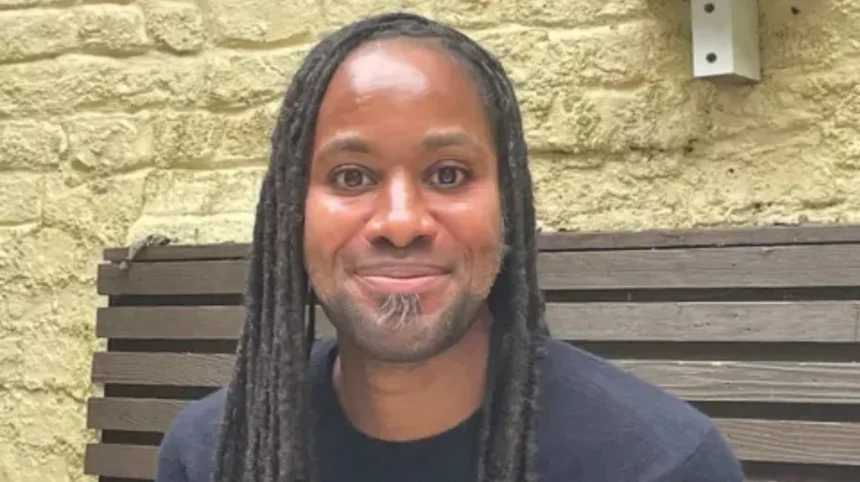
Professor Jason Arday died on 4 August 2026 at the age of 41 in a flat in Battersea, London, England. He was killed long before his death, reduced to a black professor. Despite all his limitations and errors, he was well‑experienced and well‑qualified to be a professor. Liverpool John Moores University has investigated and already declared that Professor Arday’s PhD thesis was not plagiarised. However, the British media persecuted him as if he had committed a crime. The universities where Professor Arday worked started investigations based on the media campaign, which forced him to resign. The well‑coordinated racist campaign not only undermined Professor Arday but also created conditions of immense physical and mental stress that took away his life. His promising life was cut short, and his family lost their loved one. The racist media that campaigned against him are now publishing obituaries celebrating his struggles and achievements. The universities that joined the racist campaign by launching investigations into Professor Jason Arday’s career are now sending tribute messages of sympathy and solidarity and offering support to those deeply affected by his death. Irony is an integral part of English society, so there is no surprise here in the tributes followed by institutional murder of Prof. Arday.
Death is a great equaliser in a deeply racialised, discriminatory society in Britain or elsewhere in the world. All the racists and their media outlets can take pleasure that their campaign has won by killing Professor Jason Arday. No one dies for punctuation and grammatical errors; no one is hounded for plagiarism the way Professor Jason Arday was hounded. There are hundreds of professors with white skin but without a postgraduate degree, without a PhD, without any teaching or research experience, and with no publications, yet they continue to lead universities as professors and members of the so-called meritocratic networks. Bluff is the only word that comes to mind while thinking about meritocracy in Britain. There is no accountability, no question of meritocracy, as their skin colour aligns with the white racist knowledge traditions and institutional practices based on Eurocentric bias.
Professor Jason Arday’s autobiography, titled Great and Unfortunate Things, summarised his life, struggles and death. A black man from a council estate entering Cambridge is the only crime committed by Professor Jason Arday. His other mistake was that he dared to dream and achieved it by entering a white world of academia, where otherness is designed to undermine and kill people of colour – and where white working‑class people suffer in this racist system as well. The dropout rate among white working‑class and BME students is higher in most UK universities, which reveals that institutional discrimination continues to define British society. In such a society, the dream of socio-economic, educational mobility, emancipation and the struggle for justice is a crime.
Academia is supposed to be a safe place ‘for not knowing’ – where mistakes are not criminalised but used as stepping stones to learn new things. It is supposed to be a place for self‑discovery and limitless imagination, where every academic mistake is a learning experience. New academic mistakes propel learners to new findings in the process of knowledge production and dissemination. This organic space creates conditions where teachers, students and researchers work together to challenge, reject and question dominant narratives, democratising knowledge both in its production and in its dissemination.
The rise of privatisation in higher education has commodified teaching and learning and destroyed the organic conditions and relationships between teachers and students. It has destroyed all conditions necessary to conduct research without thinking about outcomes. Regular managerial interventions have accelerated the destruction of teaching and learning, replacing them with contact hours, teaching workloads, research assessments, and so on. Mass reproduction has replaced critical thinking. Tick box exercise of compliance culture has replaced higher learning with employability. Teachers and students have become numbers in the spreadsheets of managers who have nothing to do with research and teaching other than revenue generation.
Such a rent‑seeking culture of education has created a toxic workplace culture. Schools, colleges and universities have transformed into unforgiving places where regular public scrutiny and regulatory compliance define the everyday life of an academic. In the white world of academia, its colonial, undemocratic, authoritarian, patriarchal and Eurocentric knowledge traditions add further challenges for people of colour. Working‑class people, women, black people, sexual minorities and other ethnic minorities suffer additional challenges both as students and teachers, due to inherent discrimination based on class, race, gender and sexuality. White supremacist ideology, supported by colonial Eurocentric knowledge traditions and their institutional frameworks, has naturalised discrimination within its normal everyday operations.
Racialised capitalism and its race realists used a minimalist neoliberal representative framework of equality, diversity and inclusion to address issues of discrimination based on race, gender, class, sexuality and other minorities, within a compliant culture of representation that does nothing to change the knowledge traditions, institutional cultures and practices embedded with discrimination. Professor Jason Arday is not alone; another female Muslim academic, working as an Assistant Research Professor, is also being hounded by the racist media and its right‑wing typewriters of power and British establishment. It reveals much about racism in Britain beyond Cambridge.
Academia is rotten in Britain, much like its other establishments. The rising stress, depression and mental health issues due to racial, gender and class‑based discrimination put UK universities on notice. All British universities need to be investigated for their racist operations – for prioritising profit over staff and students welfare, rent over research – and for employing corrupt, under‑qualified, unqualified and inexperienced managers who are drunk with arrogance and ignorance of the power and money they wield.
It is not surprising that Prof. Arday’s death is a celebration for right-wing forces, but the silence of the so-called progressive forces hurts. The real tribute to Professor Jason Arday is to fight racism and all other forms of discrimination within UK universities and in the wider society. Defending Professor Jason Arday even after his death is the first step towards a wider struggle against all forms of inequality and exploitation.
The views expressed in this article are the author’s own and do not necessarily reflect (North London News) editorial policy.