Key Points
- Harrow Council has unveiled major capital improvement proposals for Roxbourne Park in Pinner, aimed at making the public green space safer, more accessible, and more resilient.
- A core element of the project involves relocating and completely upgrading the children’s playground to improve safety and modernise ageing equipment.
- Extensive infrastructure works will replace deteriorating footpaths, install new wayfinding signage, enhance drainage to counter seasonal flooding, and improve visibility throughout the park grounds.
- The project forms part of the local authority’s broader Parks Capital Programme, which commits over £6 million to green spaces across the borough over a three-year period.
- Local residents and key park user groups, including the Friends of Roxbourne Park, are being invited to submit their feedback on the proposals as part of a public consultation process.
Harrow (North London News) August 18, 2026 – A North London park is set to undergo substantial improvement works as the council looks to make it “safer and more accessible” for residents. The local authority has said the proposals have been developed following site assessments and engagement with local stakeholders with the aim of improving “the long-term sustainability” of the park.
- Key Points
- What changes are being proposed for Roxbourne Park in Pinner?
- How does this scheme fit into Harrow Council’s wider capital strategy?
- Who was consulted during the development of the park proposals?
- Background of the Roxbourne Park development
- Prediction: How this development will affect local residents and visitors
What changes are being proposed for Roxbourne Park in Pinner?
As reported by Noah Vickers of MyLondon, Harrow Council has put forward a public consultation outlining wide-ranging physical upgrades for Roxbourne Park, situated in Pinner. According to details released in the local authority’s consultation documentation, the primary focus of the scheme involves completely upgrading and relocating the popular children’s playground further into the park grounds.
As noted by Vickers, the current play facilities represent one of the most heavily utilised assets within the green space, catering to local families as well as visitors from across the borough. However, following detailed physical condition surveys, safety reviews, and site assessments, council officers concluded that the existing play equipment, surfacing, and overall spatial layout required a modern overhaul.
In addition to the relocated play zone, the proposed blueprint introduces extensive pathway restoration across the entire site. As documented by Vickers of MyLondon, multiple pedestrian footpaths throughout Roxbourne Park are currently displaying significant “signs of wear and deterioration”. The proposed overhaul will see these pathways replaced with high-quality, durable surfaces designed to accommodate step-free access, wheelchairs, and pushchairs far more effectively.
Further physical measures detailed within the scheme encompass enhanced park entrances, updated clear wayfinding signage, improved natural surveillance lines to boost personal safety, and strategic civil engineering work aimed at alleviating seasonal flooding and drainage issues that have historically affected low-lying grass areas.
How does this scheme fit into Harrow Council’s wider capital strategy?
As reported by Noah Vickers of MyLondon, the planned investment at Roxbourne Park forms an integral part of the local authority’s broader Parks Capital Programme. This strategy outlines targeted capital expenditure for public open spaces and recreational grounds across the London Borough of Harrow.
Under the framework of this ongoing municipal programme, Harrow Council has committed to investing more than £6 million into local parks over a three-year cycle. The overall objective of the ring-fenced fund is to “improve facilities and raise quality standards” across community spaces while simultaneously lowering ongoing, reactive maintenance costs through up-front infrastructure investment.
According to statements published in Harrow Council’s project summary, the strategic vision for Roxbourne Park aims to deliver a space that is “safer, more accessible, and better connected” by systematically upgrading visual appearance, practical functionality, and long-term environmental resilience for future generations.
Who was consulted during the development of the park proposals?
As detailed by Noah Vickers of MyLondon, council representatives confirmed that the draft proposals were not created in isolation, but were developed following direct engagement with key community stakeholders who regularly utilise the park.
Official documentation published on the council’s engagement platform, MyHarrow Talk, indicates that consultation feedback was gathered from prominent local organisations. These include the Friends of Roxbourne Park, the Harrow and Wembley Society of Model Engineers—who operate the popular miniature railway within the park grounds—as well as regional sports clubs and community user groups.
The local authority is now opening up the draft plans to the wider public, inviting local residents, parents, and park visitors to submit their formal feedback before final construction timelines and engineering tenders are locked in.
Background of the Roxbourne Park development
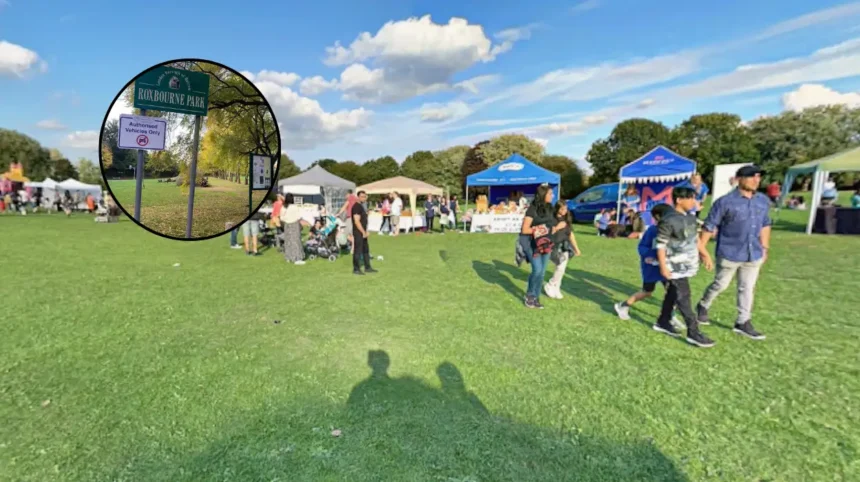
Roxbourne Park represents one of the largest and most ecologically varied open spaces situated in the southern portion of Pinner, serving residents from nearby Rayners Lane, Field End Road, and Castleton Road. Spanning extensive lawns, formal playing fields, and recreational facilities, the park plays a central role in local sports, hosting regular amateur football and cricket matches throughout their respective seasons. It is also home to the Roxbourne Local Nature Reserve and the Yeading Brook, which runs through the park boundary, providing vital wildlife corridors for waterbirds and native flora.
Historically, the park has faced challenges common to urban green spaces across Greater London. Heavy year-round footfall combined with age has resulted in significant wear on tarmac footpaths and play equipment. Furthermore, its proximity to the Yeading Brook has meant that during periods of intense winter rainfall, sections of the footpaths and grass turf suffer from poor drainage and waterlogging.
The current makeover plans build upon recent public investments in the area. In early 2026, civil engineering teams completed a major river restoration project along the section of the Yeading Brook passing through Roxbourne Park, undertaken in partnership with the Environment Agency to improve river hydraulics and bank stability. The newly announced Parks Capital Programme work represents the second major phase of infrastructure renewal for the site, shifting focus from river mechanics to terrestrial recreational facilities, safety, and pedestrian accessibility.
Prediction: How this development will affect local residents and visitors
The execution of the proposed Roxbourne Park makeover is poised to directly impact several key demographics within the local community:
- Families and Young Children: The relocation and complete replacement of the play equipment will provide families with a modern, safer play environment away from perimeter roads or sightline obstructions. Upgraded, cushioned safety surfacing and inclusive play apparatus will allow children of varying physical abilities to utilise the facilities year-round.
- Elderly Residents and People with Mobility Impairments: The full resurfacing of deteriorating footpaths and the removal of uneven paving will drastically reduce trip hazards. Enhanced step-free connections and smooth pathways will enable mobility scooter users, wheelchair users, and parents pushing buggies to navigate the entirety of the park without encountering impassable mud or broken tarmac during wet autumn and winter months.
- Local Walkers, Joggers, and Sports Clubs: The introduction of clear wayfinding signage, improved sightlines, and enhanced natural surveillance will make the park feel noticeably safer for solitary walkers, dog owners, and runners, particularly during early morning or evening hours. Improved drainage measures will also preserve sports pitches and grass verges, preventing prolonged field closures caused by standing surface water.
- Local Taxpayers: While capital expenditure requires up-front funding from the council’s £6 million parks budget, investing in high-durability modern materials is expected to lower long-term municipal maintenance expenditure, reducing the need for frequent, reactive asphalt repairs.