Barnet has a strong historic-house tradition shaped by medieval manors, country estates, Victorian villas, landscaped parks and former rural settlements. The modern London Borough of Barnet contains heritage properties that reflect centuries of changing land ownership, architecture, agriculture, transport and suburban development.
- Which historic house in Barnet is the best place for a public visit?
- What can visitors see at Stephens House and Gardens?
- What is the history of Wrotham Park near Barnet?
- Can you visit Wrotham Park as a normal tourist attraction?
- Which historic houses can you see around Monken Hadley?
- What historic houses can you see in Finchley?
- How do Barnet’s historic estates reflect the area’s development?
- How should you plan a historic-house visit in Barnet?
- Why are Barnet’s historic houses important for visitors today?
For visitors, the most accessible historic house experience is Stephens House and Gardens in Finchley, a Grade II listed Victorian mansion surrounded by approximately 10 acres of landscaped grounds. Wrotham Park is another major country-house estate associated with Barnet, although it is privately owned and does not operate as a normal daily visitor attraction. Its historic parkland crosses the Barnet and Hertsmere administrative boundary.
Barnet also contains important historic houses that are visible from public areas or have restricted access rather than conventional visitor opening. Examples include Mount House in Monken Hadley, Finchley Manor, and historic properties around Hadley Green and Monken Hadley.
Understanding this distinction is important. A property can have statutory heritage protection without being open to the public. Historic England states that listed places are protected because of their architectural or historic interest, while many are not publicly accessible.
Which historic house in Barnet is the best place for a public visit?
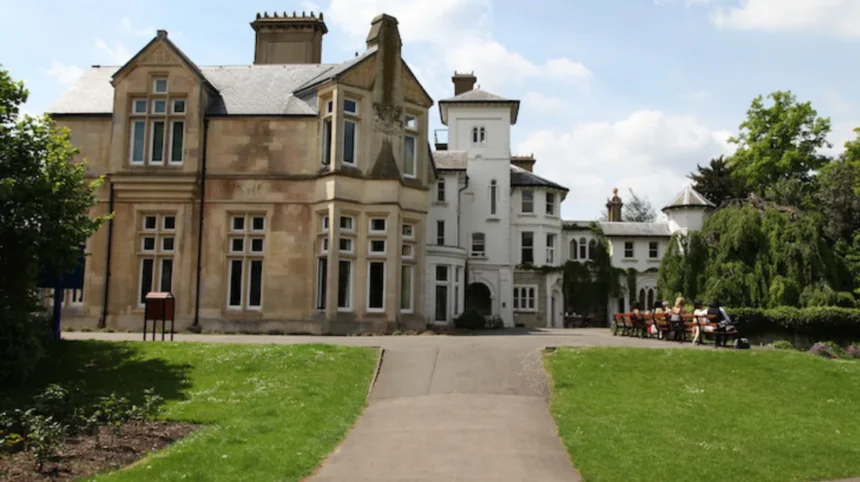
Stephens House and Gardens is Barnet’s clearest publicly accessible historic-house destination, combining a Grade II listed Victorian mansion, landscaped gardens, historic trees, community facilities and interpretation connected with Henry Charles Stephens.
Stephens House stands at 17 East End Road in Finchley. The building is also known historically as Avenue House. Historic England lists Avenue House as a Grade II building and describes it as an Italianate villa dating from about 1859, later substantially extended and refurbished by Henry Charles Stephens.
Henry Charles Stephens, commonly known as “Inky” Stephens, was the son of the inventor of Stephens’ blue-black ink. He acquired Avenue House in 1874. The property became closely associated with his life, business interests and public legacy in Finchley.
The history of the site is considerably older than the Victorian house. The land was known as Temple Croft Fields and was associated with the Knights Templar from 1243. From 1312 it belonged to the Knights Hospitallers until their estates were seized during the reign of Henry VIII in 1540.
The existing manor associated with the site was developed after Thomas Allen acquired the land in 1732. A later villa was constructed by the Reverend Edward Cooper in 1859. Stephens subsequently transformed the property and expanded the estate.
The grounds are particularly significant. Stephens commissioned landscape designer Robert Marnock, a leading nineteenth-century garden designer associated with the Gardenesque style, to develop the surrounding gardens. The estate retains a notable collection of trees and landscaped areas.
Stephens left the house and grounds for public enjoyment. After his death in 1918, the property was used as a military hospital. The estate was formally opened to the public in 1928 following a legal and administrative dispute concerning its future.
Visitors therefore encounter more than a Victorian building. Stephens House represents the transition from private estate to public community asset.
The house also demonstrates how historic buildings acquire new functions. It has served as a hospital, public library, local-government offices and a modern venue for conferences, celebrations and community activities.
As you explore the modern site, you are crossing land with a deep heritage. Read about the full to understand its origins.
What can visitors see at Stephens House and Gardens?
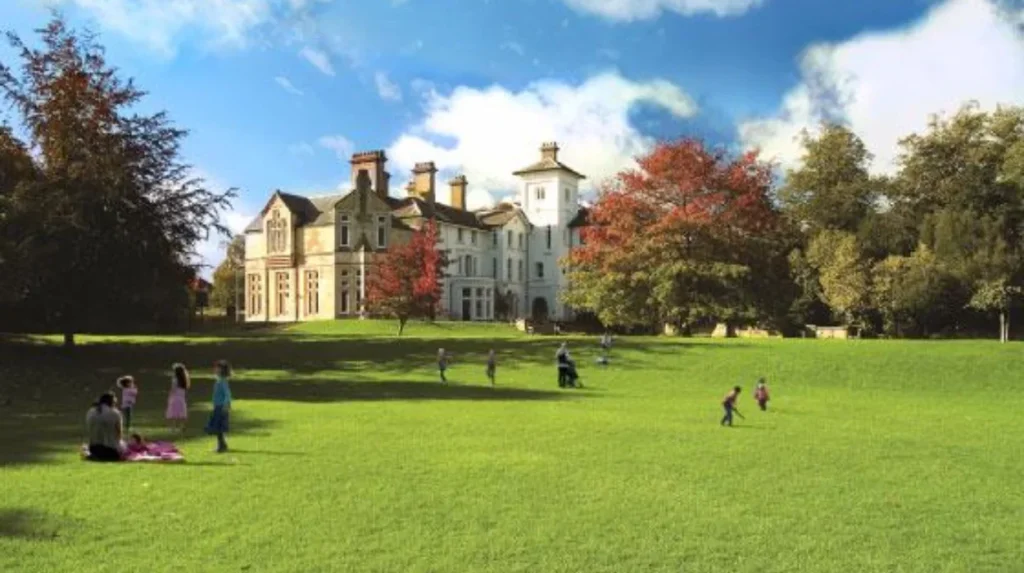
Visitors to Stephens House and Gardens can experience the historic mansion, landscaped grounds, mature trees, heritage features, community spaces and the legacy of Henry Charles Stephens, while the estate provides a publicly accessible green setting in Finchley.
The house provides the architectural focus of the estate. Its Victorian Italianate character includes stuccoed elevations, a slate roof, tall chimneystacks and a substantial multi-storey arrangement. Historic England records its architectural development and later alterations.
The building originally contained rooms including a library, school rooms and bedrooms. Stephens lived in the property from 1878. The building therefore provides a direct connection with nineteenth-century domestic life and the commercial success of the Stephens ink business.
The surrounding gardens provide a separate heritage experience. Historic England places the Avenue House Grounds on the Register of Parks and Gardens of Special Historic Interest at Grade II. Barnet Council identifies Stephens House and Gardens as one of the borough’s five nationally registered historic parks and gardens.
The estate covers approximately 10 acres. Its historic tree collection is an important feature of the grounds. The landscape reflects the Victorian Gardenesque approach, in which individual trees and plants were displayed for their form and character within a designed setting.
The estate also contains historic outbuildings and facilities associated with its later community use. Today, these spaces support events, meetings, celebrations, exhibitions and other activities.
The Stephens Collection provides an additional connection with the history of the Stephens family and their ink business. Access arrangements for collection material differ from general garden access, so visitors should check the venue’s current arrangements before planning a specialist heritage visit.
The estate is particularly useful for travellers who want a heritage attraction that does not require a full-day excursion outside North London. Its combination of architecture, gardens and social history creates a compact heritage destination within Barnet.
What is the history of Wrotham Park near Barnet?
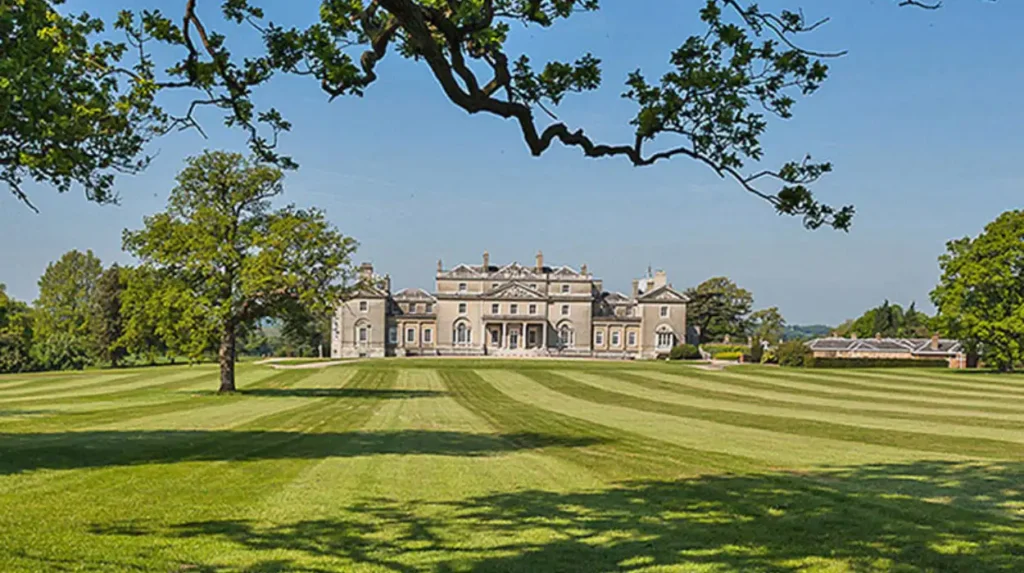
Wrotham Park is an eighteenth-century Palladian country house and registered historic landscape near Barnet, designed by Isaac Ware for Admiral John Byng in 1754 and associated with Capability Brown’s landscape work from about 1765.
Wrotham Park is one of the most important historic estates associated with the Barnet area. The estate lies close to Barnet and Potters Bar and extends across the administrative boundary between the London Borough of Barnet and Hertsmere in Hertfordshire.
The present country house was built for Admiral John Byng in the mid-eighteenth century. Architect Isaac Ware designed the house in the Palladian tradition. Palladian architecture derives from the work of Renaissance architect Andrea Palladio and became influential in Britain during the seventeenth and eighteenth centuries.
The estate had an earlier history. In 1750, Admiral Byng acquired approximately 150 acres of the Pinchbank estate. He built the present house on approximately the same location as an earlier property and renamed the estate Wrotham Park after the Byng family’s earlier home in Kent.
The landscape became particularly important under George Byng, John Byng’s nephew. Around 1765, landscape designer Lancelot “Capability” Brown worked on the park, with surveyor Samuel Lapidge. The estate was subsequently enlarged in phases, reaching approximately its present extent by the nineteenth century.
Historic England records the park as a Grade II registered historic park and garden. The landscape includes eighteenth-century parkland associated with Brown, later nineteenth-century modifications and early nineteenth-century pleasure grounds laid out in the Gardenesque style.
The house itself is separately listed at Grade II*. Historic England records the 1754 country house and stable block, later additions and nineteenth-century architectural alterations.
A major event occurred in 1883 when a fire gutted the house. The building was subsequently reconstructed using the original design while incorporating stronger Victorian construction techniques. The estate therefore contains both eighteenth-century design and nineteenth-century rebuilding history.
Wrotham Park is also notable for its scale. The registered landscape covers approximately 116 hectares, while the wider estate is substantially larger. The setting includes parkland, valleys, a lake and long views across surrounding countryside.
Can you visit Wrotham Park as a normal tourist attraction?
Wrotham Park is privately owned and is not a normal daily public attraction, so visitors should not expect unrestricted access to the house or estate; access occurs through specific events, private bookings or other authorised arrangements.
This distinction is essential when planning a Barnet heritage itinerary. Wrotham Park is an important historic site, but heritage status does not automatically create public access.
Historic England specifically notes that many protected historic places are not open to the public. Wrotham Park remains in private ownership, making it different from Stephens House and Gardens.
The estate has nevertheless hosted organised access opportunities. The Open House Festival, for example, has listed Wrotham Park as a historic-house visit, providing an opportunity to see the property under an organised access arrangement.
This type of access is different from ordinary museum admission. Availability depends on the event or authorised activity. Visitors should check the current organiser or estate information before travelling.
Wrotham Park is therefore best treated as a special-access heritage destination rather than a permanently open attraction.
Its exterior and surrounding landscape remain important parts of the historic character of the Barnet–Potters Bar area. The estate sits near major roads but retains a substantial rural landscape. Historic England records the park’s long views, valleys, lake and historic planting structure.
The estate also demonstrates the historic relationship between Barnet and the surrounding Hertfordshire countryside. Modern administrative boundaries do not always match historic estates. Wrotham Park is a clear example because the registered landscape is associated with both Greater London and Hertfordshire.
For visitors, the practical lesson is simple: research access before travelling. Do not assume that a listed country house is open simply because it appears on heritage maps or tourism websites.
Which historic houses can you see around Monken Hadley?
Monken Hadley contains a concentrated group of historic houses and rural buildings, including Mount House, historic properties around Hadley Green and houses associated with the former Enfield Chase landscape, although most are private or have restricted access.
Monken Hadley provides one of Barnet’s strongest historic residential landscapes. Barnet Council identifies the area as a conservation area characterised by historic buildings, winding lanes, common land and mature native trees.
The area developed around ancient routes. The Great North Road, historically one of the principal routes between London and northern England, passed through Chipping Barnet, Hadley Green and Hadley Highstone before continuing towards Potters Bar.
This transport history influenced the development of substantial houses along the route. During the eighteenth and nineteenth centuries, Monken Hadley acquired a collection of small and larger houses associated with a predominantly rural society.
Mount House is one of the best-known historic properties in the area. Barnet Council records that Mount House had been built by 1754. It stands within the historic landscape associated with Hadley Common.
The house has an important educational and intellectual history. It was associated with surgeon Joseph Henry Green, who lived there between 1836 and 1863. Green was associated with Samuel Taylor Coleridge and later wrote and edited works connected with Coleridge’s philosophical ideas.
Mount House later became associated with St Martha’s School and subsequently with Mount House School. Its current use means it should not be treated as a conventional open house attraction.
The surrounding Hadley Common provides a more practical visitor experience. The common was once part of Enfield Chase, a large royal hunting landscape associated with Tudor monarchs. Local residents historically had rights to graze animals and collect firewood.
Following the division of Enfield Chase after 1777, approximately 240 acres in the parish of Monken Hadley became Hadley Common. The common retained much of its wooded character, creating an important landscape setting for nearby historic houses.
Visitors can therefore explore Monken Hadley as a historic landscape walk rather than expecting a sequence of open stately homes.
The village also has a direct connection with the Battle of Barnet of 1471, an important conflict during the Wars of the Roses. Barnet Council identifies the battlefield as taking place within sight of St Mary the Virgin in Monken Hadley.
Historic houses around Hadley Green form part of this wider setting. Some are private residences, so visitors should view them from public roads and respect property boundaries.
What historic houses can you see in Finchley?
Finchley contains several historic properties and landscapes linked to former manors, agricultural estates and Victorian suburban development, with Stephens House providing the strongest combination of public access, architectural heritage and designed landscape.
Finchley’s historic character developed from a rural landscape that gradually became part of the expanding London suburban area. Barnet Council records Finchley as a Saxon place name, with its early landscape dominated by woodland and agricultural activity.
The area was associated with the Bishop of London by the eleventh century. Woodland supplied fuel and supported pig husbandry, while later land clearance created Finchley Common. By the medieval and early modern periods, agriculture and transport had become increasingly important.
Finchley Manor, also known as the Manor House, represents this earlier estate tradition. Historical records associate the property with the Allen family and the former manor of Finchley. The present building has eighteenth-century origins and later alterations.
Finchley Manor is associated with the Sternberg Centre for Judaism, so it does not operate as a standard stately-home attraction. Visitors should therefore distinguish between seeing a historic property and entering a publicly operated heritage house.
Stephens House developed within this same historic landscape. The site demonstrates how former rural and manorial land was transformed into a nineteenth-century villa estate and later a public community facility.
Finchley also contains historic conservation areas and individual listed buildings. Finchley Garden Village, for example, reflects the transition from rural settlement to planned suburban development. Barnet Council records the earlier agricultural landscape, Finchley Common and the historic road network that preceded twentieth-century expansion.
This makes Finchley valuable for visitors interested in architectural history beyond traditional country houses. Its heritage includes manor houses, Victorian villas, planned residential areas, historic roads and surviving green spaces.
For a short heritage visit, Stephens House offers the clearest destination. For a longer walking itinerary, visitors can combine the house and gardens with nearby historic streets and conservation areas.
How do Barnet’s historic estates reflect the area’s development?
Barnet’s historic houses demonstrate a clear transition from medieval woodland and manorial land to royal hunting grounds, country estates, Victorian villas and modern suburban communities, preserving evidence of changing ownership, architecture, transport, agriculture and public land use.
Barnet’s historic estates cannot be understood separately from its landscape history. Before large-scale suburbanisation, much of North London consisted of woodland, common land, farmland and individual estates.
The medieval landscape included manors controlled by religious and ecclesiastical institutions. Finchley was associated with the Bishop of London, while Temple Croft Fields had connections with the Knights Templar and Knights Hospitallers.
Royal hunting also shaped the area. Enfield Chase covered a large area north of London and was associated with Tudor royal hunting. Hadley Common remains an important surviving component of this historical landscape.
The eighteenth century brought major changes in estate design. Wrotham Park demonstrates the country-house model, with a Palladian mansion, formal grounds and a large landscaped park influenced by Capability Brown.
The nineteenth century introduced another type of historic property. Stephens House represents the prosperous Victorian villa estate, combining a substantial residence with professionally designed gardens and private landholding.
The twentieth century brought further transformation. Stephens House became a hospital, library and council facility before developing into its current community and heritage role. Wrotham Park remained privately owned, while other historic houses became schools, residential properties or institutional buildings.
This pattern explains why Barnet has fewer conventional stately-home attractions than counties such as Kent, Surrey or Hertfordshire. Urban development changed the historic landscape, while many surviving houses retained private or institutional uses.
The borough still contains nationally protected historic landscapes. Barnet Council currently identifies five registered historic parks and gardens, including Stephens House and Gardens, East Finchley Cemetery and St Marylebone Crematorium, Golders Green Crematorium, St Pancras and Islington Cemetery and Crematorium, and Hoop Lane Jewish Cemetery.
Not all five are country estates, but their inclusion demonstrates the wider importance of designed landscapes within Barnet’s heritage.
Explore More Area Guide
Barnet Public Art: Sculptures, Murals and Art Trails 2026
Barnet Urban Growth and History: North London 2026
How should you plan a historic-house visit in Barnet?
Plan Barnet heritage visits around access status, opening arrangements, transport, public rights of way and conservation requirements, with Stephens House suited to regular visits and Wrotham Park and private historic houses requiring advance confirmation or public-road viewing.
Stephens House is the simplest starting point because its gardens are designed for public enjoyment and the estate operates as an active community and events venue. The house itself has specific access arrangements, including guided access for some areas.
Visitors interested in architecture should allow time for both the mansion and gardens. The Grade II designation of the house and the Grade II registration of the grounds make the property significant at both building and landscape levels.
Wrotham Park requires a different approach. Its private ownership means visitors should look for authorised events or organised access opportunities rather than arriving expecting standard admission. Historic England confirms its protected status and private-estate character.
Monken Hadley works particularly well as a walking-based heritage destination. The conservation area contains historic buildings, common land, ancient routes and landscape features associated with the Battle of Barnet and Enfield Chase.
Visitors should remain on public routes when viewing private houses. Listed status does not provide a right of entry. Photography should also respect residents and property boundaries.
For transport planning, Finchley and Barnet have strong public-transport connections with central London. Wrotham Park sits near Barnet, Potters Bar, Hadley Wood and Cockfosters, but the estate itself remains private. Organised-event information should be checked before travelling.
The best itinerary depends on the visitor’s objective. A traveller seeking public access to a historic house should prioritise Stephens House. A visitor interested in landscape history should explore Monken Hadley and Hadley Common. Someone researching eighteenth-century country-house architecture should investigate Wrotham Park through authorised access opportunities.
Why are Barnet’s historic houses important for visitors today?
Barnet’s historic houses preserve evidence of North London’s transformation from rural and ecclesiastical landscapes into an urban borough, giving visitors access to Victorian gardens, Georgian country-house design, medieval routes, royal hunting landscapes and surviving conservation areas.
Barnet’s heritage value extends beyond individual buildings. Historic houses act as reference points for understanding how land use changed over several centuries.
Stephens House shows the Victorian development of a substantial private villa and its eventual transformation into a public asset. Its gardens retain historic landscape characteristics while the house continues to support modern community functions.
Wrotham Park represents a different heritage model. Its Palladian architecture and designed parkland demonstrate the eighteenth-century country-estate tradition. The involvement of Isaac Ware and Capability Brown gives the estate architectural and landscape significance.
Monken Hadley provides another layer. Its historic houses sit within a landscape shaped by ancient roads, common rights, woodland, royal hunting and the Wars of the Roses.
These sites also demonstrate the importance of conservation. Historic England’s statutory listing system protects buildings and registered landscapes because of their special architectural or historic interest. Barnet’s conservation areas provide an additional framework for protecting the character of historic neighbourhoods.
For tourists, this creates a heritage experience different from visiting a single large stately-home attraction. Barnet’s historic environment is distributed across houses, gardens, streets, commons and former estates.
The most practical conclusion is therefore straightforward. Stephens House and Gardens is the principal publicly accessible historic-house destination. Wrotham Park is the major country estate requiring authorised access. Monken Hadley and Finchley provide wider historic landscapes containing important private and institutional houses.
Together, these places reveal how Barnet evolved from a predominantly rural landscape into one of North London’s major urban boroughs while retaining significant evidence of its earlier history.
What is the best historic house to visit in Barnet?
Stephens House and Gardens in Finchley is the best publicly accessible historic-house destination in Barnet. The Grade II listed Victorian mansion sits within approximately 10 acres of landscaped gardens and has strong connections with Henry Charles Stephens.