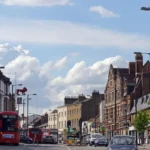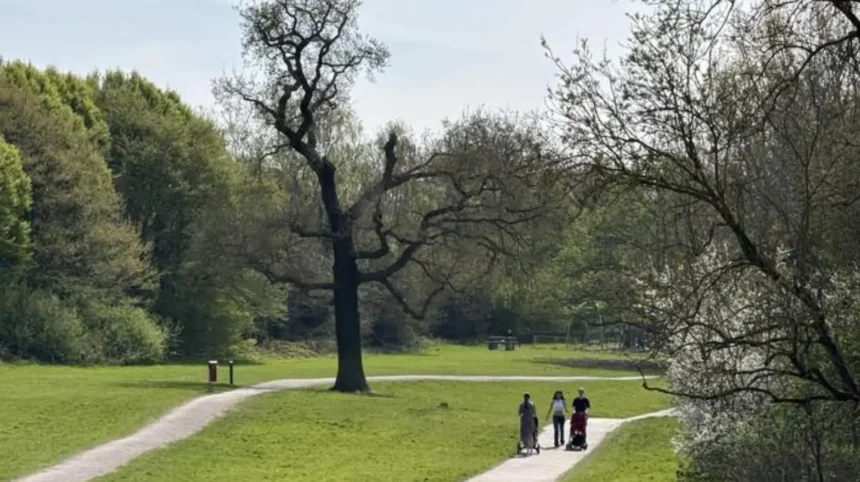
Barnet is one of North London’s greenest boroughs, combining established parks, ancient woodland, open fields, river valleys, commons and historic streets. Its walking landscape changes noticeably through spring, summer, autumn and winter. This seasonal variety makes Barnet suitable for short local walks, longer countryside-style routes and heritage-focused exploration.
- What makes Barnet a good destination for seasonal walking?
- Which Barnet walks are best for spring?
- Which Barnet walks are best for summer?
- Which Barnet walks are best for autumn?
- Which Barnet walks are best for winter?
- How should you choose a Barnet walk for each season?
- What should visitors know before walking in Barnet?
- Why are Barnet’s seasonal walks important for the borough’s future?
Barnet Council’s 2026–2036 Parks and Open Spaces Strategy records more than 250 parks and open spaces covering around 1,200 hectares, equivalent to about 20% of the borough. It also states that roughly one-third of Barnet is designated Green Belt. These spaces support recreation, biodiversity, physical activity and access to nature.
The borough also has established walking infrastructure. The Dollis Valley Greenwalk covers 10 miles from Moat Mount in Mill Hill through Barnet towards Hampstead Heath. The route is mostly flat and uses hard surfaces, although weather conditions can create muddy or icy sections.
For visitors, the best seasonal walk depends on landscape, daylight, ground conditions and the type of experience required. Spring suits woodland and wildflower areas. Summer favours longer valley and countryside routes. Autumn brings stronger woodland colour and historic landscapes. Winter is better suited to shorter, accessible and mainly paved routes.
What makes Barnet a good destination for seasonal walking?
Barnet provides year-round walking through parks, woodland, commons, fields, river valleys and historic neighbourhoods. Its routes range from accessible paved paths to uneven countryside trails, giving visitors different options for weather, daylight and seasonal landscape conditions.
Barnet’s walking offer is unusually varied for an outer London borough. The council identifies formal parks and gardens, wild landscapes, Green Belt land and leafy river valleys as major components of its open-space network.
This landscape creates distinct seasonal walking opportunities. Woodland areas become particularly attractive when spring vegetation develops and when autumn foliage changes. Open fields provide expansive views during summer. Paved park routes remain useful during wetter or colder months.
The borough also provides organised walking opportunities. Barnet Council currently promotes seven health walks each week, alongside Healthy Heritage Walks and Active Trails. Healthy Heritage Walks and Active Trails are free, while organised Health Walks have a charge.
Walking therefore works for several visitor profiles. Tourists can combine green spaces with heritage. Residents can use short routes for regular exercise. Digital nomads and business travellers can use a morning or evening walk to explore areas outside central London.
Seasonal walking also requires attention to daylight. Barnet Council publishes park closing times that change throughout the year. For example, scheduled closing times range from 4.30pm during parts of winter to 9.30pm in early summer.
Which Barnet walks are best for spring?
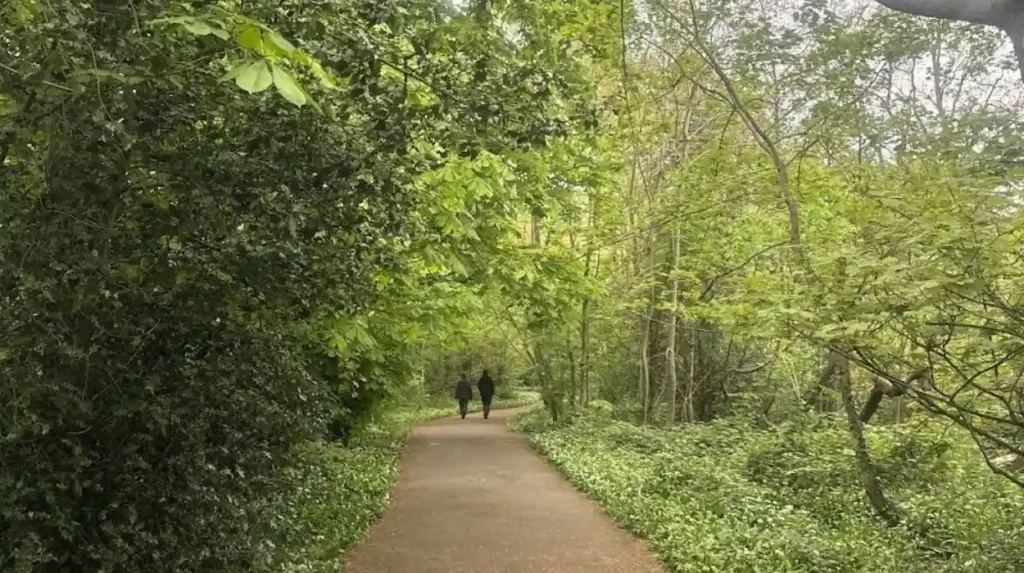
Spring is particularly suitable for Totteridge Fields, Oak Hill Wood, Totteridge Common and Dollis Valley routes because vegetation becomes active, wildflowers appear and woodland landscapes become greener. These locations combine natural habitats with established footpaths and countryside-style scenery.
Spring is one of the strongest seasons for exploring Barnet’s natural landscapes. Longer daylight improves walking conditions, while vegetation provides a clear seasonal change across fields, woodland and river corridors.
Totteridge Fields
Totteridge Fields is a strong spring choice because it contains traditional countryside habitats within Barnet. London Wildlife Trust describes the seven-hectare reserve as a site with ancient trees and insect interest that supports substantial wildlife activity during spring and summer.
The reserve sits along Hendon Wood Lane in the Totteridge area. Its landscape includes unsurfaced footpaths, hedgerows and fields. The London Outer Orbital Path runs along its northern boundary. Access includes kissing gates, and cattle graze the site.
Visitors should use suitable footwear because the paths are mainly unsurfaced. The landscape is particularly appropriate for visitors seeking a countryside experience without leaving London.
Oak Hill Wood
Oak Hill Wood provides a different spring experience. London Wildlife Trust describes it as a steeply sloping medieval woodland in East Barnet, with rare trees and flowers and habitat suitable for bats.
The woodland sits beside Oak Hill Park. This combination allows walkers to move between managed parkland and more natural woodland landscapes.
Oak Hill Park itself contains gardens, wildlife interest, a café, sports facilities and other visitor amenities. Barnet Council records the park at Parkside Gardens in East Barnet.
Totteridge Common
Totteridge Common is another useful spring location because the surrounding landscape links woodland, open fields and the Dollis Brook valley. Barnet Council’s Totteridge Healthy Heritage Walk uses mostly unpaved ground through woodland and fields and is circular. The council states that the route is unsuitable for buggies and wheelchair users.
Spring is therefore particularly useful for walkers who prioritise vegetation, wildlife habitats and countryside scenery rather than fully accessible surfaces.
Which Barnet walks are best for summer?
Summer is the best season for longer Barnet routes such as the Dollis Valley Greenwalk and Totteridge Fields because extended daylight supports longer walks. Open fields, river valleys and Green Belt landscapes provide varied scenery while hard-surface sections support steady walking.
Summer provides the longest daylight period and the greatest flexibility for longer routes. This makes the Dollis Valley Greenwalk one of the most practical choices.
Dollis Valley Greenwalk
The Dollis Valley Greenwalk is a 10-mile route connecting Moat Mount in Mill Hill with Hampstead Heath through the Dollis Valley. Barnet Council states that it can take up to six hours and is mostly flat, with hard surfaces that suit walkers, runners and wheelchair users.
The route crosses multiple green spaces rather than functioning as a single enclosed park. It therefore provides a broader picture of Barnet’s landscape.
The route also demonstrates why summer is valuable for longer walks. Six hours of walking requires adequate daylight, water and preparation. Weather conditions remain important because the council specifically notes that some sections become muddy or icy.
The Greenwalk is also connected to biodiversity improvements. Barnet Council identifies wildflower meadows, grassland management, river care, improved footpaths and better signage as elements of its ongoing management approach.
Totteridge Fields in summer
Totteridge Fields becomes particularly relevant in summer because London Wildlife Trust identifies it as a traditional English countryside landscape that is rich in life during spring and summer. The reserve contains mature trees, fields and hedgerows.
Barnet Council also records summer wildflowers in Totteridge Fields, including common knapweed, tufted vetch, selfheal and creeping thistles.
This makes the site suitable for nature-focused walking. Visitors should remain on established paths and respect grazing animals.
Totteridge and Whetstone
Totteridge offers another summer option through its network of commons, fields and historic landscapes. The conservation area sits along a gravel ridge and slopes towards Dollis Brook and Folly Brook. Open land forms part of the London Green Belt.
The landscape combines residential streets with open countryside. This gives visitors a route that is both accessible from an urban area and visually rural.
Which Barnet walks are best for autumn?
Autumn is especially suited to Oak Hill Wood, Monken Hadley Common, Hadley Green and Barnet’s heritage routes. Woodland foliage, mature trees, historic landscapes and open commons create strong seasonal contrasts while shorter routes reduce exposure to declining daylight.
Autumn changes the character of Barnet’s established woodland and historic landscapes. Mature trees become the central feature, while cooler temperatures make moderate-distance walking comfortable.
Monken Hadley Common
Monken Hadley Common is a strong autumn choice because it combines woodland, open land and historic surroundings. Barnet Council’s conservation-area documentation describes extensive common land, woodland and Hadley Green as important opportunities for informal recreation, including walking and picnicking.
The area also forms part of the London Outer Orbital Path, commonly known as the LOOP. The LOOP is a long-distance walking route around Greater London.
The common has additional historic significance. Barnet Council records that the area was once part of Enfield Chase, a large private hunting estate dating from the period after the Norman Conquest.
Hadley Green and the Barnet–Hadley Walk
Barnet Council’s Healthy Heritage Walk through Barnet and Hadley contains more than 10 heritage points of interest. The route covers High Barnet and Hadley and includes the history of Chipping Barnet and the Battle of Barnet at Hadley Green.
This route is mainly urban rather than a countryside trail. That distinction makes it useful in autumn when daylight decreases and walkers want a route containing streets, historic buildings and open spaces.
The route also passes Hadley Highstone. A stone obelisk erected in 1740 commemorates the Battle of Barnet. The route continues towards St Mary the Virgin Church in Monken Hadley.
As you explore the modern landscape, you are crossing land with a deep heritage. Read about the full to understand its origins.
Barnet’s historical walking landscape is therefore not separate from its natural environment. Hadley Green, Monken Hadley Common and surrounding paths demonstrate how historic settlements, old routes and open land remain connected.
Which Barnet walks are best for winter?
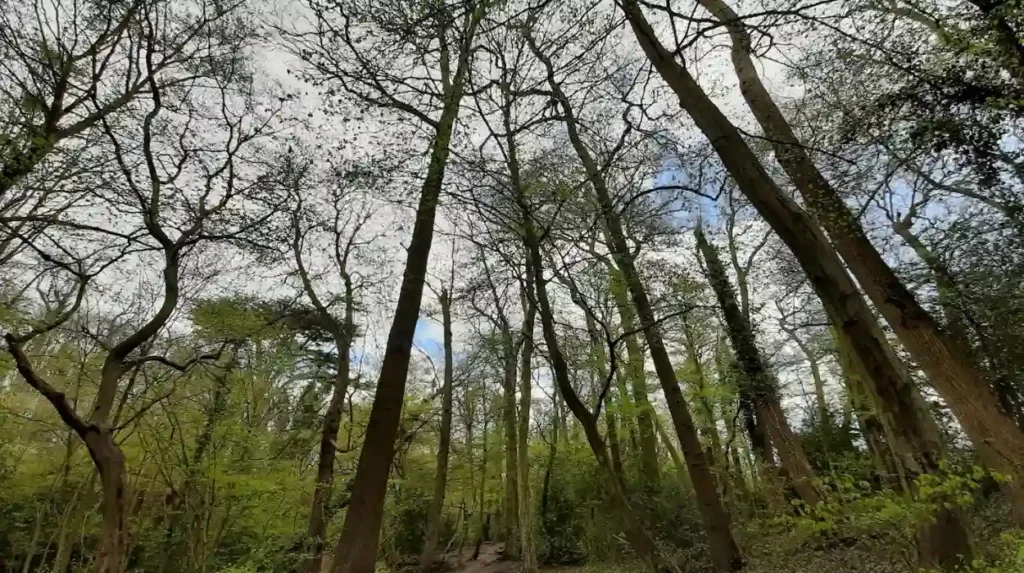
Winter is best for shorter routes with reliable surfaces, including sections of the Dollis Valley Greenwalk, Hendon to Mill Hill and selected park walks. Reduced daylight makes route length, closing times, footwear and weather conditions important factors.
Winter walking in Barnet requires more attention to surfaces and daylight than summer walking. Mud, frost and ice affect unpaved paths, while park closing times become significantly earlier.
Hendon to Mill Hill Walk
Barnet Council’s Hendon to Mill Hill Walk provides a useful winter option because it is described as a gentle stroll combining urban heritage and leafy green spaces. The route is mostly paved, although some park sections become muddy during wet weather. It is not circular.
The route works well for visitors who want to combine walking with local history rather than undertaking a long countryside trail.
Its mixture of paved streets and parkland also creates a practical balance between urban accessibility and outdoor scenery.
Short park walks
Barnet contains many smaller parks and open spaces that support shorter walks. The council’s park directory includes locations such as Oak Hill Park, Monken Hadley Common, Hadley Green, Riverside Walk and Woodside Park.
Shorter routes are particularly useful in winter because walkers can plan around daylight and weather conditions.
Barnet Council advises people attending walks during cold weather to wear warm clothing and suitable footwear. It also states that organised walks can be cancelled at short notice when conditions are unsafe.
The same principle applies to independent walking. Check the weather, daylight and ground conditions before setting out.
How should you choose a Barnet walk for each season?
Choose spring for woodland and wildflowers, summer for longer valley routes, autumn for woodland and heritage landscapes, and winter for shorter paved routes. Ground conditions, daylight, accessibility and park closing times should determine the final route.
Seasonal selection is more effective when walkers consider route characteristics rather than simply choosing a park.
Spring prioritises vegetation and wildlife. Totteridge Fields and Oak Hill Wood provide strong examples because both contain natural habitats and seasonal plant interest.
Summer prioritises distance and daylight. The 10-mile Dollis Valley Greenwalk is the clearest example because its maximum walking time is approximately six hours.
Autumn prioritises woodland and heritage. Oak Hill Wood, Monken Hadley Common and Hadley Green combine mature landscapes with historical features.
Winter prioritises surface reliability and manageable distances. Hendon to Mill Hill is suitable for this purpose because Barnet Council describes it as mostly paved.
Accessibility also needs separate consideration. Not every attractive countryside route is suitable for wheelchair users, buggies or visitors requiring step-free access. The Dollis Valley Greenwalk is mostly flat with hard surfaces, while the Totteridge Healthy Heritage Walk uses uneven, unpaved ground and is unsuitable for buggies and wheelchair users.
Explore More Area Guide
48 Hours in Barnet: Complete Two-Day Itinerary | North London 2026
How Diverse Is Barnet’s Culture? North London 2026
What should visitors know before walking in Barnet?
Visitors should check route surfaces, daylight, weather, park closing times, accessibility and wildlife-management conditions before walking. Suitable footwear is essential on unpaved routes, while longer walks require water, navigation and sufficient daylight for completion.
Preparation is straightforward but important.
Barnet’s parks do not have one universal closing time. The council operates seasonal closing schedules. During part of January, parks close at 4.30pm, while scheduled closing times reach 9.30pm between 4 June and 15 July.
Visitors should therefore plan departure and finishing times around the specific season.
Weather affects route surfaces. The Dollis Valley Greenwalk can become muddy or icy, while the Totteridge route includes uneven unpaved ground.
Wildlife areas also require responsible behaviour. Totteridge Fields contains grazing cattle, and the reserve has several kissing-gate entrances.
Walking etiquette includes keeping to designated paths, closing gates, controlling dogs where required and avoiding disturbance to wildlife.
Visitors should also distinguish between a park walk and a nature-reserve walk. A formal park normally provides managed recreational facilities. A nature reserve places greater emphasis on habitat protection and biodiversity.
Why are Barnet’s seasonal walks important for the borough’s future?
Barnet’s seasonal walking network supports recreation, physical activity, biodiversity, local heritage and access to green space. The borough’s 2026–2036 parks strategy establishes long-term priorities for maintaining, improving and connecting these landscapes.
Barnet’s parks have significance beyond leisure. The council’s 2026–2036 Parks and Open Spaces Strategy identifies physical activity, wellbeing, biodiversity, environmental protection, culture and community cohesion among the benefits of the borough’s open spaces.
The strategy records more than 250 parks and open spaces covering approximately 1,200 hectares. Around one-third of Barnet is Green Belt.
This scale explains why seasonal walking is an important part of the borough’s visitor and resident experience.
The future management of these spaces also focuses on biodiversity. Barnet Council identifies improvements such as wildflower meadows, grassland management, river care, better footpaths and improved entrances on the Dollis Valley Greenwalk.
Walking therefore provides direct access to several parts of Barnet’s environmental infrastructure.
For visitors, the practical conclusion is simple. There is no single best Barnet walk for every season. Totteridge Fields and Oak Hill Wood stand out in spring. Dollis Valley is particularly strong in summer. Oak Hill Wood and Monken Hadley suit autumn. Hendon to Mill Hill and shorter park routes are practical winter choices.
Together, these routes show the breadth of Barnet’s landscape. They connect woodland, open fields, river valleys, commons, parks and historic settlements. The result is a four-season walking destination within North London, with options ranging from short urban heritage walks to a 10-mile green corridor.
What is the best walk in Barnet for spring?
Totteridge Fields and Oak Hill Wood are excellent spring walking locations in Barnet. Both provide woodland, fields, mature trees and seasonal plant interest. Totteridge Fields is particularly suitable for visitors seeking a countryside-style experience within North London.