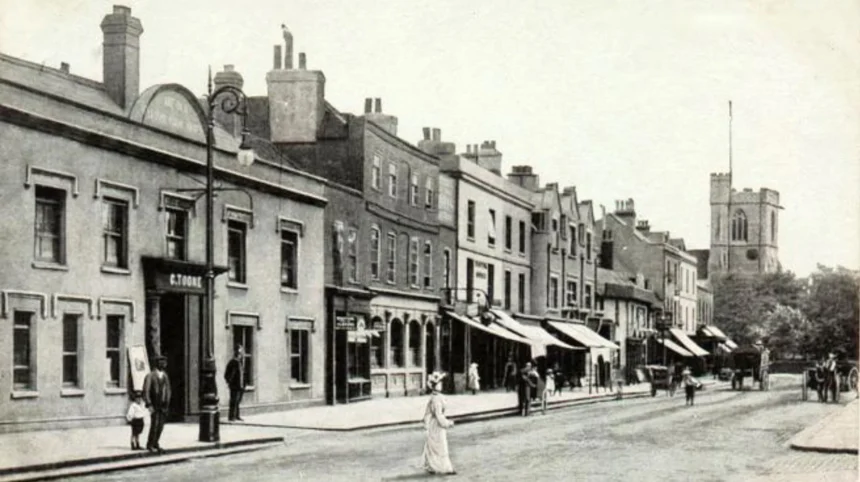
Barnet has a long history that stretches back to the medieval period, with the settlement of Chipping Barnet developing as an important market centre in the 12th century. The strongest documented milestone is August 1199, when King John granted a market charter to the Lord of the Manor. This charter formally recognised an established trading centre and helped shape the town that exists today.
- When was Barnet first established as a settlement?
- Why is 1199 an important date in Barnet’s history?
- Was Barnet inhabited before the 12th century?
- How did woodland clearance contribute to Barnet’s origins?
- What was Chipping Barnet like in the medieval period?
- How did Barnet’s market shape the town?
- What role did St John the Baptist Church play in early Barnet?
- Did the Battle of Barnet affect the town’s history?
- How did roads and travel help Barnet grow?
- When did Barnet become the modern London Borough?
- Why is Barnet’s medieval origin important for visitors today?
- What is the simplest answer to when Barnet was established?
- How has Barnet’s origin shaped its identity?
- What should visitors remember about Barnet’s origins?
Barnet was not created as a town in a single year. Its development took place over centuries. Woodland clearance, roads, agriculture, medieval landholding, religious institutions and commercial activity all contributed to its growth.
The name Barnet has Anglo-Saxon origins. Barnet Council explains that it derives from the Saxon word “baernet”, associated with a clearing in a forest created by burning. The word “Chipping” has a different origin. It comes from Old English “cēap”, meaning trade or market, reflecting the importance of commerce to the settlement.
The modern London Borough of Barnet is much newer. It was created in 1965, when Finchley and Hendon boroughs were combined with Chipping Barnet, East Barnet and Friern Barnet urban districts.
Understanding this distinction is essential. The historic settlement of Barnet dates to the medieval period, while the administrative borough dates from the 20th century.
When was Barnet first established as a settlement?
Barnet developed as a recognisable settlement during the 12th century, with its documented market charter of August 1199 providing the clearest landmark in its early development. The town grew around roads, woodland clearance, agriculture and medieval trade.
There is no single foundation date for Barnet comparable with the founding dates associated with some planned medieval towns. Instead, its history shows gradual development.
Barnet Council’s historical material identifies Chipping Barnet as developing during the 12th century as a market town associated with St Albans Abbey. The settlement occupied a strategically useful position on routes leading north from London.
The medieval town developed around the junction of routes that eventually became associated with the High Street and Wood Street. Barnet Council describes Chipping Barnet as beginning around a fork in the road running north from London, where the High Street currently meets Wood Street.
The 1199 market charter represents an important stage because medieval markets required formal authority. A market provided a recognised place where agricultural goods, livestock and other commodities could be exchanged.
The existence of the charter also demonstrates that Barnet had already developed enough commercial and settlement importance to receive royal recognition.
This means 1199 is best understood as a documented milestone rather than the literal date Barnet was founded.
The settlement continued expanding after the charter. Its location helped connect London with communities further north, while its market strengthened its role as a local commercial centre.
Why is 1199 an important date in Barnet’s history?
The year 1199 is important because King John granted a charter for a weekly market at Barnet in August that year. The charter is among the earliest recorded evidence of Barnet’s formal development as a recognised medieval market settlement.
A royal market charter gave legal recognition to regular commercial activity. In medieval England, markets were important economic institutions because they concentrated buying and selling in designated places and on designated days.
Barnet’s market became central to the identity of Chipping Barnet.
The term “Chipping” itself reflects this role. Barnet Council explains that the name comes from the Old English cēap, meaning trade or market. The name therefore preserves evidence of the settlement’s commercial character.
The market also contributed to the physical development of the town. Traders, customers, livestock handlers, craftsmen and travellers required services and accommodation. Commercial activity therefore supported inns, shops, workshops and other urban functions.
Barnet Council records that the market existed in different forms and locations from at least the 12th century. The historic market was originally located around the point where Wood Street divides from the High Street.
The market was later re-chartered by Elizabeth I in 1588, demonstrating the continued importance of commercial activity in the town.
The 1199 charter therefore provides one of the strongest answers to the question of when Barnet was established as a town.
Was Barnet inhabited before the 12th century?
Evidence for earlier activity exists in the wider Barnet area, but the historic town itself is not securely documented as a developed settlement before the medieval period. Barnet Council states that Barnet does not appear in the Norman Domesday Book of 1086.
This distinction matters because archaeological activity and permanent urban settlement are different historical categories.
The wider area contains evidence of earlier human activity, including ancient routes, woodland clearance and agricultural use. Roman activity is also associated with the broader region, although claims that a Roman settlement directly founded modern Barnet require careful treatment.
Local historical traditions have sometimes linked Barnet with Roman occupation. Barnet Council’s historical material records such traditions, including claims concerning a Roman encampment. These traditions do not establish a continuous Roman town on the site of medieval Chipping Barnet.
The absence of Barnet from Domesday Book is also significant.
The Domesday Book was the great survey commissioned by William the Conqueror in 1085–1086 to record landholding, resources and taxable assets across much of England. Barnet Council’s heritage material specifically notes that Barnet does not appear in the Norman survey.
That absence does not prove that nobody lived in the area in 1086. It shows that the place was not recorded under the name and administrative circumstances that would later identify Barnet as a prominent settlement.
The strongest documentary evidence for the emergence of the town therefore comes from the 12th and early 13th centuries.
How did woodland clearance contribute to Barnet’s origins?
Woodland clearance played an important role in Barnet’s early landscape. The name Barnet is linked to the Saxon “baernet”, meaning a clearing in woodland made by burning, while cleared land supported agriculture, grazing and later settlement growth.
Early medieval northern London contained extensive areas of woodland. Clearing trees created usable land for farming and settlement.
Barnet’s name preserves this environmental history. According to Barnet Council, “baernet” refers to a clearing in a forest made through burning.
The process of clearance created fields and meadows. Agricultural production then supported communities and generated surplus goods for local exchange.
Over time, roads and trading activity became increasingly important. A settlement positioned along routes between London and northern communities had a practical advantage.
The development of the market in 1199 built on this landscape.
Agricultural producers could bring goods to the market, while travellers created demand for food, accommodation and services. The market therefore connected rural production with wider regional commerce.
This combination of cleared land, agriculture, transport and trade explains why Barnet developed into a lasting settlement rather than remaining simply a rural clearing.
What was Chipping Barnet like in the medieval period?
Medieval Chipping Barnet was a market settlement connected to the estates of St Albans Abbey and positioned along important routes north of London. Its market, parish institutions and trading activity established the foundations of the historic town centre.
Chipping Barnet became closely associated with the Abbey of St Albans, a major Benedictine monastery and landholding institution in medieval Hertfordshire.
Barnet Council states that East Barnet and High, or Chipping, Barnet later belonged to the Abbot of St Albans until the Dissolution of the Monasteries in the 16th century.
The relationship with St Albans Abbey shaped local land ownership and administration.
Religion was another major component of medieval Barnet.
The Church of St John the Baptist on Wood Street provides important evidence of the area’s medieval development. Historic England records that the earliest church on the site was probably built around 1120. The earlier church was later replaced, with the present medieval building beginning in the early 15th century.
The church’s history demonstrates that Barnet possessed established religious institutions before the modern period.
The combination of market activity and parish life created a recognisable medieval town structure.
As you explore the modern High Street and historic centre, you are crossing land with a deep heritage. provides the wider historical background needed to understand how Barnet developed through later centuries.
How did Barnet’s market shape the town?
Barnet’s market was one of the central forces behind the town’s development. Established under the 1199 charter and later re-chartered in 1588, the market supported trade, livestock activity, services and the growth of the surrounding High Street.
Markets created economic concentration.
Instead of trade occurring only between scattered farms and households, a formal market brought sellers and buyers together at a recognised location.
Barnet’s market developed a strong livestock connection.
By the end of the 16th century, Barnet had become an important meat market. Barnet Council’s planning history records that by this period it was London’s main meat market before the later development of Smithfield’s dominance.
The market’s location changed over time.
The original market occupied the area around the junction of Wood Street and the High Street. Later arrangements placed market activity in different parts of Chipping Barnet.
The market also influenced the language of the area.
“Chipping Barnet” describes the market character of the town, while “High Barnet” became another established name. Barnet Council’s historical material records the use of High Barnet from at least the early modern period.
The market remains an important part of Barnet’s identity, even though its organisation and physical setting have changed substantially.

What role did St John the Baptist Church play in early Barnet?
St John the Baptist Church is one of Barnet’s most important surviving medieval landmarks. Historic England records an earlier church dating probably to around 1120, followed by the construction of the present medieval church from the early 15th century.
The church demonstrates that Barnet was not simply a commercial stopping point.
A permanent parish church required an established local population and religious organisation.
Historic England records that Hubert Walter, who later became Archbishop of Canterbury, served as rector of the church in the late 12th century. The first vicar was ordained in 1274.
The existing building contains substantial medieval fabric.
Construction of the present church began in the early 15th century. The west tower was begun in 1449 and completed in 1482, while the nave and chancel were completed around 1480.
These dates place the church firmly within the period when Barnet was already an established medieval town.
For visitors interested in the origins of Barnet, the church provides physical evidence that complements the documentary evidence of the market charter.
The surviving building also demonstrates how Barnet’s religious landscape developed alongside its commercial importance.
Did the Battle of Barnet affect the town’s history?
The Battle of Barnet took place in 1471 during the Wars of the Roses and became one of the defining historical events associated with the area. It occurred near Monken Hadley and reflected Barnet’s strategic position on major routes north of London.
The Battle of Barnet was fought on 14 April 1471 between forces supporting King Edward IV and the Earl of Warwick.
The Wars of the Roses were a series of dynastic conflicts involving rival branches of the English royal House of Plantagenet.
The battle occurred in the wider Barnet area rather than directly within today’s High Street.
Barnet Council identifies the battlefield as being within sight of St Mary’s Church at Monken Hadley. The church and surrounding landscape preserve important connections with the event.
The battle demonstrated the strategic significance of the routes through Barnet.
The area stood along the historic Great North Road, which connected London with northern England. Control of this route had military and economic importance.
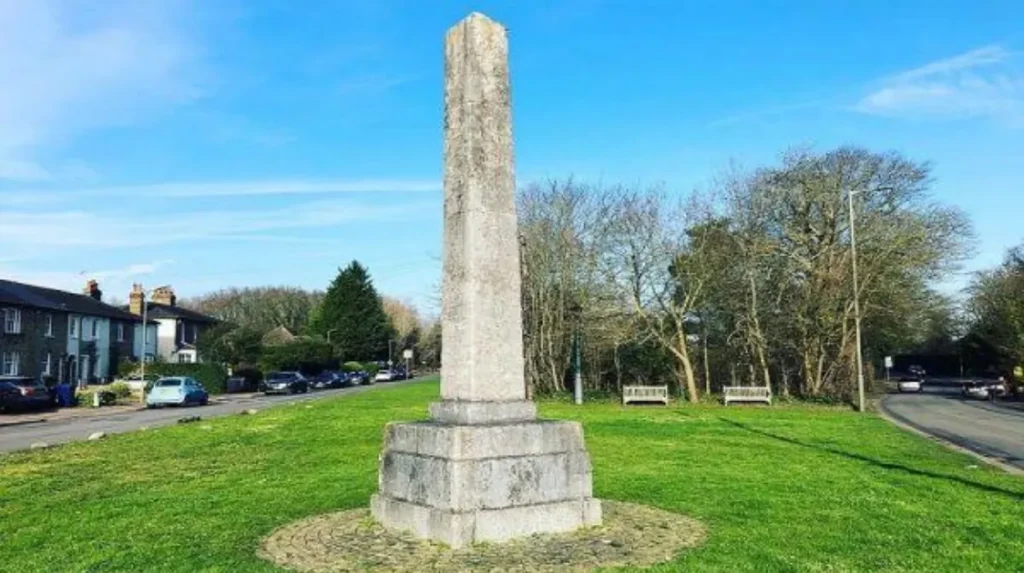
A battlefield memorial obelisk was erected in 1740 by Sir Jeremy Sambrook near the historic junction of the Great North Road and the old road to St Albans.
The battle therefore forms part of Barnet’s medieval legacy rather than its foundation story.
Barnet was already an established market town by 1471. The conflict added a major political and military episode to its history.
How did roads and travel help Barnet grow?
Barnet’s position on routes north from London supported its development as a market and travel centre. Roads connected the town with London, St Albans and northern England, bringing traders, livestock, coaches and other travellers through the settlement.
Transport has been central to Barnet’s history since the medieval period.
The settlement developed around a road junction. That location supported both local movement and longer-distance travel.
The Great North Road later became one of Britain’s major historic routes.
Barnet’s road position helped the town serve travellers moving between London and communities farther north.
The importance of the route continued into the coaching era.
Barnet Council records that before the construction of a new route through Hadley in 1826, as many as 150 coaches a day crossed Hadley Green.
This level of traffic illustrates how strongly Barnet’s economic development was connected to transport.
Inns, shops and service businesses developed around passing traffic. The High Street became both a commercial centre for local residents and a stopping point for travellers.
This historical pattern still affects how visitors experience Barnet.
Modern transport has changed dramatically, but the town’s central streets continue to follow routes shaped by centuries of movement.
When did Barnet become the modern London Borough?
The modern London Borough of Barnet was established in 1965, more than seven centuries after the 1199 market charter. It combined Finchley and Hendon with Chipping Barnet, East Barnet and Friern Barnet to create a new London borough.
The administrative history of Barnet is therefore separate from the history of the settlement.
Before 1965, the area contained several separate local authorities.
The creation of Greater London led to a major reorganisation of local government. The London Borough of Barnet was formed as part of this process.
Barnet Council confirms that the borough brought together Finchley, Hendon, Chipping Barnet, East Barnet and Friern Barnet.
The new borough incorporated places with different historical identities.
This explains why modern Barnet contains a much wider geographical area than the historic settlement commonly called Chipping Barnet or High Barnet.
The borough’s creation also explains why the phrase “Barnet history” can refer to two different subjects.
One subject is the history of the medieval town.
The other is the administrative history of the modern London borough.
Both are important, but they have different starting dates.
Why is Barnet’s medieval origin important for visitors today?
Barnet’s medieval origins remain visible through its historic street pattern, market tradition, churches, heritage buildings and connections with the Battle of Barnet. These features allow visitors to understand the area as a historic settlement rather than simply a modern London suburb.
The historic centre provides the clearest connection with Barnet’s origins.
Chipping Barnet’s High Street follows the commercial logic established by centuries of movement and trading activity.
St John the Baptist Church provides surviving medieval architectural evidence.
The wider Monken Hadley area preserves connections with the 1471 battlefield and historic roads.
Historic England’s Barnet heritage hub identifies medieval sites alongside extensive post-medieval and 20th-century heritage. Its records demonstrate that Barnet’s built environment developed continuously across multiple historical periods.
For tourists, this makes Barnet particularly useful for understanding the transition from medieval market settlement to modern London district.
Visitors can connect documentary dates with physical places.
The 1199 market charter explains the origin of Barnet’s commercial identity.
The early 12th-century church evidence demonstrates established religious activity.
The 1471 battle connects Barnet with national political history.
The 1826 road changes demonstrate the continuing importance of transport.
The 1965 borough formation explains the modern administrative geography.
Together, these milestones create a clear historical sequence.
What is the simplest answer to when Barnet was established?
Barnet began developing as a settlement during the 12th century, while August 1199 provides the clearest documented milestone because King John granted a weekly market charter. The modern London Borough of Barnet was created much later, in 1965.
There is no reliable single foundation year for the historic settlement.
The most accurate historical answer is therefore:
Barnet developed as a medieval settlement during the 12th century, and its market received a royal charter in August 1199.
This date is more useful than claiming that Barnet was simply “founded in 1199”.
The evidence indicates that settlement and commercial activity existed before the charter. The charter formalised the market and helped establish Barnet as a recognised market town.
Barnet’s name also points to an earlier landscape history. The Saxon-derived “baernet” refers to a forest clearing, while “Chipping” records the later importance of trade.
The modern borough has an entirely different foundation date.
Its administrative creation in 1965 brought together several existing authorities and communities.
For historical accuracy, the two dates should never be confused.
Explore More Area Guide
Best Connected Barnet Areas to Central London, North London 2026
How to Get Around Barnet by Public Transport
How has Barnet’s origin shaped its identity?
Barnet’s identity developed from three connected foundations: woodland clearance, medieval market activity and strategic transport routes. The 1199 market charter formalised its commercial role, while religious institutions, roads and later administrative reform shaped the Barnet recognised today.
Barnet’s origins explain several features of its present character.
The town’s name preserves its woodland past.
The name Chipping Barnet preserves its market history.
The High Street reflects centuries of commercial and transport activity.
St John the Baptist Church preserves medieval religious heritage.
Monken Hadley preserves connections with the 1471 battle.
The modern borough reflects 20th-century local government reform.
These layers show that Barnet did not emerge from a single event.
Its development was cumulative.
The settlement grew because its landscape supported agriculture, its position supported travel and its market supported commerce.
The 1199 charter formalised one of these functions. Later centuries expanded the town’s economic and transport roles.
The result is a historic London area where medieval foundations remain relevant to the modern visitor experience.
What should visitors remember about Barnet’s origins?
Visitors should remember that Barnet is a medieval market settlement rather than a town founded on one precise date. Its development accelerated during the 12th century, the market charter arrived in 1199, and the modern borough was created in 1965.
The most important historical dates form a clear timeline.
Barnet’s name reflects an Anglo-Saxon woodland landscape.
The settlement developed significantly during the 12th century.
King John granted a market charter in 1199.
A major early church existed by approximately 1120, according to Historic England’s assessment of St John the Baptist Church.
The Battle of Barnet took place in 1471.
Elizabeth I issued a new market charter in 1588.
Major road changes affected the area in 1826.
The London Borough of Barnet was created in 1965.
This sequence provides the clearest answer to the question “When was Barnet first established?”
Barnet’s roots are medieval, its documented market history begins in 1199, and its modern administrative identity dates from 1965.
For visitors exploring North London, this history gives the town centre a clear historical context. The streets, church, market tradition and surrounding heritage landscape represent different stages in a development that began centuries before Barnet became part of Greater London.
Barnet is therefore best understood not as a place founded on one day, but as a settlement that developed gradually from a medieval clearing and market centre into a major part of modern North London.
When was Barnet first established?
Barnet developed as a recognisable settlement during the 12th century. The most important documented date is August 1199, when King John granted Barnet a charter for a weekly market.