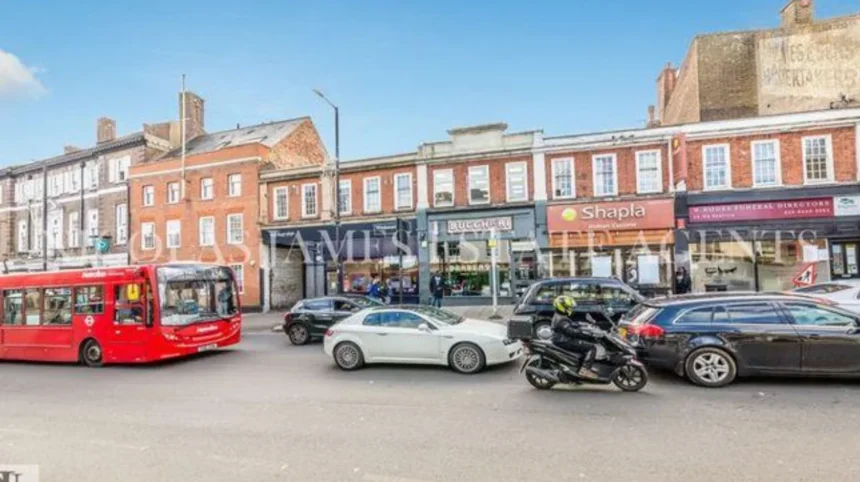
Barnet is a large North London borough that combines residential neighbourhoods, green spaces, shopping centres, historic areas and direct transport links into central London. For students visiting London, its main advantages are access to the Northern line, National Rail services, local amenities and accommodation options outside the most central tourist areas.
- Is Barnet a good location for students visiting London?
- How convenient is Barnet for travelling into central London?
- Which parts of Barnet are convenient for student visitors?
- Can students find affordable accommodation in Barnet?
- What makes Barnet useful for students on a limited budget?
- Does Barnet have enough things to do outside central London?
- Is Barnet practical for students who need study-friendly places?
- Is Barnet suitable for students who want to visit London’s universities?
- Is Barnet convenient for students travelling to London attractions?
- Is Barnet suitable for students staying for several days?
- What should students check before booking accommodation in Barnet?
- What are the main advantages of staying in Barnet as a student?
- What are the main limitations of staying in Barnet as a student?
- Is Barnet suitable for students visiting London overall?
The London Borough of Barnet is in North London and had 398,344 residents at the 2021 Census, making it the second-largest London borough by population according to Barnet Council’s Joint Strategic Needs Assessment. The borough covers a wide geographical area, so the experience differs between High Barnet, Finchley, Hendon, Golders Green, Edgware, Mill Hill and surrounding districts.
For a student visitor, location matters more than the borough name itself. A stay near a Northern line station provides a different experience from accommodation farther from rail services. Students should therefore assess the specific neighbourhood, station, journey time, accommodation cost and access to food and study facilities before booking.
Is Barnet a good location for students visiting London?
Barnet is suitable for students visiting London because it provides direct public transport, extensive local amenities, green spaces and accommodation choices while remaining outside central London. Its Northern line stations connect visitors with Camden, Euston, Tottenham Court Road, Leicester Square and Waterloo.
Barnet works particularly well for students who plan to spend substantial time in central London but do not need to stay beside major West End attractions.
The borough has several Northern line stations, including High Barnet, Totteridge & Whetstone, Woodside Park, West Finchley, Finchley Central, East Finchley, Golders Green, Brent Cross, Hendon Central, Colindale, Burnt Oak and Edgware. The exact station depends on the neighbourhood.
This creates a straightforward transport structure for visitors. High Barnet is at the northern end of the Northern line, while stations farther south provide progressively shorter journeys towards central London.
Barnet also has National Rail connections. New Barnet station is served by Great Northern and Thameslink services, providing another option for journeys beyond the immediate Underground network.
The borough therefore suits several student travel patterns. A visitor attending an event in central London can use the Underground. A student exploring destinations outside the Northern line network can combine Underground, National Rail and bus services.
The main consideration is distance. Barnet is not a single compact town centre. It is a large borough containing distinct communities. Students should select accommodation according to their daily destination rather than choosing any Barnet address simply because it carries the same borough name.

How convenient is Barnet for travelling into central London?
Barnet has strong connections with central London through the Northern line, with High Barnet services passing through Camden, Euston, King’s Cross St Pancras, Tottenham Court Road, Leicester Square, Charing Cross, Embankment and Waterloo.
Transport for London lists High Barnet on the Northern line, with southbound services continuing through major central London interchanges. A current TfL timetable shows High Barnet to Euston services passing through Camden Town, while the wider route continues towards King’s Cross St Pancras.
The route is particularly useful for students because several destinations are important to London universities, cultural institutions and visitor attractions.
Euston provides connections with National Rail and London Underground services. King’s Cross St Pancras provides access to major rail services and multiple Underground lines. Tottenham Court Road connects with the Central and Elizabeth lines. Leicester Square serves the West End. Waterloo provides connections with several transport services and National Rail.
Journey times depend on the starting station, service pattern and final destination. A student staying close to High Barnet station has a longer Underground journey than someone staying around East Finchley or Golders Green.
This makes station proximity an important accommodation factor.
Students should also check the TfL journey planner before travelling. Engineering works, delays and temporary service changes affect London transport. TfL currently publishes live station and service information, including disruption notices for High Barnet.
Which parts of Barnet are convenient for student visitors?
The most practical Barnet areas depend on transport needs, with High Barnet, Finchley, Golders Green, Hendon, Mill Hill and Edgware offering different combinations of Underground access, shops, food, green space and connections to central London.
High Barnet provides access to the northern end of the Northern line. It has a traditional town-centre environment with local shops, cafés, restaurants and community facilities.
Finchley contains several Northern line stations, including Finchley Central and West Finchley. This gives visitors several transport points and access to established residential and commercial areas.
Golders Green sits farther south on the Northern line. Its location provides convenient access towards central London and a substantial local high street.
Hendon has both Underground and National Rail connections in the wider area. Hendon Central is on the Northern line, while nearby rail infrastructure adds alternative routes for some journeys.
Mill Hill has a different transport pattern. Mill Hill East is on the Northern line, while Mill Hill Broadway provides a National Rail connection on the Thameslink network. The two stations serve different parts of the district.
Edgware is at the northern end of the Northern line branch. It provides access to local services and shopping while remaining connected to central London through the Underground.
The practical choice therefore depends on the student’s itinerary.
A student visiting central London every day benefits from living close to a direct Underground station. A student combining London sightseeing with journeys outside London can prioritise access to National Rail.
Can students find affordable accommodation in Barnet?
Barnet offers a range of private accommodation types, including rooms in shared houses, flats and short-stay properties, but prices vary by neighbourhood, property type, season and distance from transport. Students should compare total costs rather than rent alone.
Accommodation is one of the most important factors when assessing Barnet for a student visit.
Central London accommodation often carries a premium because of its location. Barnet provides an alternative geographical position in North London, but affordability is not uniform across the borough.
Properties near major transport stations can attract higher demand. Golders Green, Finchley and Hendon also contain established residential markets with different housing types and price levels.
Students should compare the full cost of a stay. The calculation should include rent or nightly accommodation charges, transport, food, deposits, cleaning fees and other compulsory charges.
For longer stays, the distinction between a room and an entire property is important. A room in shared accommodation normally spreads housing costs between occupants. An entire flat gives more privacy but carries a higher total accommodation cost.
Barnet Council maintains a register of licensed Houses in Multiple Occupation, known as HMOs. An HMO is a property occupied by multiple households sharing facilities such as kitchens or bathrooms. The council states that it maintains a public register under the Housing Act 2004.
This provides useful information for students considering shared accommodation.
Full-time students also receive specific Council Tax treatment. Barnet Council states that full-time students do not have to pay Council Tax, subject to the applicable eligibility rules. Where all adults in a property are full-time students, an exemption can apply. Where non-students also live in the property, different reduction rules apply.
Visitors staying for only a few nights normally focus on the accommodation’s advertised total price rather than Council Tax arrangements. Longer-term student visitors should check their status and accommodation agreement before assuming an exemption applies.
What makes Barnet useful for students on a limited budget?
Barnet supports budget-conscious student travel through local shops, supermarkets, public transport, parks and shared accommodation options, allowing visitors to manage daily spending without relying on central London facilities for every meal, activity or service.
The first financial advantage is the ability to use local services.
A student staying in Barnet does not need to travel into central London for every meal. High streets across the borough provide supermarkets, cafés, restaurants, takeaways and everyday services.
Self-catering can also reduce daily food expenditure compared with eating every meal in central tourist districts. Accommodation with kitchen facilities gives students greater control over food spending.
Transport remains a significant part of the budget. London fares depend on zones, journey types and payment methods. TfL publishes current pay-as-you-go caps and Travelcard information, with prices determined by the zones travelled through.
Students should calculate transport costs based on their actual itinerary.
A visitor travelling into central London once or twice during a short stay has a different transport requirement from a student travelling into Zone 1 every day.
Walking also has a role in reducing local travel costs. Many Barnet neighbourhoods contain parks, high streets and local amenities within walking distance of residential areas.
Does Barnet have enough things to do outside central London?
Barnet provides students with parks, historic areas, shopping streets, cafés, restaurants and cultural destinations, giving visitors options for leisure time without travelling into central London for every activity. Its large geographical area creates varied neighbourhood experiences.
Barnet is not solely a residential base.
The borough contains extensive green areas and historic sites. Students can use local parks for walking, exercise and informal outdoor time.
The area also has a long history connected with settlements, roads, estates, religious buildings and local government. Barnet Council’s historical archive contains documents, books, photographs and maps covering the area’s development.
As you explore the modern borough, you are crossing land with a deep heritage. Read about the full [Insert Anchor Text for History Article Here] to understand its origins.
This historical dimension gives student visitors additional low-cost activities. Local history can be explored through streets, buildings, public spaces and heritage records without requiring a full-day central London itinerary.
Barnet also provides access to larger North London attractions. Students can combine local exploration with trips to Hampstead, Camden, central London and other destinations using the Northern line.
Is Barnet practical for students who need study-friendly places?
Barnet has cafés, libraries, community facilities and commercial centres that provide alternatives for students who need quiet places outside their accommodation, although the suitability of each venue depends on opening hours, Wi-Fi, seating and noise levels.
Study requirements differ between students.
Some visitors need only a reliable internet connection for occasional academic work. Others require several hours of quiet reading or laptop work.
Barnet’s established town centres provide cafés and public facilities that can support short study sessions. Libraries and community facilities provide another potential option, subject to local opening times and access rules.
Students should check whether a venue permits laptop use and whether power sockets are available before relying on it for extended work.
Digital nomads visiting North London face similar requirements. A stable internet connection, accessible transport, food options and a comfortable working environment are more important than tourist attractions during working hours.
This makes neighbourhood selection important. A student staying beside a busy transport corridor has different options from one staying in a quieter residential area.

Is Barnet suitable for students who want to visit London’s universities?
Barnet can work as a base for visiting students because Northern line and National Rail services connect North London with major interchange stations, from where visitors can continue to university campuses across London using the wider transport network.
London’s universities are distributed across the capital rather than concentrated in one district.
Students visiting universities should therefore plan around the specific campus.
The Northern line gives direct access to central locations including Euston, King’s Cross St Pancras, Tottenham Court Road, Leicester Square and Waterloo. These stations provide interchange opportunities for onward travel.
For example, a student attending an open day in central London can use the Northern line for the first part of the journey and change to another Underground, Elizabeth line, Overground or National Rail service where required.
National Rail provides another route. New Barnet is served by Great Northern and Thameslink, creating additional options for journeys across and beyond London.
The correct route depends on the university campus, not simply the university name. Large universities operate across multiple buildings and locations.
Students should therefore enter the exact campus address into a journey planner before booking accommodation.
Is Barnet convenient for students travelling to London attractions?
Barnet is convenient for sightseeing because the Northern line provides direct access towards Camden, central London and the West End, while local buses and National Rail services expand the range of destinations accessible from the borough.
Students visiting London often want to combine education-related activities with sightseeing.
The Northern line supports this pattern particularly well.
Camden is directly accessible from Northern line stations. Central London destinations follow farther south. TfL timetables show High Barnet services passing through Camden Town, Euston and onward central stations.
The route also reaches Tottenham Court Road, Leicester Square, Charing Cross, Embankment and Waterloo. These locations sit close to major cultural, entertainment, shopping and tourism districts.
This means students can spend the daytime visiting a university, museum or study venue and return to Barnet afterwards without changing transport for every journey.
The arrangement is particularly useful for visitors staying in areas close to a Northern line station.
Students should still consider the final walking distance from the station to their accommodation. A direct Tube journey does not remove the need for a safe and convenient last-mile route.
Is Barnet suitable for students staying for several days?
Barnet is suitable for multi-day student visits because it combines local amenities with reliable connections into central London, allowing visitors to establish a practical daily routine around accommodation, transport, food, study, sightseeing and leisure.
A multi-day stay benefits from a stable routine.
Students can use local supermarkets for groceries, local cafés for informal work, parks for outdoor breaks and public transport for central London visits.
The borough’s size also gives repeat visitors opportunities to explore different neighbourhoods instead of returning to the same central tourist areas.
Transport planning becomes more important during a longer stay. Students should identify the nearest Underground station, nearest National Rail station, major bus routes and alternative routes before travelling.
New Barnet is one example of a station with both Great Northern and Thameslink services.
The Northern line provides another extensive network through Barnet. Its stations extend from High Barnet through several North London districts and into central London.
For longer stays, students should also consider laundry facilities, cooking arrangements, luggage storage, supermarket access and the distance between accommodation and transport.
These practical details have a direct effect on the overall convenience of a student visit.
What should students check before booking accommodation in Barnet?
Students should check the exact address, nearest station, transport route, total accommodation cost, cancellation conditions, kitchen facilities, internet access, local amenities and late-night travel options before booking accommodation anywhere in Barnet.
The borough’s large size means two properties carrying a Barnet address can have very different travel times.
The nearest station should be checked using the actual accommodation address.
Students should also check whether the station provides Underground or National Rail services. New Barnet, for example, has Great Northern and Thameslink services, while High Barnet is served by the Northern line.
The second consideration is total cost.
The advertised room price does not always represent the complete cost. Cleaning charges, deposits, service charges, transport and food can increase the final budget.
The third consideration is accommodation suitability.
Students staying for several days benefit from kitchen access, laundry facilities and reliable Wi-Fi. Students staying for one night have different requirements.
The fourth consideration is transport timing.
TfL provides live service information, and temporary disruptions can affect individual routes. Checking services before important university visits, examinations, events or airport journeys reduces the risk of unexpected delays.
The final consideration is the neighbourhood itself. Students should assess the walking route between accommodation and the station during the hours they expect to travel.
What are the main advantages of staying in Barnet as a student?
Barnet’s main student advantages are North London transport links, access to central London, local shopping, green space, varied accommodation and National Rail connections. These features support students who want practical access to London without staying directly in the city centre.
The transport network is the strongest structural feature.
Northern line stations provide direct connections towards major central destinations. National Rail adds alternatives from locations such as New Barnet.
The second advantage is local infrastructure.
Students have access to everyday shops, food outlets, supermarkets, parks and community facilities across the borough.
The third advantage is variety.
High Barnet, Finchley, Golders Green, Hendon, Mill Hill and Edgware have different physical environments and transport arrangements. This gives visitors flexibility when selecting accommodation.
The fourth advantage is the combination of urban and green environments.
Barnet contains substantial open spaces and residential districts alongside busy commercial areas. This creates options for students who want access to central London while spending their accommodation time in a less central part of the capital.
Explore More Area Guide
Is Barnet Suitable for Older Visitors? Accessibility Guide
Barnet for Couples: Things to Do and Travel Guide
What are the main limitations of staying in Barnet as a student?
Barnet’s main limitations are its large geographical size, variable transport access between neighbourhoods and longer journeys from northern locations to central London compared with accommodation in inner London. Students should choose by station and itinerary rather than borough name.
The first limitation is distance.
High Barnet is farther from central London than accommodation around Camden or King’s Cross. A direct Tube service reduces the complexity of the journey but does not eliminate travel time.
The second limitation is geographical variation.
Barnet is not one compact district. The practical experience differs significantly between areas.
The third limitation is transport dependency.
Students visiting central London frequently need regular Underground travel. Transport costs therefore form part of the accommodation decision.
The fourth limitation is that local amenities differ between neighbourhoods. Some areas have larger high streets and more services than others.
These limitations do not prevent students from using Barnet as a base. They demonstrate why accommodation should be selected using precise transport and itinerary information.
Is Barnet suitable for students visiting London overall?
Barnet is a practical North London base for student visitors who prioritise transport access, local amenities, green space and accommodation choice. Its suitability depends on the exact neighbourhood, station, budget and frequency of travel into central London.
Barnet provides a combination of residential infrastructure and strong London transport connections.
The Northern line links many Barnet neighbourhoods with Camden and central London. TfL’s route includes High Barnet, Totteridge & Whetstone, Woodside Park, Finchley stations, Golders Green, Hendon Central, Colindale, Burnt Oak and Edgware.
New Barnet adds Great Northern and Thameslink services for some journeys.
The borough also provides everyday facilities that reduce the need to travel into central London for basic requirements.
For students, the strongest approach is to treat Barnet as a network of neighbourhoods rather than a single destination. The best accommodation decision depends on the relationship between the student’s accommodation, nearest station, university or event destination and daily budget.
Students should also use current TfL information when planning travel because fares, timetables and service conditions change. TfL publishes current fare caps, Travelcard information and live transport updates.
Barnet therefore fits students whose priorities include practical accommodation, access to London’s wider transport network and the ability to balance sightseeing with everyday local life.
Is Barnet suitable for students visiting London?
Yes. Barnet is suitable for students who want access to central London while staying in a North London borough with Underground connections, local shops, green spaces, cafés and varied accommodation.