Barnet occupies a distinctive position in North London. It combines established suburban neighbourhoods, historic settlements, extensive parks, woodland, nature reserves, sports facilities and transport connections with central London. This combination gives visitors opportunities to experience green space without leaving the capital.
- What makes Barnet a sustainable visitor destination?
- How much green space does Barnet offer visitors?
- Which Barnet parks are best for eco-friendly outdoor activities?
- How does Barnet protect biodiversity?
- How is Barnet improving sustainable transport for visitors?
- Does Barnet have good opportunities for walking and cycling?
- How is Barnet addressing air pollution?
- How are trees and woodlands contributing to Barnet’s sustainability?
- How does Barnet use sustainable drainage to manage climate risks?
- How does Barnet’s sustainability strategy affect visitors?
- How does Barnet connect sustainability with its history?
- What sustainable activities can tourists do in Barnet?
- Is Barnet suitable for a low-carbon day trip from London?
- What are the main sustainability challenges facing Barnet?
- What is the future of sustainable tourism in Barnet?
- How sustainable is Barnet as a visitor destination overall?
Sustainability in Barnet is not limited to recycling or tree planting. It includes how visitors travel, how green spaces are managed, how biodiversity is protected, how urban areas respond to climate change, and how local infrastructure reduces environmental impacts.
Barnet Council has committed to making the borough net zero by 2042. The council declared a climate and biodiversity emergency in May 2022 and organises its sustainability work around areas including carbon reduction, sustainable movement, adaptation, green infrastructure and waste management.
For visitors, this creates a practical destination where walking, cycling, public transport, parks and nature-based activities can form a substantial part of a low-impact itinerary.
What makes Barnet a sustainable visitor destination?
Barnet is sustainable for visitors because its extensive green spaces, public transport network, walking routes, cycling opportunities and climate policies support lower-impact ways to explore North London. Its parks and natural landscapes also provide recreation without requiring long-distance travel from central London.
Barnet’s sustainability credentials come from the relationship between its urban areas and natural environment. The borough contains a large collection of parks, open spaces, wild landscapes, Green Belt land and leafy river valleys. Barnet Council identifies these spaces as important environmental and recreational assets.
The council’s parks directory currently lists 160 parks and open-space locations, including Arrandene Open Space, Barnet Gate Wood, Bethune Nature Reserve and Barnet Memorial Woodland.
This gives visitors a wide choice of outdoor experiences. A traveller can choose a woodland walk, nature reserve, public park, sports facility or cycling route rather than relying exclusively on indoor attractions or car-based excursions.
Barnet’s sustainability strategy also gives environmental management a long-term framework. The borough’s net-zero target is 2042, while the council has a separate organisational net-zero target of 2030.
This distinction matters because destination sustainability involves both visitor behaviour and the infrastructure supporting visitors.
How much green space does Barnet offer visitors?
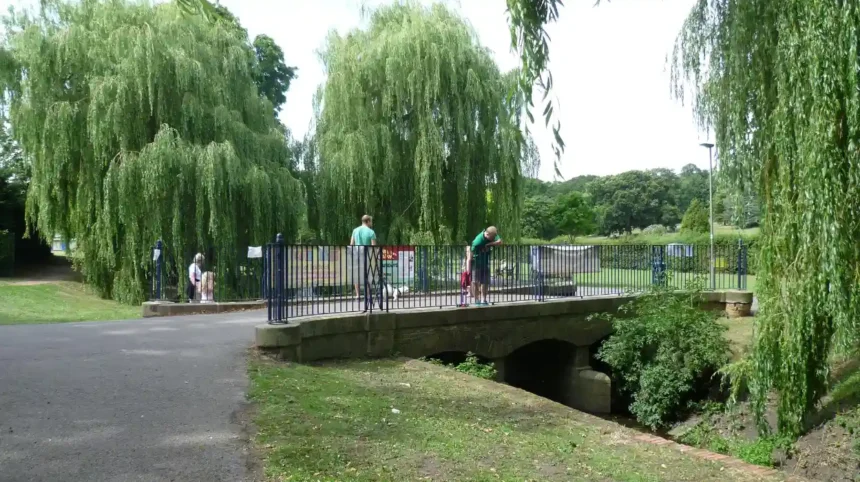
Barnet has a substantial network of parks, open spaces, woodland, nature reserves and recreational landscapes. Examples include Oak Hill Park, Rowley Green Nature Reserve, Totteridge Fields, Hendon Park, Cherry Tree Wood and Darlands Lake, creating many low-impact outdoor activities.
Green infrastructure is one of Barnet’s strongest assets for sustainable tourism. Green infrastructure means natural or semi-natural features that provide environmental, social and climate benefits. Examples include parks, trees, woodland, wetlands, riverside areas and sustainable drainage systems.
Barnet’s official parks directory demonstrates the geographical spread of these spaces. Locations include Oak Hill Park and Oak Hill Woods and Meadow in East Barnet, Rowley Green Nature Reserve in Arkley, Totteridge Fields near Whetstone and Mill Hill Park.
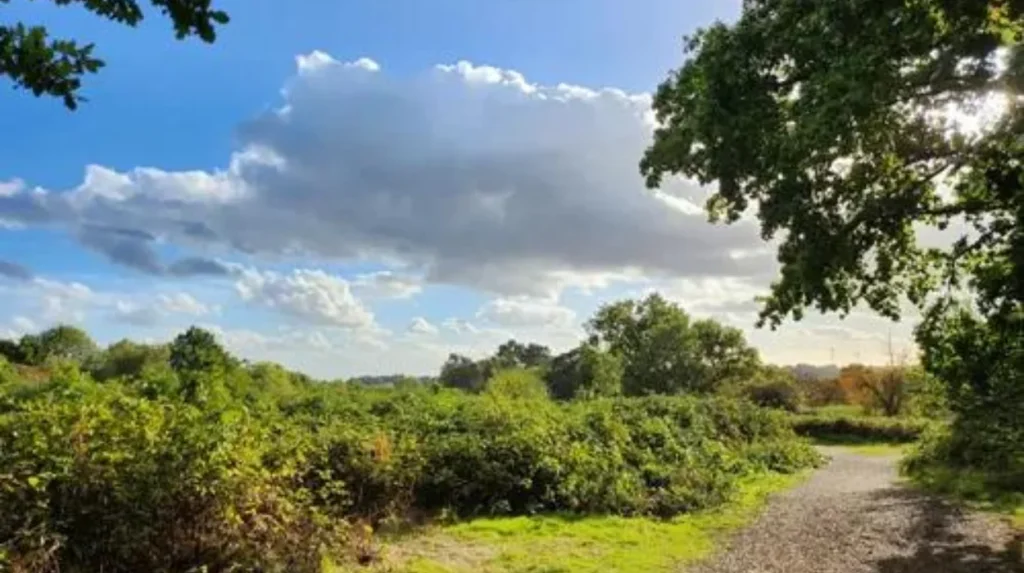
Oak Hill Wood is particularly relevant to biodiversity-focused visitors. London Wildlife Trust manages the 5.5-hectare woodland nature reserve within Oak Hill Park. The wider park covers 10 hectares. The woodland is an ancient woodland and local nature reserve with significant nature-conservation value.
The management approach at Oak Hill Wood also demonstrates how sustainability can involve natural regeneration rather than simply planting trees. Since management was relaxed in 2006, woodland has naturally expanded into a neighbouring field by approximately 3,000 square metres.
This type of landscape allows visitors to experience biodiversity directly while remaining within an established London borough.
Which Barnet parks are best for eco-friendly outdoor activities?
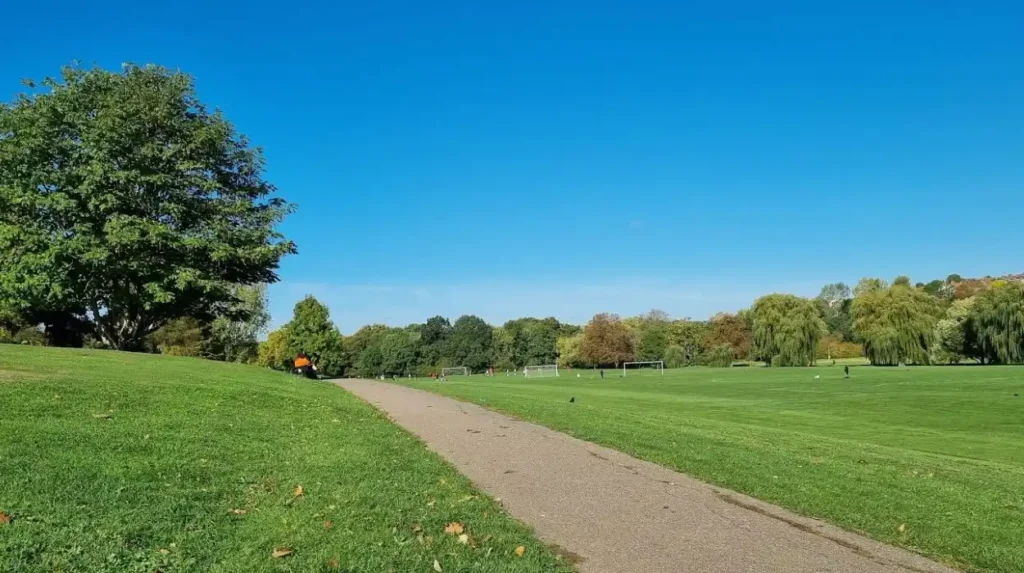
Barnet’s parks support walking, running, cycling, nature observation, recreation and family activities. Examples include Oak Hill Park, Hendon Park, Mill Hill Park, Rowley Green Nature Reserve and Totteridge Fields, allowing visitors to build low-carbon outdoor itineraries.
Walking is one of the simplest ways to reduce the environmental impact of sightseeing. Barnet Council provides walking, running and cycling trail information, including routes associated with the Dollis Valley Greenwalk and other health walks.
Visitors can combine several types of activity within the same trip. A walking itinerary can include a park, local high street, café and public transport connection. A cycling itinerary can link green spaces with neighbourhood attractions.
Hendon Park provides another example of an accessible urban green space. Other official listings include Cherry Tree Wood, Coppetts Wood, Darlands Lake, Edgwarebury Park, Friary Park and Glebelands.
These locations provide different landscape types. Woodland supports nature observation and quieter walks. Formal parks provide recreation and open lawns. Nature reserves provide opportunities to understand local biodiversity.
The sustainability benefit comes from the proximity of these landscapes to residential and transport areas. Visitors do not need to travel outside London for every nature-based experience.
How does Barnet protect biodiversity?
Barnet protects biodiversity through nature reserves, woodland management, green-space strategies, tree planting, habitat improvement and climate-resilience projects. Examples include Oak Hill Wood’s natural regeneration, Silkstream improvements and management of Sites of Importance for Nature Conservation.
Biodiversity refers to the variety of living organisms, habitats and ecosystems within an area. For a visitor destination, biodiversity protection improves the ecological value of parks while supporting recreation and climate resilience.
Barnet’s current Parks and Open Spaces Strategy covers 2026–2036. It was developed using feedback from residents, community groups and partners and includes supporting evidence on open spaces, biodiversity and nature recovery.
The strategy recognises that green spaces need to support both current and future needs while helping biodiversity respond to climate change.
Oak Hill Wood demonstrates this approach at site level. Its natural expansion has increased woodland coverage while relying on existing ecological processes. London City Hall identifies natural regeneration as a method that can improve woodland resilience and reduce reliance on imported planting material.
Barnet also contains numerous locations identified for nature and wildlife interest, including Bethune Nature Reserve, Coppetts Wood, Darlands Lake, Cherry Tree Wood and Greenhill Gardens.
Visitors therefore encounter sustainability through actual landscape management rather than through signage alone.
How is Barnet improving sustainable transport for visitors?
Barnet’s sustainable transport approach prioritises walking, cycling, public transport, accessibility and integrated travel. The 2025–2042 Transport Strategy provides the framework, while active-travel measures and public transport improvements support lower-emission journeys across the borough.
Transport is a major part of destination sustainability because travel affects carbon emissions, congestion and air quality.
Barnet adopted its current Transport Strategy in July 2025. The strategy covers 2025–2042 and focuses on safe and accessible transport, sustainable transport choices, thriving neighbourhoods and innovation.
For visitors, this framework supports an itinerary that begins with public transport and continues on foot or by bicycle.
Barnet Council also identifies walking, cycling and public transport as important components of its sustainability programme. Its climate citizens’ assembly specifically called for an integrated sustainable transport plan, safer active-travel infrastructure and better public transport.
Public transport is particularly important because Barnet is part of Greater London. Visitors can use London’s wider rail, Underground, bus and other public transport systems to reach different parts of the borough.
A sustainable visitor itinerary therefore does not require a private car for every journey. Choosing public transport for longer connections and walking for shorter local journeys reduces dependence on petrol and diesel vehicles.
Does Barnet have good opportunities for walking and cycling?
Barnet provides established opportunities for walking, running and cycling through parks, open spaces and dedicated trails. Examples include the Dollis Valley Greenwalk, local health walks, park routes and connections through woodland and open landscapes across the borough.
Walking has a direct environmental advantage because it produces no direct vehicle emissions. It also allows visitors to combine several local destinations without additional transport.
Barnet Council promotes walking, running and cycling trails through its parks service. The Dollis Valley Greenwalk is one of the most recognisable green routes associated with the borough.
Cycling also fits Barnet’s wider transport strategy. The council’s climate assembly identified safer roads and stronger cycle-lane provision as priorities for active travel.
Visitors should plan routes according to the terrain, road conditions, weather and their own ability. A green route is most sustainable when it is also safe and practical.
The combination of parks and neighbourhood destinations creates opportunities for short walking journeys rather than single-purpose trips. For example, a visitor can connect a green space with a local shopping area or café and then continue by public transport.
How is Barnet addressing air pollution?
Barnet treats air quality as an important part of sustainability, with transport identified as a major pollution source. Its 2023–2028 Air Quality Action Plan supports cleaner travel, while walking, cycling, public transport and electric vehicles reduce dependence on conventional petrol and diesel journeys.
Barnet’s Air Quality Action Plan covers 2023–2028 and aims to reduce exposure to air pollution while improving health and quality of life for residents and visitors.
Barnet Council states that road transport is the largest source of air pollution in the borough. Its Clean Air Day 2026 information reports that cars contribute 431 tonnes of pollutants each year.
This makes transport choices relevant to visitors. Walking, cycling and public transport reduce the need for individual car journeys.
The council is also expanding electric vehicle infrastructure. Its sustainability reporting states that more than 1,500 electric vehicle charge points had been installed, with further expansion planned.
Electric vehicles remove exhaust emissions from the vehicle itself, although their overall environmental impact still depends on electricity generation, manufacturing and other lifecycle factors.
For visitors, public transport and active travel remain straightforward options when practical.
How are trees and woodlands contributing to Barnet’s sustainability?
Trees and woodlands help Barnet manage heat, air pollution, biodiversity and landscape quality. Examples include Oak Hill Wood, park tree-planting schemes, Halliwick Recreation Ground and Malcolm Park, where planting has supported shade, habitat and environmental resilience.
Urban trees provide multiple environmental functions. They create shade, support wildlife, contribute to landscape quality and help moderate local environmental conditions.
London City Hall records earlier Barnet tree-planting projects. One project funded the planting of 67 semi-mature trees at Halliwick Recreation Ground and Malcolm Park. The trees were positioned near children’s play areas to provide shade and help reduce exposure to air pollution.
Another programme supported the planting of 99 trees across Barnet parks, including Woodcroft Park, Oak Hill Park, Hendon Park, Basing Hill Park, Lyndhurst Park and New Southgate Recreation Ground.
Barnet Council also works with Trees for Streets through a tree sponsorship scheme. This allows community involvement in planting trees in streets and local parks.
For visitors, tree-rich parks provide shaded walking environments and improve the visual and ecological quality of outdoor routes.
How does Barnet use sustainable drainage to manage climate risks?
Barnet uses sustainable urban drainage to reduce flood risk while creating environmental benefits. Examples include work at Halliwick Recreation Ground and green infrastructure proposals in Finchley Central, where drainage, planting and public-realm improvements support climate resilience.
Sustainable urban drainage systems, commonly called SuDS, manage rainwater close to where it falls. They reduce pressure on conventional drainage networks and can create additional habitat and green space.
Barnet has identified flood resilience as part of its sustainability agenda. Council information states that 38 high-priority sites and 507 sites at risk have been identified for future sustainable drainage projects.
The Halliwick Recreation Ground scheme represents an example of this approach.
Finchley Central also forms part of wider green-infrastructure investment. London City Hall reports that the Finchley Central public-realm project includes SuDS and semi-mature tree planting within more than 5,500 square metres of refurbished public space.
These measures demonstrate that sustainability in Barnet is connected to everyday urban infrastructure rather than being limited to countryside management.
How does Barnet’s sustainability strategy affect visitors?
Barnet’s sustainability strategy affects visitors through cleaner travel, protected green spaces, biodiversity projects, improved public areas, air-quality measures and climate-resilient infrastructure. These policies shape how visitors move through and experience the borough.
Barnet’s Sustainability Action Plan covers multiple areas, including housing and buildings, renewable energy, transport, natural environment and biodiversity, sustainable consumption and waste, business and skills, and partnerships.
The strategy therefore operates across the systems that influence visitor experiences.
Transport affects how visitors arrive and move around. Parks policy affects where they spend time outdoors. Biodiversity programmes influence nature-based experiences. Air-quality measures affect the environmental conditions of streets and public spaces.
The council’s sustainability dashboard tracks five broad areas: energy and carbon, sustainable movement, adaptation and resilience, waste management and green infrastructure.
This framework makes Barnet’s sustainability approach measurable rather than purely promotional.
How does Barnet connect sustainability with its history?
Barnet’s environmental character developed alongside centuries of settlement, agriculture, woodland management, roads and suburban growth. Historic landscapes remain visible in modern parks and open spaces, linking today’s sustainable visitor experiences with the borough’s long-term land-use history.
Modern green spaces are part of a much longer landscape story. Barnet’s present-day open spaces reflect historic settlement patterns, agricultural land, woodland and later suburban development.
Visitors exploring contemporary parks therefore encounter landscapes shaped by both natural processes and human activity.
As you explore the modern landscape, you are crossing land with a deep heritage. Read the full [Insert Anchor Text for History Article Here] to understand its origins.
This historical perspective is useful when assessing sustainability because environmental value often depends on continuity. Ancient woodland, established parks and mature trees provide ecological functions that newer developments take years to replicate.
Oak Hill Wood demonstrates this principle particularly clearly. Its ancient woodland status gives it a conservation significance that extends beyond its recreational use.
Sustainable tourism in Barnet therefore involves protecting existing environmental assets while improving access to them.
What sustainable activities can tourists do in Barnet?
Visitors can explore Barnet sustainably through walking, cycling, nature observation, woodland visits, park recreation and public-transport-based sightseeing. Examples include the Dollis Valley Greenwalk, Oak Hill Wood, Rowley Green Nature Reserve, Hendon Park and Mill Hill Park.
A sustainable Barnet itinerary can prioritise outdoor experiences and minimise unnecessary vehicle travel.
Walking is suitable for local exploration. Cycling provides longer-distance connections. Public transport links different neighbourhoods. Parks and nature reserves provide free or low-cost opportunities for recreation.
Nature observation is particularly compatible with sustainable tourism because it requires relatively little infrastructure. Visitors can explore woodland, watch birds, identify plants and observe seasonal changes without consuming significant resources.
The borough’s parks directory includes locations with nature-reserve and wildlife-interest classifications, providing numerous options for visitors interested in biodiversity.
Visitors can also support local businesses by spending money in neighbourhood cafés, shops and markets reached through walking or public transport. This connects environmental sustainability with local economic activity.
Is Barnet suitable for a low-carbon day trip from London?
Barnet is well suited to low-carbon day trips because visitors can combine London’s public transport network with walking, cycling and green-space exploration. A single itinerary can include parks, woodland, local centres and nature sites without requiring extensive private-car travel.
Barnet’s location within London provides an important sustainability advantage. Visitors can access the borough through the wider metropolitan transport system rather than travelling to a distant countryside destination.
Once in Barnet, the extensive green-space network provides activities within the borough itself.
A practical low-carbon day can therefore follow a simple structure: public transport arrival, walking through a green route, time in a park or nature reserve, a local food stop and public transport return.
The exact route should reflect the visitor’s starting point and chosen destination.
The Transport Strategy’s focus on integrated sustainable transport reinforces this model.
What are the main sustainability challenges facing Barnet?
Barnet still faces sustainability challenges linked to road traffic, air pollution, climate change, biodiversity protection, accessibility and pressure on green spaces. Examples include transport emissions, flood risk, uneven access to open spaces and the need to maintain biodiversity as development continues.
Sustainable tourism does not mean that a destination has eliminated its environmental impacts.
Barnet Council identifies road transport as the largest source of air pollution in the borough.
The borough also faces climate-related pressures, including flood risk and the need for biodiversity to respond to changing environmental conditions. The Parks and Open Spaces Strategy specifically identifies biodiversity resilience as an important future challenge.
Accessibility is another consideration. Barnet’s own growth strategy identifies limited public transport infrastructure and accessibility challenges in some open spaces.
This means sustainable tourism must include accessibility. A destination is not fully sustainable if environmental improvements exclude visitors with mobility or access requirements.
Barnet’s future progress therefore depends on improving transport, protecting green infrastructure and ensuring that environmental benefits remain accessible.
Explore More Area Guide
Barnet Local Food Specialities: Jewish, Persian & Asian Cuisine
Why Barnet Is a Gateway to North London
What is the future of sustainable tourism in Barnet?
Barnet’s sustainable tourism potential is linked to its 2026–2036 parks strategy, 2025–2042 transport strategy and 2042 net-zero target. Future progress centres on biodiversity, green infrastructure, active travel, cleaner transport, climate resilience and better access to green spaces.
Barnet has established long-term policy frameworks rather than relying on individual environmental projects.
The Parks and Open Spaces Strategy 2026–2036 provides a decade-long framework for managing and improving green spaces.
The Transport Strategy 2025–2042 provides a longer-term framework for sustainable and inclusive movement.
The borough’s net-zero target is 2042, while the council’s organisational target is 2030.
These commitments give Barnet a clear direction for future environmental management.
The strongest opportunity for visitors is the integration of these policies. Better walking routes can connect green spaces. Improved public transport can reduce car dependency. Biodiversity projects can improve nature experiences. Sustainable drainage can make parks more climate resilient.
Barnet is therefore not simply a place where visitors can find parks. It is a London destination where environmental policy, green infrastructure and leisure activity increasingly overlap.
How sustainable is Barnet as a visitor destination overall?
Barnet has strong foundations for sustainable tourism through its extensive green spaces, biodiversity assets, active-travel opportunities and long-term climate policies. Its main challenges remain transport emissions, accessibility, development pressure and continued delivery of net-zero commitments.
The evidence supports a positive assessment of Barnet’s sustainability infrastructure.
The borough has a large network of parks and open spaces. Its official directory lists 160 locations, while its current parks strategy provides a framework through 2036.
Its sustainability programme has a measurable net-zero target of 2042. The council declared a climate and biodiversity emergency in 2022 and tracks progress through a sustainability dashboard.
Transport policy also supports sustainable movement through walking, cycling and public transport.
For visitors, the most sustainable approach is straightforward: use public transport where practical, walk between nearby attractions, cycle where appropriate, spend time in established green spaces, respect wildlife and minimise waste.
Barnet’s environmental value is strongest when its parks, woodlands and neighbourhoods are treated as connected parts of one destination.
Is Barnet a sustainable visitor destination?
Yes. Barnet has strong foundations for sustainable tourism, including extensive parks and open spaces, nature reserves, walking routes, cycling opportunities and public transport connections. Its sustainability policies also include a borough-wide net-zero target for 2042.