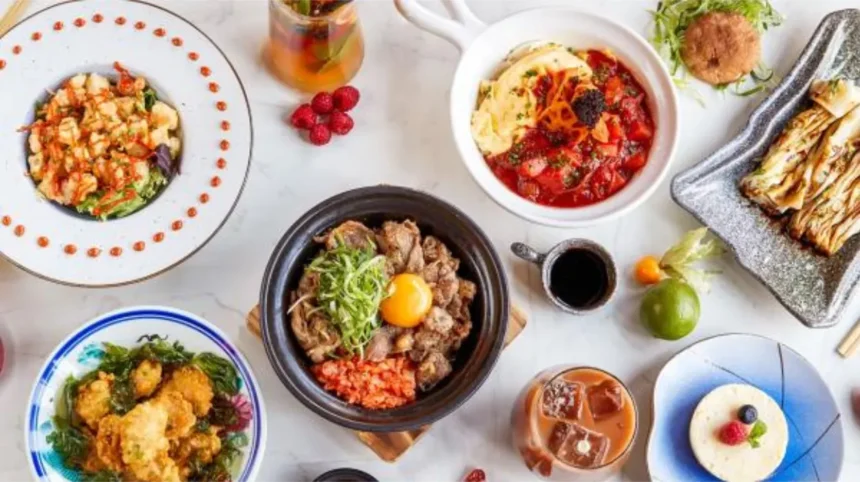
Barnet has no single dish that defines the whole borough. Its food identity comes from historic market trading, Jewish and Iranian communities, Asian cuisines, African and Caribbean food, Greek Cypriot traditions, specialist food shops, cafés, restaurants and modern food halls. This diversity makes Barnet one of North London’s strongest destinations for exploring food through different neighbourhoods.
- What makes Barnet’s local food scene distinctive?
- Which Jewish food specialities can you try in Barnet?
- Where can you experience Persian and Iranian food in Barnet?
- What Asian food specialities are available in Barnet?
- Can you find African, Caribbean and Mediterranean specialities in Barnet?
- What traditional British food can you try in Barnet?
- Which Barnet markets and food events are best for discovering local specialities?
- How should visitors explore Barnet’s food specialities?
- Why is Barnet’s food culture important to North London?
Barnet’s culinary character also reflects its geography. The borough contains major centres including Chipping Barnet, Golders Green, North Finchley, Finchley Central, Colindale, Burnt Oak, Hendon and Edgware. Barnet Council identifies seven main town centres, eight district town centres and 15 local or neighbourhood town centres, creating a broad network of places where independent food businesses operate.
The borough’s demographic profile explains much of this variety. The 2021 Census recorded Barnet as having London’s largest Jewish population, representing 14.5% of residents. Asian residents accounted for 19.3% of the population, while the largest non-English main languages included Romanian, Persian or Farsi, Polish, Gujarati and Portuguese.
For visitors, this means Barnet is better understood as a collection of culinary districts than as a destination built around one signature recipe.
What makes Barnet’s local food scene distinctive?
Barnet’s food scene combines historic market culture with Jewish, Iranian, Asian, African, Caribbean and Mediterranean influences, creating a broad selection of specialist dishes, kosher foods, street food, cafés, restaurants, bakeries and market products across its neighbourhoods.
The strongest feature of Barnet’s food culture is its combination of history and migration. Food businesses serve established communities while also attracting visitors from across North London.
Golders Green is particularly important. Barnet Council describes the area as having a long tradition of shops and catering serving local Jewish and Japanese communities. Its commercial parades contain cafés, restaurants and specialist retailers alongside mainstream shops.
The borough also has a substantial Iranian presence. Barnet Council stated in 2026 that Barnet is home to the United Kingdom’s largest Iranian community as well as its largest Jewish community.
This cultural structure influences the food available in local high streets. Specialist ingredients, religious dietary requirements and traditional cooking methods all contribute to the local offer.
The distinction between a “Barnet speciality” and a dish simply available in Barnet is important. Traditional British dishes are part of the local dining scene, but Barnet’s strongest culinary identity comes from the concentration of specialist cuisines and community food traditions.
The result is a food landscape where a visitor can experience Jewish deli-style foods, Persian dishes, Asian street food, Caribbean cooking and Greek Cypriot flavours within the same borough.
Barnet Council’s own food strategy recognises food as both a health issue and a cultural and social resource. Its 2022–2027 Food Plan specifically states that culturally relevant and socially acceptable food should be available to local communities.
Which Jewish food specialities can you try in Barnet?
Jewish food is one of Barnet’s defining culinary traditions, particularly around Golders Green, where visitors can find kosher restaurants, bakeries, cafés, deli-style foods, traditional Jewish dishes and modern menus shaped by the borough’s long-established Jewish community.
Golders Green is the clearest starting point for exploring Jewish food in Barnet. The neighbourhood’s Jewish history dates back more than a century. Barnet Council records Jewish family shops and homes in the area by 1910, with around 300 Jewish families estimated to live there by 1915.
This community history is directly reflected in the local food economy.
Visitors can look for bagels, smoked salmon, gefilte fish, chopped liver, latkes, challah, kugel, falafel, hummus and other dishes associated with Jewish culinary traditions. Availability differs between individual businesses, so menus should be checked before travelling.
Kosher food is also an important part of the local food infrastructure. “Kosher” refers to food prepared according to Jewish dietary laws, including rules concerning permitted foods, preparation and combinations of ingredients.
Barnet Council’s Golders Green conservation-area documentation specifically notes that the district has restaurants and shops catering to the Jewish community. It names Solly’s restaurant as one example of a Jewish-focused food business on Golders Green Road.
A modern example is Head Room Café, a social enterprise on Golders Green Road established by Jami in 2016. Its menu includes kosher food and drinks alongside dishes such as shakshuka, chickpea and lentil curry, fish and chips and nourishing bowls.
Shakshuka is particularly useful for visitors seeking a recognisable Middle Eastern breakfast or brunch dish. It consists of eggs cooked in a spiced tomato-based sauce and is widely served across Middle Eastern and North African food cultures.
Visitors interested in Jewish food should also distinguish between kosher, Israeli, Ashkenazi and Sephardi food. These categories overlap in some businesses but are not interchangeable.
Ashkenazi Jewish cuisine developed largely within Central and Eastern European Jewish communities. Sephardi cuisine developed among Jewish communities with roots in Spain, North Africa, the Middle East and the Mediterranean. Israeli cuisine incorporates influences from many Jewish communities as well as Palestinian and wider Middle Eastern traditions.
Barnet’s food scene provides access to parts of this wider culinary spectrum rather than representing a single uniform Jewish cuisine.
As you explore Golders Green’s modern restaurants and food shops, you are also moving through a neighbourhood shaped by more than a century of community development. Read about the full [Insert Anchor Text for History Article Here] to understand its origins.
Where can you experience Persian and Iranian food in Barnet?
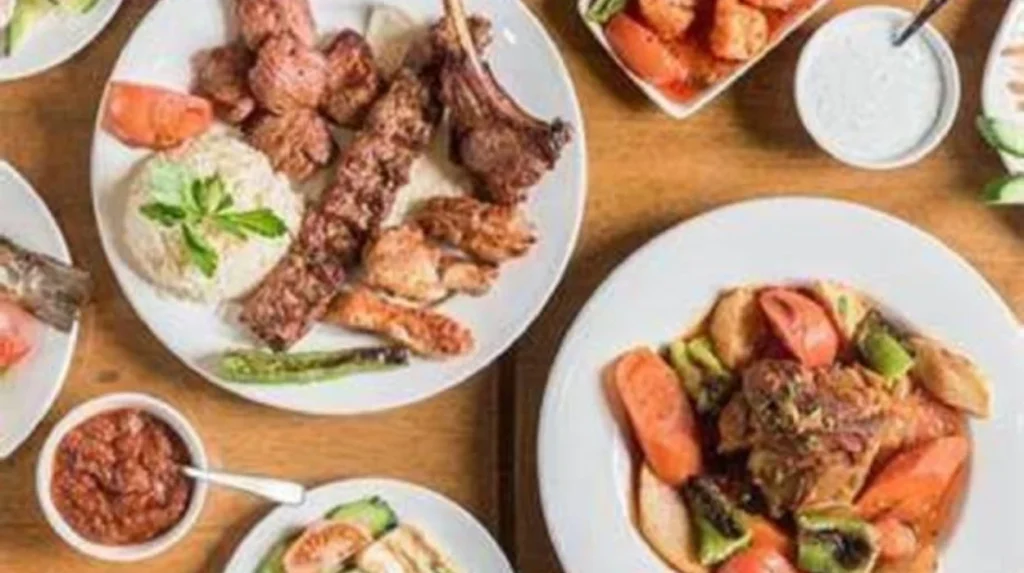
Persian and Iranian food forms an important part of Barnet’s multicultural dining scene, with dishes built around rice, herbs, grilled meats, stews, saffron, yoghurt, aubergine and seasonal ingredients appearing across specialist restaurants and food businesses.
Iranian food is particularly significant because Barnet has one of the United Kingdom’s largest Iranian communities. Barnet Council confirmed in 2026 that the borough is home to the country’s largest Iranian population.
For visitors, Persian cuisine offers a different culinary profile from the Jewish food culture concentrated in parts of south Barnet.
Typical dishes to look for include chelo kebab, koobideh, joojeh kebab, ghormeh sabzi, fesenjan, zereshk polo and tahdig.
Chelo kebab combines steamed Persian rice with grilled meat. Koobideh is minced meat formed around skewers and grilled. Joojeh kebab uses marinated chicken. Ghormeh sabzi is a herb-based stew containing ingredients such as kidney beans and dried lime. Fesenjan combines ground walnuts with pomegranate-based flavours and meat.
Tahdig is the crisp layer of rice formed at the bottom of the cooking pot. It is a particularly distinctive part of Persian rice preparation.
Persian rice is often prepared through a multi-stage cooking process rather than simply boiling rice until soft. The rice is partially cooked, drained and then steamed. This produces separate grains and allows the formation of tahdig at the bottom.
Saffron also has an important role. It is used to flavour and colour rice, kebabs and other Persian dishes.
Persian cuisine is not limited to restaurant meals. Specialist grocery businesses also provide ingredients used in Iranian cooking. These include dried limes, saffron, herbs, nuts, rice and preserved products.
This makes Barnet useful for travellers who want to explore food beyond ready-to-eat dishes. A specialist food shop provides insight into the ingredients behind the cuisine.
The local Iranian food scene also reflects the wider linguistic diversity of Barnet. The 2021 Census recorded Persian or Farsi as the second most common non-English main language in the borough, after Romanian.
What Asian food specialities are available in Barnet?
Barnet has a substantial Asian food offer covering Chinese, Japanese, Korean, Vietnamese, Malaysian, Singaporean, Taiwanese and Indian cuisines, with Colindale’s Bang Bang Oriental providing one of the borough’s most concentrated Asian food destinations.
Colindale is one of the strongest places to explore Asian food in Barnet.
The most prominent destination is Bang Bang Oriental, a large Asian food hall on Edgware Road.
Visit London describes the venue as a 32,000-square-foot, approximately 3,000-square-metre food destination containing more than 25 kiosks. Its food offer includes cuisines from China, Korea, India, Japan, Vietnam, Singapore, Taiwan and Malaysia.
That concentration makes Colindale particularly useful for visitors who want to compare several Asian food traditions during one outing.
Chinese food includes dishes such as dim sum, bao, noodles, dumplings and regional stir-fries. Japanese food includes sushi, ramen, udon and tempura. Korean food includes bibimbap, kimchi, Korean fried chicken and grilled dishes.
Vietnamese food commonly includes pho, banh mi, spring rolls and rice-based dishes. Malaysian and Singaporean food provides dishes such as laksa, nasi lemak, char kway teow and Hainanese chicken rice.
Indian food adds another major category, with curries, biryani, tandoori cooking, dosas, samosas and regional vegetarian dishes represented across North London.
The important point is regional distinction. “Asian food” is not one cuisine. The cooking methods, ingredients, spice profiles and cultural histories differ substantially between East Asia, South Asia and Southeast Asia.
Barnet’s concentration of Asian businesses therefore creates an opportunity for visitors to experience multiple culinary traditions rather than one generic category.
The wider borough also supports specialist Asian food shopping. Ingredients such as rice varieties, noodles, sauces, spices, dried foods and fresh produce are available through specialist retailers.
This is particularly relevant for residents and digital nomads who want food options suitable for regular meals rather than occasional restaurant visits.
Can you find African, Caribbean and Mediterranean specialities in Barnet?
African, Caribbean and Mediterranean food adds another important layer to Barnet’s culinary identity, with community organisations, restaurants, cafés and food businesses providing dishes influenced by West African, Caribbean, Greek Cypriot and wider Mediterranean traditions.
Barnet Council records community-based food provision serving African and Caribbean residents. The Barnet African Caribbean Association provides freshly cooked hot African and Caribbean meals at its multicultural community centre in West Hendon.
African food varies significantly by region. Visitors can encounter dishes based around rice, plantain, beans, meat, fish, vegetables and spice blends. West African cuisines include dishes such as jollof rice, suya, fried plantain, pounded yam and soups or stews.
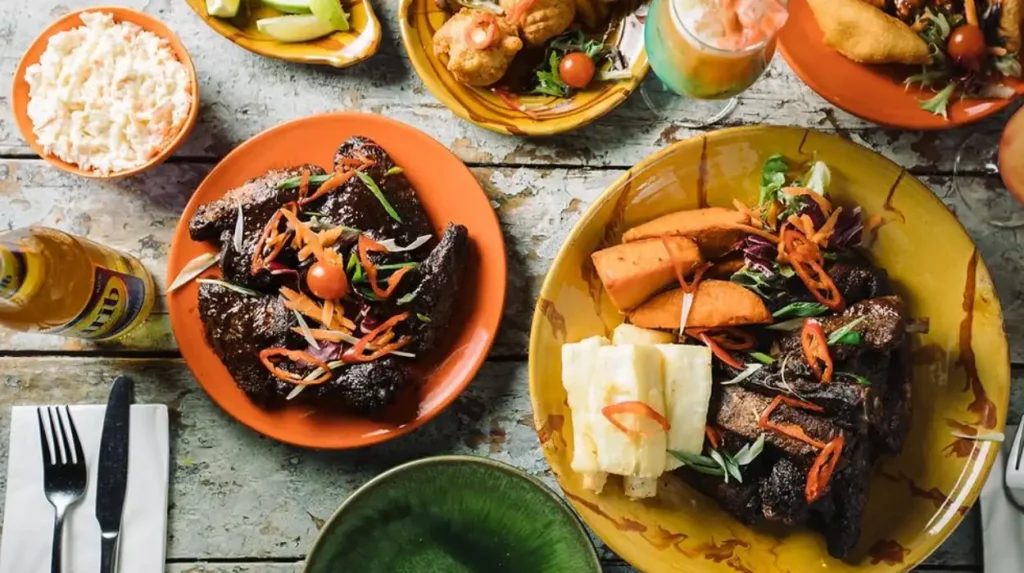
Caribbean cuisine also has several distinct traditions. Dishes to look for include jerk chicken, rice and peas, roti, fried plantain, curry goat and saltfish with ackee.
These foods reflect Caribbean histories involving African, European, Indian and Indigenous influences.
Greek Cypriot food is another established part of Barnet’s community landscape. Barnet Council lists the Greek Cypriot Brotherhood Centre on Britannia Road in North Finchley and records its community lunch provision.
Greek Cypriot cuisine typically includes halloumi, souvlaki, moussaka, kleftiko, loukoumades and meze. These foods combine Mediterranean ingredients such as olive oil, vegetables, herbs, grains, cheese and grilled meats.
The term meze refers to a collection of smaller dishes served together. It is a useful format for visitors because it allows several flavours and preparations to be sampled during one meal.
Mediterranean and Middle Eastern food also overlaps with the wider Barnet dining scene. Dishes such as hummus, falafel, grilled meats, salads and flatbreads appear across different culinary traditions.
Visitors should therefore look beyond cuisine labels when exploring Barnet. The same ingredient can appear in several culinary traditions while being prepared differently.
What traditional British food can you try in Barnet?
Traditional British food remains part of Barnet’s everyday dining culture through dishes such as fish and chips, pies, roast meals, sandwiches, cakes and breakfasts, while historic Barnet Market provides an important connection between food retail and the area’s medieval trading history.
Barnet’s British food identity is strongly connected with its historic market.
Barnet Market received its Royal Charter from King John in August 1199. Barnet Council records that the market existed in different locations and forms from at least the 12th century.
The market became particularly important for meat trading. During the late Tudor period, Barnet’s market controlled much of London’s meat supply. London butchers travelled to Barnet to purchase cattle, which were kept on nearby farms before being brought into London as required.
This history gives Barnet an unusually strong connection between food and commerce.
The word Chipping in Chipping Barnet refers to a market or marketplace. Barnet Council states that Barnet Market, which began in 1199, continues today. The town centre contains independent shops, restaurants, cafés and bars alongside the market.
For visitors, traditional British food options include fish and chips, English breakfast, meat pies, sausage and mash, Sunday roast, sandwiches, scones and traditional cakes.
Fish and chips also appear in contemporary Barnet cafés. Head Room Café in Golders Green lists traditional fish and chips among its menu choices.
The significance of British food in Barnet is therefore not limited to historic recipes. It exists alongside international cuisines.
A visitor can eat a traditional British meal and then explore Persian, Jewish or Asian food within the same wider borough.
That combination is central to understanding Barnet’s food identity.
Which Barnet markets and food events are best for discovering local specialities?
Barnet’s markets and food events provide the easiest way to sample several food styles in one visit, with Barnet Market offering historic trading continuity and the Barnet Food Festival demonstrating the borough’s contemporary multicultural food culture.
Barnet Market is the historic starting point. Its Royal Charter dates to 1199, making it one of the borough’s strongest links between present-day food culture and medieval commerce.
The modern market forms part of Chipping Barnet town centre, where visitors also find independent shops, restaurants, cafés and bars.
For visitors interested in a broader food selection, the Barnet Food Festival demonstrates the scale of the modern culinary scene.
The inaugural festival at the Royal Air Force Museum in 2025 featured more than 40 food and drink stalls. Barnet Council described the event as offering global cuisines ranging from wood-fired pizza and spicy curries to sweet treats and artisan coffee.
Food festivals are particularly useful for tourists because they reduce the need to travel between separate neighbourhoods. Several cuisines appear within the same event environment.
However, festival food represents a snapshot rather than the entire permanent food scene. Visitors seeking particular dishes should check individual businesses and current opening arrangements.
Barnet Council regulates food businesses through its food-safety system. Restaurants, cafés, hotels, shops, market stalls, mobile catering vans and other food businesses generally require registration where applicable.
Food businesses must also provide required allergen information. Barnet Council states that food business operators are required to provide allergen information and that food labels must be accurate and not misleading.
This is important for visitors with allergies or specific dietary requirements.
The borough also supports food businesses through street-trading regulations. Barnet Council defines street trading as selling or offering goods and services on the street and includes market stalls, mobile traders and certain café arrangements within its licensing framework.
These regulations help explain why food markets operate within defined legal and safety structures.
Explore More Area Guide
Why Barnet Is a Gateway to North London
Balancing Urban Living and Open Countryside in Barnet
How should visitors explore Barnet’s food specialities?
The most effective approach is to explore Barnet by culinary district, starting with historic Chipping Barnet, then visiting Golders Green for Jewish food, Colindale for Asian cuisines and other neighbourhoods for African, Caribbean, Persian and Mediterranean specialities.
A food-focused visit works best when the borough’s geography is treated as part of the experience.
Start in Chipping Barnet for Barnet Market and traditional British food. The area provides the historical foundation for understanding how food trading shaped the town.
Continue towards Golders Green for Jewish and kosher food. The neighbourhood has a long-established Jewish community and specialist food businesses. Barnet Council identifies Jewish and Japanese communities as important influences on the local commercial character.
Move towards Colindale for Asian food. Bang Bang Oriental offers more than 25 food kiosks representing cuisines from across Asia.
Explore West Hendon for African and Caribbean community food. Barnet Council specifically records freshly cooked African and Caribbean meals through the Barnet African Caribbean Association.
For Mediterranean and Greek Cypriot food, North Finchley provides another useful area to investigate, supported by the presence of the Greek Cypriot Brotherhood Centre.
Visitors should also consider specialist grocery shopping. Food shops provide access to ingredients that explain how different cuisines are constructed. Rice, spices, herbs, sauces, preserved foods, breads, cheeses and confectionery reveal culinary traditions that restaurant menus alone do not show.
For tourists, this approach creates a food itinerary based on neighbourhood identity.
For residents, it provides a practical way to discover independent businesses.
For digital nomads, cafés and casual restaurants provide additional places to eat between work sessions.
For business travellers, Barnet’s food districts provide accessible dining choices without requiring a journey into central London.
Why is Barnet’s food culture important to North London?
Barnet’s food culture demonstrates how historic market trading and modern migration have shaped North London, producing a borough where Jewish, Iranian, Asian, African, Caribbean, Mediterranean and British culinary traditions operate alongside one another.
Barnet’s food culture reflects the borough’s population structure.
The 2021 Census recorded 19.3% of residents as Asian and 7.9% as Black. Barnet also had London’s largest Jewish population, at 14.5% of residents.
These figures provide a demographic explanation for the range of food businesses found across the borough.
The history is equally important. Barnet Market has traded under its charter since 1199, while Golders Green developed a substantial Jewish community during the early 20th century.
Modern food culture therefore sits on top of a much older commercial network.
Barnet Council’s Food Plan also recognises the social and cultural importance of food. It identifies culturally relevant food as part of a sustainable local food system and links food with community wellbeing and social experience.
This makes local food more than a tourism attraction. It is part of the borough’s social infrastructure.
The food scene also continues to evolve. New food halls, independent cafés, specialist retailers, community organisations and food festivals add new choices without removing the historic market tradition.
For visitors, the key takeaway is simple: Barnet does not have one signature dish. Its signature is culinary diversity rooted in place.
A visit can combine medieval market history, Jewish food traditions, Persian cooking, Asian street food, African and Caribbean meals, Greek Cypriot cuisine and familiar British dishes.
That breadth makes Barnet a strong food destination for travellers exploring North London and for residents looking for new culinary experiences close to home.
What food is Barnet famous for?
Barnet is known for its multicultural food scene rather than one single signature dish. Popular choices include Jewish and kosher food in Golders Green, Persian cuisine, Asian food in Colindale, African and Caribbean dishes, Greek Cypriot food and traditional British meals.