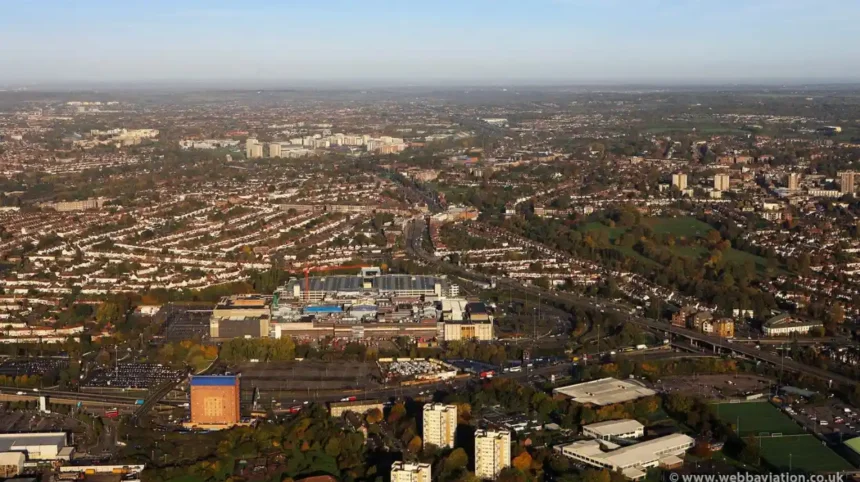
Barnet occupies a strategically important position in northern London. The London Borough of Barnet stretches from the inner northern suburbs towards the Greater London boundary and combines established town centres, major roads, Underground stations, National Rail services, new development areas and extensive green space.
- Why is Barnet considered a gateway to North London?
- How does Barnet’s geography connect it with the rest of North London?
- Which Underground services make Barnet an important transport gateway?
- How do National Rail and Thameslink services strengthen Barnet’s connections?
- What role does Brent Cross West play in Barnet’s gateway function?
- How do Barnet’s roads connect North London with destinations beyond London?
- Why does Barnet’s historical development explain its modern transport importance?
- How easy is it to travel from Barnet to central London?
- Which Barnet areas are best connected for visitors and business travellers?
- How does Barnet support travel beyond its own borough?
- Why does Barnet’s growing population increase the importance of its transport network?
- How does Barnet balance transport connectivity with sustainable travel?
- What makes Barnet different from other North London gateways?
- What is Barnet’s long-term importance as a North London gateway?
Its location explains why Barnet functions as a practical gateway to North London. Roads such as the A1 and M1 connect the borough with destinations beyond London, while the Northern line provides direct Underground access towards central London. Thameslink and Great Northern services provide additional rail connections, while major transport corridors link Barnet with neighbouring boroughs and areas beyond the capital.
Barnet is also a substantial urban area in its own right. The Office for National Statistics recorded approximately 389,300 residents in the borough at the 2021 Census, representing a 9.2% increase from approximately 356,400 in 2011. Barnet ranked 17th among England’s 309 local authority areas by population in 2021.
This combination of population, geography, transport infrastructure and historical development gives Barnet its gateway role.
Why is Barnet considered a gateway to North London?
Barnet is a gateway to North London because it sits on major north-south routes connecting central London with Hertfordshire and other northern destinations. Underground, rail, bus and road networks give the borough strong regional accessibility.
Barnet sits on the northern edge of Greater London and provides a transition between the dense urban environment of inner London and the more suburban settlements towards Hertfordshire. Its geographical position has influenced its development for centuries.
Barnet Council records that an important route north from London towards St Albans passed through the area by the 11th century. A settlement subsequently developed around this route. High Barnet later became the historic centre of the area, with its market recorded in different forms and locations since at least the 12th century.
The modern transport network follows the same broad geographical logic. North-south movement remains fundamental to Barnet’s transport system.
The borough provides access towards central London through the Northern line and National Rail. It also connects towards northern destinations through the A1, M1 and other strategic roads.
This makes Barnet useful for several groups. Visitors can use it as a base for exploring North London and central London. Residents can travel towards employment and cultural centres. Business travellers can reach different parts of London without relying on a single transport mode.
The gateway function therefore comes from connectivity rather than a single station or road.
How does Barnet’s geography connect it with the rest of North London?
Barnet occupies a broad northern position within Greater London, bordering several London boroughs and sitting close to Hertfordshire. This geography places Barnet between central London, neighbouring North London districts and major destinations north of the capital.
The London Borough of Barnet covers a large area compared with many inner London boroughs. Its neighbourhoods include High Barnet, East Barnet, Finchley, Golders Green, Hendon, Mill Hill, Edgware, Colindale, Cricklewood and Brent Cross.
These areas create different transport relationships.
High Barnet and East Barnet sit towards the northern part of the borough. Finchley occupies a central position. Hendon, Colindale, Brent Cross and Cricklewood form important western and southern corridors. Edgware and Burnt Oak connect the borough with areas around the north-western edge of London.
The borough’s neighbouring authorities include Enfield, Haringey, Camden, Brent, Harrow and Hertfordshire districts beyond Greater London.
This geographical spread is important because North London does not operate as one compact centre. Employment, shopping, education, leisure and residential activity are distributed across numerous town centres.
Barnet therefore provides several points of access into this wider network.
The borough’s geography also supports road travel. Northbound routes connect London with towns and cities beyond the capital, while east-west roads link Barnet with neighbouring boroughs.
Barnet Council identifies strong connections with central London and key roads heading northwards as important characteristics of its connected-borough strategy.
Which Underground services make Barnet an important transport gateway?
The Northern line is the principal Underground network serving Barnet, with its Edgware and High Barnet branches extending deep into the borough. These services provide direct connections towards Camden Town, central London and major interchange points.
The Northern line is especially important to Barnet’s gateway function. The Underground line divides into branches north of Camden Town, with the High Barnet branch serving the eastern side of the borough and the Edgware branch serving the western side.
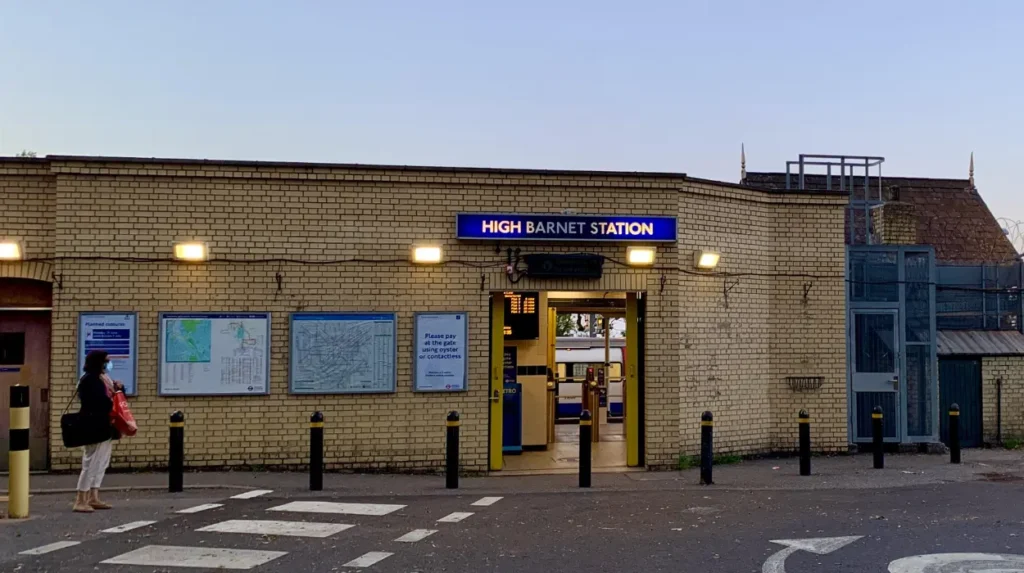
High Barnet station is the northern terminus of the High Barnet branch. Stations along this branch include High Barnet, Totteridge & Whetstone, Woodside Park, West Finchley, Finchley Central and East Finchley.
The Edgware branch serves stations including Edgware, Burnt Oak, Colindale, Hendon Central, Brent Cross and Golders Green.
These stations provide access towards Camden Town and central London. Passengers can connect with wider Underground and rail networks at interchange locations along the route.
The Northern line therefore creates a direct north-south transport spine.
Barnet also sits close to other Underground corridors. The Piccadilly line runs near the eastern side of the borough, while the Jubilee line operates near the north-western edge. Barnet Council transport documentation identifies these services as additional options around the borough.
For visitors, this means different parts of Barnet have different access points to London’s Underground network. For residents, it creates multiple routes into central London.
The result is a transport structure that supports both local and metropolitan movement.
How do National Rail and Thameslink services strengthen Barnet’s connections?
National Rail services expand Barnet’s reach beyond the Underground by linking stations such as Mill Hill Broadway, Hendon, Cricklewood, New Barnet and Oakleigh Park with central London and destinations north of London.
National Rail is an important part of Barnet’s gateway role because it extends travel beyond the Underground network.
Thameslink services operate through the western side of the borough. Stations include Cricklewood, Hendon and Mill Hill Broadway. Thameslink provides connections towards central London and destinations including St Albans and Luton.
Great Northern services operate through stations including New Barnet and Oakleigh Park. These services connect with central London and destinations towards Hertfordshire.
Barnet’s strategic transport assessment identifies Thameslink and Great Northern as key railway services serving the borough. It also identifies the Northern line as the principal Underground network.
The importance of National Rail is particularly clear for journeys that do not start or finish near a Tube station.
Rail also provides a useful alternative for travellers heading towards destinations north of London. This strengthens Barnet’s position between London and the wider commuter belt.
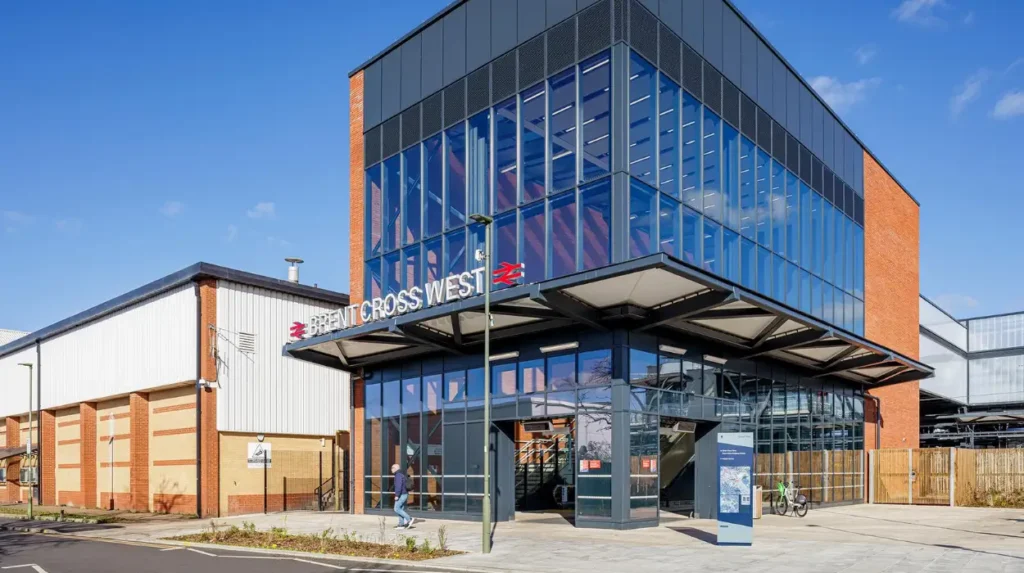
Brent Cross West added another important rail connection. The station opened in December 2023 on the Thameslink route between Cricklewood and Hendon. Barnet Council describes it as London’s first new mainline station in more than a decade and states that it connects Brent Cross with central London in as little as 12 minutes.
The station also supports the development of Brent Cross Town, strengthening the relationship between transport infrastructure and regeneration.
What role does Brent Cross West play in Barnet’s gateway function?
Brent Cross West provides a modern Thameslink connection in southern Barnet and strengthens access between Brent Cross Town, central London and the wider rail network. Its opening added a major transport interchange to an area undergoing large-scale regeneration.
Brent Cross West is significant because transport infrastructure and urban development are closely connected in this part of Barnet.
The station sits on the Midland Main Line between Cricklewood and Hendon. Its Thameslink services provide a direct rail connection into central London and northwards along the wider Thameslink network.
The station opened in December 2023. Barnet Council described it as a major milestone for the borough and a gateway to the new Brent Cross Town neighbourhood.
Its pedestrian overbridge also improves movement across the railway corridor. Barnet Council states that the bridge created pedestrian access across this section of the Midland Main Line for the first time since the railway was constructed in the 19th century.
This illustrates a wider principle behind Barnet’s gateway status. Transport infrastructure does not simply move people through the borough. It also supports new neighbourhoods, employment areas, retail destinations and public spaces.
Brent Cross West consequently strengthens both local accessibility and Barnet’s regional transport role.
How do Barnet’s roads connect North London with destinations beyond London?
Barnet’s road network provides important northbound connections through routes including the A1 and M1, linking London with Hertfordshire, the wider East of England and destinations across northern England. These routes complement public transport connections across the borough.
Road infrastructure is another major reason Barnet functions as a gateway.
The A1 passes through the wider Barnet area and forms part of a historic north-south route between London and northern England. The M1 begins at Staples Corner near the southern edge of Barnet and provides a major motorway connection northwards.
The M1 connects London with destinations including Watford, Milton Keynes, Leicester, Nottingham and areas farther north.
The A1 provides a different strategic route towards Hertfordshire and northern destinations. These routes support private cars, commercial traffic, buses and other road users.
Barnet’s road position is particularly important because public transport is stronger for radial journeys towards central London than for every orbital journey across the borough. Barnet Council identifies local orbital connectivity as an ongoing transport challenge.
The road network therefore provides flexibility that rail and Underground routes do not always provide.
For domestic business travellers, this connectivity supports journeys between North London, Hertfordshire and central London. For leisure travellers, it creates access to destinations beyond the capital.
The road network also explains why congestion and sustainable transport are important issues in Barnet’s long-term planning.
Why does Barnet’s historical development explain its modern transport importance?
Barnet’s transport importance has deep historical roots because an established route from London towards St Albans passed through the area centuries before modern railways and motorways existed. Later markets, roads and railways reinforced this strategic position.
Barnet’s gateway function is not a recent development.
Barnet Council records that the settlement existed before the Norman Conquest and that an important route from London towards St Albans passed through the area by the 11th century. High Barnet developed around this movement corridor.
The historic market also contributed to the area’s importance. Barnet’s market has existed in different forms and locations since at least the 12th century. Markets historically concentrated commercial activity around established routes because traders and customers needed reliable access.
Railways later transformed the scale of movement.
Underground and mainline railway expansion connected Barnet’s settlements more closely with London’s employment and commercial core. Roads subsequently expanded the range of destinations accessible from the borough.
As you explore the modern transport network, you are crossing land with a deep heritage. Read about the full to understand its origins.
The modern gateway role is therefore part of a long geographical pattern. Barnet repeatedly developed around routes that connected London with settlements farther north.
How easy is it to travel from Barnet to central London?
Barnet has strong radial connections into central London through the Northern line and National Rail, with multiple stations distributed across the borough. Journey times vary by starting point, destination and service, but direct routes serve major central areas.
Central London is the most important destination for many Barnet journeys.
The Northern line provides direct access towards Camden Town and central London. From the High Barnet and Edgware branches, passengers can travel towards locations including Euston, King’s Cross St Pancras, Bank and London Bridge through the wider Northern line network.
National Rail provides another route.
Thameslink services connect Barnet stations with central London destinations. Brent Cross West, for example, provides a direct Thameslink connection towards central London.
Great Northern services from New Barnet and Oakleigh Park provide access towards London terminals and central areas.
This choice of transport modes reduces reliance on one corridor.
The distribution of stations also matters. A traveller staying in High Barnet has a different optimal route from someone staying in Hendon or Brent Cross. The same applies to business travellers working in different parts of London.
Barnet’s strength is therefore network coverage rather than a single universal journey.
Which Barnet areas are best connected for visitors and business travellers?
High Barnet, Finchley, Hendon, Brent Cross, Colindale, Edgware and Cricklewood each have different transport advantages. The strongest choice depends on proximity to Underground stations, National Rail services, major roads and the traveller’s final destination.
High Barnet benefits from the Northern line’s northern terminus and provides access to the historic town centre.
Finchley benefits from several Northern line stations, including Finchley Central, West Finchley and East Finchley. This creates a dense Underground network across the area.
Hendon has both Underground and National Rail connections. Hendon Central provides Northern line access, while Hendon station provides Thameslink services.
Brent Cross benefits from the Northern line and the newer Brent Cross West Thameslink station. This makes it one of the borough’s strongest transport locations.
Colindale has a Northern line station and sits near major road corridors.
Edgware forms another important transport centre in north-west Barnet. Its Underground station is the northern terminus of the Edgware branch.
Cricklewood has Thameslink access and strong road connections towards central and western London.
For visitors, the best area depends on attractions and accommodation. For business travellers, the relevant factor is proximity to the final workplace. For digital workers, access to town centres and transport can influence where daytime work takes place.
How does Barnet support travel beyond its own borough?
Barnet connects with neighbouring London boroughs and areas beyond Greater London through Underground, National Rail, bus and road networks. These connections make it possible to travel across North London without treating Barnet as an isolated destination.
Barnet’s gateway role becomes clearer when journeys continue beyond the borough boundary.
Travellers can move south towards Camden and Westminster, east towards Enfield and Haringey, west towards Brent and Harrow, and north towards Hertfordshire.
The Northern line provides the strongest southbound connection. Thameslink and Great Northern provide northbound rail connections.
Bus services perform an additional function. They connect neighbourhoods that are not directly served by Underground or National Rail stations and provide orbital links between town centres.
Barnet Council’s transport strategy specifically identifies the need to improve interchange and orbital connectivity across the borough. The council adopted its current Transport Strategy 2025–2042 in July 2025.
This is important because gateway status involves more than travelling towards central London. It also involves movement between different parts of North London.
The transport network therefore operates at several scales: neighbourhood, borough, London-wide and regional.
Why does Barnet’s growing population increase the importance of its transport network?
Barnet’s population reached approximately 389,300 in the 2021 Census, up 9.2% from 2011. Population growth increases demand for reliable public transport, roads, walking routes and cycling infrastructure across the borough.
Population is a major factor in transport planning.
The ONS recorded approximately 389,300 residents in Barnet in 2021, compared with approximately 356,400 in 2011. The borough’s population therefore increased by around 33,000 people over the decade.
Barnet’s 9.2% population increase was higher than London’s overall 7.7% increase during the same period.
This growth affects travel demand.
More residents generate more journeys to work, schools, shops, healthcare facilities, leisure destinations and transport interchanges.
Growth also increases demand around regeneration areas. Brent Cross Town is a major example where new development is directly associated with improved rail infrastructure.
Barnet Council’s current transport strategy focuses on safe and accessible transport, integrated sustainable transport, thriving neighbourhoods and innovation in transport delivery.
The gateway role will therefore remain closely connected to infrastructure investment.
How does Barnet balance transport connectivity with sustainable travel?
Barnet’s transport strategy combines public transport investment with walking, cycling, cleaner vehicles and improved interchange. The objective is to support movement while reducing congestion, improving accessibility and creating a more sustainable transport network.
High connectivity creates benefits but also creates transport pressure.
Barnet Council identifies congestion and overcrowding as challenges associated with population growth. Its connected-borough strategy supports better orbital public transport, improved interchange and greater use of walking and cycling.
The current Barnet Transport Strategy 2025–2042 places sustainable and inclusive transport at the centre of the borough’s long-term approach.
This means the future gateway model is not based solely on additional road capacity.
Walking is important around town centres and stations. Cycling provides short-distance connections between neighbourhoods and transport hubs. Buses provide links between areas without direct rail access.
Rail and Underground services remain essential for longer journeys.
Electric vehicles and other transport technologies also form part of the wider transition towards cleaner travel.
For visitors, these changes increase the range of transport choices. For residents, they influence how easily different neighbourhoods connect with one another.
The strategic objective is an integrated network rather than dependence on one transport mode.
Explore More Area Guide
Independent Businesses Shaping Barnet’s Local Character
How to Explore Barnet on a Budget: Free Attractions
What makes Barnet different from other North London gateways?
Barnet combines a large geographic area, a population of nearly 390,000, several Underground corridors, National Rail routes, strategic roads and a long history as a northbound route. This combination gives it an unusually broad gateway function within North London.
Other parts of North London provide strong transport connections, but Barnet combines several forms of accessibility across a particularly large borough.
Its Underground network reaches both High Barnet and Edgware. National Rail provides Thameslink and Great Northern services. Brent Cross West adds a modern Thameslink station. Major roads connect the area with destinations north of London.
Barnet also contains multiple town centres rather than one dominant central district.
This creates a distributed transport network. Different parts of the borough function as separate gateways depending on the journey.
High Barnet serves the northern end of the Northern line. Edgware performs a similar function on the western branch. Hendon combines Underground and National Rail. Brent Cross combines Underground access with Thameslink at Brent Cross West. Cricklewood provides another rail connection towards central London.
The borough therefore operates as a network of gateways rather than a single gateway.
Its historical position reinforces this role. The route towards St Albans helped establish Barnet’s importance long before modern transport infrastructure existed.
What is Barnet’s long-term importance as a North London gateway?
Barnet’s long-term importance comes from its strategic position between central London and northern destinations, supported by Underground, National Rail, roads and ongoing transport planning. Population growth and regeneration continue to make reliable connections central to the borough’s future.
Barnet’s gateway role is firmly established by geography, history and infrastructure.
The borough provides several routes into central London and several routes towards areas beyond the capital. Its Northern line branches reach deep into the borough, while Thameslink and Great Northern services expand regional access.
Brent Cross West demonstrates how new transport infrastructure continues to reshape the borough. The station connects a growing regeneration area with central London and the wider Thameslink network.
Population growth also strengthens the importance of transport planning. Barnet grew by 9.2% between the 2011 and 2021 censuses, reaching approximately 389,300 residents.
The council’s Transport Strategy 2025–2042 provides the current strategic framework for improving accessibility, sustainability, safety and connectivity.
For tourists, Barnet offers a practical base for exploring North London and central London. For residents, it provides access to a wide employment and leisure geography. For digital workers and business travellers, its transport links make movement between different parts of London more straightforward.
Barnet is therefore a gateway in both a geographical and transport sense. Its historical northbound route evolved into a modern network of Underground lines, railways, roads, buses and regeneration-led infrastructure.
That combination explains why Barnet remains one of the most strategically connected areas of North London.
Why is Barnet called a gateway to North London?
Barnet is considered a gateway to North London because it connects central London with northern London, Hertfordshire and destinations beyond the capital through Underground, National Rail, bus and road networks.