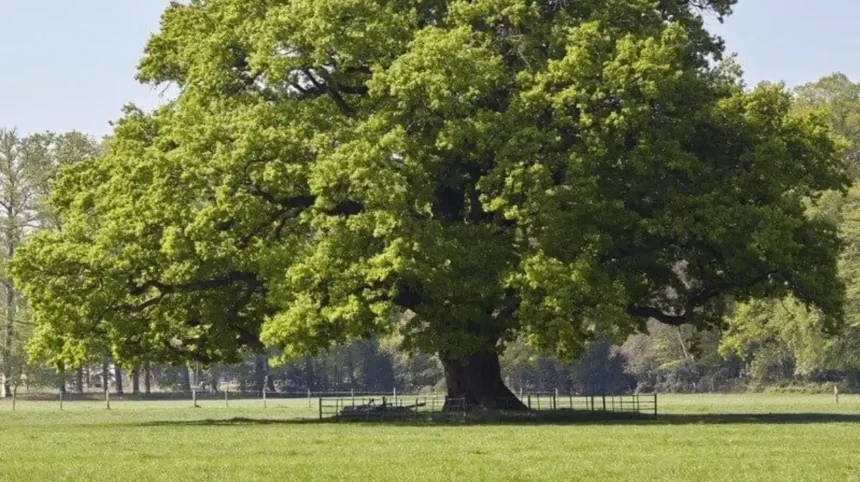
North London’s London Borough of Barnet contains a varied landscape of ancient woodland, hedgerows, grassland, parks, gardens and nature reserves. These habitats support native British trees, flowering plants, grasses, ferns and shrubs that form an important part of the borough’s local biodiversity.
- What Does Native Flora Mean in Barnet?
- Which Native Trees Grow in Barnet?
- Which Native Wildflowers Grow in Barnet’s Green Spaces?
- Which Native Plants Grow in Barnet’s Woodlands?
- Where Can Visitors See Native Trees and Plants in Barnet?
- How Has Barnet’s History Shaped Its Native Vegetation?
- How Do Soil and Water Conditions Affect Native Plants in Barnet?
- How Do Native Plants Support Wildlife in Barnet?
- When Is the Best Time to See Native Plants in Barnet?
- How Can Visitors Identify Native Plants Without Damaging Habitats?
- How Is Barnet Protecting Its Native Trees and Plants?
- Why Do Barnet’s Native Trees and Plants Matter for the Future?
For visitors exploring Barnet, understanding its native flora provides a practical way to recognise local habitats, discover quieter walking routes and appreciate the ecological history of North London. Native plants also support insects, birds and other wildlife by providing food, shelter and breeding sites.
What Does Native Flora Mean in Barnet?
Native flora in Barnet refers to plant species that occur naturally in the British Isles and form part of the borough’s local vegetation. Examples include English oak, silver birch, hawthorn, bluebell and common nettle, although individual species vary according to soil, moisture, shade and habitat.
Native flora includes trees, shrubs, wildflowers, grasses and other plants that established themselves in Britain without deliberate human introduction. Some species arrived naturally after the last Ice Age, while others spread through long-established ecological processes.
Barnet’s native vegetation reflects its position on the northern edge of Greater London, where suburban development meets remnants of countryside. Woodland, parkland, railway verges, streams and open grassland provide different conditions for plant growth.
The distinction between native, non-native and naturalised plants is important. A native species occurs naturally in the region. A non-native species has been introduced from another geographical area. A naturalised species is a non-native plant that has established self-sustaining populations outside cultivation.
For example, English oak (Quercus robur) is native to Britain, while Japanese knotweed (Reynoutria japonica) is an introduced species that spreads aggressively in suitable conditions. A park containing both species therefore supports a mixture of native and non-native vegetation.
Native status also differs from conservation status. A plant can be native and common, such as the common nettle, or native and locally scarce. Identifying a species correctly requires attention to its physical characteristics, growing environment and geographical distribution.
Which Native Trees Grow in Barnet?
Native trees in Barnet include English oak, silver birch, downy birch, ash, field maple, hazel and rowan. Examples occur in woodland, hedgerows, mature parkland and other green spaces, although the presence of each species depends on local soil conditions and management.
Trees provide the structural framework of many habitats in Barnet. Their branches create nesting sites, their leaves support insects, and their roots stabilise soil. Fallen leaves and decaying wood also contribute to nutrient cycling.
English oak
English oak (Quercus robur) is one of Britain’s characteristic native broadleaved trees. It has a broad crown, lobed leaves and acorns attached to long stalks. Mature oaks support numerous insects and provide food for birds and mammals.
Oak trees occur in established woodland and parkland settings. Their longevity creates habitats that develop over decades or centuries, including cavities, loose bark and deadwood used by specialist wildlife.
Silver birch and downy birch
Silver birch (Betula pendula) is recognised by its pale bark, slender branches and small triangular leaves. It often grows in open woodland, woodland edges and disturbed ground where sufficient light reaches the soil.
Downy birch (Betula pubescens) is another native birch. Its young shoots and leaves have a softer, hairy appearance, and it is more associated with damp conditions than silver birch.
Both species support insects and contribute to the early stages of woodland regeneration.
Ash
Ash (Fraxinus excelsior) is a native tree with compound leaves and distinctive black buds. It occurs in a range of British woodland types, including habitats with relatively fertile soils.
Ash dieback, a disease caused by the fungus Hymenoscyphus fraxineus, has affected ash populations across Britain. The disease causes crown decline and can kill trees, creating challenges for woodland management and the long-term composition of native woods.
Field maple
Field maple (Acer campestre) is Britain’s only maple species native to the country. It grows as a small tree or large shrub and is commonly associated with hedgerows, woodland edges and traditional farmland boundaries.
Its five-lobed leaves turn yellow in autumn. Its dense branching structure provides shelter for birds, while its flowers supply nectar and pollen to insects.
Hazel and rowan
Hazel (Corylus avellana) is a native shrub or small tree found in woodland understoreys and hedgerows. Its nuts provide food for wildlife, including squirrels and some woodland mammals.
Rowan (Sorbus aucuparia), also called mountain ash, produces clusters of white flowers followed by red-orange berries. These berries provide food for birds, particularly during late summer and autumn.
Species identification should always be based on the actual tree rather than the general appearance of a green space. Barnet’s parks contain planted ornamental trees as well as naturally occurring native species.
Which Native Wildflowers Grow in Barnet’s Green Spaces?
Native wildflowers in Barnet include common knapweed, selfheal, tufted vetch, creeping thistle and other meadow plants. Examples are found in grassland, field margins and traditional hedgerows, where flowering vegetation supports pollinating insects and maintains the character of North London’s countryside.
Barnet’s wildflowers are particularly visible in areas where grassland receives less intensive mowing. These plants provide nectar and pollen, produce seeds for wildlife and create ground cover for small invertebrates.
Common knapweed
Common knapweed (Centaurea nigra) is a native perennial wildflower with purple, thistle-like flower heads. It grows in grassland, roadside verges and meadow habitats.
Its flowers attract bees, butterflies and other insects during summer. The plant is especially useful in meadow management because it contributes to the variety of flowering resources available throughout the season.
Selfheal
Selfheal (Prunella vulgaris) is a low-growing perennial with small purple flower spikes. It grows in lawns, grassland and other open habitats, including areas that receive occasional mowing.
Its compact growth and flowering structure make it easy to overlook. Visitors examining the edges of paths and less closely cut grass find it more readily than those walking through formal lawns.
Tufted vetch
Tufted vetch (Vicia cracca) is a climbing or scrambling perennial with clusters of violet-blue flowers. It grows through grasses and other vegetation in meadows, hedgerows and field margins.
As a member of the pea family, it forms relationships with soil bacteria that help convert atmospheric nitrogen into forms the plant can use. Its flowers also provide resources for pollinating insects.
Creeping thistle
Creeping thistle (Cirsium arvense) is a native perennial with pink-purple flower heads. Its underground roots allow it to spread through suitable grassland and disturbed ground.
Although it is often treated as an agricultural weed, its flowers provide nectar and pollen for insects. Its presence illustrates why ecological value and agricultural management priorities are not always identical.
Other meadow flowers
Other native or long-established wildflowers occur according to the local habitat. Examples include oxeye daisy (Leucanthemum vulgare), bird’s-foot trefoil (Lotus corniculatus) and common sorrel (Rumex acetosa).
These plants do not occur uniformly throughout the borough. Soil fertility, mowing frequency, grazing and the history of a site influence which species survive. A species-rich meadow therefore differs significantly from a frequently cut recreational lawn.
Which Native Plants Grow in Barnet’s Woodlands?
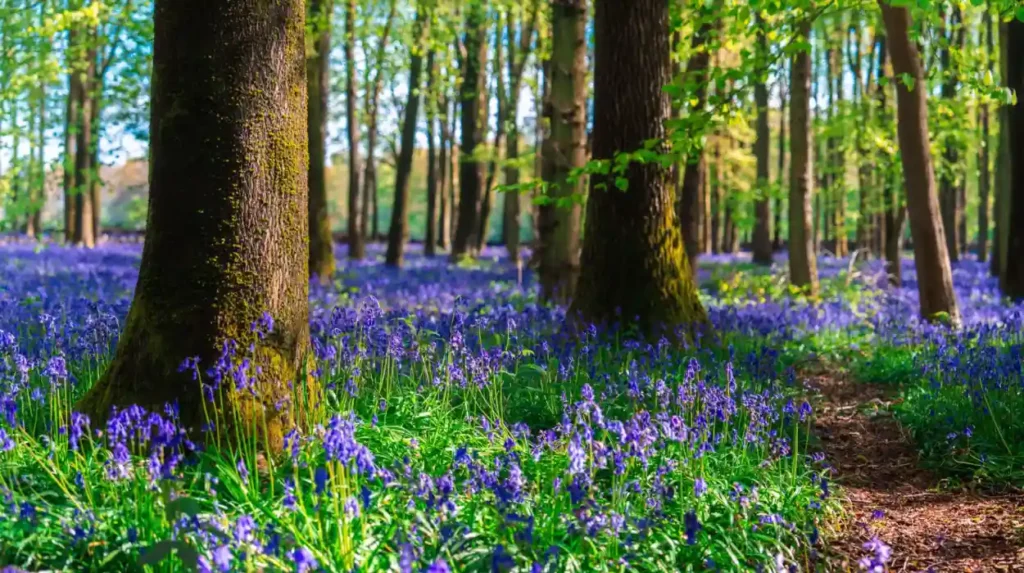
Native woodland plants in Barnet include bluebells, wood anemones, brambles, ferns and woodland ground flora associated with mature trees. Examples are found in shaded woodland, damp stream margins and clearings, where seasonal light and soil moisture determine which plants thrive.
Woodland plants occupy several layers beneath the tree canopy. The ground layer contains mosses, ferns and flowering plants. Shrubs form the understorey, while mature trees create the canopy above them.
Bluebells
English bluebell (Hyacinthoides non-scripta) is a familiar native woodland flower. It produces drooping clusters of blue-violet, bell-shaped flowers, usually in spring.
Bluebells grow particularly well in established woodland where the soil and light conditions suit them. Their spring growth takes advantage of sunlight reaching the woodland floor before deciduous trees develop their full leaf canopy.
English bluebells are distinct from Spanish bluebells and hybrid plants frequently found in gardens. Native bluebells typically have flowers hanging mainly to one side of the stem, narrow leaves and strongly recurved flower tips.
Visitors should avoid trampling bluebell colonies. Their presence is an indicator of woodland conditions, but a single flowering display does not independently establish a site’s formal ancient-woodland status.
Wood anemone
Wood anemone (Anemone nemorosa) is a spring-flowering perennial associated with established woodland. It has white, occasionally pink-tinged flowers and deeply divided leaves.
The plant spreads gradually through underground rhizomes. This slow growth means established colonies are vulnerable to disturbance and do not recover immediately after repeated trampling or soil disruption.
London Wildlife Trust identifies wood anemones among the notable features of Oak Hill Wood in East Barnet. The reserve’s woodland habitat makes it a useful destination for visitors interested in spring flora.
Brambles and woodland shrubs
Bramble (Rubus fruticosus aggregate) is a group of closely related blackberry plants found in woodland edges, hedgerows and scrub. Its flowers provide food for insects, and its fruits feed birds and mammals.
Other native shrubs include hawthorn (Crataegus monogyna), blackthorn (Prunus spinosa) and elder (Sambucus nigra). These shrubs create dense cover, support insects and provide seasonal fruit.
Shrub growth is important where woodland transitions into grassland. A mixture of open ground, scrub and mature trees creates more varied conditions than a uniformly shaded stand of trees.
Ferns and mosses
Ferns grow in suitable shaded and damp locations, including stream banks, woodland slopes and sheltered ground. Bracken (Pteridium aquilinum) is a native fern that can form extensive stands in suitable conditions.
Mosses grow on soil, stones, decaying wood and tree trunks. They help retain moisture and contribute to small-scale habitat diversity.
Not every fern or moss seen in Barnet is necessarily native. Accurate identification requires examination of individual characteristics rather than relying on the general appearance of a plant.
Where Can Visitors See Native Trees and Plants in Barnet?
Visitors can explore native flora at Oak Hill Wood, Totteridge Fields and Rowley Green Nature Reserve. Examples include woodland trees, meadow wildflowers, hedgerow shrubs and wetland vegetation, with the best locations depending on whether visitors prefer shaded paths or open countryside.
Oak Hill Wood, East Barnet
Oak Hill Wood is an ancient woodland and Local Nature Reserve within Oak Hill Park. Its trees include oak, hornbeam and ash, while its slopes and stream corridor support varied woodland conditions. London Wildlife Trust recommends the reserve for woodland flowers and wildlife.
Totteridge Fields
Totteridge Fields contains traditional countryside, mature hedgerows and grassland along the Dollis Brook valley. Common knapweed, tufted vetch, selfheal and creeping thistle are among the flowers recorded by Barnet Council.
Rowley Green Nature Reserve, Arkley
Rowley Green is notable for its bog habitat, woodland, grassland and boggy ponds. Oak and birch are prominent trees. Its wet ground provides conditions different from those found in dry grassland or formal urban parks.
How can visitors choose the right nature reserve?
Oak Hill Wood suits visitors interested in woodland plants and tree identification. Totteridge Fields is more suitable for observing wildflowers across open grassland and hedgerows. Rowley Green provides an opportunity to understand how wet ground supports a distinct plant community.
Before travelling, check access information and current site guidance. Woodland paths become muddy after rain, and uneven slopes require suitable footwear. Visitors should remain on permitted paths and avoid entering fenced or restricted habitats.
How Has Barnet’s History Shaped Its Native Vegetation?
Barnet’s native vegetation reflects centuries of woodland management, farming, grazing, settlement and urban development. Examples include mature hedgerows, ancient woodland, traditional meadows and trees retained in parks, each preserving different elements of the borough’s changing relationship with the surrounding countryside.
The landscape of Barnet is not entirely untouched wilderness. Its habitats reflect natural processes alongside generations of land management.
Ancient woodland is generally defined in England as land that has been continuously wooded since at least 1600. Such sites can contain distinctive soils, fungi, plants and other organisms associated with long periods of woodland continuity.
Oak Hill Wood is described by London Wildlife Trust as medieval woodland thought to date back at least to the 11th century. Its history includes church ownership, incorporation into the Oak Hill Estate during the 16th century, and acquisition by the local authority in 1931. The park opened for public recreation in 1933.
Traditional hedgerows also preserve evidence of former field boundaries. Hawthorn, blackthorn, field maple and hazel are examples of native woody plants that form hedges. These structures provide routes for wildlife moving between woodland fragments, meadows and gardens.
As you explore Barnet’s green spaces today, you are crossing landscapes shaped by generations of land use. Read the full [Insert Anchor Text for Barnet History Article Here] to understand how the area’s historical development shaped its countryside, settlements and surviving green spaces.
Urban development has changed the distribution of habitats across Barnet. Roads, housing, railways and commercial areas divide some green spaces into smaller patches. Parks, gardens, streams and green corridors help maintain connections between these habitats.
The survival of ancient woodland and traditional meadow vegetation therefore has importance beyond appearance. These habitats retain ecological features that are difficult to recreate quickly once lost.
How Do Soil and Water Conditions Affect Native Plants in Barnet?
Soil type, moisture, drainage and sunlight determine which native plants grow successfully in Barnet. Examples include bluebells in established woodland, knapweed in grassland and birch around suitable woodland edges, while wet habitats support vegetation adapted to persistently damp conditions.
Barnet contains several contrasting habitat types within one borough. These include ancient woodland, traditional hay meadow, watercourses and urban green spaces. Barnet Council identifies these habitats as important components of the borough’s biodiversity.
Woodland soil and shade
Woodland soils contain decomposing leaves, twigs and other organic matter. This material supports soil organisms and contributes nutrients as it breaks down.
Bluebells and wood anemones are adapted to seasonal woodland light. Their growth and flowering cycles take advantage of brighter conditions before many deciduous trees develop dense summer foliage.
Plants growing under mature trees also compete for water, nutrients and space. Shade-tolerant species survive where direct sunlight is limited.
Grassland and meadow conditions
Meadow plants respond strongly to soil fertility and mowing practices. Species-rich grassland often benefits from management that prevents vigorous grasses from dominating the vegetation.
Regularly cutting grass short before wildflowers flower and set seed reduces their ability to reproduce. Carefully timed mowing, removal of cut vegetation and appropriate grazing maintain more varied plant communities.
At Totteridge Fields, mature hedgerows and grassland create a landscape that supports native flowers and insects. The site’s connection with the Dollis Brook valley adds further habitat variation.
Wetland and streamside conditions
Wet ground supports plants that tolerate reduced oxygen around their roots or seasonal flooding. Rowley Green Nature Reserve is particularly relevant because its boggy ponds and woodland provide conditions that differ from dry grassland.
Streamside vegetation also helps stabilise banks, slow surface water and provide shelter for wildlife. Protecting these plants reduces the risk of soil erosion and helps maintain the ecological quality of watercourses.
How Do Native Plants Support Wildlife in Barnet?
Native plants support Barnet’s wildlife by providing food, shelter, nesting material and breeding habitat. Examples include oak leaves feeding insect larvae, hawthorn berries feeding birds, bluebell flowers attracting pollinators and dense bramble growth offering cover for small animals.
Native plants form the foundation of many local food webs. Leaves, flowers, seeds, fruits and roots supply resources to insects, birds, mammals and soil organisms.
Oak trees are particularly valuable because their foliage supports many insect species. Caterpillars and other invertebrates then provide food for insect-eating birds. Mature trees also offer nesting sites and cavities for wildlife.
Flowering plants contribute at different points in the year. Early spring flowers provide resources when insect activity increases, while summer meadow flowers support pollinators through warmer months. Autumn berries and seeds provide food as temperatures fall.
Hedgerows link habitats that would otherwise remain isolated. A hedge containing hawthorn, blackthorn and hazel offers flowers, fruit and shelter. These functions become more important where roads and buildings interrupt the surrounding landscape.
Deadwood also has ecological value. Fallen branches and decaying trunks support fungi, beetles and other decomposers. Removing every piece of deadwood from a woodland reduces habitat opportunities for organisms that depend on decaying timber.
Native vegetation does not guarantee the presence of every associated animal. Wildlife distribution also depends on habitat quality, disturbance, connectivity and seasonal conditions. Protecting a range of plant communities gives more species access to suitable resources.
When Is the Best Time to See Native Plants in Barnet?
Spring and summer provide the widest opportunities to observe Barnet’s native flowering plants, while autumn highlights woodland trees and fruiting shrubs. Examples include bluebells in spring, meadow flowers in summer, red berries in autumn and visible tree structures during winter.
Spring: March to May
Look for emerging woodland flowers, including bluebells and wood anemones. Fresh leaves also make it easier to identify some shrubs and trees before the woodland canopy becomes dense.
Summer: June to August
Explore grassland for common knapweed, tufted vetch and selfheal. Flowering periods vary with temperature, rainfall and local management, so individual species do not flower on identical dates every year.
Autumn: September to November
Observe changing leaf colours, oak acorns and fruiting shrubs. Rowan berries and other fruits also help visitors recognise native trees and understand their seasonal role in wildlife feeding.
Winter: December to February
Study bark, buds, branching patterns and evergreen ground cover. The absence of leaves makes the structure of deciduous trees easier to examine, although most woodland wildflowers remain inconspicuous.
Seasonal observations are most useful when visitors record the date and location alongside the species. This creates a clearer picture of flowering times and helps distinguish annual variation from long-term ecological change.
How Can Visitors Identify Native Plants Without Damaging Habitats?
Visitors can identify Barnet’s native plants by examining leaf shape, bark, flowers, fruits and growing conditions, then checking these features against a reliable field guide. Examples include oak leaves, birch bark and bluebell flower structure, observed without picking plants or disturbing wildlife.
Start by examining the overall plant structure. Trees can be identified using their leaves, buds, bark and fruits, while wildflowers are often recognised through flower shape, leaf arrangement and stem characteristics.
Record the habitat as well as the plant. A flower growing in shaded woodland has a different ecological context from a similar-looking species found in a garden or roadside verge.
For accurate identification, use resources from established botanical organisations, conservation charities or recognised plant identification guides. Scientific names help distinguish species that share similar common names.
Photography is an effective method for documenting plants without damaging them. Take clear images of the whole plant, its leaves and any flowers or fruits. Avoid stepping off paths into sensitive vegetation to obtain a better photograph.
Visitors should not uproot plants, remove wildflowers or collect seeds from protected sites without permission. Some plants are difficult to identify without specialist knowledge, and rare species can be harmed by repeated disturbance.
A simple field notebook can record the species name, location, date, habitat and visible characteristics. For travellers interested in local ecology, these observations turn a routine walk into a structured nature study.
Explore More Area Guide
Historic Public Buildings in Barnet: Places to Visit
What Makes Barnet’s Suburban Architecture Distinctive?
How Is Barnet Protecting Its Native Trees and Plants?
Barnet protects native vegetation through nature reserve management, tree planting, habitat restoration and biodiversity planning. Examples include conservation work at Oak Hill Wood, the protection of grassland habitats and the borough’s commitment to plant 5,000 trees by 2028.
Barnet Council identifies biodiversity protection as part of its environmental priorities. Approximately one-third of the borough’s area is classified as green space, including woodland, meadows and watercourses. These habitats help support wildlife while providing recreational spaces for residents and visitors.
Woodland restoration
Oak Hill Wood demonstrates how targeted management protects woodland biodiversity. London Wildlife Trust has managed the reserve, including work to control non-native species such as cherry laurel and rhododendron.
The reserve has also used natural regeneration to encourage woodland expansion into neighbouring grassland. Natural regeneration allows existing trees to produce seeds and establish new growth, reducing the need to introduce young trees from elsewhere.
This approach helps maintain locally adapted vegetation and creates opportunities for woodland habitats to expand where conditions are suitable.
Tree planting and urban greenery
Barnet approved its Tree Planting Policy in 2023, establishing a target of planting 5,000 trees by 2028. The programme aims to improve air quality, increase greenery and strengthen resilience to flooding.
Tree planting provides the greatest ecological benefit when species selection reflects local conditions. Native trees such as English oak, field maple, hazel and silver birch provide resources for wildlife when planted in appropriate locations.
New planting also requires long-term maintenance. Young trees need suitable soil conditions, sufficient water and protection from damage to establish successfully.
Grassland and wetland conservation
Meadows and wetlands require management suited to their ecological characteristics. Appropriate mowing, grazing, invasive plant control and protection of watercourses help preserve different habitat types.
Barnet’s wider biodiversity work includes surveying sites and developing a Local Nature Recovery Plan. These activities support the identification of habitats that require protection, improvement or better connections with neighbouring green spaces.
Conservation remains an ongoing process. Urban development, invasive species, changing weather patterns and recreational pressure all influence the condition of native vegetation.
Why Do Barnet’s Native Trees and Plants Matter for the Future?
Barnet’s native trees and plants help maintain biodiversity, regulate local temperatures, manage rainfall and connect fragmented habitats. Examples include mature oaks providing wildlife habitat, meadow flowers supporting pollinators and streamside vegetation helping stabilise soil along local watercourses.
Native vegetation has environmental, ecological and recreational value. Trees provide shade and intercept rainfall, while their roots and surrounding soils help manage water movement. These functions are particularly relevant in built-up areas where hard surfaces increase surface runoff.
Woodland and meadow habitats also support nature-based recreation. Visitors can study plant identification, observe seasonal changes and explore less urbanised parts of North London without travelling far from residential areas.
Maintaining these benefits requires more than planting individual trees. Ecological diversity depends on the quality and connectivity of entire habitats, including understorey vegetation, flowering plants, hedgerows and natural water features.
Future conservation work in Barnet therefore depends on protecting established habitats while improving the ecological value of parks, streets, gardens and development sites. Native species are an important part of this process, provided they are planted and managed in ways that suit local environmental conditions.
For visitors, the most useful way to appreciate Barnet’s flora is to compare several habitat types. A woodland walk reveals shade-tolerant flowers and mature trees, while a meadow visit highlights grasses, flowering plants and pollinator activity. A wetland reserve demonstrates how water and soil conditions shape vegetation.
What trees are native to Barnet?
Native trees found in Barnet include English oak, silver birch, downy birch, ash, field maple, hazel and rowan. These trees grow in woodland, hedgerows, parks and other green spaces across North London.