Key Points
- Barnet Council Approval: The London Borough of Barnet has formally passed an opposition motion to explore an official town twinning partnership with Haifa, Israel’s third-largest city.
- Voting Breakdown: The motion, tabled by Conservative Councillor Raffy Lachter, passed with Conservative support. Labour councillors abstained from the vote, whilst the single Green Party member and one Independent member voted against the motion.
- Hackney’s Decision: The move comes shortly after Hackney Council ended its 50-year municipal twinning agreement with Haifa, following a letter sent by Hackney’s Green Party Mayor, Zoë Garbett.
- Key Strategic Focus Areas: The proposed alliance seeks to establish collaborative links between Barnet and Haifa across local healthcare, higher education, research, and community cultural exchanges.
- Demographic Context: Barnet is home to the largest Jewish population of any UK local authority, comprising 56,616 residents (14.5% of the borough) according to the 2021 Census, as well as sizeable Christian (36.6%) and Muslim (12.2%) communities.
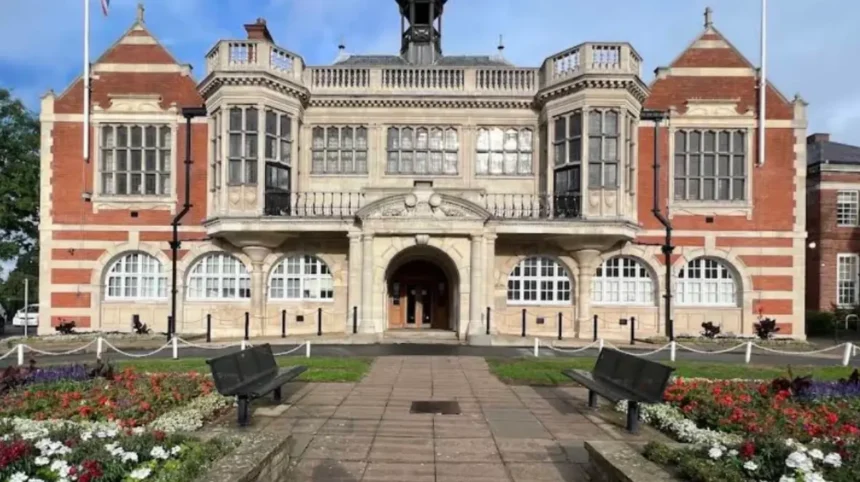
Barnet (North London News) October 24, 2026 – The London Borough of Barnet has voted in favour of an opposition motion to examine entering into a formal civic twinning agreement with the northern Israeli port city of Haifa. The decision was reached during a full council meeting on 20 October 2026, following a motion brought forward by Conservative Councillor Raffy Lachter. The resolution instructs council officers to examine the potential operational costs, governance frameworks, and practical requirements of establishing formal civic ties before reporting back to the next ordinary meeting of the council.
As reported by Niva Yadav of The London Standard, two Conservative members were absent from the chamber but were recorded as supporting the principle of the motion. Members of the ruling Labour group chose to abstain during the vote, whilst the council’s sole Green Party member, alongside an Independent councillor, voted directly against the proposal.
Barnet Council already maintains active civic links with several international partners, including Ramat Gan in Israel, Chaville in France, Siegen-Wittgenstein in Germany, Pokhara in Nepal, and Montclair in the United States. Proponents of the new motion stated that the selection of Haifa aligns with the borough’s diverse demographic landscape and existing international engagement commitments.
What are the proposed objectives of the Barnet-Haifa partnership?
As reported by The London Standard, Conservative Councillor Raffy Lachter detailed the civic and institutional goals behind the proposal, expressing a desire to establish operational links between local public services. As reported by Councillor Raffy Lachter of Barnet Council, Lachter stated:
“My vision is to officially twin Barnet with the city of Haifa, but what I’m most excited for is what the ties can achieve, like meaningful cooperation in healthcare, education, and research.”
Highlighting the structural parallels between the two jurisdictions, Councillor Lachter pointed to the potential for direct institutional collaboration between higher education institutions and healthcare providers. As reported by Councillor Raffy Lachter of Barnet Council, Lachter stated:
“There are two universities in Haifa, and we have the University of Middlesex in Barnet. We have Barnet General Hospital, and they’ve got Rambam Hospital. There are real opportunities to connect.”
Councillor Lachter noted that previous municipal arrangements in London, such as those formerly operated by Homerton Hospital in Hackney, allowed medical personnel to participate in skill-sharing exchanges with Israeli counterparts. The motion seeks to replicate similar exchange initiatives between medical staff at Barnet General Hospital and healthcare professionals in Haifa.
Addressing Haifa’s social dynamics, Councillor Lachter added:
“Haifa is the most diverse city in Israel. It’s a multicultural city. It’s a city where Arabs and Jews rub along and work together, so we thought it was appropriate. Anyone who knows Israel and knows the city will understand that, and many of the residents in Barnet would also understand that.”
How did Hackney Council sever its historic ties with Haifa?
The decision by Barnet Council follows the decision by the London Borough of Hackney to terminate its 50-year municipal twinning partnership with Haifa. Hackney had initially established its twinning arrangement with Haifa in the 1970s, although official administrative activities under the framework had remained dormant since 2019.
As reported by Michelle Rosenberg of Jewish News, newly elected Green Mayor of Hackney, Zoë Garbett, issued formal correspondence to civic leadership in Haifa announcing the end of the partnership. The initial consultation deadline associated with the decision drew scrutiny due to its proximity to the anniversary of the 7 October attacks. Following public criticism, Mayor Garbett issued an apology for what she described as a “deeply regretful oversight” and subsequently extended the administrative review deadline.
Campaigners advocating for the severing of Hackney’s ties asserted that continuing a formal relationship with a major Israeli municipal port was inconsistent with the borough’s values amid the ongoing conflict in Gaza. Conversely, Haifa Mayor Yona Yahav responded to the decision by emphasizing that Haifa’s core values of multi-community coexistence would remain unchanged despite Hackney’s withdrawal.
Background of the particular development
Town twinning in the United Kingdom originated in the post-Second World War era as a mechanism to promote international reconciliation, cross-border cultural understanding, and commercial links between local government areas. These agreements typically involve non-political, community-led initiatives such as educational exchanges, municipal knowledge sharing, sports tournaments, and trade networking.
Haifa is Israel’s third-largest municipality and its primary commercial seaport, situated within sovereign Israeli territory established in 1948. The city contains a mixed population of Jewish Israelis and Arab residents who identify as Palestinian, making it widely recognized internationally as an urban hub for cohabitation and joint economic activity.
The London Borough of Barnet features a distinctive demographic profile. According to data from the 2021 Census, Barnet contains the highest concentration of Jewish residents of any local authority in the United Kingdom, totaling 56,616 people or 14.5 percent of the borough’s total population. The borough also encompasses significant religious minorities, including a Christian population representing 36.6 percent and a Muslim population representing 12.2 percent of local residents.
Prediction: How this development can affect the local community and key stakeholders
The decision to initiate formal discussions regarding a twinning arrangement between Barnet and Haifa is anticipated to impact several local stakeholder groups across the borough in distinct ways:
- Local Academic and Healthcare Institutions: If officers approve the governance framework and formalize the agreement, Middlesex University and Barnet General Hospital could establish structured research and professional exchange programmes with the University of Haifa, Technion, and Rambam Health Care Campus. This could facilitate shared research projects and clinical observational placements for medical staff.
- Civic and Faith Communities in Barnet: Given Barnet’s demographic landscape, the motion may reinforce civic engagement among Jewish community groups seeking cultural ties with Israel. Conversely, local groups concerned with international human rights and Middle Eastern affairs may continue to express opposition during the officer review phase, maintaining public debate at future full council meetings.
- Local Governance and Council Resources: Council officers are now tasked with evaluating the operational feasibility and financial implications of the proposed link. The outcome of their report will determine whether the council proceeds to draft a formal charter, which will require additional vote procedures from elected members in upcoming council sessions.