Holloway reflects Islington’s urban character through its combination of historic streets, high-density housing, multicultural communities, independent businesses, established shopping areas and ongoing regeneration. Located in North London, Holloway demonstrates how an inner-London neighbourhood balances residential life, commercial activity, cultural diversity and changing urban development.
- What Is Holloway and Where Is It Located in Islington?
- How Does Holloway Fit Within the Borough of Islington?
- Why Is Holloway Important to North London’s Urban Identity?
- How Has Holloway’s Historical Development Shaped Its Urban Character?
- How Did Holloway Change During the Nineteenth Century?
- What Role Did Holloway Road Play in Urban Expansion?
- How Does Holloway’s Housing Reflect Islington’s Residential Character?
- Why Are Victorian Terraced Houses Important to Holloway?
- How Does Social Housing Shape the Neighbourhood?
- How Is New Housing Changing Holloway?
- How Does Nag’s Head Reflect Holloway’s Commercial Identity?
- Why Is Nag’s Head an Important Shopping Destination?
- How Has Retail Development Changed the Area?
- What Does Nag’s Head Tell Visitors About Holloway’s Urban Character?
- How Does Cultural Diversity Influence Holloway’s Community Identity?
- How Do Independent Businesses Reflect Cultural Diversity?
- How Do Community Facilities Support Social Connections?
- Why Is Cultural Diversity Important to Holloway’s Future?
- How Does Public Transport Shape Holloway’s Urban Development?
- What Are the Main Transport Connections in Holloway?
- How Does Holloway Road Influence Movement?
- Why Is Transport Accessibility Important for Residents and Visitors?
- How Does Holloway Compare with Other Islington Neighbourhoods?
- How Is Holloway Different from Highbury?
- How Is Holloway Different from Canonbury?
- How Is Holloway Different from Barnsbury?
- How Is Holloway Different from Angel?
- How Is Urban Regeneration Changing Holloway?
- What Is Happening at the Former Holloway Prison Site?
- Why Is the Women’s Building Important?
- How Will Holloway Park Influence the Surrounding Neighbourhood?
- How Do Green Spaces and Public Facilities Contribute to Holloway’s Urban Character?
- What Role Do Parks Play in Holloway?
- How Do Libraries and Educational Facilities Strengthen the Community?
- How Does Holloway Support Modern Working and Everyday Urban Lifestyles?
- Why Is Holloway Suitable for Students and Young Professionals?
- Can Remote Workers Find Suitable Working Environments in Holloway?
- What Makes Holloway Practical for Domestic Business Travellers?
- How Does Local Planning Influence Holloway’s Future Development?
- What Is the Islington Local Plan?
- Why Is Affordable Housing Important for Holloway?
- How Can Holloway Maintain Its Existing Identity During Regeneration?
- Why Is Holloway an Important Example of Islington’s Urban Character?
The neighbourhood provides an important perspective on Islington’s wider identity. While areas such as Angel and Canonbury are associated with Georgian architecture, independent restaurants and attractive residential streets, Holloway has a more varied urban landscape. Its character comes from traditional terraced houses, purpose-built flats, busy transport corridors, local shopping centres and community facilities.
Holloway also illustrates the relationship between historical development and modern regeneration. Its former industrial and institutional sites, established residential streets and evolving commercial areas show how Islington responds to changing housing needs and population growth.
For visitors, Holloway offers an opportunity to understand a less commercialised side of North London. For residents, students, professionals and local businesses, it represents an established urban community with strong transport connections and access to everyday services.
What Is Holloway and Where Is It Located in Islington?
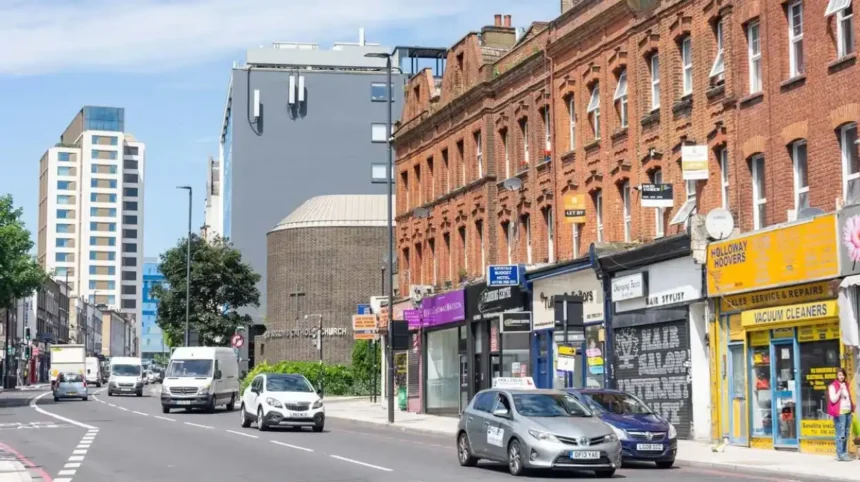
Holloway is a residential and commercial neighbourhood in the London Borough of Islington, North London. It centres on Holloway Road, the A1 route connecting Highbury Corner with Archway, and includes established housing areas, shopping facilities, educational institutions and community spaces.
Holloway occupies a central position in Islington’s northern section. Its main commercial corridor is Holloway Road, which connects several neighbourhoods and provides access to local services, public transport and employment destinations.
The neighbourhood is closely associated with the Nag’s Head town centre, one of Islington’s established shopping destinations. Its wider surroundings include Archway, Highbury, Tufnell Park, Finsbury Park and Caledonian Road.
Holloway’s location gives it a distinctive urban structure. Rather than developing around one traditional village centre, it grew along a major transport route. Residential streets extend from this central corridor, creating a combination of busy commercial frontages and quieter housing environments.
How Does Holloway Fit Within the Borough of Islington?
Islington is an inner-London borough situated immediately north of the City of London. It contains residential neighbourhoods, commercial centres, cultural destinations and major transport connections.
According to Islington Council, the borough has 17 electoral wards. Holloway is one of these wards, alongside neighbouring areas such as Highbury, Hillrise, Tollington and Tufnell Park. The present ward structure followed boundary changes introduced in May 2022.
Holloway represents the densely developed northern part of the borough. Its streets connect residential communities with employment, education and retail facilities across Islington and neighbouring London boroughs.
Why Is Holloway Important to North London’s Urban Identity?
Holloway demonstrates the relationship between residential density and accessible neighbourhood services. Its shops, transport links, educational facilities and housing developments support everyday urban life.
Its identity also differs from the more internationally recognised destinations of central Islington. Holloway retains a strong local shopping culture and a practical residential character. This makes it an important example of how North London’s neighbourhoods serve permanent communities as well as visitors.
How Has Holloway’s Historical Development Shaped Its Urban Character?
Holloway’s urban character developed from an historic route through northern London into a densely populated residential and commercial neighbourhood. Road improvements, railway expansion, Victorian building activity and twentieth-century institutions transformed its landscape and established the foundations of modern Holloway.
The history of Holloway explains why its present-day streets contain different architectural styles and building types. Its development followed changes in transport, population movement, housing demand and commercial activity.
The name Holloway dates back to at least the fifteenth century. It refers to a hollow or sunken highway that crossed the area. The historic route connected London with settlements further north and eventually formed part of the Great North Road.
Islington’s local history records that Edward III licensed tolls for gravelling the highway in 1384. The route was subsequently turnpiked in 1717, improving its role as an important road into London.
How Did Holloway Change During the Nineteenth Century?
During the early nineteenth century, Holloway contained villas, cottages and developing settlements along its main roads. The arrival of improved transport connections encouraged further residential and commercial expansion.
The neighbourhood gradually developed into a significant shopping and residential district. Department stores, entertainment venues, churches and public buildings became important elements of its built environment.
Several historic buildings demonstrate this development:
- St Mary Magdalene Church, completed in 1811, represents early nineteenth-century religious architecture.
- St John’s Church, built between 1826 and 1828, reflects the area’s expanding population.
- Islington Central Library, opened in 1906, demonstrates the development of public educational facilities.
- The Holloway Odeon, opened in 1938, represents twentieth-century entertainment architecture.
These buildings contribute to Holloway’s architectural identity and demonstrate how public institutions became integrated into its growing urban environment.
What Role Did Holloway Road Play in Urban Expansion?
Holloway Road became the main organising feature of the neighbourhood. Its position on the historic northbound route encouraged shops, services and residential development along its length.
Commercial businesses established themselves close to the road because it attracted passing traffic and served nearby residents. Housing expanded into adjoining streets, creating a compact urban district.
This development pattern remains visible today. Holloway Road continues to function as a commercial and transport corridor, while surrounding streets provide residential accommodation and local community facilities.
For a deeper understanding of this transformation, explore the [historical development of Holloway and Nag’s Head](Insert Anchor Text for History Article Here).
How Does Holloway’s Housing Reflect Islington’s Residential Character?
Holloway reflects Islington’s residential character through its mixture of Victorian terraces, converted properties, mansion blocks, purpose-built flats, council housing and contemporary developments. This housing diversity supports different household sizes, income groups and lifestyles within a densely populated inner-London neighbourhood.
Housing is one of the strongest indicators of Holloway’s urban identity. Its residential landscape demonstrates how Islington accommodates different generations and household types within limited urban space.
Traditional terraced streets remain an important feature of the neighbourhood. These properties reflect nineteenth-century expansion and provide continuity with Holloway’s earlier residential development.
Alongside older houses, purpose-built flats and converted buildings increase the range of available accommodation. Modern developments introduce additional housing capacity and contemporary architectural designs.
Why Are Victorian Terraced Houses Important to Holloway?
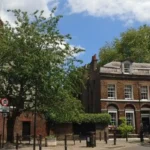
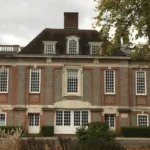
Victorian terraces form part of Holloway’s established residential landscape. These properties typically feature brick façades, repeated building layouts, bay windows and narrow front gardens.
Their street-facing design creates continuous building lines and clearly defined pavements. This arrangement supports a traditional urban streetscape where residential entrances sit close to public roads.
Many older properties have also undergone internal modernisation. Some contain separate flats, while others remain single-family homes. This creates a mixture of traditional architecture and contemporary residential use.
How Does Social Housing Shape the Neighbourhood?
Social housing is an important part of Islington’s wider housing structure. It provides affordable accommodation in a borough where private housing costs create substantial pressure on household budgets.
Holloway’s residential character includes established housing estates and affordable housing developments. These properties support long-term communities and provide accommodation for residents who work or study locally.
Social housing also influences the neighbourhood’s community facilities. Schools, health services, local shops and public spaces serve residents across different housing tenures.
How Is New Housing Changing Holloway?
New housing developments are increasing the amount and variety of accommodation in Holloway. The former Holloway Prison site represents one of the most significant examples of this transformation.
The redevelopment introduces residential buildings, affordable homes, public space and community facilities. It demonstrates how former institutional land can support a new urban neighbourhood.
The wider implications extend beyond housing numbers. New developments influence pedestrian movement, local shopping demand, public-space provision and the relationship between established streets and newer residential areas.
How Does Nag’s Head Reflect Holloway’s Commercial Identity?
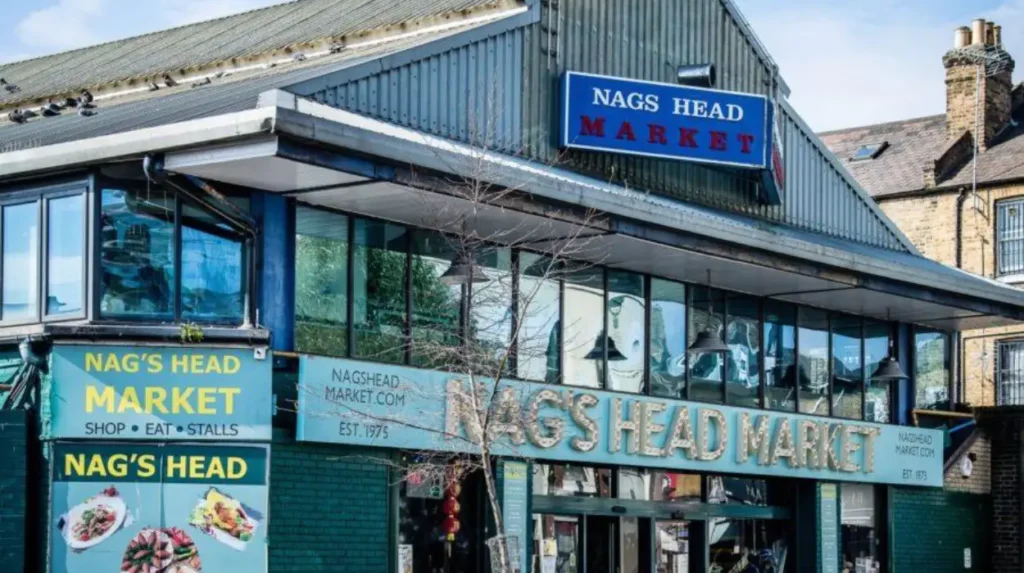
Nag’s Head reflects Holloway’s commercial identity through its concentration of retail shops, supermarkets, independent businesses, restaurants and everyday services. Its position around Holloway Road and Seven Sisters Road makes it an important shopping destination for surrounding residential communities.
Nag’s Head is one of the most recognisable commercial areas in Holloway. It serves residents from neighbouring streets and attracts shoppers travelling through North London.
The shopping district has developed alongside the area’s population growth. Its commercial activity reflects the practical needs of a densely populated residential neighbourhood rather than relying exclusively on tourism or destination shopping.
Why Is Nag’s Head an Important Shopping Destination?
Nag’s Head occupies a central position on Holloway Road, close to its junction with Seven Sisters Road. It sits approximately halfway between Archway and Highbury Corner.
Islington Council’s Nag’s Head Town Centre Strategy identifies the area as an established shopping centre serving a densely populated local community. The strategy also recognises its accessibility by underground services and buses.
The commercial environment includes different types of businesses, such as:
- Supermarkets and convenience shops, including Waitrose and Sainsbury’s.
- Independent retailers, including specialist food and everyday household businesses.
- Cafés and restaurants, serving residents, workers and visitors.
- Personal services, including hairdressers, barbers and beauty businesses.
- Local service providers, including pharmacies and professional businesses.
This commercial diversity makes Nag’s Head an important part of Holloway’s everyday economy.
How Has Retail Development Changed the Area?
Nag’s Head experienced significant commercial investment during the twentieth century. In 1992, central government funding supported the Nag’s Head Urban Partnership, which brought together the council, local businesses and residents to encourage town-centre improvements.
This programme contributed to the development of the Nag’s Head Shopping Centre. The former Jones Brothers department store, which had been part of the John Lewis Partnership, was converted into a Waitrose supermarket with additional retail and office space.
The former Odeon cinema also underwent refurbishment, increasing its capacity from one screen to eight screens.
These changes demonstrate how Holloway adapted its traditional shopping environment to changing consumer requirements.
What Does Nag’s Head Tell Visitors About Holloway’s Urban Character?
Nag’s Head demonstrates how local shopping centres support established residential communities. Its retail businesses provide convenient access to everyday products and services.
For visitors, the area provides a useful starting point for exploring Holloway Road. Its shops, food businesses and surrounding streets offer insight into the neighbourhood’s commercial and cultural identity.
How Does Cultural Diversity Influence Holloway’s Community Identity?
Cultural diversity is central to Holloway’s community identity. Its residents, independent businesses, international food outlets and community organisations contribute to a multicultural neighbourhood that reflects Islington’s wider population and its position within London’s diverse urban environment.
Islington has a long-established reputation for cultural diversity. Holloway reflects this characteristic through its residential population and everyday commercial activity.
The neighbourhood contains residents from different cultural backgrounds, age groups and professional communities. Their presence influences local food businesses, community services, religious facilities and neighbourhood events.
The council describes diversity as a fundamental element of Islington’s identity. Its published borough information records a population of approximately 242,827 and states that 33% of residents were born outside the United Kingdom. These figures describe the borough rather than Holloway ward alone.
How Do Independent Businesses Reflect Cultural Diversity?
Independent businesses provide visible evidence of Holloway’s multicultural character. Local shops and restaurants serve different communities and contribute to the neighbourhood’s commercial variety.
International food businesses are particularly important. Specialist grocery shops and restaurants provide products and cuisines associated with different regions and cultural traditions.
This commercial activity creates a connection between local residents and the wider economy of London. It also helps maintain a neighbourhood shopping environment that serves everyday needs.
How Do Community Facilities Support Social Connections?
Community facilities support interaction between residents and strengthen neighbourhood relationships. Libraries, schools, religious buildings, healthcare facilities and local organisations provide opportunities for participation in community life.
Islington Central Library is an important public facility in the wider Holloway area. It provides access to reading materials, information and learning resources.
Local schools and community organisations also support families and young people. These institutions contribute to the neighbourhood’s long-term residential character.
Why Is Cultural Diversity Important to Holloway’s Future?
Cultural diversity contributes to the economic and social resilience of Holloway. Independent businesses attract customers, community organisations support residents, and established cultural networks create continuity during periods of redevelopment.
However, population growth and changing housing costs also create challenges. Maintaining affordable accommodation, accessible public services and suitable commercial premises remains important for preserving the neighbourhood’s social diversity.
How Does Public Transport Shape Holloway’s Urban Development?
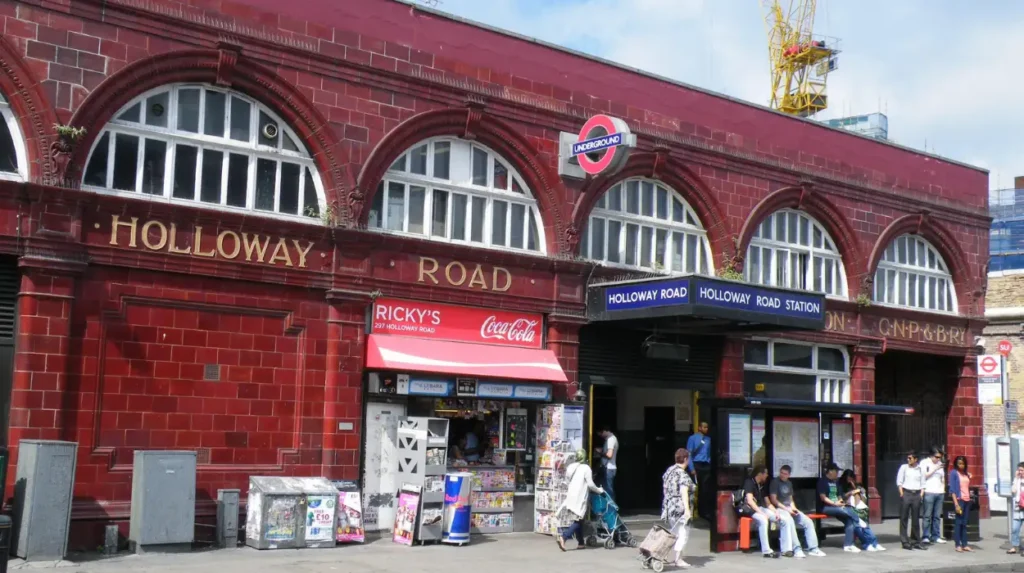
Public transport shapes Holloway’s urban development by connecting residential streets with employment centres, educational institutions and shopping destinations across London. Holloway Road Underground station, nearby railway stations and extensive bus routes support movement and reinforce the neighbourhood’s commercial importance.
Transport accessibility is one of Holloway’s most significant urban characteristics. Its position along a major north London road has supported residential expansion and commercial development for generations.
The neighbourhood benefits from connections to central London and surrounding districts. These links support residents commuting to work, students travelling to educational institutions and visitors exploring North London.
What Are the Main Transport Connections in Holloway?
Holloway Road Underground station is situated on the Piccadilly line. It provides direct connections towards central London and destinations further north.
Other useful transport facilities include:
- Highbury & Islington station, providing access to the Victoria line and London Overground services.
- Caledonian Road station, offering another Piccadilly line connection.
- Archway station, connecting the surrounding area through the Northern line.
- Local bus routes, linking Holloway with neighbouring communities and central London.
The availability of different transport options supports daily movement and reduces dependence on private vehicles.
How Does Holloway Road Influence Movement?
Holloway Road is an important north-south transport corridor. It carries local traffic, buses, cyclists and pedestrians while providing access to retail and residential destinations.
Its commercial activity benefits from pedestrian movement. Shops, restaurants and services are positioned along the route, allowing residents to combine shopping with daily travel.
However, busy roads also create urban challenges. Traffic congestion, noise and air pollution affect the quality of the surrounding residential environment.
These conditions make pedestrian safety, public transport improvements and sustainable travel important considerations in Holloway’s future planning.
Why Is Transport Accessibility Important for Residents and Visitors?
Transport accessibility increases Holloway’s appeal as a residential location. Workers can reach employment centres, students can travel to universities, and residents can access services across the capital.
For visitors, the transport network makes Holloway a practical base for exploring Islington and other North London destinations.
The combination of underground stations, buses and walkable shopping streets reflects the compact and connected nature of inner-London neighbourhoods.
How Does Holloway Compare with Other Islington Neighbourhoods?
Holloway differs from other Islington neighbourhoods through its stronger emphasis on busy commercial roads, diverse residential accommodation and established local shopping. Comparisons with Highbury, Canonbury, Barnsbury and Angel reveal the different architectural and social characteristics within the borough.
Islington contains several distinct neighbourhoods. Their urban identities reflect differences in historical development, housing, commercial activity and public-space provision.
Holloway’s character becomes clearer when compared with surrounding areas.
How Is Holloway Different from Highbury?
Highbury is recognised for its residential streets, green spaces and proximity to Emirates Stadium. Its built environment includes Victorian and Edwardian houses, mansion blocks and modern residential developments.
Holloway has a more prominent commercial-road character. Holloway Road contains a substantial concentration of everyday retail businesses, while its adjoining streets provide residential accommodation.
Both neighbourhoods combine older housing with modern development. However, Holloway’s identity is more closely connected to its shopping corridor and transport infrastructure.
How Is Holloway Different from Canonbury?
Canonbury is associated with Georgian architecture, historic squares, residential conservation areas and quieter streets.
Holloway has a more varied architectural landscape. Its busy roads, Victorian terraces, apartment buildings and commercial premises create a denser and more mixed streetscape.
Canonbury attracts visitors interested in architectural heritage and traditional residential character. Holloway provides a stronger example of everyday urban activity and neighbourhood commerce.
How Is Holloway Different from Barnsbury?
Barnsbury is known for Georgian and Victorian residential architecture, garden squares and conservation areas.
Holloway contains a broader mixture of housing types and commercial buildings. Its urban environment demonstrates the relationship between residential density, retail activity and transport connections.
Both neighbourhoods contribute to Islington’s architectural heritage, but their streetscapes represent different stages and patterns of urban development.
How Is Holloway Different from Angel?
Angel is a major commercial and leisure destination within Islington. Upper Street, restaurants, independent retailers and cultural venues contribute to its strong visitor appeal.
Holloway has a more locally focused commercial identity. Nag’s Head serves the everyday shopping requirements of nearby residential communities, while Holloway Road connects several northern neighbourhoods.
Together, these areas demonstrate the variety of urban environments within Islington.
How Is Urban Regeneration Changing Holloway?
Urban regeneration is changing Holloway through new housing, improved public spaces, redevelopment of former institutional land and investment in community facilities. These projects reflect Islington’s wider approach to accommodating population growth while maintaining neighbourhood identity and supporting inclusive development.
Regeneration is an important part of Holloway’s contemporary urban character. The neighbourhood contains established buildings alongside redevelopment sites that introduce new residential and commercial uses.
The former Holloway Prison redevelopment is particularly significant because it transforms a large institutional site into a mixed-use residential area.
What Is Happening at the Former Holloway Prison Site?
Holloway Prison closed in 2016. The Ministry of Justice sold the site to housing association Peabody in March 2019.
The redevelopment became known as Holloway Park. Islington Council granted planning permission in April 2022 for a comprehensive scheme containing 985 homes, a Women’s Building, commercial space and publicly accessible green space.
The approved development includes:
- 985 residential homes, including 60 extra-care homes.
- A commitment to 60% affordable housing in the original approved scheme.
- A 1.4-acre public park.
- A dedicated Women’s Building.
- Approximately 1,800 square metres of commercial space.
- New pedestrian connections and landscaped public areas.
The project demonstrates how a former institutional site can become an integrated residential neighbourhood.
Why Is the Women’s Building Important?
The Women’s Building connects the redevelopment with the former prison’s history as a women’s correctional institution.
Its purpose is to provide a dedicated community facility for women and women’s organisations. The development also includes 155 social rented homes within the same building.
In September 2026, the Greater London Authority reported that construction of the building was progressing. Completion was expected in March 2028, although the long-term fit-out and operating arrangements remained under development.
The building represents an important example of how regeneration can retain a connection with a site’s historical and social significance.
How Will Holloway Park Influence the Surrounding Neighbourhood?
Holloway Park introduces additional housing and public facilities into an established urban area. Its pedestrian routes and public park are designed to improve connections between surrounding streets.
New residents also increase demand for local services, shops, healthcare and public transport. This creates opportunities for businesses while increasing pressure on existing infrastructure.
The project’s long-term success depends on maintaining accessible public space, delivering affordable housing and ensuring that new facilities serve established as well as incoming residents.
How Do Green Spaces and Public Facilities Contribute to Holloway’s Urban Character?
Green spaces and public facilities improve Holloway’s residential environment by providing opportunities for recreation, community interaction and everyday outdoor activity. Parks, libraries, educational buildings and accessible public areas balance the neighbourhood’s dense housing and busy commercial streets.
Holloway’s urban character is not defined exclusively by buildings and roads. Public facilities and outdoor spaces also influence how residents experience the neighbourhood.
In a densely populated part of London, access to green space is particularly important. Parks provide places for walking, exercise and social activities without requiring residents to travel outside their local area.
What Role Do Parks Play in Holloway?
Nearby parks and green spaces provide recreational opportunities for Holloway residents.
Examples include:
- Whittington Park: A neighbourhood green space near Archway with facilities for recreation and community activities.
- Paradise Park: A green space in the wider Islington area, offering landscaped areas and opportunities for outdoor activities.
- Highbury Fields: One of Islington’s major public parks, providing sports facilities, open lawns and walking routes.
- The new Holloway Park: A 1.4-acre public park included in the former prison redevelopment.
These spaces contribute to the wider network of outdoor facilities serving northern Islington.
How Do Libraries and Educational Facilities Strengthen the Community?
Public libraries and educational institutions support the social infrastructure of urban neighbourhoods.
Islington Central Library provides reading, information and learning services. Schools and educational facilities support families and young residents, while nearby colleges and universities contribute to the wider student population.
These facilities also support people who work remotely or require quiet places for independent study, subject to the services and facilities available at individual locations.
The relationship between education, public services and residential development reinforces Holloway’s function as a complete neighbourhood rather than simply a shopping destination.
How Does Holloway Support Modern Working and Everyday Urban Lifestyles?
Holloway supports modern urban lifestyles through accessible public transport, local shopping, educational facilities, residential accommodation and nearby employment centres. Its combination of everyday services and connections to central London benefits professionals, students, remote workers and business travellers.
Modern urban neighbourhoods need to support more than residential accommodation. They also require accessible services, convenient transport and spaces that accommodate changing working patterns.
Holloway provides these features through its established commercial streets and connections to other parts of London.
Why Is Holloway Suitable for Students and Young Professionals?
Holloway’s transport connections provide access to educational institutions and employment destinations.
Its mixture of housing types creates different accommodation options, including shared flats, rented apartments and traditional residential properties.
Local supermarkets, cafés, restaurants and essential services also make everyday living more convenient.
The nearby Emirates Stadium and Highbury area contribute to the wider leisure and employment environment, while transport connections support journeys to central London.
Can Remote Workers Find Suitable Working Environments in Holloway?
Remote workers benefit from Holloway’s local cafés, public transport and access to libraries and community facilities.
Cafés provide informal environments for short working sessions, meetings and independent study. However, visitors should check individual businesses’ policies regarding laptop use, Wi-Fi and seating availability.
Islington Central Library offers an alternative public learning environment. Its facilities and opening arrangements should be checked before planning a working visit.
Holloway’s location also allows remote workers to access wider coworking facilities across Islington and neighbouring areas.
What Makes Holloway Practical for Domestic Business Travellers?
Holloway offers convenient connections to central London and other business districts. Its accommodation and retail services also support visitors who need everyday facilities during short stays.
Business travellers can use Holloway as a base for exploring northern Islington while maintaining access to the wider London transport network.
Its urban character is therefore connected to both residential activity and the movement of people through the capital.
Explore More Area Guide
What Is Canonbury Known For? History, Architecture and Attractions
What Makes Finsbury Unique? History and Heritage of Islington
How Does Local Planning Influence Holloway’s Future Development?
Local planning influences Holloway’s future by guiding housing construction, commercial development, transport improvements, environmental protection and public-space provision. Islington Council’s Local Plan establishes the planning framework for balancing new development with heritage, community needs and sustainable neighbourhood growth.
Planning policy determines how neighbourhoods respond to population changes and economic pressures. In Holloway, it influences the relationship between existing residential streets, commercial centres and major redevelopment sites.
What Is the Islington Local Plan?
The Islington Local Plan is the council’s framework for managing development and land use across the borough.
Islington Council adopted its new Local Plan on 28 September 2023. It contains three main elements:
- Strategic and Development Management Policies.
- Site Allocations.
- Bunhill and Clerkenwell Area Action Plan.
These documents guide decisions about planning applications, development sites and the future use of land. Islington Council
For Holloway, planning considerations include housing delivery, affordable accommodation, town-centre vitality, public transport, pedestrian access and protection of important local buildings.
Why Is Affordable Housing Important for Holloway?
Affordable housing is important because Islington experiences substantial housing demand and significant differences in household income.
New developments provide opportunities to increase the supply of affordable accommodation. However, successful housing delivery also requires suitable infrastructure, public services and accessible community facilities.
Holloway Park illustrates this approach through its affordable housing commitment and provision of social rented accommodation.
How Can Holloway Maintain Its Existing Identity During Regeneration?
Maintaining Holloway’s identity requires development that responds to its existing urban structure.
New buildings need to consider surrounding architectural styles, street connections, pedestrian movement and the scale of neighbouring properties.
Commercial areas also require continued investment. Independent retailers and established businesses contribute to the area’s character and provide services that larger developments alone cannot replace.
Community consultation remains important when major planning decisions affect established residential streets.
Why Is Holloway an Important Example of Islington’s Urban Character?
Holloway is an important example of Islington’s urban character because it combines historic development, diverse housing, multicultural communities, established shopping streets and modern regeneration. Its changing landscape demonstrates how a densely populated London neighbourhood balances residential needs with economic and social development.
Holloway represents several defining characteristics of Islington.
Its historical development explains the importance of Holloway Road as a major transport and commercial corridor. Victorian terraces, public buildings and established residential streets preserve evidence of earlier urban expansion.
Nag’s Head demonstrates the importance of local shopping centres in supporting everyday community life. Its independent retailers, supermarkets and restaurants maintain a strong commercial connection with surrounding residential areas.
Cultural diversity contributes to the neighbourhood’s social and economic identity. Different communities influence local businesses, food culture, community facilities and the wider residential environment.
Housing diversity also makes Holloway representative of inner-London development. Traditional houses, converted buildings, social housing and contemporary apartments accommodate different household requirements.
The redevelopment of the former Holloway Prison site introduces another important dimension. Holloway Park demonstrates how large institutional sites can be transformed into residential neighbourhoods with affordable housing, public facilities and green space.
For tourists and leisure travellers, Holloway provides an opportunity to explore an established North London neighbourhood beyond the familiar destinations of central Islington. Its shopping streets, historic buildings and surrounding residential areas reveal the everyday character of the borough.
For residents, students and professionals, its transport connections and local services support practical urban living.
Holloway’s future identity will depend on how effectively new developments support existing communities. Affordable housing, accessible public spaces, sustainable transport and the continued vitality of Nag’s Head will remain important considerations.
Ultimately, Holloway reflects Islington’s urban character through the relationship between its past, present and future. It demonstrates how a historic North London neighbourhood continues to adapt while retaining its residential, commercial and multicultural foundations.
Where is Holloway located in London?
Holloway is a neighbourhood in the London Borough of Islington, North London. It is centred around Holloway Road and Nag’s Head, with nearby areas including Highbury, Archway and Tufnell Park.