Canonbury is known for its historic Georgian and Victorian architecture, attractive residential streets, literary connections, Canonbury Square, Canonbury Tower and the New River Walk. Located in the London Borough of Islington, this established North London neighbourhood combines architectural heritage, green spaces and a distinctive residential character. Its historic buildings, mature trees, traditional pubs and peaceful streets make it an interesting destination for visitors exploring London’s historic neighbourhoods.
- What Is Canonbury in North London Known For?
- Where Is Canonbury Located in North London?
- What Is the Historical Significance of Canonbury?
- Why Is Canonbury Tower an Important Historic Landmark?
- What Makes Canonbury Tower Architecturally Important?
- Which Famous People Were Associated with Canonbury Tower?
- Why Is Canonbury Square Famous?
- What Architectural Features Make Canonbury Special?
- What Are the Main Architectural Styles in Canonbury?
- Which Traditional Features Should Visitors Look For?
- How Does Conservation Protect Canonbury’s Architecture?
- What Is the New River Walk Known For in Canonbury?
- What Can Visitors See Along the New River Walk?
- Why Is the New River Walk Important to Canonbury Residents?
- Why Is Canonbury Considered One of Islington’s Established Residential Neighbourhoods?
- What Makes Canonbury’s Residential Streets Distinctive?
- How Do Green Spaces Contribute to Local Character?
- What Is the Relationship Between Canonbury and Modern Islington?
- What Can Tourists Explore in Canonbury?
- Which Streets Are Worth Exploring?
- What Cultural Attractions Are Nearby?
- How Long Should Visitors Spend Exploring Canonbury?
- What Makes Canonbury Interesting for Literature and Cultural History?
- Why Do Literary Connections Matter to Canonbury’s Identity?
- How Does Canonbury Connect with Islington’s Wider Cultural Heritage?
- What Local Amenities and Facilities Are Available in Canonbury?
- Where Can Visitors Find Cafés and Restaurants?
- Is Canonbury Suitable for Remote Workers?
- What Transport Facilities Serve Canonbury?
- Why Is Canonbury’s Conservation Area Important for Its Future?
- How Does Conservation Affect Property Improvements?
- How Will Canonbury Balance Heritage and Modern Living?
- Why Should Canonbury Be Included in a North London Visit?
Unlike London’s major commercial districts, Canonbury is primarily recognised for its residential identity and architectural character. Its streets preserve evidence of the area’s development from a medieval manor and Tudor estate into a fashionable residential neighbourhood during the eighteenth and nineteenth centuries.
The neighbourhood also has important connections with writers, artists and historical figures. George Orwell, Evelyn Waugh and other notable cultural figures lived in or around Canonbury Square. The surviving Canonbury Tower provides a physical connection to the area’s medieval and Tudor past.
For tourists, Canonbury offers an opportunity to explore historic London beyond the main attractions. Visitors can discover period houses, landscaped gardens, traditional streets and the remains of an important historic estate within easy reach of central Islington.
What Is Canonbury in North London Known For?
Canonbury is best known for its Georgian and Victorian residential architecture, historic Canonbury Square, medieval Canonbury Tower, literary associations and the New River Walk. Its established residential character distinguishes it from the busier commercial streets of nearby Islington and Angel.
Canonbury is a residential neighbourhood in the London Borough of Islington, north of central London. It sits between the wider Islington area, Highbury and Dalston, with Upper Street, Essex Road and Canonbury Road providing important local connections.
The neighbourhood developed around the historic Manor of Canonbury. Its name reflects its former association with religious institutions and the medieval estate connected with the Priory of St Bartholomew.
Today, Canonbury combines historic housing with modern residential properties, local businesses and community spaces. Its streets contain examples of Georgian townhouses, Victorian villas, traditional terraces and later residential developments.
The area’s architectural character is one of its strongest attractions. Many buildings retain original features, including decorative brickwork, sash windows, entrance steps, iron railings and traditional doorways.
Canonbury also benefits from its location within Islington. Residents and visitors have access to the restaurants, independent shops, cultural venues and transport connections of nearby Upper Street and Essex Road.
Its identity rests on three connected characteristics: architectural heritage, literary history and established residential life.
Where Is Canonbury Located in North London?
Canonbury is situated in the London Borough of Islington, approximately three miles north of central London’s main historic districts. It lies close to Upper Street, Essex Road, Highbury and Dalston, providing convenient access to central London and neighbouring North London communities.
Canonbury occupies an established residential area in inner North London. Its location places it within easy reach of Islington’s main shopping and entertainment streets while maintaining a quieter residential atmosphere.
Upper Street forms an important western reference point. This well-known Islington thoroughfare contains restaurants, shops, theatres and independent businesses. Essex Road provides another important local connection, linking Canonbury with surrounding neighbourhoods.
The neighbourhood also connects with Highbury to the north and Dalston towards the east. These neighbouring areas provide additional shopping, dining, leisure and cultural opportunities.
Canonbury does not have one universally recognised administrative boundary for everyday visitor purposes. Its wider local identity overlaps with surrounding parts of Islington, including East Canonbury.
How Can Visitors Reach Canonbury?
Canonbury benefits from several public transport options. Canonbury railway station is served by London Overground services, connecting the neighbourhood with destinations including Highbury & Islington, Dalston Junction and Stratford.
Highbury & Islington station provides access to the Victoria line and London Overground services. Essex Road railway station is another useful option for visitors travelling through the local area.
Local bus services connect Islington with other parts of London. Visitors can also reach Canonbury on foot from Upper Street and nearby Angel.
For tourists, walking is particularly useful because the neighbourhood’s architectural attractions are spread across residential streets rather than concentrated inside one visitor attraction.
Which Neighbourhoods Surround Canonbury?
Canonbury sits within a wider network of established North London neighbourhoods.
- Islington: Known for Upper Street, independent restaurants, theatres and historic buildings.
- Highbury: Recognised for Highbury Fields, residential streets and its football heritage.
- Dalston: Known for its creative businesses, nightlife and multicultural food scene.
- Angel: A popular destination for shopping, dining, entertainment and access to Regent’s Canal.
These neighbouring districts complement Canonbury’s quieter residential character and provide additional activities for visitors.
What Is the Historical Significance of Canonbury?
Canonbury has a history stretching back to the medieval period, when it formed part of an estate associated with religious institutions. Its development continued through Tudor ownership, eighteenth-century building projects and nineteenth-century residential expansion, creating today’s historic neighbourhood.
Canonbury’s historical identity is closely connected with the Manor of Canonbury. Historical accounts trace the manor to the medieval period, with records connecting its ownership to Ralph de Berners following the Norman Conquest.
The estate subsequently became associated with the Canons of St Bartholomew’s Priory in Smithfield. Religious ownership influenced the area’s early development and established the foundations of Canonbury’s historic identity.
Canonbury House became an important building within the estate. The surviving historic complex includes Canonbury Tower, which provides evidence of the area’s Tudor architectural development.
During the sixteenth century, the property passed into private ownership following the Dissolution of the Monasteries under Henry VIII. Thomas Cromwell received the manor, and Sir John Spencer later became associated with the estate.
Sir John Spencer was a wealthy London merchant and Lord Mayor of London. His ownership contributed to the rebuilding and expansion of Canonbury’s historic buildings.
The estate gradually lost its rural character as London expanded northwards. Agricultural land gave way to residential development, particularly during the eighteenth and nineteenth centuries.
This transition explains why Canonbury contains medieval and Tudor heritage alongside Georgian and Victorian residential architecture.
Visitors interested in understanding the neighbourhood’s historical development should also explore its wider heritage. Read about the complete [History of Canonbury and Its Medieval and Tudor Heritage Here] to understand how the historic manor developed into one of Islington’s established residential districts.
Historical accounts and records from the London Archives provide further evidence of the area’s development and its important buildings.
Why Is Canonbury Tower an Important Historic Landmark?
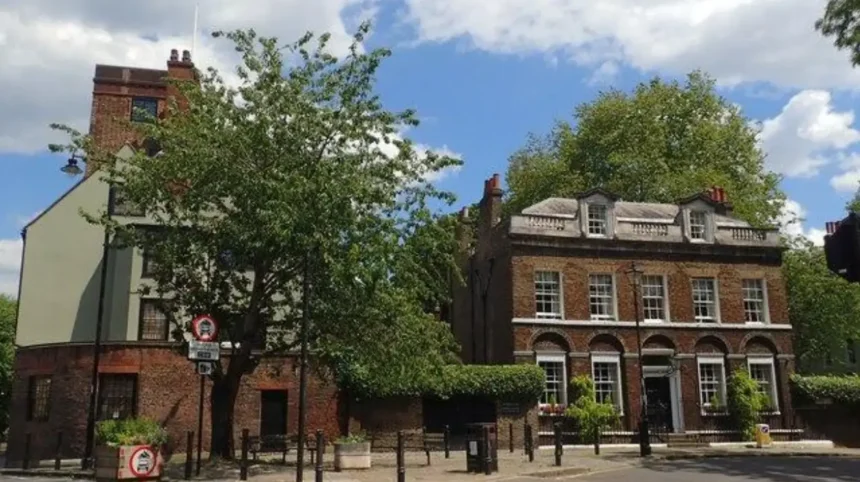
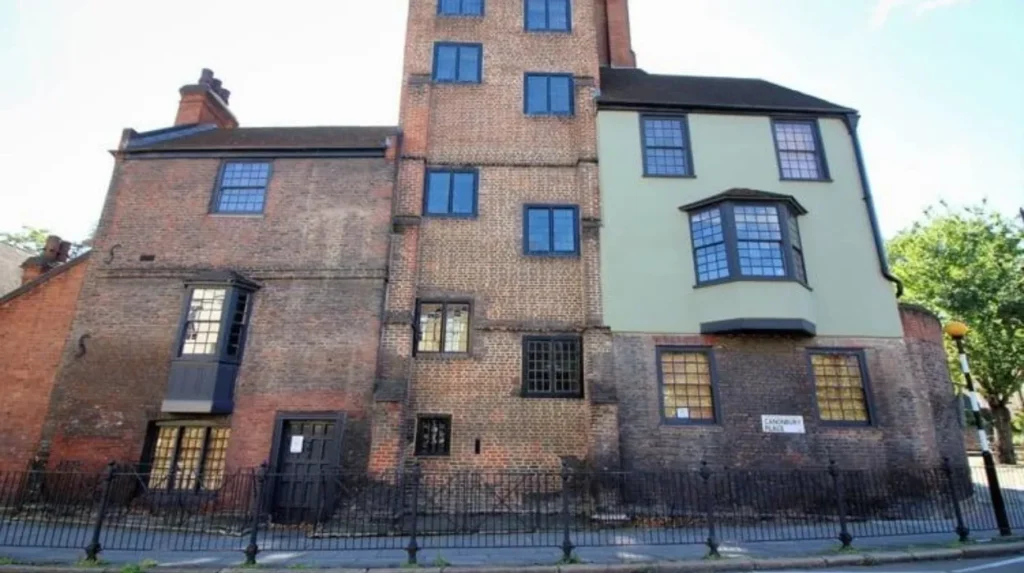
Canonbury Tower is one of Islington’s most important surviving historic buildings. The Grade II listed Tudor structure forms part of the former Canonbury manor complex and is associated with Sir John Spencer, Francis Bacon and the novelist Oliver Goldsmith.*
Canonbury Tower stands in Canonbury Place. It is a prominent reminder of the neighbourhood’s medieval and Tudor history.
The tower forms part of a larger historic building complex. The original manor house was rebuilt between 1509 and 1532 for the Canons of St Bartholomew’s Priory. Sir John Spencer subsequently undertook further rebuilding work during the late sixteenth century.
Historic England identifies the tower as a Grade II* listed building. This designation recognises its particular architectural and historic significance.
What Makes Canonbury Tower Architecturally Important?
The tower displays historic masonry construction and architectural features associated with Tudor domestic buildings.
Its staircase tower dates from approximately 1580, with the upper storey added later in the sixteenth century. Additional wings and alterations developed the wider building complex during the seventeenth and eighteenth centuries.
The building also underwent substantial restoration in 1907–08. These restoration works helped preserve its historic structure.
The tower is particularly important because it represents the survival of an earlier manor estate within a densely developed London neighbourhood.
Which Famous People Were Associated with Canonbury Tower?
Canonbury Tower has connections with several notable historical and literary figures.
Sir Francis Bacon, the English philosopher, statesman and writer, is associated with Canonbury through its historical ownership and occupancy records.
Oliver Goldsmith, the eighteenth-century Irish writer and author of The Vicar of Wakefield, is another notable figure connected with the tower.
John Newbery, an eighteenth-century publisher and bookseller, also appears among its historical occupants.
The Tower Theatre Company occupied the building from 1953 until 2003. This theatrical connection added another cultural dimension to its history.
Today, the building is associated with the Canonbury Tower Charitable Trust and the Canonbury Masonic Research Centre.
Why Is Canonbury Square Famous?
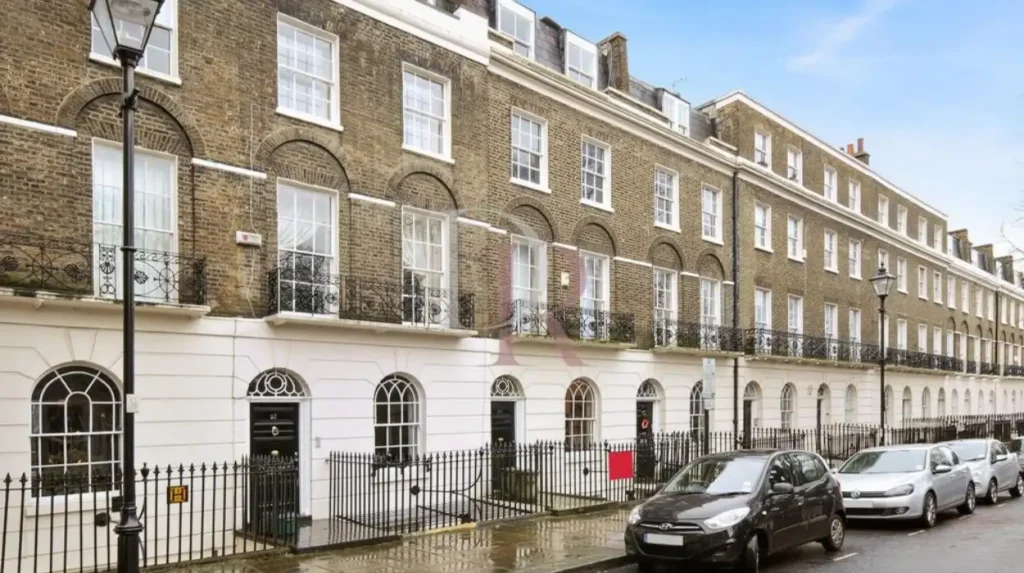
Canonbury Square is famous for its early nineteenth-century townhouses, landscaped communal gardens and literary connections. George Orwell and Evelyn Waugh both lived in the square, making it an important location within Islington’s architectural and cultural heritage.
Canonbury Square is one of the neighbourhood’s most recognisable historic locations. Its architectural appearance reflects the residential expansion of Islington during the nineteenth century.
Building development began in 1805 under Henry Leroux, who constructed houses on land belonging to the Marquess of Northampton.
The square gradually developed into an established residential address. Its surrounding buildings demonstrate the architectural preferences of London’s growing professional and wealthy residential population during the early nineteenth century.
The central gardens provide an important green space within the surrounding residential streets.
How Did Canonbury Square Gardens Develop?
The gardens developed during the nineteenth century. The original garden arrangement was divided by the New North Road turnpike, now associated with Canonbury Road.
In 1884, the Fourth Marquess of Northampton opened the gardens to the public and donated the land to Islington Council.
The original railings were removed during the Second World War. The gardens underwent redesign during the 1950s, with replacement railings installed.
A further improvement took place in 2006, when the western garden received new planting, including vines and rose beds.
Today, the gardens provide a peaceful public space surrounded by historic buildings.
Which Writers Lived in Canonbury Square?
Canonbury Square has an established literary reputation because of its connections with important twentieth-century British writers.
George Orwell lived at 27b Canonbury Square from autumn 1944 until 1947. He moved there with his family after their previous home was damaged during the Second World War.
Orwell wrote parts of his novel Nineteen Eighty-Four during his time at the address.
Evelyn Waugh, the British novelist known for Decline and Fall and Brideshead Revisited, lived at 17a Canonbury Square from 1928 to 1929.
Other notable cultural figures associated with the square include Samuel Phelps, Duncan Grant and Vanessa Bell.
These literary and artistic connections make Canonbury Square an important destination for visitors interested in London’s cultural history.
What Architectural Features Make Canonbury Special?
Canonbury is distinguished by Georgian townhouses, Victorian semi-detached villas, traditional brick terraces, decorative entrances, historic railings and mature residential gardens. These architectural features create a consistent historic streetscape across much of the Canonbury Conservation Area.
Architecture is central to Canonbury’s identity. Unlike areas dominated by modern commercial developments, many Canonbury streets retain buildings from earlier periods of London’s residential expansion.
The neighbourhood’s architectural character developed over several centuries. Medieval buildings, Tudor structures, Georgian townhouses and Victorian villas represent different stages of its transformation.
What Are the Main Architectural Styles in Canonbury?
Canonbury contains several identifiable architectural styles.
Georgian architecture: Georgian residential buildings are particularly visible around Canonbury Square. These properties feature balanced façades, sash windows, decorative entrances, brick construction and classical proportions.
Victorian architecture: Mid-Victorian villas are prominent across several residential streets. These houses frequently feature larger floor plans, decorative brickwork, projecting bays and spacious gardens.
Tudor architecture: Canonbury Tower provides an important example of the area’s Tudor architectural heritage. Its historic masonry and staircase tower distinguish it from the later residential buildings.
Twentieth-century architecture: Later residential developments also form part of Canonbury’s built environment. Their presence demonstrates how the neighbourhood adapted to changing housing requirements.
Which Traditional Features Should Visitors Look For?
Visitors exploring Canonbury should pay attention to the smaller architectural details that contribute to its historic character.
Traditional features include:
- Original sash windows and decorative window surrounds.
- Cast-iron railings and traditional entrance steps.
- Brick façades with stone or stucco detailing.
- Decorative doorways and entrance fanlights.
- Historic paving materials, including York stone and granite setts.
- Traditional rooflines, chimneys and parapets.
Pleasant Place, Canonbury Square and Tyndale Terrace are particularly relevant locations for observing traditional paving and historic street details.
The raised pavements along parts of St Paul’s Road and Canonbury Square also contribute to the area’s distinctive appearance.
How Does Conservation Protect Canonbury’s Architecture?
Canonbury was designated a conservation area on 18 February 1969. Islington Council extended the designation on 23 January 2001.
A conservation area is a location recognised for its special architectural or historic interest. Its designation gives the local planning authority additional controls over development that affects its character.
In Canonbury, these controls help protect historic buildings, streets, trees and traditional materials.
Property owners must consider planning requirements before undertaking certain alterations. Demolition, substantial changes and some external improvements require additional permissions.
The conservation approach also recognises that the character of a neighbourhood depends on more than individual buildings. Street layouts, gardens, trees, paving and boundaries contribute to the overall appearance.
Canonbury’s conservation status therefore plays an important role in maintaining its established residential identity.
What Is the New River Walk Known For in Canonbury?
The New River Walk is known for its historic waterway, peaceful pedestrian routes, mature trees and natural surroundings. It follows a surviving section of the seventeenth-century New River, providing Canonbury with an important green corridor.
The New River Walk is one of Canonbury’s most distinctive outdoor features. It provides a natural contrast to the surrounding residential architecture and busy roads.
The New River was constructed between 1609 and 1613 under the direction of Sir Hugh Myddelton. It was an artificial waterway designed to transport clean drinking water from Hertfordshire to London.
Despite its name, the New River is an aqueduct rather than a natural river. Its construction represented an important engineering achievement in London’s water supply history.
The waterway originally transported water from springs in Hertfordshire towards New River Head in Islington.
A surviving section passes through Canonbury and forms part of the neighbourhood’s historic landscape.
What Can Visitors See Along the New River Walk?
The New River Walk provides a peaceful route through the residential neighbourhood. Visitors encounter water, trees, shrubs and landscaped sections along its route.
The site also has ecological importance. The Greenspace Information for Greater London Partnership identifies New River Walk as a Borough Grade I Site of Importance for Nature Conservation.
The site covers approximately 2.15 hectares and includes a linear green space extending for more than half a kilometre through Canonbury.
Its wildlife includes:
- Waterbirds such as mallards, moorhens and coots.
- Garden birds such as robins, blackbirds and tits.
- Aquatic plants such as yellow iris and branched bur-reed.
- Insects such as emperor dragonflies.
These natural features make the walkway relevant to visitors interested in urban wildlife and accessible outdoor spaces.
Why Is the New River Walk Important to Canonbury Residents?
The walkway contributes to Canonbury’s residential environment by providing an accessible green corridor.
It offers opportunities for walking, quiet outdoor breaks and informal nature observation. Local residents also participate in activities that support its maintenance and long-term conservation.
The Friends of the New River Walk promote community involvement and the protection of the waterway.
For visitors, the route provides an opportunity to understand how historic infrastructure continues to influence London’s modern neighbourhoods.
Why Is Canonbury Considered One of Islington’s Established Residential Neighbourhoods?
Canonbury is recognised for its established residential identity, historic housing, mature gardens and quieter streets. Its housing developed during London’s eighteenth- and nineteenth-century expansion, creating a neighbourhood with a strong architectural character.
Canonbury developed from a historic estate into a residential district as London’s population and built environment expanded.
Its housing stock reflects the requirements of different generations. Georgian townhouses provided substantial accommodation for affluent households, while Victorian villas introduced additional residential styles and larger family properties.
The neighbourhood also contains later developments, including modern flats and converted residential buildings.
This combination of property types creates a varied housing environment while preserving the area’s traditional appearance.
What Makes Canonbury’s Residential Streets Distinctive?
The streetscape is one of the defining characteristics of Canonbury.
Many roads contain mature trees, traditional boundary walls, front gardens and period properties. Residential buildings often stand behind railings or landscaped entrances.
The area also contains quieter pedestrian routes and small communal green spaces.
Unlike heavily commercialised parts of Islington, Canonbury has a more residential street pattern. Local shops and services are available, but housing remains a major part of its identity.
How Do Green Spaces Contribute to Local Character?
Green spaces contribute to Canonbury’s established residential environment.
Canonbury Square Gardens and the New River Walk provide different types of outdoor space. The square offers a traditional landscaped garden, while the New River Walk provides a longer linear route alongside historic water infrastructure.
Mature trees and private gardens also influence the appearance of residential streets.
These green features are important because they support the visual character of the neighbourhood and provide opportunities for outdoor recreation.
What Is the Relationship Between Canonbury and Modern Islington?
Canonbury forms part of a wider urban environment that includes residential, commercial and cultural destinations.
Upper Street provides restaurants, theatres, independent shops and entertainment. Essex Road offers local businesses and everyday services.
This relationship allows Canonbury to retain a quieter residential character while remaining connected to the wider economic and cultural activity of Islington.
For residents, visitors and people working remotely, this combination provides access to local facilities without requiring accommodation in a major commercial centre.
What Can Tourists Explore in Canonbury?
Tourists visiting Canonbury can explore historic streets, Georgian townhouses, Canonbury Tower, landscaped gardens and the New River Walk. The neighbourhood is particularly suitable for walking tours focused on architecture, literary history and London’s historic residential development.
Canonbury is best explored on foot. Its principal attractions are distributed across residential streets, gardens and historic buildings.
A walking visit allows tourists to examine architectural details and understand the relationship between the historic manor and later residential development.
Which Streets Are Worth Exploring?
Canonbury Square is an essential starting point because it combines historic townhouses, communal gardens and literary associations.
Canonbury Place provides access to Canonbury Tower and its surrounding historic buildings.
Tyndale Terrace is another useful location for observing traditional streetscape features and historic paving.
Pleasant Place contains surviving examples of traditional York stone paving, which contribute to Canonbury’s conservation character.
Visitors can also explore the residential streets around Alwyne Road and Canonbury Park to appreciate the area’s Victorian housing and mature gardens.
What Cultural Attractions Are Nearby?
Canonbury’s location provides access to several attractions across Islington.
The following destinations are useful additions to a local walking itinerary:
- Islington Green: A historic public green near Upper Street, associated with the area’s development.
- The Almeida Theatre: A well-known theatre in Islington presenting contemporary and classical productions.
- Angel: A shopping and entertainment district with restaurants, cafés and cultural venues.
- Highbury Fields: A large public green space offering walking routes and outdoor recreation.
These destinations expand the visitor experience beyond Canonbury’s residential streets.
How Long Should Visitors Spend Exploring Canonbury?
A focused walk through Canonbury generally takes around one to two hours, depending on walking speed and the number of stops.
Visitors interested in architecture and photography can spend additional time examining individual buildings and historic street details.
Those combining Canonbury with Upper Street, Angel or Highbury should allow half a day for a more extensive North London itinerary.
Canonbury does not operate as a single ticketed attraction. Most of its residential streets and public outdoor spaces can be explored independently, although access to private buildings and interiors is restricted.
What Makes Canonbury Interesting for Literature and Cultural History?
Canonbury has an established literary reputation because several influential writers and artists lived in its historic streets. Its strongest literary connections include George Orwell and Evelyn Waugh, alongside artists Duncan Grant and Vanessa Bell.
Canonbury’s cultural history is closely associated with its residential development during the nineteenth and twentieth centuries.
Its houses attracted people from artistic, literary and professional communities. Canonbury Square became particularly associated with writers whose work influenced British literature.
George Orwell’s connection with the neighbourhood is especially significant. His residence at 27b Canonbury Square between 1944 and 1947 provides a direct link between the area and the development of Nineteen Eighty-Four.
Evelyn Waugh’s residence at 17a Canonbury Square during 1928–29 adds another important literary connection.
Why Do Literary Connections Matter to Canonbury’s Identity?
Literary associations contribute to the historical identity of residential neighbourhoods.
In Canonbury, these connections provide additional context for the area’s historic houses. They also attract visitors interested in writers’ lives, creative communities and the cultural history of London.
The presence of heritage information and literary references helps visitors connect individual addresses with wider developments in British literature.
How Does Canonbury Connect with Islington’s Wider Cultural Heritage?
Canonbury forms part of a wider Islington literary landscape.
The borough has connections with writers, playwrights, artists and cultural organisations. Its historic streets and residential buildings have provided homes and working environments for creative figures across different periods.
Nearby Islington destinations, including Angel and Upper Street, extend this cultural experience through theatres, independent venues and established arts organisations.
Canonbury therefore contributes to the wider cultural reputation of North London without functioning as a major entertainment district itself.
What Local Amenities and Facilities Are Available in Canonbury?
Canonbury benefits from its proximity to Islington’s shopping streets, restaurants, independent cafés, public transport and cultural facilities. Residents and visitors access everyday services locally, with additional entertainment and commercial options available around Upper Street and Essex Road.
Canonbury’s residential character does not mean that visitors lack access to everyday facilities. Its position within Islington provides convenient connections to established shopping and entertainment areas.
Where Can Visitors Find Cafés and Restaurants?
Upper Street is one of the main destinations for dining near Canonbury. It contains restaurants, cafés, pubs and independent food businesses serving different cuisines.
Essex Road also provides local dining options and everyday shopping facilities.
Angel offers further choices, including established restaurants, casual dining venues and cafés.
These locations are useful for tourists who want to combine a residential neighbourhood walk with lunch, coffee or evening dining.
Is Canonbury Suitable for Remote Workers?
Canonbury’s location provides access to cafés, transport connections and commercial facilities in nearby Islington.
Remote workers can explore independent cafés around Upper Street and Angel for informal working sessions. However, visitors should check individual business policies regarding laptop use, seating availability and Wi-Fi.
For longer working sessions, dedicated coworking facilities in the wider Islington and King’s Cross areas provide additional options.
What Transport Facilities Serve Canonbury?
Canonbury railway station provides London Overground connections. Highbury & Islington offers access to the Victoria line, while Essex Road provides additional National Rail services.
These connections support travel towards central London and other parts of the capital.
Walking and cycling are also practical options for exploring nearby neighbourhoods.
Explore More Area Guide
What Makes Finsbury Unique? History and Heritage of Islington
What Is Clerkenwell Known For in Islington, London?
Why Is Canonbury’s Conservation Area Important for Its Future?
Canonbury’s conservation area protects its historic buildings, architectural details, traditional street layouts, mature trees and public spaces. Its designation helps Islington Council manage development while retaining the neighbourhood’s established architectural and residential identity.
Canonbury’s historic environment requires ongoing protection because residential development and modern building requirements continue to influence the area.
The conservation designation provides a planning framework for managing these changes.
Islington has 42 conservation areas, according to the council’s published conservation information. Canonbury is one of these designated areas.
How Does Conservation Affect Property Improvements?
Conservation rules influence the types of external alterations permitted on historic properties.
Homeowners and developers must consider the effect of proposed changes on architectural character.
Examples include:
- Replacing traditional windows with inappropriate modern designs.
- Altering original entrances and decorative doorways.
- Removing historic railings or boundary features.
- Changing rooflines and building elevations.
- Removing mature trees without the required permissions.
Some changes require planning permission or additional listed building consent.
These requirements help maintain the historic appearance of Canonbury while allowing appropriate improvements.
How Will Canonbury Balance Heritage and Modern Living?
The future of Canonbury depends on balancing housing needs, environmental improvements and historic preservation.
Energy efficiency is an important consideration for older properties. However, improvements to insulation, windows and building materials must respect the construction methods and appearance of historic buildings.
The neighbourhood also requires continued investment in public spaces, walking routes and local infrastructure.
The New River Walk provides an example of how historic infrastructure can support contemporary environmental and recreational needs.
Maintaining these features will remain important to Canonbury’s identity as London continues to develop.
Why Should Canonbury Be Included in a North London Visit?
Canonbury deserves a place on a North London itinerary because it combines historic architecture, literary heritage, green spaces and traditional residential streets. Its attractions provide a different perspective on London’s development beyond major commercial and tourist districts.
Canonbury offers a distinctive experience for visitors interested in London’s historic neighbourhoods.
Its attractions are closely connected with the area’s development rather than concentrated inside museums or large visitor complexes.
The neighbourhood provides several reasons for inclusion in a wider North London visit.
Architectural interest: Canonbury Square, Canonbury Place and surrounding residential streets preserve examples of Georgian, Victorian and Tudor architecture.
Historical importance: Canonbury Tower connects the neighbourhood with medieval religious ownership and Tudor London.
Literary heritage: George Orwell and Evelyn Waugh’s former residences provide important cultural connections.
Outdoor spaces: The New River Walk and Canonbury Square Gardens provide accessible places for walking and relaxation.
Local connections: Upper Street, Essex Road and Angel provide restaurants, shops, theatres and transport links.
A practical itinerary starts at Canonbury railway station or Upper Street, continues towards Canonbury Square and Canonbury Place, and includes the New River Walk. Visitors can then continue towards Angel or Highbury for additional attractions.
Canonbury is particularly relevant to tourists who want to understand how London’s residential districts developed. Its historic buildings, traditional streets and preserved landscapes demonstrate the relationship between heritage and modern urban life.
The neighbourhood’s identity is not based on one attraction. It comes from the combination of its architecture, historical associations, literary connections and established residential environment.
For anyone exploring North London, Canonbury provides an informative and accessible introduction to Islington’s architectural and cultural heritage.
What is Canonbury famous for?
Canonbury is famous for its Georgian and Victorian architecture, historic Canonbury Square, Tudor-era Canonbury Tower, literary connections and the New River Walk. It is one of Islington’s established residential neighbourhoods.