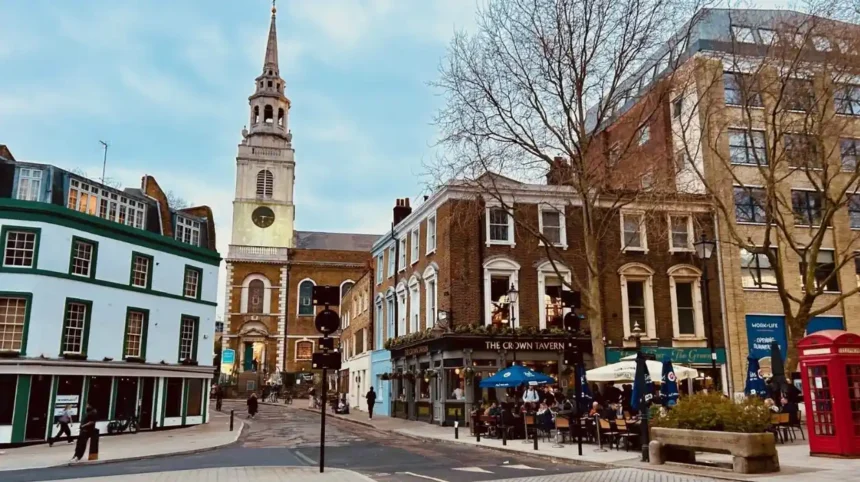
Clerkenwell is one of central London’s most distinctive historic districts. It is known for its medieval religious heritage, centuries of craftsmanship, important radical and social history, distinctive architecture, independent food and drink businesses, and its modern role as a major centre for design and creative industries.
- Where is Clerkenwell and why is its location important?
- How did Clerkenwell get its name?
- What was Clerkenwell’s role in medieval London?
- Why is St John’s Gate one of Clerkenwell’s most important landmarks?
- Why did Clerkenwell become famous for watchmaking and craftsmanship?
- What is Clerkenwell Green known for?
- Why is Clerkenwell important to London’s design industry?
- What architectural styles can visitors see in Clerkenwell?
- What cultural institutions and museums are associated with Clerkenwell?
- Why is Exmouth Market important to modern Clerkenwell?
- How has Clerkenwell’s food and drink scene developed?
- How does Clerkenwell connect with Smithfield and Farringdon?
- What can visitors do when exploring Clerkenwell?
- Why does Clerkenwell remain relevant to London today?
- What is Clerkenwell ultimately best known for?
Although Clerkenwell is commonly associated with Islington, its historic area extends across administrative boundaries. Much of the neighbourhood lies within the London Borough of Islington, while areas around Smithfield and Farringdon connect it closely with the City of London and the London Borough of Camden. This central location has shaped Clerkenwell for more than 1,000 years.
The name Clerkenwell comes from the Clerks’ Well, a historic spring associated with medieval religious communities. The district developed around monasteries, churches, wells and institutions before becoming a nationally important centre for watchmaking, jewellery, printing and other specialist trades.
Today, Clerkenwell combines surviving historic buildings with contemporary offices, restaurants, galleries and design showrooms. Its streets provide a concentrated record of London’s religious, industrial, architectural and social development.
Where is Clerkenwell and why is its location important?
Clerkenwell is a historic central London district centred north of the City of London, known for its position between Farringdon, Smithfield, King’s Cross and Islington. Its location connected medieval institutions, workshops, markets and modern transport networks throughout London’s development.
Clerkenwell occupies a strategically important position immediately north-west of the historic City of London. Its proximity to the City created economic opportunities while allowing religious communities, workshops and residential neighbourhoods to develop outside the City’s traditional boundaries.
The area is generally associated with streets and places including Clerkenwell Green, St John Street, Farringdon Road, Exmouth Market and the area around Smithfield. Boundaries vary because Clerkenwell is a historic district rather than a modern administrative ward with one universally fixed perimeter.
Its location has supported different forms of activity across successive periods. Medieval religious houses established large estates. Craftspeople later used the area for workshops and small-scale manufacturing. Printing and publishing businesses expanded during the industrial period. Modern architecture and design companies now occupy converted warehouses and newer commercial buildings.
Farringdon provides one of the area’s most important transport connections. The railway station links London Underground services with national and regional rail services, while the Elizabeth line has increased connections between central London, Heathrow Airport, the West End and east London.
This accessibility also supports Clerkenwell’s role as a destination for visitors, office workers and business travellers. Many of the district’s principal historic and cultural sites are within walking distance of each other.
How did Clerkenwell get its name?
Clerkenwell takes its name from the Clerks’ Well, a historic spring associated with medieval religious clerks. The well gave its name to the surrounding settlement, which developed through religious institutions, housing, trade and later industrial activity over many centuries.
The Clerks’ Well is the historic feature from which Clerkenwell derives its name. The well was associated with the Parish Clerks of London, a medieval religious and professional group.
Medieval London depended on wells and springs for water supplies. Natural water sources also shaped settlement patterns and local identities. Clerkenwell developed around one such source and subsequently became associated with major religious institutions.
The district’s name preserves evidence of its medieval landscape. Modern Clerkenwell is densely built, but its place name records a period when springs, fields and religious estates formed important parts of the surrounding environment.
The well itself remains an important element of Clerkenwell’s historical identity. It demonstrates how London’s historic place names often preserve information about earlier occupations, institutions and geographical features.
As you explore the modern district, you are crossing land with a deep heritage. Read about the full [Clerkenwell Historical Background] to understand its origins.
What was Clerkenwell’s role in medieval London?
Medieval Clerkenwell was a major religious district containing monasteries, churches and institutional estates. The Priory of St John and other religious foundations controlled substantial land, influenced local development and established a heritage that remains visible in buildings, streets and archaeological records.
Religious institutions shaped Clerkenwell from the Middle Ages. The area contained several important foundations, including the Priory of the Order of St John of Jerusalem, commonly known as the Knights Hospitaller.
The Knights Hospitaller were a medieval Christian religious order founded to provide care for pilgrims and later associated with military activity in the eastern Mediterranean. Their English headquarters at Clerkenwell became one of the area’s most significant institutions.
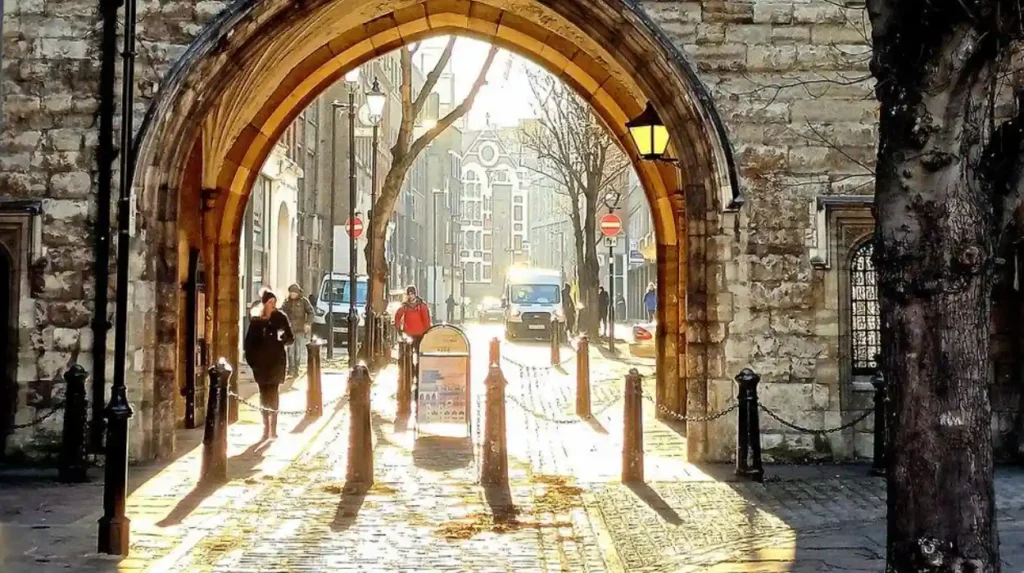
St John’s Gate is the best-known surviving architectural connection with this history. The present gatehouse was built in the early sixteenth century and formed part of the Priory complex. It remains a prominent landmark on St John’s Square.
The medieval district also contained the nunnery of St Mary, Clerkenwell, and other religious properties. These institutions owned land, employed workers and influenced the pattern of streets and buildings.
The Dissolution of the Monasteries under King Henry VIII transformed this landscape during the sixteenth century. Between 1536 and 1540, the Crown dissolved religious houses across England and Wales. Former monastic land and buildings entered new forms of ownership and use.
Despite these changes, Clerkenwell retained physical and historical connections with its medieval past. Street names, churches, surviving structures and archaeological evidence continue to document this period.
Why is St John’s Gate one of Clerkenwell’s most important landmarks?
St John’s Gate is an early sixteenth-century gatehouse linked to the medieval Priory of the Order of St John. It is known for its architectural survival, religious history and later associations with publishing, culture and the modern St John Ambulance organisation.
St John’s Gate stands at the northern end of St John’s Square and provides a visible link between modern Clerkenwell and its medieval institutions.
The gatehouse formed part of the Priory of St John, the English headquarters of the Knights Hospitaller. Although much of the wider priory complex disappeared or changed after the Dissolution of the Monasteries, the gatehouse survived.
The building later served different purposes, reflecting the changing economy and culture of London. Its history includes associations with publishing and literary activity.
Today, the site is closely connected with the heritage of St John Ambulance. St John Ambulance is a British first-aid and health organisation with historical roots in the Order of St John.
For visitors, St John’s Gate provides a clear example of architectural continuity. Clerkenwell’s historic identity is not confined to museums or written records. Important structures remain integrated into the working streetscape.
Why did Clerkenwell become famous for watchmaking and craftsmanship?
Clerkenwell became internationally recognised for specialist craftsmanship because skilled workers established workshops near London’s commercial centre. Watchmakers, jewellers, clockmakers and instrument makers created concentrated trade networks that supported training, production, repair and innovation for centuries.
From the seventeenth century onwards, Clerkenwell became strongly associated with precision trades. The district’s narrow streets and mixed-use buildings suited small workshops, where skilled craftspeople could manufacture and repair specialist products.
Watchmaking became one of Clerkenwell’s best-known industries. Britain developed a significant clock and watchmaking sector, and Clerkenwell provided an important London base for independent makers and specialist suppliers.
A watch or clock required numerous components and specialist skills. These trades included case-making, engraving, metalworking, spring-making and precision engineering. The concentration of related businesses allowed workers and suppliers to operate close to one another.
Jewellery and decorative metalwork also developed in the district. Nearby Hatton Garden became London’s principal jewellery quarter, strengthening the wider area’s association with skilled metalworking and specialist commerce.
Clerkenwell’s industrial history differed from large-scale factory districts. Many businesses operated from smaller premises, combining workshops, storage and living accommodation.
This pattern left an architectural legacy. Former workshops and warehouses have been converted into offices, studios, restaurants and residential properties. The survival of these buildings helps explain why the district has become attractive to architecture and design businesses.
What is Clerkenwell Green known for?
Clerkenwell Green is known as a historic public space associated with political activity, working-class communities and radical organisations. Its surrounding buildings record centuries of social change and connect the area with London’s history of reform, publishing and organised labour.
Clerkenwell Green is one of the district’s most recognisable historic spaces. The green developed as a local gathering place and later became associated with political movements and social organisations.
During the nineteenth and twentieth centuries, Clerkenwell had strong connections with radical politics, trade unionism and reform movements. The area’s workshops and working population contributed to this political culture.
The district also became associated with publishing. Print businesses benefited from Clerkenwell’s central location and its network of skilled workers.
One important institution in the area is the Marx Memorial Library, which occupies a historic building on Clerkenwell Green. The library preserves material relating to socialism, labour history and political movements.
Clerkenwell’s political heritage forms part of its broader historical identity. The district is known not only for medieval institutions and specialist manufacturing but also for the social organisations that developed during London’s industrial and urban growth.
This history provides context for visitors exploring the area. Public spaces and ordinary commercial buildings often have connections with national movements that extended beyond Clerkenwell.
Why is Clerkenwell important to London’s design industry?
Clerkenwell is an established centre for architecture, interiors and product design, with studios, showrooms and specialist businesses concentrated in historic commercial buildings. Its annual design events and professional networks reinforce its position within London’s international creative economy.
Modern Clerkenwell is strongly associated with design. Architecture practices, furniture companies, lighting specialists, materials suppliers and interior design businesses operate throughout the district.
The area’s built environment has supported this transition. Former industrial buildings often provide large floor areas, distinctive structural features and central locations suitable for studios and showrooms.
Clerkenwell Design Week has become an important annual event in the district’s cultural and commercial calendar. The event brings together manufacturers, designers, architects and visitors through exhibitions, installations and product presentations.
Design activity extends beyond one event. Showrooms and professional businesses operate throughout the year, making Clerkenwell a working centre rather than solely a visitor destination.
The concentration of specialist companies has also shaped local streets. Commercial premises often display furniture, lighting and architectural products, creating a distinctive relationship between the district’s business activity and public environment.
Clerkenwell demonstrates how a historic industrial area can develop new economic functions while retaining elements of its earlier building stock.
What architectural styles can visitors see in Clerkenwell?
Clerkenwell contains medieval remnants, Georgian terraces, Victorian industrial buildings and contemporary architecture. These layers reflect changing land ownership, religious institutions, manufacturing and commercial redevelopment, making the district an important place for understanding London’s architectural development across successive historical periods.
Architecture is one of the clearest ways to understand Clerkenwell. Buildings from different periods stand close together, reflecting more than 900 years of urban change.
Medieval heritage survives in structures associated with the Priory of St John and in archaeological remains beneath modern streets. St John’s Gate provides one of the most visible examples.
Georgian development introduced terraces and planned streets as London’s population expanded during the eighteenth century. Residential buildings from this period remain an important part of the area’s streetscape.
Victorian and later industrial development produced warehouses, workshops and commercial buildings. Brick construction, large windows and functional interiors reflected the requirements of manufacturing and trade.
Contemporary architecture has added new offices and cultural spaces. Modern development operates within a district containing protected historic buildings and conservation areas.
The result is a dense architectural record rather than a single uniform style. Visitors can identify different periods by examining building materials, window forms, street layouts and original commercial features.
Architectural heritage also supports Clerkenwell’s modern economy. Historic buildings provide character and adaptable commercial space for contemporary businesses.
What cultural institutions and museums are associated with Clerkenwell?
Clerkenwell contains institutions that preserve medical, political, religious and social history. Museums, archives and historic organisations provide access to collections and buildings that explain how healthcare, labour, faith, craftsmanship and urban life developed in London.
The district’s cultural institutions reflect the diversity of its history. Several organisations preserve specialised collections that connect local places with wider British and international developments.
The Wellcome Collection, located near Euston Road on the edge of the wider Clerkenwell area, has historically contributed to public understanding of health, medicine and human experience through exhibitions and collections.
The Marx Memorial Library preserves books, documents and archives relating to labour history and political movements. Its location on Clerkenwell Green reinforces the area’s association with organised workers and radical political activity.
The Museum of the Order of St John, based at St John’s Gate, interprets the history of the Order of St John and its connections with the Knights Hospitaller and modern charitable activity.
These institutions provide different perspectives on the district. Religious history explains Clerkenwell’s medieval foundations. Political archives document social movements. Medical and cultural collections demonstrate the area’s relationship with wider intellectual and institutional life.
Visitors should check current opening arrangements before travelling because exhibition programmes and access conditions change.
Why is Exmouth Market important to modern Clerkenwell?
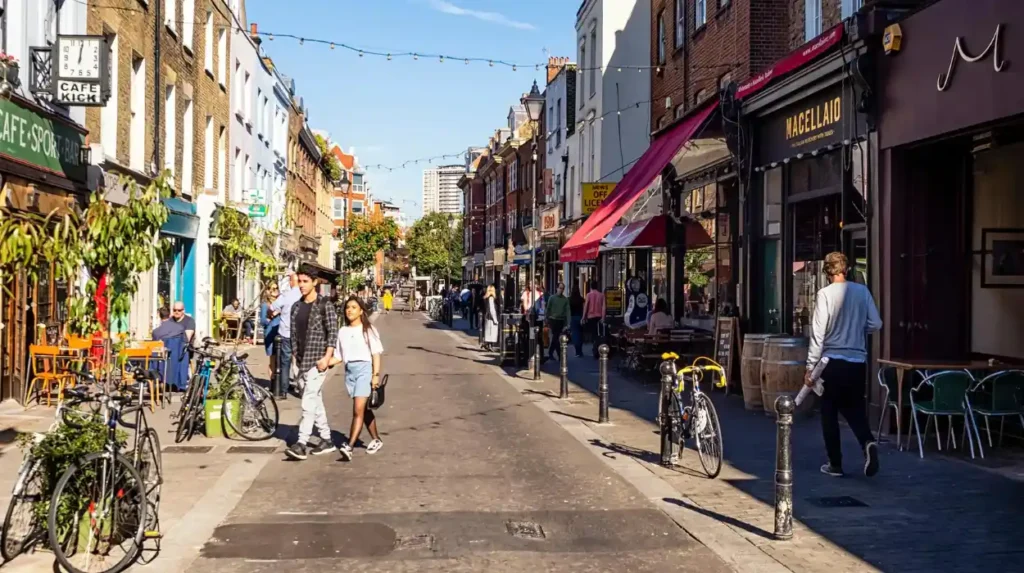
Exmouth Market is a pedestrian-focused street known for independent food businesses, cafés, shops and weekday market activity. It demonstrates Clerkenwell’s modern mixed-use character, combining residential life, local commerce and visitor facilities within a historic central London neighbourhood.
Exmouth Market represents the contemporary commercial life of Clerkenwell. The street contains restaurants, cafés and independent businesses serving residents, office workers and visitors.
Its market activity contributes to the district’s daytime economy. Food traders operate alongside permanent businesses, creating a concentrated destination for meals and informal shopping.
The area also supports the needs of modern workers. Cafés and public-facing businesses provide places for meetings and breaks, while the wider neighbourhood contains offices and creative studios.
For leisure travellers, Exmouth Market provides a useful connection between Clerkenwell’s historic attractions and its contemporary urban culture. The street is within walking distance of Clerkenwell Green, St John’s Gate and other historic locations.
The market area also demonstrates how central London neighbourhoods combine tourism with everyday use. Clerkenwell remains a working and residential district rather than a heritage area separated from modern economic activity.
How has Clerkenwell’s food and drink scene developed?
Clerkenwell’s food and drink scene developed alongside its changing workforce and central location. Historic pubs, independent restaurants, cafés and market traders serve residents, office workers and visitors, reflecting the district’s transition from manufacturing and trade towards creative and service industries.
Food and drink businesses form an important part of the modern Clerkenwell experience. The area’s central location creates demand from local residents, workers and visitors.
Historic pubs remain part of the district’s built and social heritage. Many occupy older buildings and provide continuity with Clerkenwell’s commercial past.
Restaurants and cafés have expanded alongside the growth of the design and professional services sectors. Independent businesses are particularly visible around Exmouth Market and surrounding streets.
For business travellers, the district’s compact geography is significant. Meetings, restaurants, hotels and transport connections are close to one another.
For digital nomads and remote workers, Clerkenwell offers numerous cafés and public spaces within a central London environment. Individual businesses have different policies on laptop use, seating and Wi-Fi, so visitors should confirm arrangements directly.
The food economy also supports the area’s evening activity. Visitors can combine historic walking routes with restaurants and pubs without travelling far across London.
How does Clerkenwell connect with Smithfield and Farringdon?
Clerkenwell is closely connected with Smithfield and Farringdon through geography, trade and transport. Smithfield’s historic market economy and Farringdon’s major rail connections expanded Clerkenwell’s commercial importance and continue to shape how visitors and workers use the wider central London area.
Smithfield lies immediately south-east of much of Clerkenwell and has been associated with London’s market and meat trade for centuries. Its historic market buildings and surrounding streets form part of the wider urban landscape connected with Clerkenwell.
The proximity of Smithfield created commercial links between markets, workshops and businesses. Clerkenwell workers could operate close to major trading activity without being located inside the historic City of London.
Farringdon developed into a major transport interchange. Underground and railway services have made the wider area increasingly accessible to commuters and visitors.
The Elizabeth line has strengthened this role by providing high-capacity connections across London and beyond. This infrastructure supports Clerkenwell’s modern office economy and visitor accessibility.
These connections explain why Clerkenwell is best understood within a wider central London network. The district has a distinct identity, but its history developed through relationships with neighbouring commercial, religious and transport centres.
What can visitors do when exploring Clerkenwell?
Visitors can explore Clerkenwell through its historic streets, religious landmarks, museums, public spaces, architecture and food destinations. A walking route connects many principal attractions, allowing travellers to examine medieval, industrial and contemporary layers within a compact central London district.
A practical visit often begins around Farringdon or St John’s Square. From there, visitors can walk between major landmarks without requiring frequent public transport.
St John’s Gate provides an important starting point for understanding the medieval Priory and the Order of St John. Clerkenwell Green adds political and social history to the route.
Walking along St John Street and neighbouring roads reveals changing architectural periods. Georgian and Victorian buildings stand alongside modern commercial developments.
Exmouth Market provides a convenient destination for food and refreshments. Its location also connects visitors with residential streets and smaller local businesses.
Visitors interested in architecture should pay attention to building details rather than focusing only on major landmarks. Former workshops, warehouses, churches and terraces provide evidence of Clerkenwell’s economic and social development.
This compact format suits leisure travellers with limited time and domestic business travellers seeking activities outside formal appointments.
Explore More Area Guide
What Makes Highbury a Distinctive North London Neighbourhood?
What Is Angel in Islington Famous For? Attractions and History
Why does Clerkenwell remain relevant to London today?
Clerkenwell remains relevant because its historic buildings and central location support a modern economy based on design, professional services, hospitality and culture. The district demonstrates how heritage, transport investment and adaptive reuse continue to shape central London neighbourhoods.
Clerkenwell’s significance is not limited to its past. The district remains an active part of London’s economic and cultural geography.
Design and architecture businesses support employment and professional activity. Restaurants, cafés and shops serve local communities and visitors. Historic institutions continue to preserve collections and provide educational programmes.
The district also illustrates the importance of adaptive reuse. Former industrial and commercial buildings have been given new functions while retaining physical evidence of earlier economic activity.
Transport investment has increased the area’s accessibility, particularly around Farringdon. Better connections influence office demand, visitor patterns and business activity.
Heritage management remains equally important. Historic structures require conservation and careful integration with new development. Clerkenwell’s future therefore depends on balancing commercial change with the protection of buildings and places that define its identity.
For visitors, this continuing evolution makes Clerkenwell a useful place for understanding London as both a historic and modern city.
What is Clerkenwell ultimately best known for?
Clerkenwell is best known for its medieval religious foundations, specialist craftsmanship, radical social history, distinctive architecture and modern design industry. Together, these elements explain why the district remains one of central London’s most historically layered and culturally active neighbourhoods.
No single feature defines Clerkenwell completely. Its identity developed through several major historical periods and economic functions.
The Clerks’ Well gave the district its name. Medieval religious institutions established its earliest major estates and landmarks. The Knights Hospitaller left a lasting architectural and institutional legacy centred on St John’s Gate.
Later centuries brought watchmaking, metalworking and other specialist crafts. Workshops shaped the area’s economy and produced the industrial buildings that remain important parts of the streetscape.
Political organisations and publishing added another dimension to Clerkenwell’s identity. Clerkenwell Green remains associated with London’s history of labour movements and social reform.
In the twenty-first century, architecture and design have become defining features of the local economy. Clerkenwell’s historic building stock, central location and specialist business networks support this modern role.
For tourists and leisure travellers, Clerkenwell offers a concentrated introduction to several periods of London history. For residents, it provides access to cultural institutions, independent businesses and public spaces. For business travellers, it combines central transport connections with historic attractions that can be explored during limited free time.
Clerkenwell is therefore known for continuity as well as change. Its wells, religious institutions, workshops, political organisations and design businesses belong to different eras, but each has contributed to the district visible today.
What is Clerkenwell best known for?
Clerkenwell is best known for its medieval religious heritage, the historic St John’s Gate, watchmaking and specialist craftsmanship, distinctive architecture, radical political history and its modern reputation as a leading London design district.