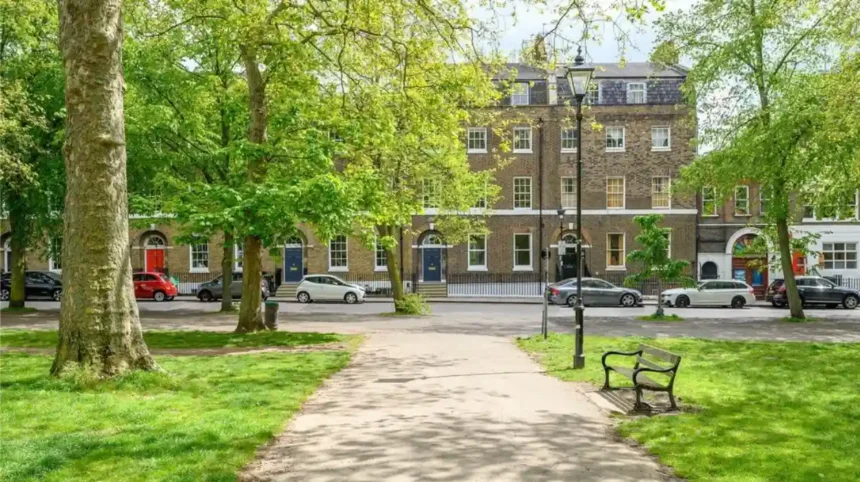
Highbury is one of North London’s most recognisable residential neighbourhoods, distinguished by its Georgian and Victorian architecture, historic green spaces, independent businesses and strong community identity. Located within the London Borough of Islington, Highbury combines historic residential streets with convenient transport connections, cultural landmarks and a well-established local character.
- Where Is Highbury in London and What Defines Its Location?
- How Did Highbury Develop from a Rural Settlement into a London Neighbourhood?
- What Architectural Features Make Highbury Distinctive?
- Georgian terraces and residential architecture
- Victorian houses and decorative details
- Historic shopfronts and streetscape design
- Why Is Highbury Fields Important to the Neighbourhood’s Identity?
- How does the park influence local life?
- What is the relationship between Highbury Fields and local conservation?
- What Historic Landmarks Should Visitors Explore in Highbury?
- How Has Arsenal Football Club Influenced Highbury’s Identity?
- What Makes Highbury Barn and Its Independent Businesses Special?
- How Does Highbury Maintain Its Residential Character?
- What Is Highbury’s Community Identity Like?
- How does Highbury support different age groups?
- How does the neighbourhood balance heritage and modern development?
- How Well Connected Is Highbury to Central London?
- Is Highbury Suitable for Digital Nomads and Remote Workers?
- What Can Tourists Do When Exploring Highbury?
- Explore the streets around Highbury Fields
- Visit the Jubilee Clock Tower
- Discover Highbury Barn
- Explore Arsenal’s architectural legacy
- Enjoy the green spaces
- How Does Highbury Protect Its Architectural and Environmental Heritage?
- What Makes Highbury Different from Other North London Neighbourhoods?
- What Is the Future of Highbury as a London Neighbourhood?
- Maintaining historic architecture
- Improving public green spaces
- Supporting a changing residential population
- Why Should Highbury Be Included in a North London Visit?
Its distinctive identity comes from the relationship between architectural heritage and everyday urban life. Georgian terraces, Victorian houses, tree-lined streets and traditional local shopping areas sit alongside modern apartments, cafés, restaurants and community facilities. Highbury Fields provides a substantial green space at the centre of this residential environment, while the neighbourhood’s proximity to Arsenal Football Club adds an important sporting connection.
For visitors, Highbury offers an opportunity to explore a quieter, residential side of London without losing access to central attractions. For residents, it provides a combination of neighbourhood convenience, public green space, historic surroundings and access to employment, education and cultural activities.
Where Is Highbury in London and What Defines Its Location?
Highbury is a residential neighbourhood in the London Borough of Islington, in North London. It sits between areas including Holloway, Finsbury Park, Canonbury and Newington Green, with Highbury Fields, Highbury Corner and Highbury Barn forming important local reference points.
Highbury occupies a well-connected position approximately four miles north of central London. Its location places it within easy reach of the City of London, King’s Cross, Camden and other major destinations. The neighbourhood is primarily residential, although its main roads contain retail businesses, restaurants, cafés and community facilities.
Highbury does not have one universally recognised boundary. Its geographical identity comes from several adjoining residential districts and historic landmarks. Highbury Fields, Highbury Corner, Highbury Barn and the streets surrounding Highbury Grove help define the neighbourhood’s character.
The area belongs to the wider Islington community. Islington is an inner London borough known for its historic streets, independent businesses, cultural venues and diverse residential districts.
Highbury’s position provides access to several neighbouring destinations:
- Holloway: A busy North London district with shopping facilities, educational institutions and sporting connections.
- Finsbury Park: An established residential and transport district with access to a major public park.
- Canonbury: A historic residential neighbourhood recognised for Georgian architecture and attractive streets.
- Newington Green: A historic area with independent shops, cafés and a long-established community identity.
These connections make Highbury suitable for visitors exploring North London beyond the main tourist destinations. Its residential setting also provides a different experience from the commercial centres of central London.
How Did Highbury Develop from a Rural Settlement into a London Neighbourhood?
Highbury developed from an agricultural landscape into a residential district as London’s northern expansion transformed surrounding countryside during the eighteenth and nineteenth centuries. Estate development, improved transport and population growth established the streets, terraces and residential character visible today.
The history of Highbury is closely connected to the expansion of London beyond its traditional urban boundaries. Before extensive residential construction, much of the surrounding landscape consisted of open fields, country estates and agricultural land.
The name Highbury is associated with the historic Highbury estate. Its development reflects the wider transformation of Islington from a semi-rural settlement into a densely populated part of metropolitan London.
During the eighteenth century, country houses and landscaped grounds occupied parts of the district. Highbury House became an important feature of the local landscape. Its gardens and estate influenced the area’s later residential development.
The nineteenth century brought substantial changes. London’s growing population increased demand for housing outside the crowded central districts. Developers converted agricultural land and former estates into residential streets.
Georgian and Victorian building styles became important features of the expanding neighbourhood. Large houses, terraces and villas attracted households seeking more spacious accommodation while remaining connected to London.
The development of railways and improved road transport strengthened Highbury’s residential appeal. Connections with central London made commuting increasingly practical.
Highbury Fields became a particularly important part of this transformation. The public park preserved a substantial area of open land as development expanded around it.
Understanding this transformation helps explain the neighbourhood’s present appearance. Modern Highbury retains evidence of its rural origins, nineteenth-century expansion and subsequent urban redevelopment.
As you explore the neighbourhood’s modern streets and residential landmarks, you are crossing a landscape shaped by centuries of change. Discover the full history of [Highbury’s historical origins and development] to understand how its rural estates became part of metropolitan London.
What Architectural Features Make Highbury Distinctive?
Highbury is distinguished by Georgian terraces, Victorian residential buildings, decorative brickwork, traditional shopfronts and carefully maintained historic streetscapes. Its architectural identity reflects nineteenth-century suburban expansion, with surviving eighteenth-century buildings and later developments contributing to its distinctive appearance.
Architecture is one of the strongest elements of Highbury’s identity. The neighbourhood contains residential buildings from different periods, creating a varied townscape rather than a uniform architectural style.
The Highbury Fields Conservation Area is particularly important. Islington Council designated it on 7 January 1969, recognising the architectural and historic value of the surrounding streets.
The conservation area contains buildings from the eighteenth and nineteenth centuries. Traditional materials include brick, rendered surfaces, timber windows, timber doors and slate roofs.
Several architectural characteristics define the local streetscape.
Georgian terraces and residential architecture
Georgian architecture is associated with the eighteenth and early nineteenth centuries. Its buildings commonly feature symmetrical façades, sash windows, decorative door surrounds and carefully proportioned elevations.
Highbury Place, Highbury Terrace and Highbury Crescent demonstrate the relationship between historic residential architecture and the open landscape of Highbury Fields.
These terraces create a consistent architectural setting around the park. Their proportions, entrances and façades contribute to the neighbourhood’s historic character.
Victorian houses and decorative details
Victorian residential architecture expanded as Highbury became increasingly urbanised. Larger houses and terraced properties introduced additional architectural variety.
Typical characteristics include:
- Red and yellow brick façades, including examples with contrasting decorative brickwork.
- Bay windows, which project from the building’s main façade.
- Decorative rooflines and chimneys, which contribute to the historic skyline.
- Timber sash windows, which preserve traditional proportions.
- Ornamental entrances, including decorative door surrounds and steps.
These features help distinguish Highbury from areas dominated by modern apartment blocks.
Historic shopfronts and streetscape design
Traditional shopfronts are another part of Highbury’s architectural identity. Original commercial premises remain important along selected local streets.
Islington Council’s Highbury Fields conservation guidance identifies surviving historic shopfronts and nineteenth-century porticos as features that contribute to the area’s character.
The council encourages the repair and retention of historic details. New buildings and alterations are expected to respect the established scale, materials and proportions of surrounding properties.
This approach helps preserve the relationship between residential buildings, local businesses and public streets.
Why Is Highbury Fields Important to the Neighbourhood’s Identity?
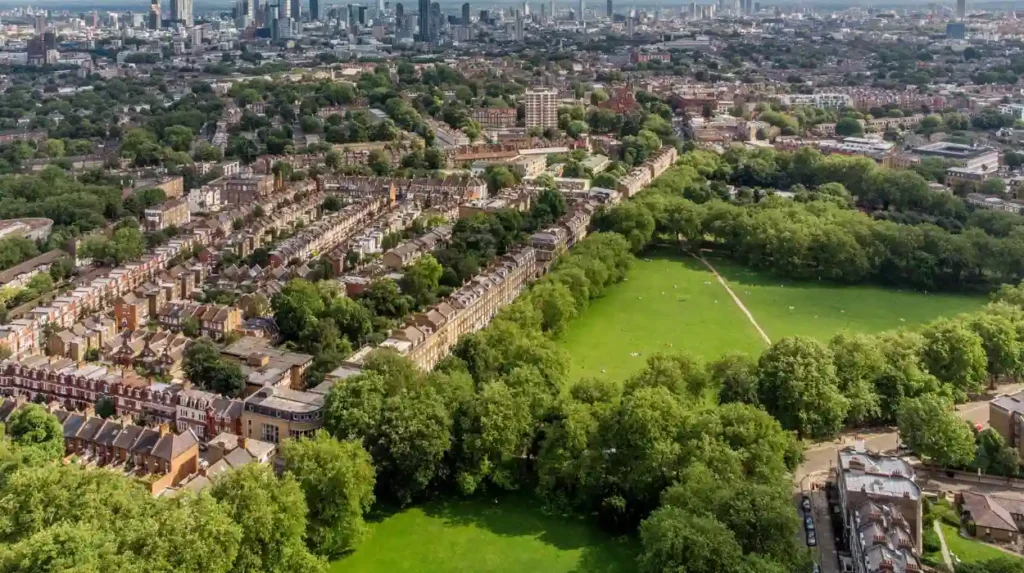
Highbury Fields is the largest public park in Islington and one of the neighbourhood’s defining landmarks. Covering 11.75 hectares, approximately 29 acres, it provides recreational facilities, mature trees, open grassland and an important historic setting.
Highbury Fields creates a strong connection between the neighbourhood’s architectural heritage and its public environment. The open space separates residential streets while providing opportunities for recreation and community activities.
The park opened to the public on Christmas Eve 1885. Its creation protected a substantial area of open land during a period of residential expansion.
According to Islington Council, Highbury Fields covers 11.75 hectares. Its facilities support different age groups and recreational interests.
The park includes:
- Eleven tennis courts, including floodlit facilities.
- Four netball courts.
- One artificial-turf football pitch measuring 50 metres by 26 metres.
- A children’s playground with water play facilities and a sandpit.
- A café and public toilets.
- Highbury Pool and Fitness Centre.
These facilities make the park an important recreational destination for residents and visitors.
How does the park influence local life?
Highbury Fields supports everyday outdoor activities. Residents use its paths for walking, its open spaces for informal recreation and its sports facilities for organised exercise.
The park also provides a setting for community interaction. Families, dog walkers, sports participants and visitors share its public spaces.
Its mature trees and open grassland contribute to local environmental quality. The site is also designated a Site of Local Importance for Nature Conservation.
For visitors, the park offers a convenient starting point for exploring the surrounding historic streets. Its location makes it possible to combine a walk through Highbury’s architectural heritage with time outdoors.
What is the relationship between Highbury Fields and local conservation?
Highbury Fields forms part of a designated conservation area. Its surroundings include historic terraces, listed buildings and traditional streetscape features.
Conservation protection recognises that architectural heritage extends beyond individual buildings. The relationship between buildings, trees, open land, street layouts and public spaces also contributes to local character.
This makes the park more than a recreational facility. It is an important part of Highbury’s historic and environmental identity.
What Historic Landmarks Should Visitors Explore in Highbury?
Highbury contains historic landmarks that demonstrate its Victorian heritage, residential development and sporting history. Highbury’s Jubilee Clock Tower, Christ Church, historic terraces and former Arsenal stadium site provide recognisable examples of the neighbourhood’s architectural and cultural development.
Historic landmarks provide a practical way to understand Highbury’s development. They also help visitors identify the architectural and cultural features that distinguish the neighbourhood.
Highbury Jubilee Clock Tower
The Jubilee Clock Tower stands at the junction of Highbury Hill and Church Path.
Constructed in 1897, it commemorates Queen Victoria’s Diamond Jubilee. Local resident Alfred Hutchinson donated the structure to the Islington Vestry.
Historic England lists the clock tower as a Grade II listed building. Its construction combines a polished pink granite base with an ornate cast-iron tower.
The structure features decorative detailing and portraits of Queen Victoria. Its position connects Highbury Barn with the Highbury Fields area.
In July 2026, Islington Council announced restoration plans for the landmark. The project addresses deterioration to its cast-iron clock, decorative elements and paintwork.
Christ Church, Highbury Grove
Christ Church is another important architectural landmark. Its relationship with the Jubilee Clock Tower forms part of the historic streetscape around Highbury Hill.
The church contributes to the area’s nineteenth-century architectural identity and provides a religious and community landmark within the neighbourhood.
Visitors exploring Highbury’s historic streets can include the church and clock tower in the same walking route.
Highbury’s historic residential terraces
The streets around Highbury Fields contain some of the neighbourhood’s most recognisable architectural features.
Highbury Place, Highbury Crescent and Highbury Terrace are particularly relevant for visitors interested in Georgian residential design.
Their historic façades, building proportions and relationship with the park demonstrate how residential development shaped the neighbourhood.
These streets also show how architectural conservation maintains the visual connection between historic buildings and the surrounding public landscape.
How Has Arsenal Football Club Influenced Highbury’s Identity?
Arsenal Football Club has played a major role in Highbury’s cultural and sporting identity. Its former stadium operated in the neighbourhood from 1913 until 2006, leaving a significant architectural legacy through the preserved stadium façades and Highbury Square redevelopment.
Football is an important part of Highbury’s public identity. Arsenal’s historic connection with the neighbourhood created a relationship between local architecture, sporting culture and international recognition.
Arsenal moved to its former Highbury ground in 1913. The stadium developed into one of English football’s best-known historic venues.
The ground underwent major architectural changes during the twentieth century.
The West Stand opened in December 1932. Designed by architect Claude Waterlow Ferrier, it introduced a major new grandstand to the stadium.
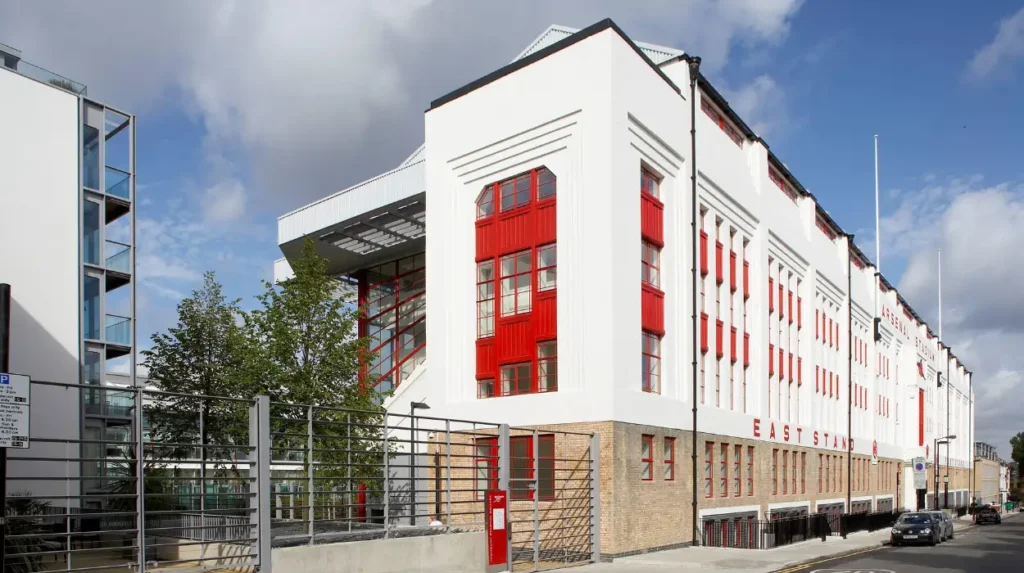
The Art Deco East Stand opened in October 1936. It contained club offices, player facilities and the famous Marble Halls.
The East Stand became a Grade II listed structure because of its architectural and historic significance.
What happened to the original Highbury stadium?
Arsenal played its final match at Highbury in May 2006 before moving to Emirates Stadium.
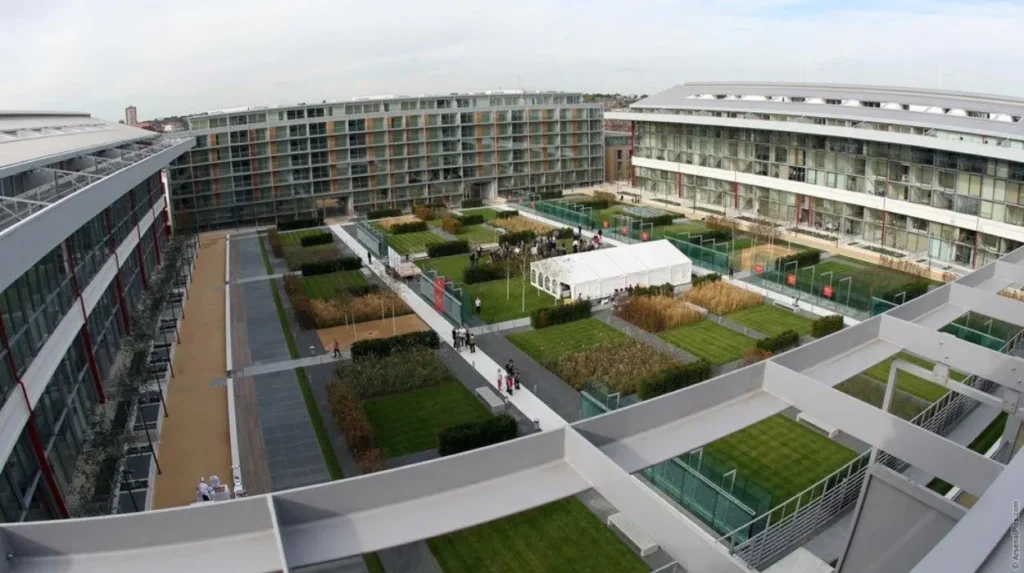
The former stadium site subsequently underwent redevelopment. Rather than removing every historic feature, the project retained significant sections of its original architecture.
The redevelopment became known as Highbury Square.
According to project information published by Sir Robert McAlpine, Highbury Square contains 724 residential apartments. The development incorporates the restored East Stand and West Stand façades.
The former playing pitch became a landscaped private garden. Residential buildings occupy the positions of the original North and South Stands.
This redevelopment demonstrates how a historic sporting building can become part of a modern residential neighbourhood while retaining important architectural features.
Where is Emirates Stadium?
Emirates Stadium is Arsenal’s current home, located in the neighbouring Holloway area.
The club moved there in 2006. The stadium has a capacity of approximately 60,000 spectators and remains a major destination for football supporters.
Although Emirates Stadium is not the former Highbury ground, its proximity maintains Arsenal’s strong association with this part of North London.
For visitors, the two stadium locations provide an opportunity to explore different stages of the club’s history.
What Makes Highbury Barn and Its Independent Businesses Special?
Highbury Barn is a traditional local shopping area that contributes to Highbury’s neighbourhood identity. Its independent businesses, food shops, cafés and everyday services provide a community-focused alternative to larger commercial centres and shopping destinations.
Highbury’s residential character is supported by its local shopping streets. Highbury Barn is particularly important because it combines everyday retail activity with the area’s historic identity.
Unlike large shopping centres, a neighbourhood shopping area serves both residents and visitors. Its businesses support daily needs while providing places for informal social interaction.
Highbury Barn’s local commercial environment includes independent food retailers, cafés, specialist shops and neighbourhood services.
Why are independent businesses important?
Independent businesses help maintain a recognisable local identity. They provide products and services that reflect the needs of surrounding residents.
Traditional food shops, cafés and specialist retailers also create opportunities for regular interaction between customers and business owners.
This commercial environment supports Highbury’s residential character. It gives visitors an opportunity to experience the neighbourhood through its everyday activities rather than concentrating exclusively on major landmarks.
What can visitors experience around Highbury Barn?
Visitors can explore local food businesses, stop at cafés and walk through the surrounding residential streets.
The Jubilee Clock Tower provides a useful landmark when exploring this part of Highbury. Its location helps connect Highbury Barn with the wider historic district.
Highbury Barn also demonstrates how traditional local shopping areas remain relevant within modern London. Their continued presence contributes to the area’s community identity and pedestrian activity.
How Does Highbury Maintain Its Residential Character?
Highbury maintains its residential identity through historic housing, tree-lined streets, established community facilities and accessible green spaces. Its combination of Georgian properties, Victorian terraces and contemporary apartments supports a varied population while preserving the neighbourhood’s distinctive architectural character.
Highbury’s residential environment is an important reason for its distinctiveness. Unlike areas dominated by offices, entertainment venues or major shopping centres, much of Highbury retains a predominantly residential layout.
The neighbourhood contains different types of housing. These include historic terraced houses, converted period properties, purpose-built flats and contemporary residential developments.
This variety reflects changes in London’s housing requirements over several generations.
What types of homes define Highbury?
Georgian and Victorian houses remain particularly important to the neighbourhood’s appearance. Many period properties feature traditional façades, large windows, decorative entrances and established garden spaces.
Converted houses provide flats within historic buildings. These properties allow older residential structures to accommodate modern household requirements.
Contemporary apartment developments introduce additional housing options. Highbury Square is a notable example because it combines residential accommodation with preserved sporting heritage.
How do residential streets contribute to local character?
Residential streets connect Highbury’s main landmarks and commercial areas. Their building styles, mature trees and relatively traditional layouts create a recognisable local environment.
The streets around Highbury Fields are particularly significant because their architecture complements the park’s open landscape.
The area’s conservation policies also influence how historic properties are maintained. Islington Council applies additional planning controls within conservation areas to protect important architectural and environmental features.
This approach supports the preservation of the neighbourhood’s established appearance while allowing appropriate improvements.
What Is Highbury’s Community Identity Like?
Highbury’s community identity reflects its established residential population, local businesses, recreational facilities and neighbourhood organisations. Public parks, schools, sports facilities and community activities create opportunities for interaction between long-term residents, newer households and visitors.
Highbury’s community identity extends beyond its architecture. Its local facilities and public spaces support everyday interaction and neighbourhood participation.
Highbury Fields provides one of the most important shared environments. People use the park for exercise, family activities, informal meetings and organised sports.
Local organisations also contribute to the area’s identity.
The Highbury Fields Association, established in 1975, campaigns on matters affecting the park and surrounding neighbourhood. Its activities include supporting the conservation of historic buildings, maintaining public spaces and representing local interests in planning discussions.
This type of community involvement demonstrates the importance residents place on their surroundings.
How does Highbury support different age groups?
Highbury provides facilities for families, young people, working adults and older residents.
Children have access to playground facilities and organised recreational opportunities. Adults use local sports facilities, cafés and public spaces. Older residents benefit from accessible community amenities and established local services.
The combination of facilities helps create a neighbourhood that supports different stages of everyday life.
How does the neighbourhood balance heritage and modern development?
Highbury’s character depends on maintaining a relationship between historic buildings and contemporary requirements.
Conservation policies guide changes to buildings in designated areas. They address building height, materials, architectural proportions and the preservation of historic features.
Modern developments such as Highbury Square demonstrate another approach. They incorporate new housing while retaining important architectural elements from the former stadium.
This balance between preservation and adaptation remains central to Highbury’s future identity.
How Well Connected Is Highbury to Central London?
Highbury benefits from strong public transport connections through Highbury & Islington station, which provides access to the Victoria line, London Overground and National Rail services. Local bus routes and surrounding stations further connect the neighbourhood with central London and North London destinations.
Transport accessibility is another important element of Highbury’s residential appeal.
Highbury & Islington station is the principal transport interchange serving the neighbourhood. It provides access to several public transport services.
These include:
- Victoria line: Underground connections towards King’s Cross St Pancras, Oxford Circus, Victoria and Brixton.
- London Overground: Connections towards destinations across North and East London and other parts of the network.
- Great Northern services: National Rail connections serving destinations including Moorgate and areas north of London.
- Local buses: Routes serving Highbury Corner, Highbury Barn and surrounding neighbourhoods.
The station is located at Highbury Corner, making it convenient for visitors exploring the central part of the neighbourhood.
How easy is it to reach major London destinations?
The Victoria line provides a direct connection between Highbury & Islington and several major central London stations.
King’s Cross St Pancras is particularly important because it connects passengers with National Rail services and international Eurostar services.
Oxford Circus provides access to one of London’s main shopping districts. Victoria offers connections with National Rail and destinations across the capital.
These connections make Highbury practical for domestic business travellers and tourists who want residential accommodation within reach of central attractions.
Is Highbury suitable for walking?
Highbury is suitable for neighbourhood exploration on foot. Its residential streets, local shops and public green spaces create opportunities for short walking routes.
A visitor can combine Highbury Fields, Highbury Place, Highbury Barn and the Jubilee Clock Tower within a local walking itinerary.
However, visitors should check current transport information before travelling. National Rail and Transport for London publish service updates, accessibility information and station facilities.
Highbury & Islington station has lifts, but National Rail classifies its platforms as category C for step-free access. Visitors requiring step-free journeys should check the specific platform and route arrangements before travelling.
Is Highbury Suitable for Digital Nomads and Remote Workers?
Highbury offers a residential setting for remote workers through its transport connections, cafés, local services and access to green spaces. Its location in Islington also provides convenient connections to central London employment districts, universities and business destinations.
Remote working has increased interest in neighbourhoods that combine residential accommodation with everyday facilities.
Highbury provides several features relevant to this working arrangement. Its transport connections support occasional office visits, while local businesses provide places for informal working sessions.
Where can remote workers spend time?
Local cafés and independent food businesses provide opportunities for refreshments and informal working breaks.
Highbury Fields offers an outdoor alternative during suitable weather. Its open spaces provide a setting for walking breaks and time away from computer screens.
The neighbourhood’s location also supports travel to nearby business districts. Workers can reach King’s Cross, the City and other central London destinations through public transport connections.
What should remote workers consider?
Not every café provides suitable facilities for extended working sessions. Visitors should check Wi-Fi availability, charging facilities, seating arrangements and business policies before planning a working day.
Residential accommodation also varies in size and layout. People requiring dedicated home offices should check available space, broadband services and tenancy conditions before booking or renting.
Highbury’s strongest advantage is its combination of residential surroundings and transport accessibility rather than a concentration of large coworking centres.
What Can Tourists Do When Exploring Highbury?
Visitors can explore Highbury through its historic residential streets, Highbury Fields, Jubilee Clock Tower, local shopping areas and Arsenal-related landmarks. These attractions provide opportunities to experience North London’s architecture, public spaces, sporting heritage and everyday neighbourhood culture.
Highbury is particularly suitable for visitors interested in neighbourhood exploration rather than conventional sightseeing.
Its attractions are spread across a relatively compact residential district. Walking provides a practical way to understand how the area’s architecture, green spaces and commercial streets connect.
Explore the streets around Highbury Fields
Begin with the historic terraces surrounding the park.
Highbury Place and Highbury Crescent provide examples of the relationship between Georgian residential architecture and public green space.
The surrounding streets also contain Victorian buildings and traditional architectural details.
Visit the Jubilee Clock Tower
Continue towards Highbury Hill to see the Jubilee Clock Tower.
Its 1897 construction and Grade II listing make it an important local heritage feature.
The tower also provides a useful point for understanding the connection between Highbury Barn and Highbury Fields.
Discover Highbury Barn
Explore the independent businesses and local shops around Highbury Barn.
This area provides a practical introduction to everyday neighbourhood life. Visitors can experience the commercial environment that supports the surrounding residential streets.
Explore Arsenal’s architectural legacy
Visit the exterior of Highbury Square to understand the former stadium’s redevelopment.
The preserved East and West Stand façades provide an important connection with Arsenal’s history.
Visitors interested in the club’s present-day sporting identity can also explore the Emirates Stadium in neighbouring Holloway.
Enjoy the green spaces
Finish with time at Highbury Fields.
Its walking paths, open grassland and recreational facilities provide an opportunity to experience the neighbourhood’s outdoor environment.
This combination of heritage, architecture and public space creates a varied local itinerary.
How Does Highbury Protect Its Architectural and Environmental Heritage?
Highbury protects its historic identity through conservation-area designation, listed-building protection and local planning policies. These measures help preserve historic façades, traditional materials, mature trees, architectural proportions and public spaces while guiding appropriate changes to existing buildings.
Architectural conservation is essential to Highbury’s long-term character. Without appropriate planning controls, historic buildings and streetscapes face pressure from redevelopment and unsuitable alterations.
Islington Council manages conservation areas across the borough. Its conservation policies recognise that historic character comes from the relationship between buildings, streets, trees, boundaries and public spaces.
What is a conservation area?
A conservation area is a designated location of special architectural or historic interest.
The Highbury Fields Conservation Area received its original designation on 7 January 1969. Its boundaries were subsequently amended in February 1990.
The designation introduces additional planning controls. These include restrictions affecting substantial demolition, certain alterations and work involving protected trees.
How are historic buildings protected?
Listed-building protection recognises structures with special architectural or historic significance.
Highbury’s Jubilee Clock Tower is a Grade II listed example. The former Arsenal East Stand is another important heritage structure.
Owners and developers must consider heritage requirements when undertaking relevant building work.
The council’s conservation guidance also encourages traditional materials and architectural details when maintaining properties within the Highbury Fields Conservation Area.
These policies support the continued presence of historic buildings within a changing residential neighbourhood.
What Makes Highbury Different from Other North London Neighbourhoods?
Highbury stands out through its combination of Georgian and Victorian architecture, extensive public green space, Arsenal’s sporting heritage, traditional local shopping and established residential streets. Its identity combines historic preservation with convenient access to London’s modern transport network.
North London contains several neighbourhoods with distinctive residential and cultural identities. Highbury shares some characteristics with neighbouring districts but maintains its own architectural and community profile.
Highbury compared with Canonbury
Canonbury is particularly recognised for its historic architecture, garden squares and residential streets.
Highbury shares this architectural heritage but has a stronger association with Arsenal’s former stadium and the extensive public space of Highbury Fields.
Highbury compared with Holloway
Holloway has a more prominent commercial and institutional environment.
Its connection with Emirates Stadium and Holloway Road gives it a different character from Highbury’s predominantly residential streets.
Highbury compared with Finsbury Park
Finsbury Park is a major transport and commercial district with access to a substantial public park.
Highbury offers a different residential environment, particularly around its Georgian terraces and historic conservation area.
The comparison demonstrates that Highbury’s identity is not based on one landmark. It comes from the combination of its architecture, green spaces, local businesses and sporting connections.
Explore More Area Guide
What Is Angel in Islington Famous For? Attractions and History
Best Places to Visit in Islington for International Tourists
What Is the Future of Highbury as a London Neighbourhood?
Highbury’s future depends on balancing housing requirements, architectural conservation, public-space improvements and local community needs. Investment in historic landmarks, environmental facilities and appropriate residential development will remain important to maintaining its distinctive North London identity.
Highbury continues to function as a residential neighbourhood within an expanding London economy.
Housing demand, environmental priorities and changing transport requirements influence its development.
Three considerations are particularly important.
Maintaining historic architecture
Historic terraces and landmark buildings require ongoing maintenance.
The restoration of the Jubilee Clock Tower, announced by Islington Council in July 2026, demonstrates continued investment in the neighbourhood’s heritage.
Preserving traditional shopfronts, residential façades and historic building materials also supports the area’s established character.
Improving public green spaces
Highbury Fields remains an important environmental and recreational asset.
Islington Council has identified improvements to sports facilities, café provision and wildlife-related facilities as part of its plans for the park.
These improvements support recreation while maintaining the park’s wider environmental importance.
Supporting a changing residential population
Highbury’s housing environment includes historic properties and contemporary apartments.
Future development needs to consider housing availability, building quality, transport access and local infrastructure.
Appropriate planning can support additional residential requirements without undermining the architectural character that makes Highbury distinctive.
The neighbourhood’s long-term appeal depends on maintaining this relationship between its historic identity and contemporary urban life.
Why Should Highbury Be Included in a North London Visit?
Highbury deserves a place on a North London itinerary because it combines historic architecture, public green space, sporting heritage and independent local businesses. Its walkable residential streets provide a different perspective on London’s history and everyday neighbourhood culture.
Highbury offers visitors an opportunity to explore an established London residential district with a recognisable architectural identity.
Its Georgian terraces provide insight into eighteenth-century residential development. Victorian buildings demonstrate the expansion of nineteenth-century London. Highbury Fields preserves an important area of public green space, while Arsenal’s former stadium illustrates the relationship between sporting history and urban redevelopment.
The Jubilee Clock Tower, Highbury Barn and surrounding historic streets provide additional points of interest.
Highbury also benefits from its location within Islington. Visitors can combine neighbourhood exploration with trips to nearby Canonbury, Holloway, Finsbury Park and central London.
For residents, the neighbourhood provides an established residential environment with public transport, recreational facilities and local shopping.
For tourists, it offers a less commercialised way to discover North London.
Ultimately, Highbury is distinctive because its architectural heritage, green spaces, sporting history and community identity remain closely connected. These features give the neighbourhood a recognisable character within London’s wider urban landscape.
Where is Highbury in London?
Highbury is a residential neighbourhood in the London Borough of Islington, North London. It is close to Holloway, Canonbury, Finsbury Park and Newington Green.