Barnet offers a varied setting for street photography in North London, combining historic high streets, traditional shopping parades, Victorian architecture, railway heritage, residential streets and modern urban developments. The London Borough of Barnet extends from High Barnet and Monken Hadley in the north to Golders Green, Finchley and Hampstead Garden Suburb in the south. Each area presents a different architectural character and opportunities to photograph everyday urban life.
- What Makes Barnet a Good Location for Street Photography?
- What Photographic Subjects Can You Find in Barnet?
- Why Does Barnet Offer Different Photography Environments?
- Which Streets in High Barnet Are Best for Street Photography?
- High Barnet High Street
- Wood Street
- The Area Around St John the Baptist Church
- Barnet Market and Stapylton Road
- Why Is Chipping Barnet Historically Important for Street Photography?
- Are Monken Hadley and Hadley Green Good for Street Photography?
- Which Streets in Finchley Are Best for Street Photography?
- Regents Park Road
- Ballards Lane
- Hendon Lane and Finchley Church End
- What Is Special About Finchley’s Architectural Character?
- Where Can You Find the Best Street Photography in Golders Green?
- Which Streets in Hendon Are Worth Photographing?
- Is Hampstead Garden Suburb One of the Best Places for Architectural Street Photography in Barnet?
- Central Square
- Northway, Middleway and Southway
- Temple Fortune Lane and Willifield Way
- Why Is Hampstead Garden Suburb Architecturally Significant?
- Which Other Barnet Streets Offer Interesting Urban Photography Opportunities?
- What Is the Best Time of Day for Street Photography in Barnet?
- Early Morning Photography
- Midday Photography
- Late Afternoon and Evening Photography
- Is Overcast Weather Suitable for Street Photography?
- What Camera Equipment Is Best for Photographing Barnet Streets?
- How Can You Plan a Street Photography Route Around Barnet?
- Route One: Historic High Barnet and Monken Hadley
- Route Two: Finchley and Finchley Church End
- Route Three: Golders Green and Hampstead Garden Suburb
- Route Four: Hendon and Mill Hill
- What Are the Legal and Ethical Considerations for Street Photography in Barnet?
- Can You Photograph People on Barnet’s Public Streets?
- What Should Photographers Know About Private Property?
- How Can You Photograph Responsibly?
- Why Are Barnet’s Historic Streets Important for Urban Photography?
- How Does Photography Document Architectural Change?
- Why Are Conservation Areas Relevant to Street Photographers?
- Will Barnet Remain Relevant for Street Photography?
- Which Barnet Streets Should You Prioritise for Street Photography?
Street photography in Barnet is not limited to famous landmarks. Its strongest subjects include independent shops, traditional pubs, historic buildings, market activity, public transport, street signs, architectural details and the relationship between older neighbourhoods and modern development. High Barnet, Chipping Barnet, East Finchley, Finchley Central, Golders Green, Hendon and Hampstead Garden Suburb provide particularly varied environments.
For visitors, these locations offer opportunities to explore North London’s streetscape while documenting the area’s local identity. Residents, digital nomads and business travellers also benefit from accessible photography locations close to public transport, cafés, shopping areas and community spaces.
What Makes Barnet a Good Location for Street Photography?
Barnet is suitable for street photography because it combines historic town centres, Victorian and Edwardian buildings, traditional shopping streets, residential architecture and contemporary urban spaces. Its different neighbourhoods provide varied photographic subjects, from busy commercial streets to quieter conservation areas.
The London Borough of Barnet is one of London’s largest outer boroughs by population. Its urban character reflects centuries of settlement, transport development, suburban expansion and commercial activity.
Unlike central London, where major attractions dominate the streetscape, Barnet offers a mixture of everyday environments. Photographers encounter traditional high streets, independent businesses, residential roads, railway infrastructure and community spaces within relatively short journeys.
The borough’s architectural variety is particularly useful for street photography. Historic buildings provide textured backgrounds, while modern shopfronts, bus stops and commercial developments introduce contemporary elements.
What Photographic Subjects Can You Find in Barnet?
Barnet provides several recognisable street photography subjects, including:
- Historic shopfronts, such as those around Chipping Barnet High Street.
- Traditional architecture, including Victorian and Edwardian buildings.
- Public transport scenes around High Barnet and Finchley Central stations.
- Independent businesses and everyday shopping activity.
- Residential streets with period houses and distinctive street layouts.
- Community spaces, traditional pubs and local commercial centres.
These subjects allow photographers to document both the physical appearance and everyday activity of North London.
Why Does Barnet Offer Different Photography Environments?
The borough developed through several historic settlements rather than around one central urban district. High Barnet, Finchley, Hendon, Edgware and Golders Green each developed distinct commercial and residential identities.
Transport infrastructure also influenced the area’s expansion. Railway connections encouraged suburban development, while established roads maintained traditional shopping centres and local business districts.
This historical development explains why Barnet contains different streetscape styles within one borough.
Which Streets in High Barnet Are Best for Street Photography?
High Barnet is one of the strongest locations for street photography because its historic High Street, Wood Street and surrounding lanes retain traditional shopfronts, period buildings, historic pubs and distinctive street layouts. The area combines commercial activity with visible architectural heritage.
High Barnet, also known as Chipping Barnet, developed as a historic market town on an important route north from London. Its streets retain features associated with medieval settlement, coaching inns, historic markets and later commercial expansion.
High Barnet High Street
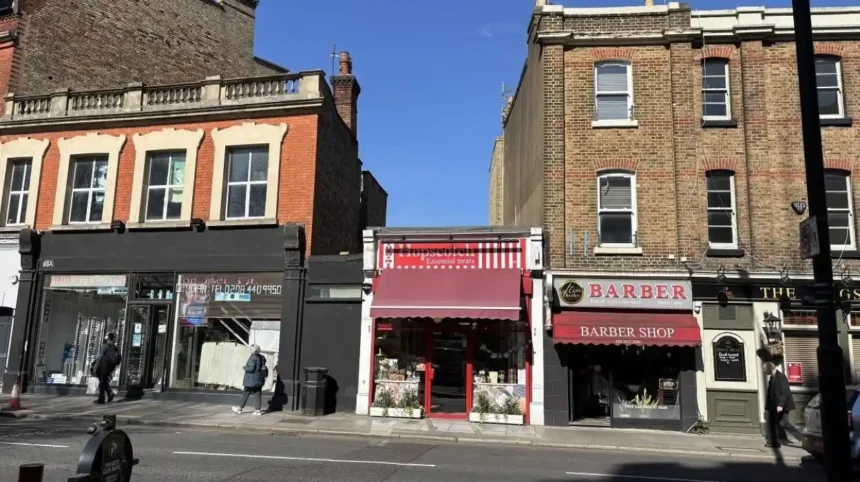
High Barnet High Street is a useful starting point for photographers interested in traditional North London streetscapes. The road contains historic commercial buildings, modern retail businesses, cafés and traditional establishments.
The street provides opportunities to photograph:
- Traditional shopfronts and business signs.
- Historic building façades and upper-floor windows.
- Pedestrians moving between shops.
- Buses and other everyday transport.
- Street-level architectural details.
The contrast between historic buildings and contemporary retail activity gives photographers a record of how a traditional town centre functions today.
Wood Street
Wood Street is particularly suitable for architectural street photography. It forms part of the Wood Street Conservation Area, designated in 1969 and extended in 1979.
Barnet Council identifies historic shops near St John the Baptist Church, Union Street, villas overlooking Ravenscroft Park and buildings extending towards The Whalebones as important elements of the conservation area’s character. Barnet Council
Photographers can focus on:
- Period residential properties.
- Traditional brickwork and decorative façades.
- Historic commercial buildings.
- Church surroundings.
- Architectural transitions between residential and commercial streets.
Wood Street also provides a connection between Barnet’s historic town centre and its residential surroundings.
The Area Around St John the Baptist Church
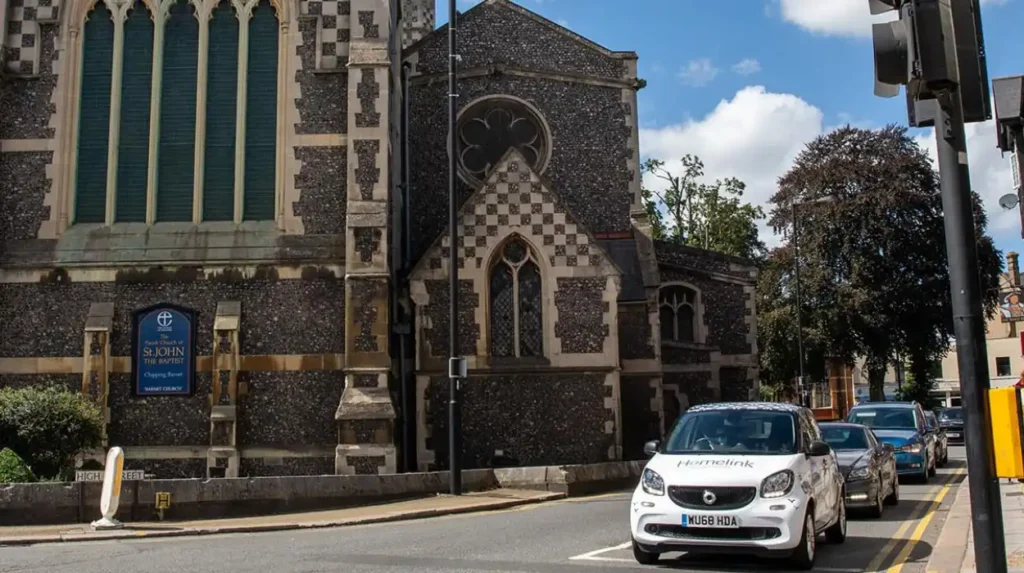
The junction around St John the Baptist Church provides a distinctive architectural subject. The church stands near the meeting point of High Street and Wood Street, creating a recognisable feature within the historic town centre.
Its flint exterior, stone detailing and prominent tower provide opportunities for photographing historic religious architecture alongside everyday street activity.
Barnet Market and Stapylton Road
Barnet Market is particularly useful for photographers interested in commercial street life. The market dates from 1199, when King John granted a charter allowing a weekly market.
The market continues to operate near The Spires Shopping Centre on Stapylton Road. Its regular trading days provide opportunities to photograph market stalls, produce displays, shoppers and the interaction between independent traders and customers.
Wednesday and Saturday are established market days. Photographers should check current trading arrangements before travelling.
Why Is Chipping Barnet Historically Important for Street Photography?
The town’s historical development explains its distinctive street pattern. Chipping Barnet grew around a market established in the late twelfth century. The surrounding High Street developed to serve traders, travellers and local residents.
The Barnet Society records the importance of coaching inns, including the surviving Mitre Inn, and the development of the market area as a centre for commercial activity. The Barnet Society
As you photograph the modern town centre, you are crossing streets shaped by centuries of settlement and trade. Explore the full [History of Barnet and Its Historic Market Town Origins] to understand how the area’s historic identity developed.
Are Monken Hadley and Hadley Green Good for Street Photography?
Monken Hadley and Hadley Green are excellent locations for photographing traditional village streets, historic buildings, mature trees and heritage architecture. Their quieter atmosphere provides a different photographic environment from Barnet’s commercial High Street.
Monken Hadley is a historic settlement in northern Barnet. Its village character, traditional buildings and relationship with surrounding green spaces make it suitable for photographers interested in heritage streetscapes.
Monken Hadley Village Streets
Monken Hadley’s traditional village environment provides opportunities to photograph:
- Historic houses and cottages.
- Traditional road layouts.
- Church architecture.
- Brick walls and boundary features.
- Mature trees surrounding residential buildings.
The streets are particularly suitable for photographers who prefer architectural details and quieter compositions rather than crowded commercial scenes.
The nearby Monken Hadley Conservation Area recognises the settlement’s special architectural and historic character. Barnet Council includes it among the borough’s designated conservation areas. Barnet Council+1
Hadley Green
Hadley Green offers a combination of historic landscape and roadside photography. Its open setting contrasts with the built-up commercial streets of central Barnet.
Photographers can frame the surrounding historic buildings, roadside features, mature trees and open grassland. The area also has an association with the Battle of Barnet, fought in 1471 during the Wars of the Roses.
The historic connection adds context to photographs documenting the area’s landscape and built environment.
What Makes Monken Hadley Different from High Barnet?
High Barnet provides a commercial streetscape, with shopfronts, buses, market activity and pedestrians. Monken Hadley offers a more traditional village setting, with residential architecture, historic boundaries and quieter roads.
Photographers can visit both areas during the same outing to create a varied collection of North London street photography.
Which Streets in Finchley Are Best for Street Photography?
Finchley’s strongest street photography locations include Ballards Lane, Regents Park Road, Hendon Lane and the streets around Finchley Church End. These areas combine Edwardian shopping parades, independent businesses, residential architecture and everyday suburban activity.
Finchley occupies a central position within the London Borough of Barnet. Its development reflects the influence of historic roads, railway connections and suburban housing expansion.
The area contains several distinct commercial centres, including Finchley Church End, East Finchley and North Finchley.
Regents Park Road
Regents Park Road is an important commercial street in North Finchley. Its retail businesses, cafés, restaurants and transport activity provide opportunities to photograph everyday suburban life.
Photographers can concentrate on:
- Shopfronts and business signage.
- Pedestrian crossings and pavements.
- Commercial building façades.
- Street furniture and bus stops.
- Changing light across building fronts.
The street is particularly useful for documenting the relationship between local businesses and residential neighbourhoods.
Ballards Lane
Ballards Lane provides another useful setting for street photography in Finchley. Its commercial buildings and everyday shopping activity create a recognisable suburban high-street environment.
The street offers a mixture of older shopfronts and contemporary businesses. This contrast helps photographers document changes in local retail architecture.
Look for repeating shopfront patterns, street signs, building entrances and reflections in commercial windows.
Hendon Lane and Finchley Church End
Finchley Church End is particularly interesting because of its Edwardian shopping parades.
Barnet Council identifies the shopping buildings around the junction of Regents Park Road and Hendon Lane as important features of the Finchley Church End Conservation Area. The area also includes a church, schools and residential buildings.
The Edwardian architecture provides opportunities to photograph decorative façades, traditional shop windows, upper-storey details and historic commercial streets.
What Is Special About Finchley’s Architectural Character?
Finchley’s architectural development reflects its transition from a rural settlement to a suburban district.
Barnet Council records that Finchley developed along the Great North Road. The arrival of railways encouraged more intensive residential development, while earlier roads continued to influence the layout of its commercial centres.
This combination of historic routes and suburban expansion gives Finchley a recognisable streetscape.
Where Can You Find the Best Street Photography in Golders Green?
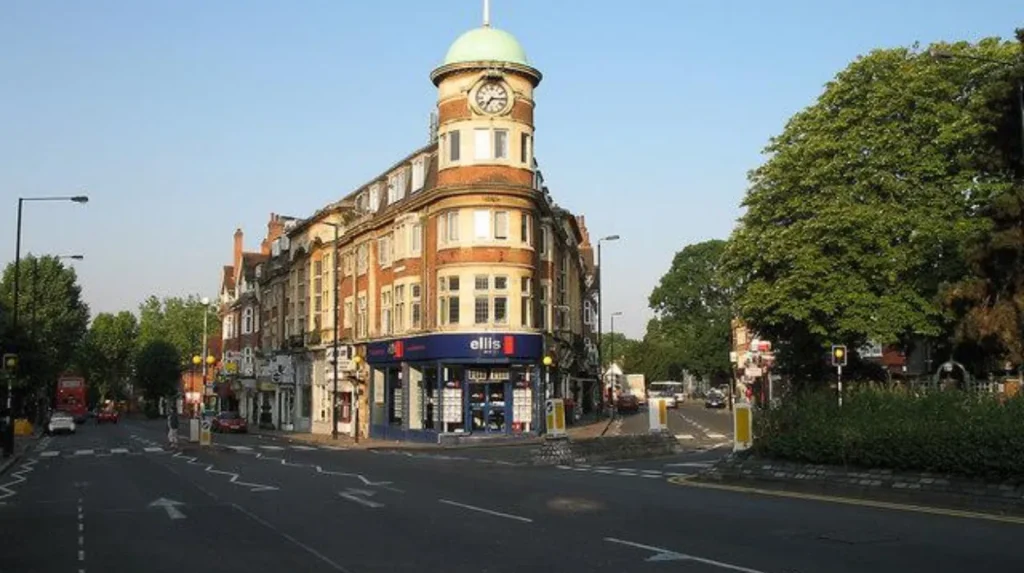
Golders Green is one of Barnet’s most useful destinations for commercial street photography. Finchley Road, Golders Green Road and North End Road provide busy shopping environments, diverse businesses, transport infrastructure and distinctive retail architecture.
Golders Green is located in southern Barnet, close to Hampstead Garden Suburb. Its town centre developed around transport connections and the growing residential population.
Golders Green Road
Golders Green Road is one of the principal streets for photographing the area’s commercial character.
The street features retail businesses, cafés, restaurants and residential properties above commercial premises. This arrangement creates a layered streetscape with different architectural details at ground and upper-floor levels.
Photographers can capture:
- Traditional retail parades.
- Restaurant entrances and window displays.
- Street signs and commercial lettering.
- Pedestrians and public transport.
- Contrasting building materials and façades.
The variety of businesses also reflects the area’s established multicultural commercial identity.
Finchley Road
Finchley Road runs through the Golders Green commercial centre and provides a mixture of retail buildings, transport infrastructure and pedestrian activity.
The road is useful for photographing wider streetscapes. Its junctions, commercial façades and movement of buses and vehicles create opportunities for urban compositions.
North End Road
North End Road provides another perspective on Golders Green’s commercial environment. Its connection with the town centre makes it useful for exploring different building styles and street-level activity.
Photographers can document the relationship between local businesses, residential streets and the wider shopping district.
What Makes Golders Green Conservation Area Photogenic?
Barnet Council identifies Golders Green Town Centre as a conservation area that includes the town centre and railway and bus/coach station.
Its principal roads include Finchley Road, Golders Green Road and North End Road. The shopping centre contains purpose-built commercial parades with retail premises at ground level and residential accommodation above.
This architectural arrangement is valuable for street photography because it captures the functional design of a suburban town centre.
Which Streets in Hendon Are Worth Photographing?
Hendon offers useful street photography opportunities around Hendon Central, The Burroughs, Church End and surrounding residential roads. Its historic buildings, civic architecture, commercial streets and transport connections provide a combination of traditional and modern urban subjects.
Hendon developed as a historic settlement before becoming part of London’s expanding suburban landscape. Its streets reflect the area’s transition from a village environment to a larger residential and commercial district.
The Burroughs
The Burroughs is one of Hendon’s most interesting locations for architectural photography. It contains important civic and institutional buildings, alongside residential and educational properties.
The area is particularly useful for photographing:
- Historic institutional architecture.
- Traditional brick and stone façades.
- Older public buildings.
- Street signs and architectural details.
- Contrasts between established buildings and modern development.
Hendon The Burroughs is recognised as a conservation area by Barnet Council. Its designation reflects the architectural and historic interest of the streetscape.
Hendon Church End
Hendon Church End provides a more traditional historic environment. Its buildings and street layout offer opportunities for photographers interested in older suburban architecture.
The surrounding area contains historic properties and buildings associated with Hendon’s development as an established settlement.
Photographers should explore the streets around the church and surrounding residential properties, concentrating on building materials, entrances, windows and architectural features.
Hendon Central and Watford Way
Hendon Central offers a contrasting photography environment. Its transport connections, commercial premises and busy roads provide contemporary urban subjects.
Watford Way is useful for photographing modern road infrastructure, pedestrian crossings, buses and the relationship between transport and commercial development.
These locations are particularly relevant to photographers documenting everyday urban movement rather than exclusively historic architecture.
Is Hampstead Garden Suburb One of the Best Places for Architectural Street Photography in Barnet?
Hampstead Garden Suburb is among Barnet’s strongest architectural photography destinations because of its planned residential streets, Arts and Crafts influences, landscaped surroundings and carefully designed public spaces. Central Square, Northway and Temple Fortune Lane provide distinctive photographic environments.
Hampstead Garden Suburb is a planned residential development in southern Barnet. It was established in the early twentieth century and is internationally recognised for its approach to architecture, landscaping and town planning.
Central Square
Central Square is one of the most recognisable architectural locations in Hampstead Garden Suburb.
The area contains significant public buildings, including St Jude-on-the-Hill, the Free Church and the former Institute. The buildings are associated with architect Sir Edwin Lutyens.
The square provides opportunities for photographing:
- Carefully arranged architectural façades.
- Traditional rooflines and windows.
- Public buildings and surrounding streets.
- Landscaped settings.
- Relationships between buildings and open space.
The architectural arrangement makes Central Square particularly suitable for wide-angle photography and detailed architectural compositions.
Northway, Middleway and Southway
These residential streets offer opportunities to photograph the planned character of Hampstead Garden Suburb.
Their houses, gardens, boundary walls and tree-lined surroundings demonstrate the relationship between domestic architecture and landscape design.
Photographers should concentrate on:
- Consistent architectural styles.
- Differences between individual houses.
- Traditional entrances and windows.
- Garden boundaries and street trees.
- Building proportions and rooflines.
Temple Fortune Lane and Willifield Way
Temple Fortune Lane and Willifield Way form another useful photography area within the wider Hampstead Garden Suburb conservation area.
These streets provide residential architecture and landscaped surroundings rather than the commercial activity found in Golders Green.
Why Is Hampstead Garden Suburb Architecturally Significant?
The Hampstead Garden Suburb Trust records that the development covers approximately 880 acres and contains more than 5,000 properties.
The Trust also identifies a substantial collection of listed buildings, including two Grade I, 41 Grade II* and 740 Grade II buildings.
The development demonstrates the principles of planned suburban architecture, with buildings, gardens, roads and open spaces designed as part of a connected environment.
Barnet Council’s conservation documentation divides the suburb into 22 character areas, including five areas of open space, providing detailed information about its architectural and landscape features. hgstrust.org+1
For photographers, this makes the suburb particularly valuable for documenting early twentieth-century residential planning.
Which Other Barnet Streets Offer Interesting Urban Photography Opportunities?
Beyond the main town centres, Barnet contains smaller residential and commercial streets with distinctive architectural details. Mill Hill, Totteridge, Finchley Garden Village and Railway Terraces provide quieter settings for documenting suburban design and local street character.
These locations are useful for photographers who want to move beyond familiar high streets and explore less prominent parts of the borough.
Mill Hill Broadway
Mill Hill Broadway offers a traditional suburban commercial environment. Its shops, cafés, restaurants and residential buildings create opportunities for everyday street photography.
The area is particularly useful for documenting local shopping activity and the relationship between commercial premises and nearby residential streets.
Photographers can explore shopfronts, building details, street furniture and the movement of pedestrians around the shopping area.
Mill Hill also has a designated conservation area, reflecting its historic and architectural interest.
Totteridge
Totteridge offers a quieter residential environment with historic buildings, traditional streets and landscaped surroundings.
The area is particularly suitable for architectural photography. Its residential properties provide subjects such as traditional façades, garden boundaries, entrance gates and established street trees.
Totteridge is a designated conservation area, making its historic character an important part of Barnet’s architectural heritage.
Finchley Garden Village
Finchley Garden Village is a particularly interesting location for photographers researching planned residential architecture.
Barnet Council identifies Village Road as the centre of this conservation area. The development contains 51 properties and covers approximately nine acres.
The council’s historical account explains that the development began in 1909, following earlier suburban expansion around Finchley. Barnet Council
Village Road, Hendon Avenue and Cyprus Avenue provide opportunities to photograph residential architecture and the relationship between houses, gardens and streets.
Railway Terraces
Railway Terraces offers another architectural photography subject within Barnet.
Railway-related residential development forms part of the borough’s wider suburban history. The conservation designation recognises the historic interest of the area.
Photographers interested in the relationship between transport infrastructure and residential development can include Railway Terraces in a wider exploration of Barnet’s historic neighbourhoods.
What Is the Best Time of Day for Street Photography in Barnet?
Early morning, late afternoon and overcast daylight provide useful conditions for photographing Barnet’s streets. Morning light highlights traditional façades, daytime activity creates commercial street scenes, and evening light introduces reflections and artificial illumination.
Lighting affects the appearance of buildings, shopfronts, pavements and pedestrians. Choosing the right time helps photographers control contrast and create more balanced compositions.
Early Morning Photography
Early morning is suitable for photographing historic streets before commercial activity becomes busy.
High Barnet High Street, Wood Street and Monken Hadley provide opportunities to photograph architecture with fewer pedestrians in the frame.
Morning light also creates shadows across building façades, highlighting decorative details and surface textures.
Midday Photography
Midday provides opportunities to document active shopping streets and public transport.
Golders Green Road, Regents Park Road and Barnet High Street are useful locations for photographing:
- Busy pavements.
- Market activity.
- Shopfronts.
- Buses and vehicles.
- Pedestrian crossings.
Direct sunlight produces strong shadows, so photographers should pay attention to exposure and bright reflections.
Late Afternoon and Evening Photography
Late afternoon provides warmer light on building façades, particularly along streets with open views.
Evening photography introduces illuminated shop windows, restaurant signs, street lighting and reflections on glass surfaces.
Golders Green and Finchley provide useful commercial environments for documenting these details.
Is Overcast Weather Suitable for Street Photography?
Overcast conditions provide softer lighting and reduce harsh shadows. This is useful when photographing shopfronts, building details and residential architecture.
Cloudy weather also helps photographers maintain more consistent exposure when moving between shaded streets and open areas.
What Camera Equipment Is Best for Photographing Barnet Streets?
A smartphone or lightweight camera with a standard wide-angle or 35mm-equivalent lens is sufficient for most Barnet street photography. Comfortable footwear, spare batteries and simple exposure controls are more important than carrying extensive specialist equipment.
Barnet’s streets offer a mixture of narrow architectural details, open commercial roads and residential environments. A flexible camera setup makes it easier to photograph different subjects without changing equipment frequently.
Smartphones
Modern smartphones provide practical tools for photographing streetscapes.
Their wide-angle cameras work well for:
- Shopfronts.
- Residential buildings.
- Street signs.
- Market scenes.
- General urban compositions.
A smartphone is also convenient for visitors exploring several neighbourhoods on foot.
Compact Cameras and Mirrorless Cameras
Compact cameras and mirrorless systems offer additional control over exposure, focus and lens selection.
A 35mm-equivalent lens is useful for everyday street photography because it captures people and buildings without requiring excessive distance.
A wider lens is suitable for architectural compositions, while a short telephoto lens helps isolate smaller details.
Accessories
Useful accessories include a spare battery, memory card, lens-cleaning cloth and a lightweight camera strap.
A tripod is generally unnecessary for daytime street photography. It also makes movement through busy pavements less convenient.
How Can You Plan a Street Photography Route Around Barnet?
A practical Barnet photography route should group nearby locations to reduce unnecessary travel. High Barnet and Monken Hadley work well together, while Finchley and Golders Green form another useful photography area with distinct commercial and residential subjects.
Barnet covers a large geographical area, so planning each photography outing around neighbouring locations helps visitors use their time efficiently.
Route One: Historic High Barnet and Monken Hadley
Start at High Barnet Underground station and explore the town centre.
A useful sequence is:
- High Barnet High Street.
- Barnet Market and Stapylton Road.
- St John the Baptist Church.
- Wood Street.
- The Whalebones.
- Monken Hadley and Hadley Green.
This route combines commercial architecture, market activity, historic buildings and traditional village streets.
Allow additional time for market photography on Wednesday or Saturday.
Route Two: Finchley and Finchley Church End
Begin around Finchley Central or the relevant local transport connection.
Explore Regents Park Road, Hendon Lane and the Edwardian shopping parades around Finchley Church End.
Continue towards Finchley Garden Village if residential architecture is the main photographic interest.
Route Three: Golders Green and Hampstead Garden Suburb
Start at Golders Green Underground station.
Explore Golders Green Road, Finchley Road and North End Road before continuing towards Hampstead Garden Suburb.
Central Square and the surrounding residential streets provide a contrasting architectural environment.
Visitors should check walking distances and transport arrangements before combining these locations, as the suburb covers a substantial area.
Route Four: Hendon and Mill Hill
Explore Hendon Central and The Burroughs before travelling towards Mill Hill Broadway.
This route provides a mixture of civic architecture, commercial streets and suburban shopping environments.
It is particularly suitable for visitors interested in documenting the development of North London’s residential and commercial districts.
What Are the Legal and Ethical Considerations for Street Photography in Barnet?
Street photographers in Barnet should respect privacy, avoid obstructing public pavements and follow restrictions applying to private property. Photographing in a public place is generally permitted in the UK, but harassment, intrusive behaviour and misuse of images raise separate legal considerations.
Street photography documents public environments and everyday activities. However, photographers should understand the distinction between public streets, privately managed spaces and locations with specific access conditions.
Can You Photograph People on Barnet’s Public Streets?
Photography in public places is generally lawful in the UK. There is no general requirement to obtain permission from every person appearing in a photograph taken in a public street.
However, photographers should respect individuals who object to being photographed. Particular care is appropriate when photographing children, vulnerable people and people in sensitive situations.
What Should Photographers Know About Private Property?
Shopping centres, privately managed developments and commercial premises can have their own photography policies.
The Spires Shopping Centre, for example, is a privately managed retail environment. Photographers should check its current rules before taking photographs within the development.
Similarly, visitors should check access conditions before photographing inside businesses, stations or other managed premises.
How Can You Photograph Responsibly?
Responsible street photography involves respecting the people and communities being documented.
Photographers should:
- Avoid blocking pavements and pedestrian crossings.
- Ask permission before taking intrusive close-up portraits.
- Respect requests to stop photographing.
- Avoid photographing private interiors without permission.
- Follow instructions from property managers and security staff.
These practices help maintain positive relationships with local communities.
Explore More Area Guide
Best Barnet Landmarks for Photography in North London
Best Instagram Spots in Barnet: Historic Sites and Green Spaces
Why Are Barnet’s Historic Streets Important for Urban Photography?
Barnet’s historic streets provide a visual record of how North London developed through medieval markets, transport improvements, suburban planning and commercial expansion. Photography preserves details of buildings, streets and local businesses that explain the borough’s changing urban identity.
Urban photography is valuable because it documents the relationship between architecture, people and public space.
Barnet provides several historical layers within one borough. Chipping Barnet retains its market-town identity, Finchley reflects historic road and railway development, and Hampstead Garden Suburb demonstrates early twentieth-century planned residential architecture.
These environments help photographers document the different stages of North London’s urban development.
How Does Photography Document Architectural Change?
Photographs create visual records of streetscapes at particular moments.
A photograph of an Edwardian shopping parade records its building materials, shopfront arrangement and architectural proportions. A contemporary photograph of the same location also documents changes in business use, signage and street activity.
This information is valuable for local historians, researchers, residents and future generations.
Why Are Conservation Areas Relevant to Street Photographers?
A conservation area is a designated location recognised for special architectural or historic interest.
Barnet Council identifies conservation areas across the borough, including:
- Wood Street.
- Monken Hadley.
- Golders Green.
- Hendon Church End.
- Finchley Church End.
- Mill Hill.
- Totteridge.
- Hampstead Garden Suburb.
The designation recognises the importance of preserving or enhancing the character and appearance of these locations under the Planning (Listed Buildings and Conservation Areas) Act 1990. Barnet Council+2
For photographers, these areas provide opportunities to document architectural features and established streetscapes.
Will Barnet Remain Relevant for Street Photography?
Barnet’s mixture of historic settlements, established shopping centres and residential development gives it continuing photographic relevance.
Changes in retail activity, building renovation, transport infrastructure and public-space design will continue to influence its streets.
Photographers who revisit the same locations over time can document these changes through comparative images.
Which Barnet Streets Should You Prioritise for Street Photography?
The best Barnet photography locations depend on the subjects you want to capture. High Barnet suits historic commercial photography, Finchley offers Edwardian shopping architecture, Golders Green provides busy urban scenes, and Hampstead Garden Suburb is ideal for planned residential architecture.
For visitors with limited time, choosing locations according to photographic interests makes exploration more efficient.
The following locations offer a useful starting point:
- Best for historic streets: High Barnet High Street and Wood Street.
- Best for traditional market scenes: Barnet Market and Stapylton Road.
- Best for village architecture: Monken Hadley.
- Best for Edwardian shopfronts: Finchley Church End.
- Best for busy commercial photography: Golders Green Road.
- Best for civic architecture: The Burroughs, Hendon.
- Best for planned residential streets: Hampstead Garden Suburb.
- Best for suburban architecture: Mill Hill Broadway and Totteridge.
- Best for quieter residential compositions: Finchley Garden Village.
Barnet offers more than one recognisable photography environment. Its historic market streets, commercial centres, conservation areas and residential neighbourhoods provide a broad view of North London’s urban character.
For tourists, street photography offers a practical way to explore the borough beyond its major attractions. Residents can use the same locations to document neighbourhood changes, while digital nomads and business travellers can fit shorter photography walks around their working schedules.
The strongest approach is to explore one neighbourhood at a time, observe its architectural details and document the relationship between historic buildings and contemporary street life. From Chipping Barnet to Hampstead Garden Suburb, the borough provides a varied collection of streetscapes for anyone interested in North London photography.
Which street is best for street photography in Barnet?
High Barnet High Street is one of the best locations for street photography. It features historic buildings, traditional shopfronts, independent businesses and everyday pedestrian activity.