Barnet is undergoing significant urban transformation as London expands, creating new homes, improving transport infrastructure and reshaping established neighbourhoods. Located in North London, the London Borough of Barnet combines suburban communities, historic town centres, commercial districts and extensive green spaces. Its development reflects a wider challenge facing the capital: accommodating a growing population while maintaining local identity, environmental quality and access to essential services.
- What Is Driving Barnet’s Transformation as London Continues to Grow?
- Population growth and changing housing demand
- London’s housing pressures
- Economic and demographic change
- How Is the Brent Cross–Cricklewood Regeneration Project Changing North London?
- What is being developed at Brent Cross Town?
- How is Brent Cross Shopping Centre changing?
- What does the development mean for employment?
- How are parks and public spaces being incorporated?
- Why Is Colindale Becoming One of Barnet’s Fastest-Changing Neighbourhoods?
- How many homes are planned in Colindale?
- How is Colindale’s transport infrastructure improving?
- What community facilities are being introduced?
- How is Grahame Park changing?
- How Is Mill Hill East Balancing New Housing with Its Suburban Character?
- What is the Millbrook Park development?
- How are green spaces supporting the development?
- What employment opportunities are being created?
- How Are Barnet’s Town Centres Adapting to London’s Urban Expansion?
- What changes are taking place in Finchley?
- How is Edgware responding to development pressure?
- Why does Chipping Barnet remain important?
- How Is Transport Infrastructure Changing Across Barnet?
- Why is Brent Cross West station important?
- What does Barnet’s Transport Strategy aim to achieve?
- How are walking and cycling becoming more important?
- What are the challenges for public transport?
- How Is Barnet Protecting Green Spaces While Building More Homes?
- Why is the Green Belt important?
- Which parks and green spaces benefit from regeneration?
- How does development affect local biodiversity?
- How Is Barnet’s Economy Changing as New Neighbourhoods Develop?
- How are new employment areas developing?
- What opportunities exist for independent businesses?
- How does digital infrastructure support economic growth?
- How Is Barnet’s Development Affecting Residents and Visitors?
- What does regeneration mean for local residents?
- What changes should tourists expect?
- Is Barnet becoming more attractive for business travellers?
- What pressures accompany urban expansion?
- What Role Does Barnet’s Local Plan Play in Future Development?
- How much housing does Barnet need to deliver?
- How does planning policy protect existing neighbourhoods?
- Why is community participation important?
- How Is Barnet Preserving Its Historic Identity During Modernisation?
- How has Barnet developed historically?
- How are historic buildings incorporated into regeneration?
- Why are conservation areas important?
- What Will Barnet Look Like as London Continues Growing Towards 2040?
- Will Barnet become more densely developed?
- Will public transport become more accessible?
- How will sustainability influence future construction?
- What challenges will Barnet need to address?
- Why Is Barnet Becoming an Important Part of London’s Future?
The transformation is particularly visible in Brent Cross–Cricklewood, Colindale and Mill Hill East. These areas are receiving substantial investment through housing developments, transport improvements, new public spaces and community facilities. At the same time, established centres such as Finchley, Hendon, Edgware and Chipping Barnet continue to adapt to changing residential and commercial needs.
According to the Office for National Statistics (ONS), Barnet’s population increased from approximately 356,400 in 2011 to 389,300 in 2021. This represented growth of 9.2%, exceeding London’s overall population increase of 7.7% during the same period. Office for National Statistics+1
This population increase creates demand for housing, schools, healthcare, employment opportunities and better transport connections. Barnet’s development strategy therefore focuses on accommodating growth through planned regeneration, infrastructure investment and more sustainable neighbourhood design.
Understanding these changes helps visitors, residents and business travellers recognise how Barnet is becoming an increasingly connected and diverse part of North London.
What Is Driving Barnet’s Transformation as London Continues to Grow?
Barnet’s transformation is driven by population growth, housing demand, infrastructure investment and London’s expanding economy. The borough is directing development towards regeneration areas, improving transport connections and supporting new neighbourhoods while protecting established communities and valuable green spaces.
London’s continued expansion places pressure on boroughs to accommodate additional residents and economic activity. Barnet has an important role because it combines accessible transport connections with substantial residential areas and previously developed land.
The borough’s geographical position connects North London with central London, Hertfordshire and other parts of the capital. This location supports commuting, retail activity, education and commercial development.
Population growth and changing housing demand
The 2021 Census recorded 389,300 residents in Barnet, making it London’s second-largest borough by population at that time. The increase from 2011 demonstrates the scale of residential change.
Barnet’s population growth also reflects changes in household composition. The borough recorded 148,917 households in 2021, representing a 9.6% increase since 2011. Smaller households, families and older residents all contribute to changing housing requirements. Barnet Open Data+1
This growth creates demand for different residential options, including family houses, apartments, affordable housing and accessible homes for older people.
London’s housing pressures
London faces a long-term shortage of suitable and affordable housing. Rising demand encourages local authorities to identify development opportunities, particularly around public transport connections and underused urban land.
Barnet’s regeneration programme responds through large residential schemes. These developments combine housing with roads, schools, parks, community facilities and commercial spaces.
The objective is to create neighbourhoods that support everyday activities rather than simply increase the number of residential properties.
Economic and demographic change
Barnet has a diverse population, with more than 90 languages spoken across the borough according to council population information. International migration, changing household needs and different age groups contribute to its evolving social character. Barnet Council
This diversity influences local businesses, restaurants, community organisations, education services and cultural activities.
For visitors, these changes are visible in the borough’s shopping streets, independent businesses and food establishments. For residents, they influence the demand for accessible services, employment opportunities and community infrastructure.
How Is the Brent Cross–Cricklewood Regeneration Project Changing North London?
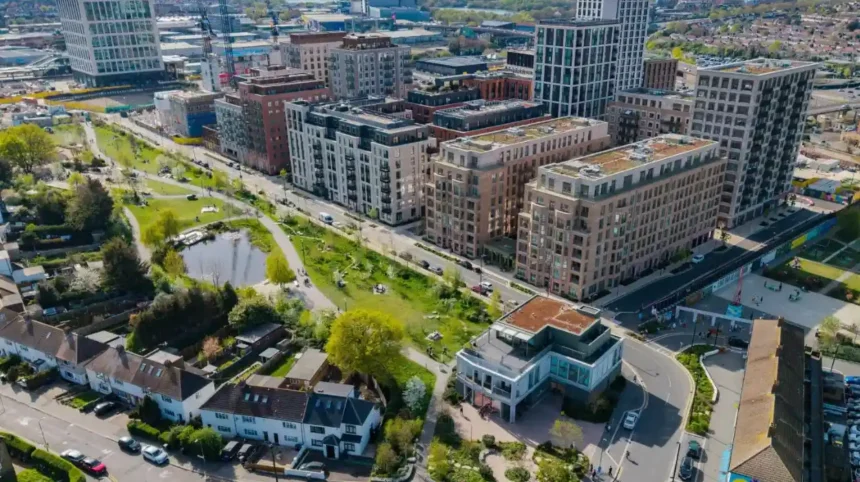
Brent Cross–Cricklewood is one of Barnet’s largest regeneration programmes, combining thousands of new homes, employment space, retail facilities, parks and transport improvements. Its development is transforming a major commercial area into a more connected residential and employment destination.
The Brent Cross–Cricklewood regeneration programme represents a major change in Barnet’s urban structure. The development covers approximately 141 hectares according to the council’s regeneration programme information and is among the borough’s largest redevelopment initiatives. Barnet Council+1
The project extends beyond the existing Brent Cross Shopping Centre. It introduces a wider urban environment with residential neighbourhoods, commercial buildings, transport infrastructure and public spaces.
What is being developed at Brent Cross Town?
Brent Cross Town is a major component of the wider regeneration programme. The council identifies plans for approximately 6,700 new homes and office space supporting up to 25,000 jobs.
The development also includes a new high street, cafés, restaurants, shops and community facilities. Its public realm plans include eight public squares and seven new or improved parks. Barnet Council
These facilities are intended to support everyday activities within walking distance of residential buildings.
The development follows a 15-minute neighbourhood concept. This approach places everyday destinations such as workplaces, shops, schools and leisure facilities within convenient walking or cycling distance.
How is Brent Cross Shopping Centre changing?
Brent Cross Shopping Centre remains an important retail destination in North London. Its wider regeneration context connects traditional shopping facilities with new residential and commercial development.
The programme includes improvements to the shopping centre and surrounding infrastructure. These changes aim to strengthen the area’s position as a regional retail and leisure destination.
New residential buildings also introduce a larger local customer base for shops, restaurants and other services.
What does the development mean for employment?
The regeneration programme introduces substantial commercial space alongside housing. Brent Cross Town’s planned employment capacity of up to 25,000 jobs establishes the area as an important future business destination.
Employment opportunities relate to offices, retail, hospitality, construction, facilities management and supporting services.
For business travellers, the expanding commercial district creates additional reasons to visit Barnet. For residents, improved access to employment within the borough supports local economic activity.
How are parks and public spaces being incorporated?
Public spaces form an important part of the Brent Cross Town development. New parks, landscaped areas and pedestrian routes are designed to connect residential and commercial buildings.
These facilities support outdoor recreation, walking, cycling and community activities. They also help balance the environmental effects of increased building density.
The regeneration project therefore represents a shift towards mixed-use urban development rather than isolated residential construction.
Why Is Colindale Becoming One of Barnet’s Fastest-Changing Neighbourhoods?
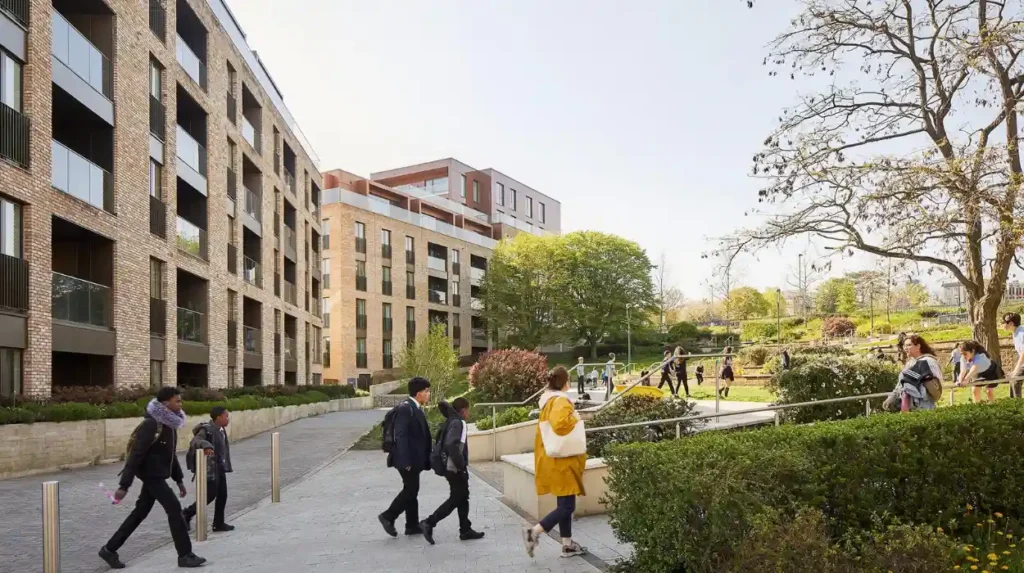
Colindale is experiencing substantial regeneration through new housing, improved transport, educational facilities and public spaces. Barnet Council’s programme identifies capacity for 10,170 additional homes, alongside infrastructure designed to support a larger and more connected local population.
Colindale is one of Barnet’s principal growth areas. Its development is changing the surrounding residential environment, particularly around Grahame Park, Colindale Avenue and the Northern line station.
The neighbourhood has a mixture of established housing, newer apartment developments, educational facilities and commercial services. Regeneration is intended to improve connections between these existing elements.
How many homes are planned in Colindale?
Barnet Council’s regeneration programme identifies 10,170 new homes across various Colindale development sites. The programme also reports that more than 3,400 homes have already been delivered through the initiative. Barnet Council
These developments increase the area’s residential capacity and create demand for additional local services.
The housing programme is supported by plans for educational establishments, health facilities, improved roads and community infrastructure.
How is Colindale’s transport infrastructure improving?
Colindale Underground station is an important transport connection because it provides access to the Northern line.
The regeneration programme includes redevelopment of the station with step-free access. This improvement supports passengers with mobility requirements, parents with pushchairs and people carrying luggage.
Other planned improvements include better bus connections, road junction upgrades and new pedestrian and cycling routes.
A pedestrian and cycling bridge is also included in the regeneration plans to connect Montrose Park with the hospital site and Underground station.
What community facilities are being introduced?
Colindale’s development includes plans for a neighbourhood hub containing health, children’s and community facilities.
The programme also includes educational infrastructure, improvements to existing parks and a new Youth Zone at Montrose Playing Field.
These facilities are important because population growth increases demand for accessible healthcare, education and recreation.
For families visiting or living in the area, the development creates a more comprehensive neighbourhood environment.
How is Grahame Park changing?
Grahame Park is a significant part of Colindale’s wider regeneration story. Its redevelopment involves changes to housing, public spaces, transport connections and community facilities.
The objective is to improve the quality of the residential environment while providing additional homes.
The area’s transformation also demonstrates how large housing estates are being incorporated into broader regeneration strategies across North London.
How Is Mill Hill East Balancing New Housing with Its Suburban Character?
Mill Hill East is developing through the transformation of former brownfield land into a residential neighbourhood. Its regeneration combines approximately 2,240 planned homes with improved transport, schools, parks, community facilities and employment opportunities.
Mill Hill East illustrates a different approach to urban growth from the larger developments around Brent Cross and Colindale.
Rather than concentrating development around a major commercial centre, the regeneration programme focuses on creating a new suburban community.
The Millbrook Park development occupies more than 40 hectares of mainly vacant and previously developed land. The site formerly included Inglis Barracks and a council waste depot.
What is the Millbrook Park development?
Millbrook Park is the main residential development associated with Mill Hill East’s regeneration.
The council identifies approximately 2,240 new homes within the programme. The development also includes a new primary school, public spaces, community facilities and improved infrastructure.
The former military land has been divided into development parcels, allowing different residential projects to progress through individual planning processes.
How are green spaces supporting the development?
Mill Hill East’s regeneration includes several public parks and landscaped areas.
Completed spaces include Central Park, Eastern Park, Barracks Park and Officers Mess Gardens. The programme also identifies Panoramic Park as a public space providing views across London. Barnet Council
These facilities help retain the area’s suburban character while accommodating additional housing.
Public parks also provide outdoor recreation opportunities for residents and visitors. Walking routes and landscaped spaces contribute to the area’s attractiveness as a leisure destination.
What employment opportunities are being created?
The regeneration programme identifies approximately 3,470 square metres of employment space and 1,100 square metres of town centre retail space.
It also identifies a target of 500 jobs associated with the development.
These facilities support local services and provide opportunities for businesses operating within the expanding neighbourhood.
Mill Hill East therefore demonstrates how residential growth can be combined with smaller commercial and community facilities.
How Are Barnet’s Town Centres Adapting to London’s Urban Expansion?
Barnet’s established town centres are adapting through changes to retail, housing, public spaces and local services. Finchley, Edgware, Hendon and Chipping Barnet retain distinct identities while responding to changing shopping habits, population growth and demand for accessible neighbourhood facilities.
Urban growth does not only affect major regeneration sites. Existing town centres also experience changes as population patterns and consumer behaviour evolve.
Barnet has several established commercial centres serving surrounding residential neighbourhoods. These centres provide everyday shopping, hospitality, professional services and community facilities.
What changes are taking place in Finchley?
Finchley contains several distinct commercial areas, including North Finchley, Finchley Central and East Finchley.
North Finchley’s High Road supports retail, restaurants, cafés and local services. Finchley Central combines residential streets with commercial facilities around its Underground station.
East Finchley has its own high street and independent businesses.
The different centres serve nearby communities while maintaining their individual commercial identities.
Future development in established centres depends on planning policy, available sites, public transport accessibility and local demand.
How is Edgware responding to development pressure?
Edgware is an important commercial and transport location in northern Barnet.
Its town centre provides shops, restaurants, professional services and connections to surrounding residential areas.
The area also sits within a wider regional environment influenced by housing demand and transport accessibility.
The council’s planning framework identifies town centre development as an important part of Barnet’s wider growth strategy. The Edgware Growth Area is also covered by supplementary planning guidance.
Why does Chipping Barnet remain important?
Chipping Barnet retains a traditional town centre character, with a high street, independent businesses, historic buildings and established residential neighbourhoods.
Its commercial activity supports everyday shopping and local services.
Growth in the wider borough creates opportunities for these established centres to improve their retail offer and public spaces without losing their distinctive character.
For leisure visitors, these areas provide a different experience from the newer developments around Brent Cross and Colindale.
How Is Transport Infrastructure Changing Across Barnet?
Barnet is improving transport through railway investment, Underground accessibility, bus services, cycling infrastructure and safer streets. Its 2025–2042 Transport Strategy establishes a long-term framework for connecting neighbourhoods and supporting sustainable movement.
Transport is central to Barnet’s ability to accommodate additional residents and businesses.
As housing and employment areas expand, existing roads and public transport services face greater demand. Improved connectivity is therefore essential for managing congestion and supporting access to employment, education and leisure.
Why is Brent Cross West station important?
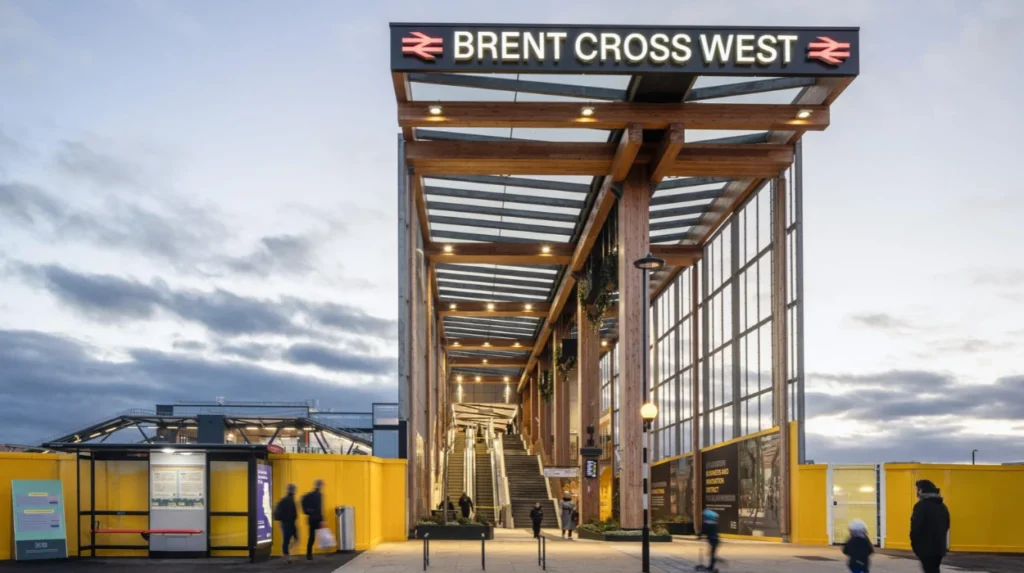
Brent Cross West railway station opened in December 2023. It provides a new Thameslink connection serving Brent Cross Town and the surrounding neighbourhoods.
Barnet Council describes it as London’s first major new mainline railway station in more than a decade.
The station provides journeys into central London in approximately 12 minutes on the fastest services. It also connects with destinations including Luton Airport and St Pancras International. Barnet Council
The station improves accessibility for commuters, visitors and business travellers.
It also supports the wider regeneration programme by making the new residential and commercial district more accessible by rail.
What does Barnet’s Transport Strategy aim to achieve?
Barnet Council adopted its Transport Strategy 2025–2042 in July 2025.
The strategy establishes four principal themes:
- Safe, accessible and healthy transport.
- Sustainable travel through an integrated transport network.
- Stronger neighbourhoods and communities.
- Innovation in transport delivery.
The framework includes improvements to road safety, cycling routes, bus reliability, station accessibility and electric vehicle infrastructure.
How are walking and cycling becoming more important?
Barnet’s regeneration schemes increasingly incorporate pedestrian routes and cycling infrastructure.
Brent Cross Town includes new walking and cycling connections, while Colindale’s regeneration programme identifies a new pedestrian and cycle bridge.
These improvements support shorter local journeys without requiring private vehicles.
Walking and cycling infrastructure also improves access to schools, parks, railway stations and commercial centres.
What are the challenges for public transport?
Barnet’s growth strategy recognises that local public transport connectivity remains a challenge.
Although the borough has established connections to central London, travel between some neighbourhoods is less convenient. This contributes to reliance on private vehicles.
Improving orbital transport connections, bus services and interchange facilities is therefore important.
The council’s longer-term transport objectives include better east–west connectivity and continued cooperation with Transport for London.
How Is Barnet Protecting Green Spaces While Building More Homes?
Barnet is balancing urban development with environmental protection through planning policies, public parks, green infrastructure and sustainable transport. Its approach recognises that accessible open spaces, biodiversity and environmental quality are essential as residential density increases.
Green space is a defining feature of Barnet’s suburban character.
Unlike densely developed central London districts, the borough contains extensive parks, playing fields, landscaped residential areas and countryside landscapes.
As construction increases, protecting these spaces becomes an important planning consideration.
Why is the Green Belt important?
The Metropolitan Green Belt is a planning designation designed to prevent unrestricted urban sprawl and maintain separation between built-up areas.
Parts of Barnet contain Green Belt land, alongside Metropolitan Open Land and designated open spaces.
These designations influence where development takes place and how planning applications are assessed.
Barnet’s Local Plan identifies Green Belt, Metropolitan Open Land, conservation areas and open spaces within its planning framework.
This means that regeneration frequently focuses on suitable previously developed land rather than treating every undeveloped site as available for construction.
Which parks and green spaces benefit from regeneration?
Several public green spaces are connected to Barnet’s growth programmes.
Examples include:
- Montrose Park and Silkstream Park in the Colindale regeneration area.
- Central Park and Barracks Park in Mill Hill East.
- Claremont Park within Brent Cross Town.
- Existing neighbourhood parks and playing fields across Finchley and Hendon.
These spaces provide opportunities for walking, exercise, family recreation and outdoor leisure.
Their improvement also supports the wider objective of making new residential areas more attractive and environmentally sustainable.
How does development affect local biodiversity?
Urban construction changes land use, vegetation and habitats. Planning therefore needs to consider trees, waterways, wildlife corridors and ecological protection.
Green infrastructure refers to connected natural and semi-natural spaces that provide environmental and recreational benefits.
In Barnet, this includes parks, landscaped streets, green corridors and sustainable drainage features.
Mill Hill East’s regeneration programme, for example, includes sustainable urban drainage systems. These systems help manage surface water by controlling how rainfall enters drainage networks. Barnet Council
The long-term challenge is ensuring that additional housing does not reduce the environmental quality that makes Barnet attractive.
How Is Barnet’s Economy Changing as New Neighbourhoods Develop?
Barnet’s economy is evolving through new employment districts, expanding residential communities, retail investment and local service businesses. Regeneration projects are creating commercial opportunities while established town centres continue supporting hospitality, professional services and independent retail.
Economic development is closely connected to residential and transport investment.
When new neighbourhoods attract residents, demand increases for shops, restaurants, childcare, healthcare, professional services and leisure facilities.
This creates opportunities for local businesses and employers.
How are new employment areas developing?
Brent Cross Town is an important example of employment-led regeneration.
Its plans include office accommodation supporting up to 25,000 jobs. The wider development also incorporates retail and hospitality facilities. Barnet Council
Mill Hill East adds smaller-scale employment and retail space to its residential development.
These projects demonstrate how Barnet is creating additional economic activity beyond traditional shopping centres.
What opportunities exist for independent businesses?
Growing residential populations create demand for everyday services.
Examples include cafés, restaurants, convenience shops, fitness facilities, childcare providers, hairdressers and professional services.
Independent businesses are particularly important in established centres such as North Finchley, East Finchley and Chipping Barnet.
New neighbourhoods also create opportunities for businesses serving residents who prefer accessible local services.
How does digital infrastructure support economic growth?
Digital infrastructure supports modern business operations, remote working and communication.
Reliable broadband and mobile connectivity are important for businesses, home workers and digital professionals.
Barnet’s growth strategy recognises digital infrastructure as part of creating a connected borough. It identifies opportunities to improve digital connectivity in regeneration areas and town centres.
For digital nomads and business travellers, access to transport, cafés, local services and reliable internet contributes to the practical appeal of Barnet’s neighbourhoods.
How Is Barnet’s Development Affecting Residents and Visitors?
Barnet’s development is changing everyday experiences through new housing, improved transport, additional public spaces and expanding commercial facilities. Residents benefit from new infrastructure, while visitors gain access to emerging leisure destinations and better-connected neighbourhoods.
Urban development produces both opportunities and challenges for people who live in or visit the borough.
Its effects vary according to location, housing type, transport access and the availability of local services.
What does regeneration mean for local residents?
New housing increases the range of residential accommodation available across Barnet.
Improved transport facilities can reduce journey barriers, while new schools, health centres and parks support growing communities.
However, rapid development also increases pressure on existing infrastructure.
Residents require sufficient GP appointments, school places, road capacity, public transport services and accessible public spaces.
The successful delivery of regeneration therefore depends on coordinating housing construction with community infrastructure.
What changes should tourists expect?
Visitors can experience both traditional and modern Barnet.
Established attractions and neighbourhoods provide historic streets, traditional shopping areas and green spaces. Newer developments introduce contemporary architecture, landscaped public areas and commercial destinations.
Brent Cross Town is particularly relevant for visitors interested in modern urban design and regeneration.
Mill Hill East provides an example of how former institutional and brownfield land is being converted into residential neighbourhoods with parks and community facilities.
Is Barnet becoming more attractive for business travellers?
Improved railway connections and new commercial developments increase Barnet’s accessibility for professional visitors.
Brent Cross West provides an important connection to central London and the wider Thameslink network.
New employment space and retail facilities also strengthen the borough’s commercial offer.
Business travellers can combine professional visits with shopping, dining and outdoor recreation in nearby neighbourhoods.
What pressures accompany urban expansion?
Growth creates challenges involving affordability, congestion, construction activity and public service capacity.
Housing supply does not automatically resolve affordability problems. The availability of suitable homes, including genuinely affordable housing, remains important.
Transport improvements also require continued investment to prevent additional residents and workers from increasing pressure on existing roads.
These issues influence how effectively Barnet manages its long-term development.
What Role Does Barnet’s Local Plan Play in Future Development?
Barnet’s Local Plan provides the planning framework for managing housing, employment, transport, environmental protection and neighbourhood development. Its 2021–2036 period establishes how the borough accommodates growth while considering infrastructure requirements and the character of existing communities.
The Local Plan is an important mechanism for controlling how Barnet changes.
It establishes policies that guide planning applications and identify locations suitable for different types of development.
The plan works alongside the Mayor of London’s London Plan, neighbourhood planning documents and supplementary planning guidance.
How much housing does Barnet need to deliver?
Barnet’s Local Plan establishes a minimum requirement of 35,460 new homes between 2021 and 2036.
This requirement reflects the borough’s long-term housing needs and its role in London’s wider housing strategy. The figure is documented in the November 2024 Local Plan inspector’s report. November 2024+1
A further indication of future housing pressure appears in the draft London Plan consultation published in 2026.
Its proposed housing targets for 2027/28–2036/37 identify 32,849 homes for Barnet, including 25,849 on brownfield land and 7,000 on greenfield land. These are draft consultation figures, not a completed delivery record.
The distinction between planning targets and completed homes is important. A housing target describes the intended level of development, while actual delivery depends on planning permissions, construction programmes, infrastructure and market conditions.
How does planning policy protect existing neighbourhoods?
Planning policy considers the relationship between new buildings and their surroundings.
Relevant considerations include:
- Building height and density.
- Affordable housing provision.
- Access to public transport.
- Road and pedestrian safety.
- Environmental quality.
- Schools and healthcare facilities.
- Protection of heritage assets and conservation areas.
These considerations help determine whether proposed developments are appropriate for particular locations.
For example, a large residential development close to a railway station has different transport implications from a similar scheme in a low-density residential street.
Why is community participation important?
Local residents and businesses have an important role in shaping development decisions.
Planning consultations allow communities to examine proposals and submit comments about design, transport, environmental effects and public facilities.
Neighbourhood planning also gives local communities an opportunity to influence how development takes place in their areas.
This process is important because regeneration affects existing residents as well as future households.
How Is Barnet Preserving Its Historic Identity During Modernisation?
Barnet’s urban transformation takes place within a borough shaped by historic settlements, traditional high streets, former military sites and established residential communities. Conservation policies and heritage-led regeneration help retain local character while accommodating contemporary housing and infrastructure.
Modernisation does not remove the importance of Barnet’s history.
The borough contains historic settlements and buildings that explain how its communities developed before London’s expansion reached North London.
Traditional high streets, historic churches, older residential properties and former institutional sites remain important parts of its identity.
How has Barnet developed historically?
Barnet’s history is connected to its position along historic routes north of London.
Chipping Barnet developed as a market settlement, with its historic high street reflecting its earlier commercial importance. Other communities, including Finchley, Hendon and Mill Hill, developed through different combinations of agriculture, local commerce, institutions and residential expansion.
The arrival and expansion of railway and Underground connections subsequently encouraged suburban growth.
During the twentieth century, residential development transformed much of Barnet into an established part of London’s suburban landscape.
Understanding this development provides useful context for interpreting today’s regeneration projects.
As you explore the modern borough, you are also crossing neighbourhoods shaped by centuries of local change. Read about the full [Insert Anchor Text: History of Barnet] to understand how its historic settlements developed into today’s North London communities.
How are historic buildings incorporated into regeneration?
Some regeneration projects incorporate existing historic structures rather than replacing every building.
Mill Hill East provides an example through the proposed conversion of the former officers’ mess building into mixed-use accommodation.
This approach connects the site’s previous military use with its emerging residential identity. Barnet Council
The retention and reuse of historic structures also supports the preservation of local architectural character.
Why are conservation areas important?
Conservation areas are designated locations where special architectural or historic interest deserves protection.
Barnet’s planning framework identifies conservation areas and heritage-related planning considerations.
These designations influence decisions involving building alterations, demolition and new construction.
They also help maintain the visual character of historic streets and established neighbourhoods.
For visitors, these areas provide opportunities to explore a different side of Barnet beyond its modern apartment developments and commercial centres.
Explore More Area Guide
Which Barnet Streets Are Best for Street Photography?
Best Barnet Landmarks for Photography in North London
What Will Barnet Look Like as London Continues Growing Towards 2040?
Barnet’s future development will increasingly depend on housing delivery, transport accessibility, sustainable construction and public infrastructure. Regeneration programmes, the Local Plan and the 2025–2042 Transport Strategy provide the framework for accommodating further growth.
The future of Barnet is closely connected to London’s wider development requirements.
The borough is expected to remain an important location for residential expansion because of its transport connections, established communities and available regeneration sites.
However, the quality of this expansion will depend on how effectively infrastructure and environmental protection keep pace with construction.
Will Barnet become more densely developed?
Barnet’s regeneration areas will introduce additional residential density, particularly around Brent Cross, Colindale and Mill Hill East.
New apartment buildings and mixed-use developments are changing the built environment in these locations.
However, the borough is not following a single development pattern.
Major regeneration areas are experiencing concentrated construction, while many established suburban neighbourhoods retain lower-density residential character.
This difference will remain an important feature of Barnet’s urban structure.
Will public transport become more accessible?
The 2025–2042 Transport Strategy identifies long-term improvements to public transport, cycling and walking.
Planned priorities include:
- Better bus reliability and frequency.
- Additional step-free station access.
- Safer walking and cycling routes.
- Improved orbital connections.
- Continued electric vehicle infrastructure investment.
These priorities support a transport network that serves both established and newly developed neighbourhoods. Barnet Council+1
Improved connectivity is particularly important for residents travelling between different parts of North London without passing through central London.
How will sustainability influence future construction?
Sustainability is becoming an increasingly important consideration in urban development.
New residential and commercial buildings require attention to energy efficiency, water management, biodiversity and environmental performance.
Barnet’s wider ambitions include becoming a net-zero borough by 2042.
The council’s transport strategy connects this ambition with cleaner travel options, improved infrastructure and reduced environmental impacts.
Future regeneration will therefore need to consider the environmental consequences of additional housing, construction activity and transport demand.
What challenges will Barnet need to address?
Barnet’s future growth involves several interconnected challenges.
Housing delivery must respond to affordability and household needs. Public transport needs to accommodate increasing passenger numbers. Schools and healthcare services must serve expanding communities.
Environmental protection also remains essential because parks, open spaces and green infrastructure contribute to the borough’s residential and recreational appeal.
The success of Barnet’s transformation will depend on coordinating these requirements rather than treating housing construction as an isolated objective.
Why Is Barnet Becoming an Important Part of London’s Future?
Barnet is becoming an important part of London’s future through large-scale regeneration, improved transport, expanding employment districts and investment in residential infrastructure. Its development demonstrates how outer London boroughs accommodate population growth while maintaining established communities and green spaces.
Barnet’s transformation reflects the changing needs of a growing capital. Its development is not restricted to new housing. It involves the creation of connected neighbourhoods, employment opportunities, modern public spaces and improved community facilities.
Brent Cross–Cricklewood is reshaping the borough’s commercial and residential landscape. Colindale is developing into a larger residential neighbourhood with additional infrastructure. Mill Hill East demonstrates how former brownfield land can support suburban housing and community facilities.
Established town centres remain equally important. Finchley, Edgware, Hendon and Chipping Barnet continue to provide commercial and community services while adapting to changing demands.
Transport investment, environmental protection and planning policy will determine how successfully these developments support future residents.
For tourists, Barnet offers a combination of traditional North London neighbourhoods, green spaces and emerging urban destinations. Residents experience the practical effects of regeneration through housing, transport and local services. Business travellers benefit from improving connections and expanding commercial facilities.
Ultimately, Barnet’s future depends on achieving a balance between growth and quality of life. Its transformation provides a clear example of how London’s outer boroughs are responding to population growth while retaining their distinctive identities.
Why is Barnet changing as London continues to grow?
Barnet is changing because of population growth, increasing housing demand and investment in transport and infrastructure. Regeneration projects are creating new homes, employment opportunities, commercial facilities and public spaces.