
Key Points
- Former Burberry supplies manager Richard Martyn is suing the London Borough of Barnet for £110,000.
- The legal action follows the council’s refusal to grant permission to fell two large oak trees in the back garden of Mr Martyn’s £1 million six-bedroom home in Mill Hill.
- Mr Martyn claims the tree roots caused structural damage to a rear extension, requiring underpinning and repairs costing over £104,000.
- Council planning officials blocked the felling due to the trees’ “special amenity value” to the surrounding neighbourhood.
- The case is being heard at the Upper Tribunal in London, where Mr Martyn is seeking compensation plus interest on behalf of his insurers.
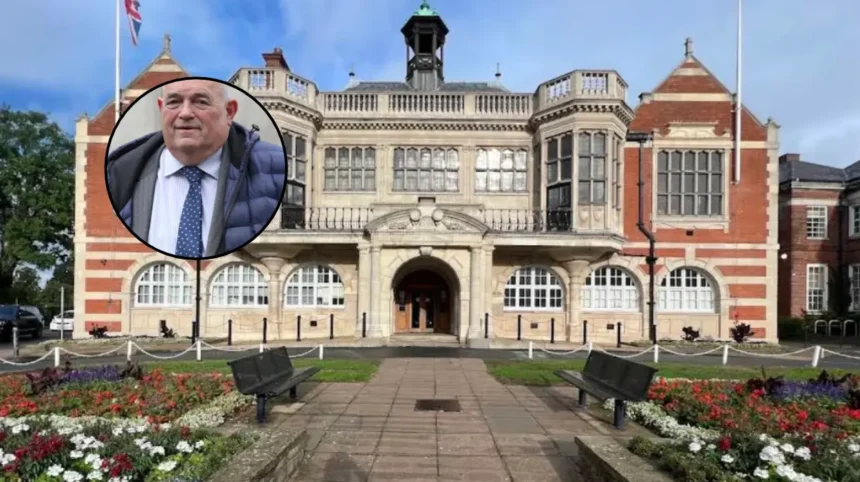
Mill Hill (North London News) November 26, 2026 – A former fashion boss is suing a north London council for £110,000 after officials banned him from chopping down two large oak trees in his garden, which allegedly caused severe structural damage to his £1 million home.
Why is Richard Martyn suing the London Borough of Barnet?
Richard Martyn, a retired business consultant and former supplies manager for Burberry, is pursuing legal action against the London Borough of Barnet on behalf of his insurers. He is seeking £110,000 in compensation, plus interest, to recover the costs incurred from repairing structural damage to his property.
Mr Martyn has lived in his six-bedroom house on The Reddings in Mill Hill for nearly 40 years. According to his claim, two large oak trees situated in his back garden—one of which stands over 80 feet tall—sent roots beneath the foundations of a rear extension at his home. Rectifying the resulting damage through underpinning and associated building works cost more than £104,000.
What was argued at the Upper Tribunal in London?
During proceedings at the Upper Tribunal in London, Mr Martyn’s barrister, David Thomas, outlined the financial and structural predicament faced by his client. Mr Thomas informed the tribunal that Mr Martyn was left with little option but to fund the extensive repair works after council planning officials rejected his application to fell the two oak trees.
Planning officials refused the request on the grounds that the trees held “special amenity value” for the wider neighbourhood. Speaking outside the court, Mr Martyn described the council’s decision to block the removal of the trees as “pure madness”.
What is the background to disputes over protected garden trees?
In the United Kingdom, local planning authorities have the statutory power to protect specific trees, groups of trees, or woodlands in the interest of public amenity through Tree Preservation Orders (TPOs) or conservation area rules. When a tree is protected, homeowners must submit formal applications to the local council before carrying out work such as pruning, topping, or felling. When a council refuses permission to remove a protected tree, and that tree subsequently causes foreseeable structural damage such as root-induced subsidence, property owners and their insurers may seek statutory compensation from the local authority for the resulting losses.
How could this legal battle affect homeowners and local councils?
The outcome of the tribunal carries significant financial and administrative implications for both residential property owners and municipal authorities across England and Wales. For homeowners and home insurers, a ruling in Mr Martyn’s favour reinforces the avenue to recover substantial underpinning and repair costs when local authorities prioritise environmental preservation over property protection. Conversely, for local councils already managing constrained budgets, an adverse ruling underscores the financial liabilities associated with refusing tree-felling applications, potentially prompting planning departments to reconsider how they weigh neighbourhood amenity value against the risk of structural subsidence claims.