
Union Chapel is an important cultural landmark in Islington, North London, because it combines Victorian Gothic architecture, religious heritage, community work and an internationally recognised live music programme. The Grade I listed building serves as a working Congregational church, concert venue and centre for social support. Its distinctive architecture, historic organ, excellent acoustics and independent cultural programme attract visitors, musicians, historians and local residents.
- Why Is Union Chapel an Important Cultural Landmark in North London?
- What Is the Historical Background of Union Chapel?
- What Makes Union Chapel’s Victorian Gothic Architecture Distinctive?
- How Do the Gothic Arches and Windows Shape the Interior?
- Why Is the Interior Layout Architecturally Significant?
- Why Does Union Chapel Have Grade I Listed Status?
- How Does Union Chapel Function as a Live Music Venue?
- What Types of Performances Take Place at Union Chapel?
- What Makes Union Chapel Different from Other London Music Venues?
- How Do Union Chapel’s Acoustics Support Live Performances?
- What Is the Significance of Union Chapel’s Historic Organ?
- How Does Union Chapel Balance Religious Worship and Contemporary Culture?
- What Role Does Union Chapel Play in Islington’s Community?
- How Does the Margins Programme Support Vulnerable People?
- Why Does Community Engagement Matter to Union Chapel’s Cultural Identity?
- Where Is Union Chapel Located and How Can Visitors Reach It?
- What Can Visitors See Inside Union Chapel?
- Can Visitors Attend a Concert at Union Chapel?
- Is Union Chapel Suitable for Architecture Enthusiasts?
- How Does Union Chapel Contribute to London’s Independent Music Scene?
- What Is the Future Cultural Importance of Union Chapel?
Located on Compton Terrace, close to Highbury and Islington station, Union Chapel represents an important part of North London’s architectural and cultural identity. It demonstrates how a historic religious building retains its original purpose while supporting contemporary arts and community activities.
The building is particularly significant because its cultural identity extends beyond live entertainment. Its history connects nineteenth-century religious development with modern music, heritage conservation and social responsibility. Visitors experience an active historic building rather than a preserved monument used exclusively for tourism.
Why Is Union Chapel an Important Cultural Landmark in North London?
Union Chapel is an important North London landmark because it combines Victorian Gothic architecture, Congregational religious history, live music and community support. Its Grade I listed status, historic interior, independent concert programme and charitable activities give it architectural, historical and contemporary cultural significance.
Union Chapel stands in Islington, a historic district in the London Borough of Islington. The London Borough of Islington is a local government area in North London known for its residential streets, theatres, independent cultural venues and historic architecture.
The chapel has several interconnected identities. It operates as a place of Christian worship, a performance venue and a community institution. These functions make it different from historic buildings that operate exclusively as museums or visitor attractions.
Its cultural importance comes from the continued use of its original architectural setting. The building accommodates religious services, contemporary performances and community initiatives without losing its historical character.
Union Chapel also contributes to London’s independent music scene. Its performance programme attracts established artists, emerging musicians and international performers. The venue provides an alternative to conventional commercial concert halls through its distinctive setting and relatively intimate performance environment.
The chapel’s location strengthens its connection with Islington’s wider cultural landscape. Visitors exploring the area can combine a visit with nearby restaurants, independent shops, theatres and historic streets.
What Is the Historical Background of Union Chapel?
Union Chapel developed from nineteenth-century Congregational worship in Islington. Its present building reflects the Victorian expansion of the congregation and the architectural ambitions of the period. Its religious origins remain central to its identity despite its development into a recognised cultural and performance venue.
Union Chapel’s history is closely connected with the growth of Congregational Christianity in nineteenth-century London. Congregationalism is a Protestant Christian tradition in which individual local churches maintain substantial independence in their religious organisation and governance.
The congregation developed during a period when Islington experienced significant population growth. Expanding residential neighbourhoods increased demand for places of worship, education and community activity.
The present chapel was designed by architect James Cubitt, a nineteenth-century architect associated with Nonconformist church architecture. Its design reflects the Gothic Revival movement, which brought medieval architectural forms into Victorian religious and public buildings.
Construction began in the nineteenth century, and the present building opened for worship in 1877. Its architectural development reflects the religious, social and urban history of Victorian London.
The chapel became an important place for worship and community gathering. Religious services provided a regular meeting point for local residents, while associated charitable activities addressed social needs.
As you explore the modern performance venue, you are also entering a building shaped by generations of religious and community activity. Read about the full [Insert Anchor Text for Union Chapel’s Historical Background Article Here] to understand the congregation’s origins, architectural development and historical significance.
The building’s history remains visible in its original architectural features, religious layout and continued use as a place of worship. This continuity distinguishes Union Chapel from many former churches that have been converted entirely into entertainment or commercial spaces.
What Makes Union Chapel’s Victorian Gothic Architecture Distinctive?
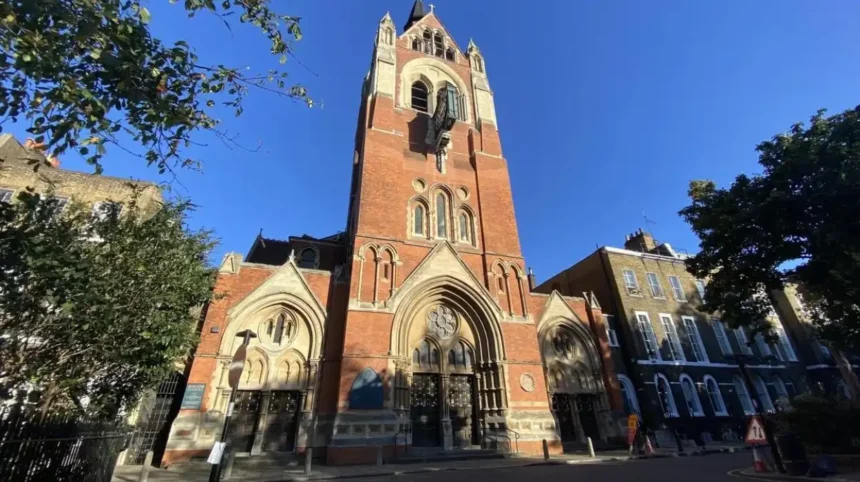
Union Chapel features Victorian Gothic Revival architecture, characterised by pointed arches, decorative stonework, tall windows and an impressive interior. Architect James Cubitt designed a building that combines religious symbolism with practical congregational space, creating a distinctive architectural landmark in Islington.
Union Chapel’s architecture is one of its most recognisable characteristics. The building follows the Gothic Revival tradition, a nineteenth-century architectural movement inspired by medieval Gothic churches and cathedrals.
Gothic Revival architecture became popular in Victorian Britain. Architects incorporated pointed arches, vertical proportions, decorative stonework and elaborate window designs into churches, universities and civic buildings.
James Cubitt designed Union Chapel with a strong emphasis on visual height and interior openness. The architectural arrangement supports both religious gatherings and collective public activities.
The building’s exterior establishes its historic identity through its masonry, window arrangements and Gothic detailing. Its substantial scale gives it a prominent presence within the surrounding residential streets.
The interior provides an equally important architectural experience. Its open congregational space allows visitors to appreciate the building’s height, proportions and decorative features from the main seating area.
How Do the Gothic Arches and Windows Shape the Interior?
Pointed arches are among the defining features of Gothic architecture. They create a vertical visual effect and help establish a sense of height within the building.
Union Chapel’s windows introduce natural light into the interior. Their arrangement contributes to the relationship between the building’s architectural structure and religious atmosphere.
The decorative details also reflect the Victorian interest in craftsmanship. Stonework, timber elements and traditional architectural finishes create a coherent historic environment.
Why Is the Interior Layout Architecturally Significant?
The chapel’s interior accommodates a large congregation while maintaining visual connections across the main worship space.
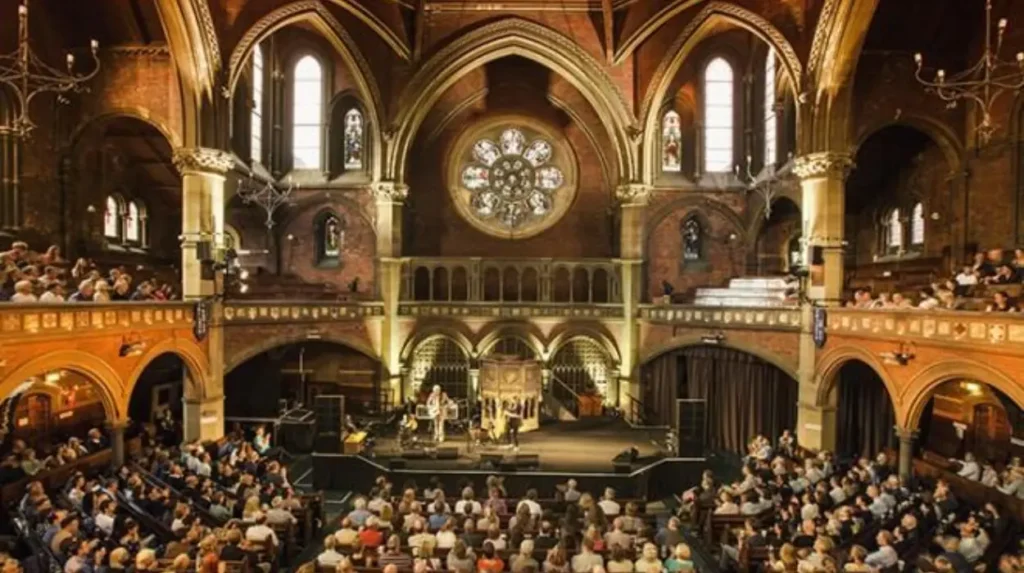
This arrangement also supports contemporary performances. Musicians perform within the historic interior, while the audience occupies the surrounding seating areas.
The building’s original religious design therefore continues to influence its modern cultural function.
Why Does Union Chapel Have Grade I Listed Status?
Union Chapel has Grade I listed status because of its exceptional architectural and historical importance. Historic England recognises Grade I buildings as structures of exceptional national interest. This designation protects the chapel’s special architectural character and influences decisions about alterations and conservation.
Listed building status is a formal heritage designation used in England to identify buildings of special architectural or historic interest.
The system includes three principal grades:
- Grade I: Buildings of exceptional interest, such as Union Chapel.
- Grade II*: Particularly important buildings of more than special interest, such as significant historic churches and civic structures.
- Grade II: Buildings of special interest that warrant every effort to preserve them.
Grade I represents the highest level of listing protection.
Historic England maintains the National Heritage List for England. This register provides information about protected buildings, monuments, parks and other designated heritage assets.
Union Chapel’s listing reflects the importance of its architectural design, historic fabric and place within Victorian religious architecture.
How Does Listed Status Protect Union Chapel?
Listed building controls help protect important architectural features from inappropriate alterations.
Building owners generally require listed building consent for works that affect the character of a listed building. The local planning authority assesses applications in accordance with national planning policy and heritage legislation.
Conservation work must consider the building’s historic materials, architectural design and significance. This approach helps preserve important features for future generations.
Listed status does not prevent all changes. It establishes a framework for managing alterations while protecting the building’s special interest.
How Does Union Chapel Function as a Live Music Venue?
Union Chapel operates as an independent live music venue alongside its religious activities. Its historic interior hosts concerts, acoustic performances, spoken-word events and other cultural programmes. The venue attracts audiences through its architectural character, distinctive atmosphere and varied programme.
Union Chapel has developed a strong reputation within London’s live music scene. Its performance programme brings contemporary artists into a historic religious environment.
The venue accommodates different musical styles, including folk, classical, acoustic, indie and alternative music. Spoken-word performances and special cultural events also form part of its programme.
Its independent identity contributes to its appeal. Rather than functioning as a conventional commercial concert hall, Union Chapel combines performance activities with its charitable and religious responsibilities.
The architectural setting influences the concert experience. The audience watches performances within a historic space featuring Gothic arches, traditional materials and a distinctive interior layout.
What Types of Performances Take Place at Union Chapel?
The venue hosts several categories of cultural events, including:
- Live music concerts, featuring acoustic, folk and alternative artists.
- Classical performances, featuring instrumentalists and chamber music.
- Spoken-word events, featuring poetry and literary performances.
- Special cultural programmes, including artist collaborations and themed events.
The programme changes throughout the year. Visitors should consult the official Union Chapel events calendar for confirmed performers, dates, ticket information and entry arrangements.
What Makes Union Chapel Different from Other London Music Venues?
Union Chapel’s combination of heritage architecture and contemporary programming creates a distinctive performance environment.
Traditional concert halls are generally designed specifically for music and theatrical performances. Union Chapel retains its original religious identity while accommodating live entertainment.
This dual function gives the venue a different cultural role. Concert audiences experience the building’s architectural heritage as part of their visit, while worshippers and community participants continue to use the chapel for its original purpose.

How Do Union Chapel’s Acoustics Support Live Performances?
Union Chapel’s large historic interior provides a distinctive acoustic environment for live music. Its architectural volume, interior surfaces and open performance space influence how sound travels through the building. These characteristics support acoustic performances and contribute to the venue’s established musical identity.
Acoustics refers to the way sound behaves within an enclosed environment. Building dimensions, materials, surfaces and architectural arrangements influence sound reflection, absorption and reverberation.
Union Chapel’s substantial interior volume contributes to its acoustic character. Sound travels through the main worship space and interacts with the building’s architectural surfaces.
This environment creates a different listening experience from smaller rooms with heavily treated acoustic interiors.
Why Are Acoustics Important for Concert Audiences?
Acoustic quality influences how clearly audiences hear music and spoken performances.
A performance space needs an appropriate balance between direct sound and reflected sound. Excessive reverberation reduces speech clarity, while insufficient reverberation can make certain musical performances sound less spacious.
Union Chapel’s architectural design provides a distinctive environment for performers and listeners. Acoustic music benefits from the relationship between the performers, audience and historic interior.
The venue’s concert programme demonstrates how a nineteenth-century religious building supports contemporary artistic activities without adopting the design of a modern purpose-built auditorium.
What Is the Significance of Union Chapel’s Historic Organ?
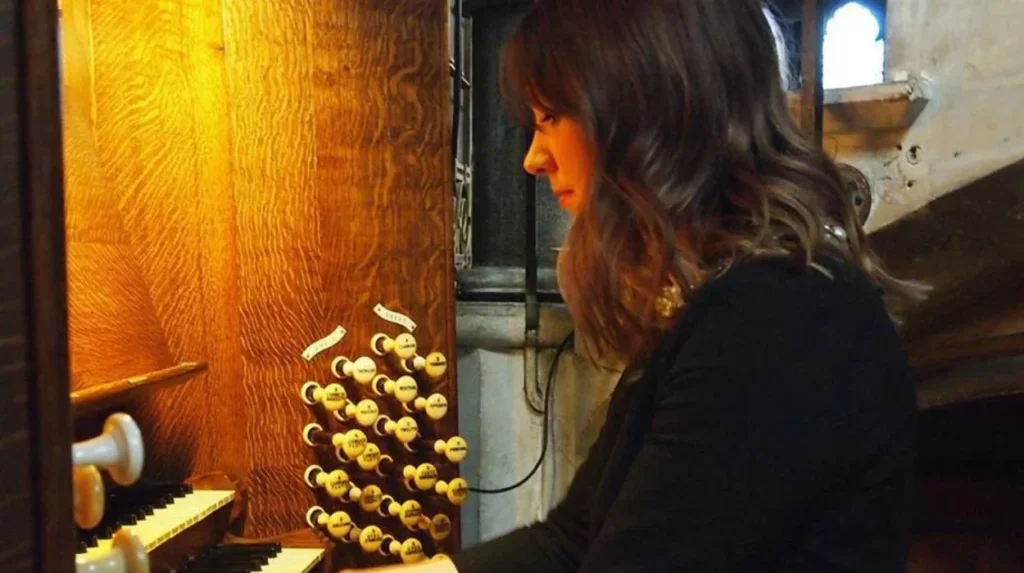
Union Chapel’s historic organ forms an important part of its religious and musical heritage. The instrument contributes to the building’s identity as a working church and connects its contemporary performance activities with traditional Christian music, organ performance and Victorian craftsmanship.
Pipe organs are among the most distinctive instruments associated with historic churches. They produce sound by directing air through pipes of different sizes and shapes.
A traditional pipe organ includes several interconnected components. These include the keyboard, pedalboard, wind system, pipes and mechanical or electrical operating mechanisms.
The instrument supports religious services through hymns, processional music and other forms of church music.
At Union Chapel, the historic organ contributes to the visual and musical character of the interior. It also reflects the importance of music in nineteenth-century Protestant worship.
The relationship between the organ and the building is particularly significant. The instrument belongs to the chapel’s historic environment rather than functioning as a separate modern addition.
Visitors interested in architectural history can examine the organ alongside the chapel’s Gothic design, windows and internal arrangement.
How Does Union Chapel Balance Religious Worship and Contemporary Culture?
Union Chapel balances religious worship and contemporary culture by maintaining its role as a Congregational church while hosting public performances and community activities. Its approach connects heritage conservation with active building use, allowing different audiences to engage with the same historic institution.
Union Chapel’s identity depends on the relationship between its original religious purpose and its contemporary cultural programme.
The building continues to accommodate Christian worship. Religious services maintain the chapel’s connection with its Congregational heritage and local community.
Its concert programme introduces the building to audiences who do not necessarily attend religious services. Musicians, visitors and cultural organisations use the venue as a performance and gathering space.
This combination demonstrates the potential for historic religious buildings to support several functions without losing their original significance.
Why Is Continued Use Important for Historic Buildings?
Historic buildings require ongoing maintenance to preserve their architectural features and structural condition.
Continued use helps maintain a building’s relevance within its surrounding community. It also creates opportunities for public engagement, cultural participation and financial support.
However, historic buildings need careful management. Changes to seating, lighting, sound equipment and visitor facilities must consider heritage requirements.
Union Chapel’s continued operation demonstrates how conservation and contemporary use can work together.
What Role Does Union Chapel Play in Islington’s Community?
Union Chapel contributes to Islington through religious worship, cultural programming, charitable work and community support. Its activities extend beyond ticketed concerts, connecting the historic building with local residents and people experiencing social or economic difficulties.
Union Chapel’s community role is an important part of its wider cultural significance.
The organisation operates alongside its music programme and church activities to support people experiencing homelessness and other forms of disadvantage.
Its Margins programme is particularly associated with providing practical support to people in need. Community support initiatives connect the institution’s religious values with practical social action.
These activities demonstrate that the chapel is not simply a tourist attraction or concert venue.
Its community work gives the building a continuing social purpose. This role is consistent with the historical importance of churches as places of gathering, support and local engagement.
How Does the Margins Programme Support Vulnerable People?
Margins is Union Chapel’s charitable community initiative. It provides support for people experiencing homelessness and social exclusion.
Its activities focus on practical assistance and access to support services. These services form part of the organisation’s wider commitment to dignity, inclusion and community care.
The programme contributes to the chapel’s identity as a social institution. It also demonstrates how historic religious organisations continue to respond to contemporary social challenges.
Why Does Community Engagement Matter to Union Chapel’s Cultural Identity?
Cultural landmarks influence communities through more than their physical appearance.
They also create opportunities for participation, shared experiences and social interaction.
Union Chapel supports these connections through its worship services, performances and charitable activities. Its different functions attract people with varied interests and backgrounds.
This makes the building relevant to both visitors and residents.
Where Is Union Chapel Located and How Can Visitors Reach It?
Union Chapel is located at Compton Terrace in Islington, North London. Highbury and Islington is the nearest major Underground and railway interchange. The surrounding area provides access to public transport, restaurants, shops and other cultural destinations.
Union Chapel, Compton Terrace, London N1 2UN, United Kingdom.
The building is situated near Upper Street, one of Islington’s main shopping and hospitality destinations.
Highbury and Islington station provides the most convenient public transport connection for many visitors. The station serves the London Underground Victoria line, London Overground and National Rail services.
Angel station is another option for visitors approaching from central London. It is located along the Northern line and connects with the wider Islington area.
What Is the Best Way to Reach Union Chapel?
Public transport provides practical access to Union Chapel.
Visitors travelling from central London can use the Victoria line to Highbury and Islington station. They can then walk towards Compton Terrace.
Buses also serve the surrounding Islington streets. Visitors should check Transport for London’s journey planner for current routes, service disruptions and accessibility information.
Cycling provides another option for visitors travelling from nearby North London neighbourhoods.
Parking availability in Islington is limited compared with suburban areas. Visitors travelling by car should check local parking restrictions and available public parking facilities before departure.
What Can Visitors See Inside Union Chapel?
Visitors can experience Union Chapel’s historic architecture, religious interior, decorative details and performance spaces. Depending on the event and access arrangements, visitors can also attend concerts, religious services and heritage-related activities within the building.
A visit to Union Chapel offers an opportunity to explore an active historic building.
The main interior provides views of its Gothic architectural features, traditional materials and distinctive spatial arrangement.
Visitors interested in architecture can examine the relationship between the exterior design and the interior worship space.
The historic organ is another important feature. Its presence illustrates the relationship between music, religion and Victorian church design.
Access to particular areas depends on the building’s schedule and event arrangements. Visitors should not assume that every part of the chapel is open during concerts or ordinary visiting hours.
Can Visitors Attend a Concert at Union Chapel?
Yes. Visitors can attend publicly advertised performances when tickets are available.
The venue publishes its events through its official website. Concert listings provide information about artists, performance dates, ticket availability and entry arrangements.
Some performances sell out in advance. Checking the events calendar before travelling helps visitors plan their visit.
Is Union Chapel Suitable for Architecture Enthusiasts?
Union Chapel is relevant to visitors interested in Victorian architecture, religious history and heritage conservation.
Its Gothic Revival design provides examples of nineteenth-century architectural principles.
Visitors can examine pointed arches, windows, interior proportions and traditional construction details. The Grade I listing also makes the building relevant to people studying England’s architectural heritage.
Explore More Area Guide
Where to Discover Live Music in Islington: Best Venues and Concerts
Historic Cemeteries and Burial Grounds in Islington, North London
How Does Union Chapel Contribute to London’s Independent Music Scene?
Union Chapel contributes to London’s independent music scene by providing a distinctive performance space for established and emerging artists. Its independent programme, historic setting and varied musical events support cultural diversity beyond the city’s larger commercial entertainment venues.
London has a large live music economy that includes concert halls, theatres, clubs, pubs and independent performance spaces.
Union Chapel occupies a distinctive position within this environment.
Its programme introduces audiences to different musical genres and performance formats. The venue also offers artists an alternative to conventional concert halls.
The building’s heritage setting forms part of its cultural identity. Performers appear within an architectural environment that predates the modern music industry by more than a century.
Why Are Independent Venues Important for London’s Cultural Economy?
Independent venues support artistic diversity and local cultural participation.
They provide performance opportunities for musicians who work across different genres and career stages.
They also contribute to the wider visitor economy through ticket sales, hospitality spending and travel activity.
Union Chapel combines these cultural functions with heritage conservation and community support. This creates a broader institutional role than entertainment alone.
What Is the Future Cultural Importance of Union Chapel?
Union Chapel’s future cultural importance depends on continued heritage conservation, accessible community engagement and a sustainable performance programme. Its combination of religious use, live music and charitable activity provides a model for maintaining historic buildings as active cultural institutions.
Historic buildings face ongoing maintenance requirements. Weather exposure, ageing materials, visitor activity and changing building standards create conservation responsibilities.
Union Chapel must maintain its historic architectural features while accommodating contemporary operational requirements.
These include audience facilities, performance equipment, building safety and accessibility.
Its cultural programme also needs to remain relevant to changing audiences. Contemporary music, community activities and public engagement help connect the historic building with new generations.
How Can Heritage Conservation Support Future Generations?
Heritage conservation protects buildings that provide evidence of architectural, religious and social history.
The preservation of Union Chapel supports public understanding of Victorian architecture and Congregational religious heritage.
It also protects a cultural venue that remains in active use.
Future conservation work needs to respect the building’s Grade I listed status and architectural significance. Appropriate maintenance helps ensure that important historic features remain available for future visitors.
Why Will Union Chapel Remain Relevant to North London?
Union Chapel’s importance comes from the relationship between its history and present-day activities.
Its architecture attracts heritage visitors. Its concerts attract music audiences. Its worship services maintain its religious identity. Its community initiatives provide practical social support.
These different activities connect the building with a broad range of people.
As North London continues to develop, Union Chapel provides a visible link between Victorian Islington and contemporary London. Its continued use preserves an important part of the area’s architectural and cultural identity.
Union Chapel is an important cultural landmark because it brings together architectural heritage, religious history, live music and community support within one Grade I listed building.
Designed by James Cubitt and opened in 1877, the chapel represents Victorian Gothic Revival architecture and the development of Congregational worship in Islington. Its distinctive interior, historic organ and acoustic environment contribute to its reputation as a London performance venue.
Its importance also extends beyond architecture and entertainment. Through its religious activities, independent music programme and Margins community initiative, Union Chapel continues to serve different sections of society.
For tourists, it provides an opportunity to explore an important historic building. For music audiences, it offers a distinctive live performance experience. For Islington residents, it remains an active part of the local cultural and community landscape.
Union Chapel therefore represents more than a preserved Victorian building. It is a working cultural institution that connects North London’s past with its present and future.
Where is Union Chapel located?
Union Chapel is located on Compton Terrace, Islington, North London, London N1 2UN. It is close to Highbury and Islington station and Upper Street.