Barnet is one of North London’s largest boroughs, with residential neighbourhoods, parks, woodland, open countryside, rivers and green corridors forming an important part of its local environment. These landscapes support wildlife, provide recreational space and contribute to the health and wellbeing of residents and visitors.
- How much of Barnet is protected as green space?
- What environmental policies guide Barnet Council’s conservation work?
- How is Barnet increasing biodiversity in its parks and open spaces?
- How does Barnet protect important wildlife habitats and nature conservation sites?
- How is Barnet planting trees and protecting existing woodlands?
- How is Barnet addressing climate change and protecting waterways?
- How does Barnet make new development more environmentally sustainable?
- How can residents and visitors help protect Barnet’s natural environment?
- What are Barnet’s future priorities for nature conservation?
Protecting this natural environment involves more than maintaining public parks. Barnet Council’s environmental responsibilities include planning decisions, biodiversity protection, tree management, habitat improvement, waste reduction and climate action. Conservation also depends on landowners, community organisations, volunteers and residents who help maintain local green spaces.
The borough’s location on London’s northern edge creates a distinctive environmental challenge. Housing, transport infrastructure and commercial development place pressure on land, while established green spaces provide opportunities to protect habitats and strengthen connections between wildlife populations.
Understanding how Barnet protects nature requires examining its planning policies, conservation sites, woodland management, biodiversity initiatives and long-term environmental objectives. These measures explain how the borough balances urban development with the protection of its natural assets.
How much of Barnet is protected as green space?
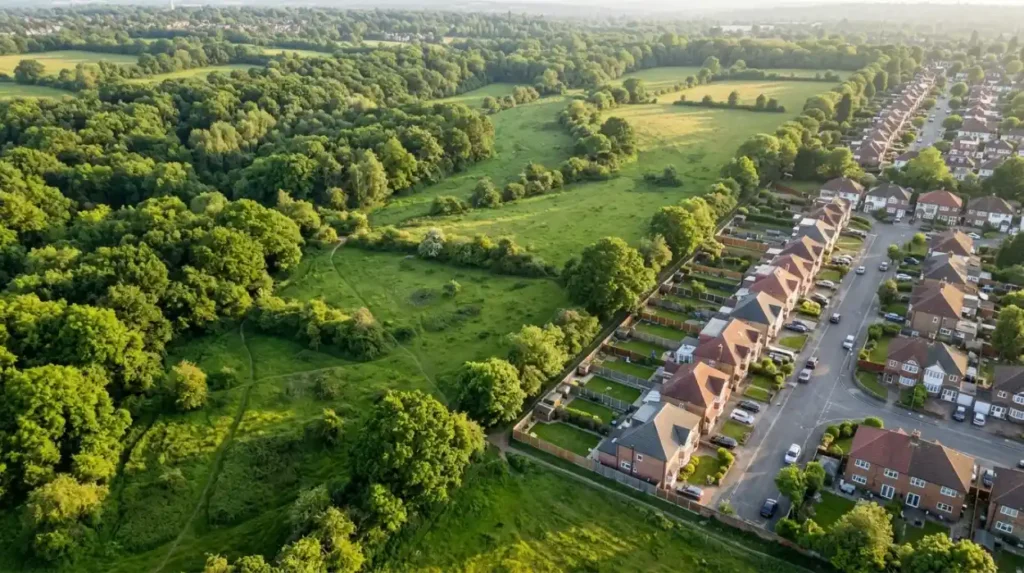
Approximately one-third of Barnet’s total area is classified as green space, according to Barnet Council. This land includes parks, woodland, meadows and watercourses that support wildlife, provide recreation and help the borough respond to climate change and urban development pressures.
Barnet’s green infrastructure is a network of natural and semi-natural places that contribute to environmental quality. Green infrastructure includes parks, gardens, trees, grassland and woodland. Blue infrastructure includes rivers, streams, ponds and other water environments.
These spaces perform several functions. Trees provide shade and store carbon. Vegetation supports insects and birds. Healthy soils absorb rainfall, while natural waterways provide habitats for aquatic species. Connected green spaces also help wildlife move between feeding, nesting and breeding areas.
Barnet’s environmental landscape includes ancient woodland, traditional hay meadows and watercourses. Each habitat supports different species and requires appropriate management. Woodland conservation focuses on trees, soils and woodland wildlife, while meadow management maintains flowering plants and grassland species.
The borough’s green spaces also serve residents and visitors. Places for walking, cycling, wildlife observation and outdoor recreation connect environmental protection with everyday life.
However, green space alone does not guarantee biodiversity. A closely mown lawn, a species-rich meadow and an established woodland have different ecological values. Conservation therefore involves improving habitat quality, protecting important sites and managing land according to its environmental characteristics.
Barnet Council identifies climate change, heatwaves, flash flooding and biodiversity loss as pressures affecting the borough’s natural environment. Its environmental approach recognises that green spaces help address these challenges while supporting local wildlife.
What environmental policies guide Barnet Council’s conservation work?
Barnet Council uses local planning policies, biodiversity commitments, tree management measures and green-space strategies to protect nature. These frameworks guide development decisions, habitat improvements and public-space management while supporting the borough’s wider environmental and climate objectives.
The Barnet Local Plan establishes a planning framework for development and environmental considerations. It addresses how growth should relate to green infrastructure, biodiversity, landscaping and climate resilience. Planning decisions must consider applicable development policies and relevant national requirements.
The council’s Planning Obligations Supplementary Planning Document, adopted on 5 February 2025, sets out financial and non-financial obligations that help mitigate the effects of development. Its coverage includes biodiversity net gain, trees, open space, water management, air quality and carbon offsetting.
These requirements matter because new buildings, roads and other infrastructure change the land on which they are constructed. Planning conditions and obligations help secure appropriate environmental measures when a proposal requires them.
The council’s Parks and Open Spaces Strategy 2026–2036 provides a longer-term framework for managing parks and public open spaces. Its stated vision includes improving wellbeing, celebrating local identity, enhancing biodiversity and involving communities. The strategy followed public consultation, which received 142 representations.
Environmental policies also relate to climate action. Barnet’s published corporate plan identified objectives to work towards a net-zero council by 2030 and a net-zero borough by 2042. These are stated ambitions, rather than confirmation that either target has already been achieved.
Taken together, the planning framework and management strategies connect development control with practical conservation. Their effectiveness depends on implementation, monitoring, funding and continued maintenance.
How is Barnet increasing biodiversity in its parks and open spaces?
Barnet Council is improving biodiversity through reduced grass cutting, meadow enhancement, peat-free compost, habitat protection and the retention of suitable dead wood. These practices provide food, shelter and breeding opportunities for wildlife, including pollinating insects, fungi and small mammals.
Biodiversity means the variety of living organisms, including plants, animals, fungi and microorganisms, and the ecosystems in which they live. Protecting biodiversity requires maintaining different habitats and the ecological relationships between species.
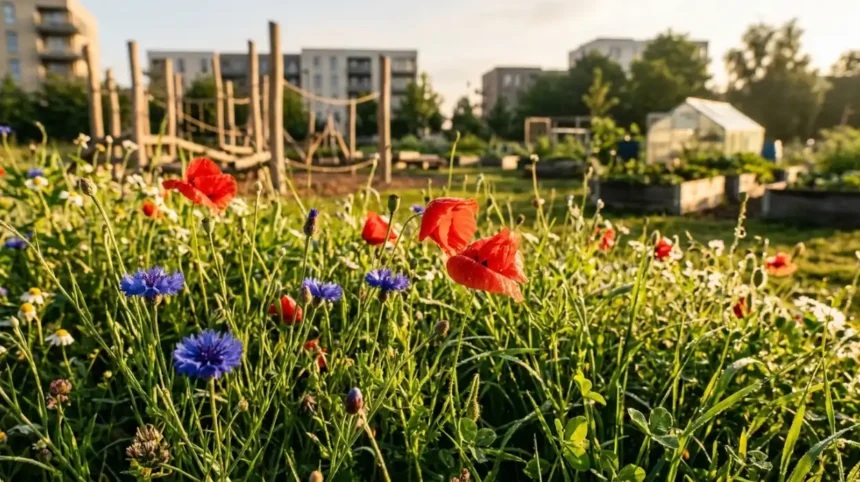
One of Barnet’s practical approaches is reducing the frequency of grass cutting. Closely and frequently mown grass provides fewer flowering resources for pollinators than suitable grassland managed to encourage wildflowers.
The council reports that 19 parks and open spaces and 12 other sites participated in its No Mow May programme in 2024. This represented an increase of five sites compared with the previous year. The initiative encourages suitable grassland to remain unmown during May, allowing flowering plants to provide resources for insects.
The council is also trialling alternative grassland management techniques, including cut-and-lift mowing. This method removes cut vegetation instead of leaving it on the ground. On suitable sites, removing cuttings reduces the accumulation of nutrients and helps create conditions favourable to a wider range of wildflowers.
Peat-free compost is another part of the council’s approach. Peatlands store carbon and support specialised wildlife. Using compost that does not contain peat reduces demand for this resource and supports the protection of peatland habitats.
Dead wood also contributes to biodiversity. Fallen branches, logs and standing dead trees provide habitats for fungi, invertebrates and other organisms. As the wood decomposes, nutrients return to the soil and contribute to ecological processes.
Barnet retains dead timber where conditions allow and public safety is not compromised. This approach demonstrates how routine park maintenance can support conservation without requiring every area to look uniformly landscaped.
These techniques work best when management reflects local conditions. A meadow requires a different cutting schedule from a formal sports pitch, while a woodland needs different interventions from a heavily used ornamental garden.
How does Barnet protect important wildlife habitats and nature conservation sites?
Barnet protects important habitats through conservation planning, the identification of Sites of Importance for Nature Conservation, habitat surveys and measures to improve ecological connections. These activities help identify valuable wildlife areas and establish priorities for protecting and restoring the borough’s natural environment.
Sites of Importance for Nature Conservation, commonly abbreviated to SINCs, are areas identified for their ecological value within London’s wider network of wildlife sites. They support the protection of habitats and species that are important at borough, regional or metropolitan level.
A SINC designation is not automatically the same as statutory designation as a Site of Special Scientific Interest or a nature reserve. The different categories have separate purposes and legal implications. Their protection depends on the relevant designation, planning policy and applicable legislation.
Barnet Council has been reviewing its SINC network and associated mapping to ensure that conservation information remains current. Its biodiversity work also includes establishing a baseline of local habitats, allowing future assessments to compare environmental conditions over time.
Habitat surveys are important because land that appears similar from a distance can support different ecological communities. Surveyors assess factors such as vegetation, habitat structure and the presence of important species. The findings inform planning decisions and conservation priorities.
The council’s biodiversity commitments for 2026–2031 include completing and publishing a Local Nature Recovery Plan, delivering relevant actions from its parks strategy and working towards improvements across its nature conservation network.
The planned approach also recognises the importance of habitat connectivity. A group of isolated green spaces cannot always provide the same ecological benefits as connected habitats. Hedgerows, waterways, tree corridors and suitable grassland can help species move through the landscape.
For visitors, these conservation areas provide opportunities to observe nature responsibly. Staying on designated paths, following site rules and avoiding disturbance during nesting periods help protect sensitive habitats.
Historical land use also helps explain the location of today’s green spaces. As you explore Barnet’s surviving woodland and open landscapes, discover the area’s [Insert Anchor Text for Barnet History Article Here] to understand how its landscape developed over time.
How is Barnet planting trees and protecting existing woodlands?
Barnet Council supports tree planting and woodland protection to improve habitat availability, increase urban shade and strengthen environmental resilience. Its approved Tree Planting Policy sets a target of planting 5,000 trees by 2028, supporting cleaner air, wildlife habitats and flood resilience.
Trees form an important part of Barnet’s natural environment. They provide nesting and roosting locations, food for insects, shade for people and shelter for wildlife. Their roots also help stabilise soil, while their canopies intercept rainfall.
In 2023, Barnet councillors approved a Tree Planting Policy with a target of planting 5,000 trees by 2028. The council identifies improved air quality and flood resilience among the intended benefits. This is a target, not a verified statement that all 5,000 trees have already been planted.
Tree planting delivers the strongest ecological benefits when the right species are planted in suitable locations and receive appropriate aftercare. Native trees, such as oak, hawthorn and silver birch, support a range of British wildlife, although the most suitable species depends on soil, moisture, available space and future climate conditions.
Protecting existing mature trees is equally important. Established trees provide developed canopies and habitats that newly planted saplings take years to replace. Conservation therefore involves decisions about tree retention, pruning, disease management, replacement planting and public safety.
Barnet’s approach to dead wood also supports woodland biodiversity. Where safe, standing dead timber and fallen branches provide habitat for specialist invertebrates and fungi. Removing every dead branch would eliminate these resources, so management balances ecological benefits against risks to park users.
Visitors exploring woodland should avoid damaging tree roots, removing branches or disturbing wildlife. Residents can contribute by planting suitable trees in gardens, protecting existing trees and reporting damaged or potentially dangerous trees through the appropriate council channels.
The long-term value of tree planting depends on survival rates, maintenance and the suitability of planting locations. Counting newly planted trees is useful, but monitoring their growth and ecological contribution provides a fuller picture of success.
How is Barnet addressing climate change and protecting waterways?
Barnet’s environmental programme links nature conservation with climate resilience, recognising that green spaces help cool urban areas, absorb rainfall and support wildlife. The council’s planning framework also identifies water management, flood mitigation and river restoration as important environmental considerations.
Climate change affects the natural environment through rising temperatures, changing rainfall patterns and more frequent periods of extreme weather. In urban areas, these pressures can increase heat stress, surface-water flooding and the loss of suitable wildlife habitats.
Parks, gardens, trees and woodland help reduce some of these effects. Tree canopies provide shade, while vegetation cools surrounding areas through evapotranspiration, the release of water vapour from plants. Soil and permeable ground also help rainwater infiltrate the land instead of flowing directly into drains.
Barnet’s planning framework recognises the role of sustainable drainage and water management. Sustainable drainage systems, commonly called SuDS, manage rainfall through features such as rain gardens, permeable surfaces, swales and attenuation ponds. These features slow water movement and reduce pressure on conventional drainage infrastructure.
Waterways also form part of the borough’s ecological network. The River Brent, Silk Stream and Pymmes Brook are identified in Barnet’s biodiversity planning evidence as waterways where river and floodplain habitat restoration is important.
River restoration involves improving the physical and ecological condition of a watercourse. Depending on the location, work includes restoring vegetation along riverbanks, improving habitat structure, managing invasive non-native species and creating conditions that support aquatic wildlife.
Barnet’s future biodiversity commitments include continued participation in Thames21 catchment partnerships and work relating to healthy rivers in the Brent and London Lea catchments. They also include developing an approach to invasive non-native species management across important conservation sites and river corridors.
These activities require cooperation across administrative boundaries because rivers and wildlife corridors do not stop at borough borders. Effective restoration depends on landowners, environmental organisations, neighbouring authorities and local communities working towards compatible objectives.
Protecting waterways also benefits people. Healthy river corridors provide green walking routes and improve the environmental quality of surrounding neighbourhoods. However, visitors should follow local guidance around water, avoid littering and keep dogs under control where site rules require it.
How does Barnet make new development more environmentally sustainable?
Barnet uses planning policies and biodiversity net gain requirements to address the environmental effects of development. Applicable projects must demonstrate how they will deliver measurable habitat improvements, helping protect ecological value while accommodating housing, infrastructure and other forms of urban growth.
Development creates pressure on land through construction, vegetation removal, increased hard surfaces and changes to drainage. Environmental planning helps identify these impacts before decisions are made and establishes measures to avoid, minimise or compensate for ecological damage.
A central mechanism is Biodiversity Net Gain (BNG). Under the statutory system introduced through the Environment Act 2021, most development within scope must deliver at least a 10% increase in biodiversity value compared with the site’s baseline. The requirement generally applies to relevant planning permissions granted in England, subject to exemptions and transitional provisions.
The system uses a statutory biodiversity metric to assess habitat value. The calculation considers factors such as habitat type, condition, area and strategic significance. Developers use this assessment to demonstrate how the project meets its biodiversity obligations.
BNG follows a hierarchy of delivery options. Developers first consider creating or improving habitat within the development site. Where on-site delivery does not meet the requirement, eligible off-site habitat gains can contribute. Statutory biodiversity credits are a last-resort mechanism under the applicable rules.
Habitat gains secured through the statutory system generally require management and monitoring for at least 30 years. This long-term requirement recognises that creating a habitat is not enough; it must also be maintained so that its intended ecological value develops and persists.
Barnet Council’s planning documentation requires biodiversity information for relevant applications, including baseline assessments and biodiversity metric calculations where applicable. Major projects and proposals affecting important nature conservation sites can require additional habitat management and monitoring information.
The council’s planning obligations framework also covers trees, open space, water management, air quality and carbon offsetting. These measures address environmental impacts beyond biodiversity calculations alone.
For residents, these policies are relevant when new housing, roads or commercial developments are proposed near established green spaces. Planning applications and supporting ecological documents provide information about the proposed development, its likely effects and the measures intended to protect or enhance the environment.
BNG does not remove every environmental impact. Its effectiveness depends on accurate baseline assessments, appropriate habitat design, enforceable commitments and continued monitoring. Protecting existing high-value habitats remains essential because replacement habitat does not immediately reproduce the ecological functions of an established woodland or species-rich meadow.
Explore More Area Guide
Woodland in Barnet: Best Forests and Nature Walks Guide
Wetland Habitats in Barnet: Ponds, Wildlife and Nature
How can residents and visitors help protect Barnet’s natural environment?
Residents and visitors support Barnet’s conservation efforts by respecting wildlife habitats, reducing litter, planting suitable native species and participating in environmental activities. Community involvement complements council policies by helping maintain green spaces, record wildlife observations and encourage responsible use of parks.
Environmental protection depends on practical action as well as formal policy. Individuals, community groups and local organisations help protect the natural environment through everyday behaviour and organised conservation activities.
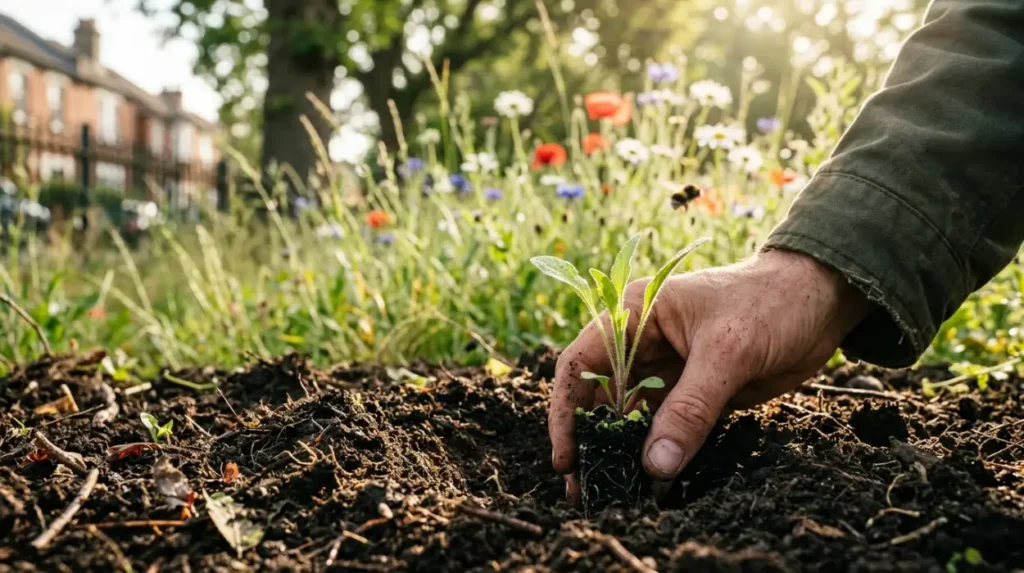
Residents can support biodiversity in gardens, balconies and shared outdoor spaces. Planting suitable native flowers provides nectar and pollen for bees and butterflies. Allowing a small section of a garden to grow naturally creates additional shelter and feeding opportunities for insects.
Composting suitable garden waste, reducing pesticide use and maintaining bird-friendly planting also improve the ecological value of residential spaces. Households without gardens can use containers to grow pollinator-friendly plants, subject to the rules of their property.
Responsible behaviour in public parks is equally important. Visitors should use designated paths, dispose of rubbish correctly, avoid damaging vegetation and respect restrictions around sensitive habitats. Dogs should be kept under control, particularly where ground-nesting birds and other vulnerable wildlife are present.
Barnet Council’s biodiversity programme also identifies citizen science as an area for development. Citizen science involves members of the public helping collect and record information that supports scientific research or environmental monitoring. The council’s published commitments for 2026–2031 include expanding such initiatives through partnerships with organisations such as Thames21 and Citizen Zoo.
Wildlife recording can help conservation teams understand where species occur and how their distribution changes. Observations become more useful when participants record dates, locations and identification details accurately and follow the guidance of the relevant recording scheme.
Community participation also strengthens public understanding of environmental decisions. Residents can review planning proposals, respond to consultations and share concerns about the condition of local green spaces.
Tourists and leisure travellers contribute by leaving natural areas as they found them. Avoiding litter, staying on marked trails and not feeding wildlife unnecessarily reduce disturbance and help protect habitats for future visitors.
What are Barnet’s future priorities for nature conservation?
Barnet’s published environmental commitments for 2026–2031 include developing a Local Nature Recovery Plan, improving conservation sites, supporting river restoration and strengthening biodiversity monitoring. The Parks and Open Spaces Strategy 2026–2036 also establishes a longer-term framework for sustainable management and community involvement.
The next phase of conservation in Barnet focuses on turning environmental policies into measurable improvements across the borough. Its published commitments identify several priorities.
The first is completing and publishing a Local Nature Recovery Plan. This plan is intended to establish local priorities for protecting and restoring habitats in alignment with London’s wider Local Nature Recovery Strategy. National government guidance explains that these strategies help direct nature recovery towards locations where habitat creation and improvement deliver wider ecological benefits.
The second priority is improving the evidence used to make conservation decisions. Habitat surveys, updated SINC mapping and biodiversity monitoring help identify ecological strengths and areas requiring restoration. Reliable baseline information also provides a reference for measuring changes over time.
A third priority is improving the management of invasive non-native species. These are species introduced outside their natural range that can cause ecological or other harm. Management requires identifying priority species, assessing local impacts and selecting appropriate control methods.
River restoration and catchment partnerships form another part of the programme. Cooperation with environmental organisations and neighbouring authorities helps coordinate action across waterways and connected habitats.
The council also plans to strengthen the monitoring of major developments with significant biodiversity net gain secured through planning obligations. This work is important because habitat improvements need to deliver their intended outcomes after construction has finished.
The Parks and Open Spaces Strategy 2026–2036 provides the broader management framework for public green spaces. It reflects pressures associated with population growth, climate change, wildlife conservation and recreational demand. Its implementation will influence how parks are maintained, improved and made accessible over the coming decade.
Progress should be assessed through evidence rather than policy announcements alone. Relevant indicators include habitat condition, tree survival, the quality of waterways, changes in species populations and the delivery of promised biodiversity improvements.
These measures help residents understand whether conservation activity is producing lasting benefits. They also support accountability as Barnet balances development needs with the long-term protection of its natural environment.
Barnet protects its natural environment through a combination of planning policy, biodiversity management, tree planting, green-space investment and habitat restoration. Around one-third of the borough is classified as green space, providing an important foundation for wildlife conservation and climate resilience.
Its practical initiatives include reducing grass cutting, retaining suitable dead wood, promoting peat-free compost and improving the management of nature conservation sites. Tree planting targets, biodiversity net gain requirements and river restoration priorities extend this work beyond individual parks.
The Parks and Open Spaces Strategy 2026–2036 and the council’s planned Local Nature Recovery Plan establish important frameworks for future action. Their long-term value depends on implementation, effective monitoring and cooperation between public authorities, landowners, environmental organisations and local communities.
For visitors, Barnet’s parks, woodlands, meadows and waterways offer opportunities to experience North London’s natural environment while learning about conservation. For residents, these spaces provide a direct connection between environmental policy and everyday life.
Protecting Barnet’s natural environment ultimately means maintaining the quality of its habitats, improving connections between green spaces and ensuring that development supports rather than undermines nature recovery. Sustainable management and continued public involvement remain essential to achieving these objectives.
How is Barnet protecting its natural environment?
Barnet Council protects nature through biodiversity conservation, tree planting, green-space management, sustainable planning, habitat restoration and initiatives that support local wildlife.