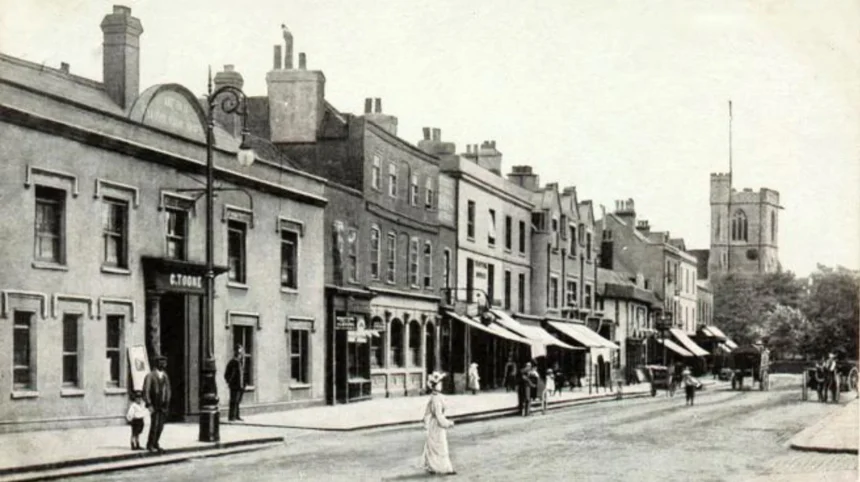
Barnet is one of North London’s oldest place names, with roots in the landscape and woodland clearance of the early medieval period. The name is generally explained through the Old English baernet, referring to land cleared by burning. The modern London Borough of Barnet inherited this historic name when it was created in 1965.
- What does the name Barnet mean?
- When was the name Barnet first recorded?
- How did woodland clearance influence Barnet’s early history?
- How did Barnet develop from a rural landscape into a town?
- Why are there several places called Barnet in North London?
- What is the connection between Barnet and Friern Barnet?
- Why is High Barnet called High Barnet?
- How did Barnet’s name survive changes in local government?
- What can visitors see that helps explain Barnet’s name?
- What does Barnet’s name tell us about North London’s history?
- Is the meaning of Barnet completely certain?
- Why is Barnet’s name important for understanding the area today?
The name therefore reflects an earlier landscape rather than a modern administrative invention. Before Barnet became a London suburb, the wider area contained woodland, agricultural land, rural settlements and important routes north from London. Over centuries, the name survived through changes in settlement, government, transport and urban development.
For visitors, the story behind the name provides a useful way to understand why Barnet developed where it did and why places such as High Barnet, East Barnet and Friern Barnet share the same name element.
What does the name Barnet mean?
Barnet is generally derived from the Old English word “baernet”, meaning land or a clearing created by burning woodland. The name therefore records an early landscape shaped by woodland clearance, agriculture and settlement in the area now associated with North London.
Old English was the language used in England before and around the Norman Conquest. Many English place names preserve Old English words describing landscape, farming, settlements, people and geographical features.
Barnet belongs to this broad group of landscape-based names.
Barnet Council describes the name as deriving from the Saxon word baernet, meaning a clearing in a forest made by burning. The explanation connects the name directly with woodland clearance.
This interpretation is significant because the modern urban landscape gives little indication of the area’s earlier environment. Roads, housing estates, shops, schools and railway stations now cover much of Barnet. The name preserves evidence of an earlier period when woodland was an important part of the landscape.
The meaning does not refer to a barn used for storing grain. That interpretation is sometimes suggested because of the similarity between “Barnet” and the modern English word “barn”. The established local historical explanation instead connects Barnet with baernet and burning.
The name is therefore a geographical description. It identifies land associated with clearance by burning.
Why was burning important in early medieval landscapes?
Woodland clearance created usable agricultural land. Trees and scrub were removed to produce fields, pasture and meadows. Burning formed part of the wider range of techniques used to transform woodland into productive land.
Barnet Council’s historical material states that the area was originally heavily wooded and that trees were cleared for timber, fuel and the creation of farmland and meadows.
The name consequently provides a linguistic record of environmental change.
It does not establish the exact location of the original clearing. It also does not identify a single documented fire. The meaning describes the type of landscape associated with the place name.
When was the name Barnet first recorded?
The name Barnet is documented in medieval records, with a 1197 reference showing that the name was already established by the late 12th century. Earlier boundary evidence from around 1005 also places Barnet within a landscape whose names and territorial divisions predated the medieval town.
Dating a place name requires distinguishing between the age of the name and the date of its earliest surviving written record.
A place can have been known by a name for generations before a surviving document records it.
Barnet Council states that Barnet existed before the Norman Conquest, although the settlement does not appear in the Domesday Survey. The council also states that an important route north from London towards St Albans passed through the area by the 11th century.
A planning heritage assessment identifies 1197 as an early documentary reference to a settlement in the area. It explains that the name denoted a place cleared by burning.
The evidence therefore shows an important distinction. Barnet’s name is older than the developed market town that visitors recognise today.
The medieval town grew significantly around transport and trade. Its position on a major route helped transform the area into an important stopping point between London and settlements farther north.
Why does Domesday Book not list Barnet?
The Domesday Book was the major survey commissioned by William the Conqueror in 1085 and completed in 1086. It recorded landholding, resources and taxable assets across much of England.
Barnet Council specifically states that Barnet does not appear in the Domesday Survey.
This absence does not prove that the area was empty in 1086. It also does not invalidate the evidence for an older place name.
Domesday records followed administrative and landholding structures. A settlement could exist without appearing under the later name or without being separately recorded as a major settlement.
The absence of Barnet from Domesday is therefore an important part of the historical story, but it should not be interpreted as evidence that Barnet suddenly appeared after 1086.
How did woodland clearance influence Barnet’s early history?
Woodland clearance helped create the agricultural landscape associated with Barnet’s name. The Old English baernet describes land cleared by burning, while cleared woodland provided space for fields, meadows, grazing and settlement that supported Barnet’s later growth as a market town.
Early medieval North London contained substantial areas of woodland. Communities depended on woodland for timber, fuel, grazing and other resources.
Clearing selected areas created agricultural opportunities.
The process also changed the physical geography of the region. A cleared area could become farmland, pasture or a settlement site. Repeated clearance produced a landscape in which woodland and open agricultural land existed alongside each other.
Barnet’s name is valuable because it records this process linguistically.
The meaning does not indicate that the entire district was cleared by one event. It describes a particular type of cleared land.
This distinction is important when interpreting historical place names. Place-name meanings often describe a feature that helped identify a settlement rather than providing a complete account of its foundation.
Barnet’s name therefore offers one piece of evidence about the landscape.
Other evidence comes from medieval documents, archaeological research, roads, churches, markets and later maps.
Barnet Council’s Local Studies and Archives contains historical documents, maps, photographs and publications that help researchers investigate these changes.
How did Barnet develop from a rural landscape into a town?
Barnet developed into a town because its location combined cleared agricultural land with an important northward route from London. By the 11th century the route towards St Albans passed through the area, while the medieval market later strengthened Barnet’s commercial role.
The location of Barnet was important.
The settlement stood on a route connecting London with communities to the north. Travellers needed places to rest, obtain food and exchange goods. Agricultural producers also needed places to sell products.
These functions reinforced one another.
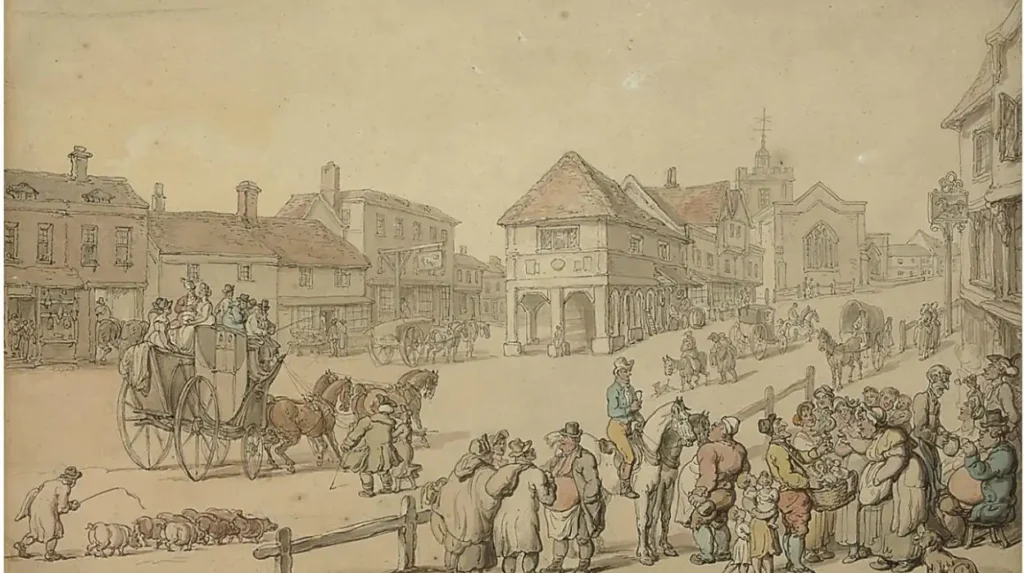
The development of the market was particularly important. King John granted a market charter on 23 August 1199 to the Lord of the Manor, the Abbot of St Albans, John de Cella. Barnet Council records the market as having existed in various forms and locations since at least the 12th century.
The charter transformed an existing commercial activity into a formally recognised market.
The market helped establish Barnet as a trading centre.
It also explains another important name: Chipping Barnet.
What does Chipping Barnet mean?
Chipping Barnet combines Barnet with the Old English term cēap, associated with trade and markets. The “Chipping” element therefore identifies Barnet as a market settlement.
The name demonstrates how different layers of history accumulated around the same place.
“Barnet” reflects the earlier landscape.
“Chipping” reflects the commercial role that became increasingly important during the medieval period.
Barnet Council notes that the market existed in various forms and locations from at least the 12th century.
The market later became strongly associated with livestock and the supply of meat to London. By the late Tudor period, Barnet’s market controlled a major share of London’s meat trade.
The modern visitor therefore encounters two historical identities in the name Chipping Barnet: a landscape shaped by woodland clearance and a medieval trading centre.
Why are there several places called Barnet in North London?
Several North London place names contain Barnet because the historic Barnet name became attached to different settlements, manors and administrative areas. Examples include East Barnet, High or Chipping Barnet and Friern Barnet, each with its own historical development.
The name was not restricted to one modern town boundary.
Historical administrative boundaries changed repeatedly. Manors, parishes and later local government districts did not always correspond to modern neighbourhood boundaries.
East Barnet represents the older settlement tradition in the area. Barnet Council identifies East Barnet as the oldest part of Barnet and explains that its earlier manor and parish centre later declined as the focus of the town shifted.
High Barnet became the name associated with the town on the hill. Barnet Council describes High Barnet as the oldest town in the borough area and notes that the name “High Barnet” is Elizabethan in origin.
Friern Barnet contains another historical layer. “Friern” derives from the association with the Knights of St John, whose presence changed the name of the area from an earlier form of Barnet.
The repeated use of Barnet demonstrates the historical importance of the name as a regional geographical identifier.
What is the connection between Barnet and Friern Barnet?
Friern Barnet preserves the Barnet name because the medieval manor became associated with the Knights of St John. The element “Friern” reflects the brotherhood or friars connected with the manor, producing the compound name that survives in North London today.
The development of Friern Barnet provides a clear example of how place names change when ownership and institutions change.
A planning heritage assessment records Frerenbarnet in 1274 and explains that the name reflected the lordship of the brotherhood or knights of the Hospital of St John.
The Friern element therefore does not replace the older Barnet landscape name. It adds an institutional description.
Barnet Council explains that Friern Barnet was known for a time as Little Barnet and became associated with the Knights of St John.
This history shows why place names should be read as historical documents.
A single name can preserve information about landscape, ownership and settlement.
Why is High Barnet called High Barnet?
High Barnet identifies the elevated town around Barnet Hill and became established as a name before the railway era. Historical records show “High Barnet” in use before the 19th century, so the railway did not create the name, although it helped reinforce its modern use.
Barnet’s topography is important to its identity.
High Barnet occupies elevated ground. The town developed around the northern route from London, and its position made it a prominent stopping point for travellers.
The term “High Barnet” is sometimes incorrectly attributed entirely to the railway.
Barnet Council records the name as Elizabethan and notes examples of earlier documentary use. A local historical publication identifies records using “High Barnet” in 1697, 1704 and 1797, as well as earlier cartographic references.
The Great Northern Railway later used the name High Barnet for its station in 1872.
This reinforced the distinction between High Barnet and New Barnet.
The railway subsequently accelerated suburban growth across the wider area. Barnet Council records the opening of Barnet Station in 1850, later known as New Barnet Station, followed by High Barnet station in 1872.
The railway therefore helped popularise the modern geographic distinction without being responsible for the original name.
How did Barnet’s name survive changes in local government?
Barnet’s name survived repeated administrative changes because it was already attached to an established town, market and historical landscape. In 1965, the new London Borough of Barnet adopted the historic town name, extending its use across a much larger administrative area.
The modern London Borough of Barnet was created in 1965 as part of the reorganisation of Greater London.
The new borough brought together areas with separate histories, including former local authorities associated with Barnet, East Barnet, Finchley, Hendon and Friern Barnet.
The choice of the name Barnet was therefore significant.
Barnet was not simply the name of one new administrative unit. It was a historic place name with medieval associations, a market charter, transport importance and connections to the surrounding settlements.
The Barnet Society records that there was debate over the new borough’s name, with Finchley and Hendon also strongly represented. The final decision selected Barnet.
The modern borough therefore carries forward a name that originated centuries before the creation of Greater London.
This is why the meaning of Barnet remains relevant today.
The borough’s administrative boundaries are modern, but the name is medieval in its documented history and Old English in its linguistic roots.
What can visitors see that helps explain Barnet’s name?
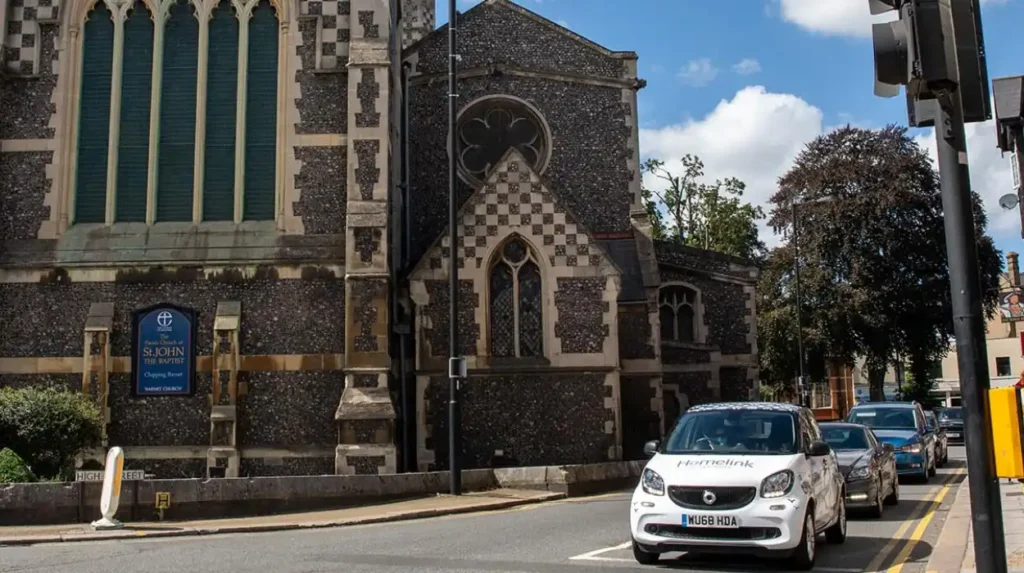
Visitors can explore High Barnet, Barnet Hill, the High Street, St John the Baptist Church, Barnet Market and surrounding historic areas to understand how landscape, roads and medieval commerce shaped the place behind the name.
The strongest way to understand the name is to connect it with the physical landscape.
Barnet Hill demonstrates the elevated setting that shaped High Barnet.
The High Street follows the historic town route.
Wood Street marks an important junction associated with the medieval market.
Barnet Market preserves the commercial identity that later gave the town the “Chipping” designation.
St John the Baptist Church forms another important part of the historic townscape.
The surrounding neighbourhoods also reveal how the original Barnet name expanded into a network of related place names.
For visitors interested in historical geography, these locations provide a compact way to trace several centuries of development.
As you explore the modern site, you are crossing land with a deep heritage. Read about the full to understand its origins.
What does Barnet’s name tell us about North London’s history?
Barnet’s name records a landscape transformed by woodland clearance and later developed through agriculture, roads, markets and settlement. Its survival from early English usage into the modern London borough connects North London’s environmental, medieval and urban histories.
The name is important because it predates the modern borough.
Its linguistic origin belongs to Old English.
Its surviving documentary history belongs largely to the medieval period.
Its market history connects it with trade.
Its transport history connects it with routes between London and northern England.
Its modern administrative history connects it with the creation of Greater London in 1965.
These layers make Barnet an important example of how English place names preserve historical information.
The name does not simply identify a location on a modern map. It points towards an earlier environment in which woodland clearance was significant enough to become part of the area’s identity.
The later development of the market added another layer. The 1199 charter established a formal commercial institution that helped turn Barnet into a significant market settlement.
The town’s location then supported coaching, road transport, railways, trams and eventually London’s suburban expansion.
Why does the name still matter today?
The name matters because it provides historical context for a modern part of London.
A visitor walking through High Barnet encounters a contemporary urban centre, but the name points towards a much older landscape.
A resident travelling through East Barnet or Friern Barnet encounters names shaped by different stages of medieval administration.
A researcher examining Barnet’s archives can follow this development through maps, documents, photographs and local publications. Barnet Council’s Local Studies and Archives collection includes historical records dating from 1600, alongside maps, newspapers, photographs and other local material.
Barnet’s name is therefore both a linguistic survival and a starting point for exploring local history.
Explore More Area Guide
North London Moving Advice From Redpath Founder Dennis Rogers 2026
Best North London Views From Barnet: Top Scenic Viewpoints
Is the meaning of Barnet completely certain?
The accepted local explanation connects Barnet with Old English baernet and land cleared by burning, although historical place-name interpretation requires care because surviving medieval spellings and documentary evidence do not record every stage of the name’s development.
The strongest explanation is the Old English baernet interpretation.
Barnet Council uses this explanation in its historical publications and walking material. A specialist place-name reference also records Barnet 1197 under Old English bærnet(t) and Middle English barnet, with the meaning associated with burning.
Historical publications have proposed other explanations in the past. Some older theories attempted to connect the name with Germanic words or other linguistic sources. These interpretations do not carry the same weight as the established Old English explanation used in modern local historical material.
It is also important not to confuse the place name with the surname Barnet or Barnett. Surnames can develop through several independent processes, including geographical origins and personal names. The place-name explanation concerns the historical settlement name of Barnet in North London.
For the North London place, the most useful interpretation is therefore straightforward: Barnet refers to a place associated with land cleared by burning.
Why is Barnet’s name important for understanding the area today?
Barnet’s name provides a direct link between modern North London and its early medieval landscape. It explains an older phase of woodland clearance, while later names such as Chipping Barnet, High Barnet and Friern Barnet preserve the town’s commercial, geographical and institutional history.
The name is more than an etymological curiosity.
It helps explain how the area developed.
The first layer is environmental: woodland was cleared and converted into useful land.
The second layer is settlement: communities developed around roads, farms and manors.
The third layer is commercial: the market charter of 1199 strengthened Barnet’s role as a trading centre.
The fourth layer is transport: roads, coaching routes, railways and later public transport expanded its connection with London.
The fifth layer is administrative: the historic name became the name of a modern London borough in 1965.
This sequence explains why Barnet remains such a recognisable name across North London.
For today’s visitor, the story begins with a simple Old English landscape description but ends with a major London borough containing diverse neighbourhoods and communities.
The name has survived because every historical period added another reason to use it.
Barnet therefore offers a particularly clear example of how a place name can preserve environmental history, medieval settlement history, commercial development and modern urban identity within a single word.
What does the name Barnet mean?
Barnet is generally derived from the Old English baernet, meaning land or a clearing created by burning woodland. The name reflects the early landscape and woodland clearance around the area.