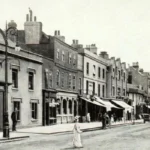
Barnet became an important market town because its location on the historic Great North Road connected London with northern England, while its chartered market created a regular centre for trade. Its fairs, inns, livestock trade, coaching traffic and growing population strengthened Barnet’s regional economy.
- Why did Barnet become an important market town?
- How did Barnet’s location help its market develop?
- When did Barnet receive its market charter?
- How did Barnet Fair strengthen the town’s economy?
- What goods were traded in Barnet?
- How did coaching traffic increase Barnet’s importance?
- How did Barnet’s inns contribute to its market-town economy?
- How did agriculture support Barnet’s market?
- How did Barnet change when railways arrived?
- Why did Barnet remain commercially important after the coaching era?
- What made Barnet different from an ordinary village?
- How did London’s growth affect Barnet’s development?
- What is Barnet’s market-town legacy today?
Why did Barnet become an important market town?
Barnet became important because its market, fairs and position on the Great North Road brought traders, farmers, travellers and customers together. The town developed as a commercial centre between London and northern England, with transport connections reinforcing its role in the regional economy.
Barnet’s development was closely connected to its geography. The settlement stood north of London on the route that became known as the Great North Road. This road connected the capital with important destinations including St Albans, Leicester and York.
The road gave Barnet a practical commercial advantage. Travellers needed places to stop, eat, rest and change horses. Farmers needed markets where agricultural goods could be exchanged. Traders needed access to customers travelling between London and communities further north.
The market provided the town with a permanent economic function. Barnet was not simply a settlement beside a major road. Its market created a recognised destination for buying and selling goods.
The town’s historic market tradition dates to the medieval period. King John granted a market charter for Barnet in 1199. The charter established an important foundation for the town’s commercial identity.
Barnet Fair became another major economic institution. The annual fair developed into a significant event for livestock trading and wider commerce. Its scale connected Barnet with agricultural communities across Hertfordshire and the surrounding region.
This commercial activity encouraged supporting businesses. Inns, shops, workshops, carriers and other services developed around the movement of people and goods.
Barnet therefore grew through a combination of market rights, road traffic, agriculture, fairs and services rather than through a single industry.
For visitors exploring modern Barnet, the market remains an important link with this commercial history. As you explore the modern town, you are crossing land with a deep heritage. Read about the full to understand its origins.
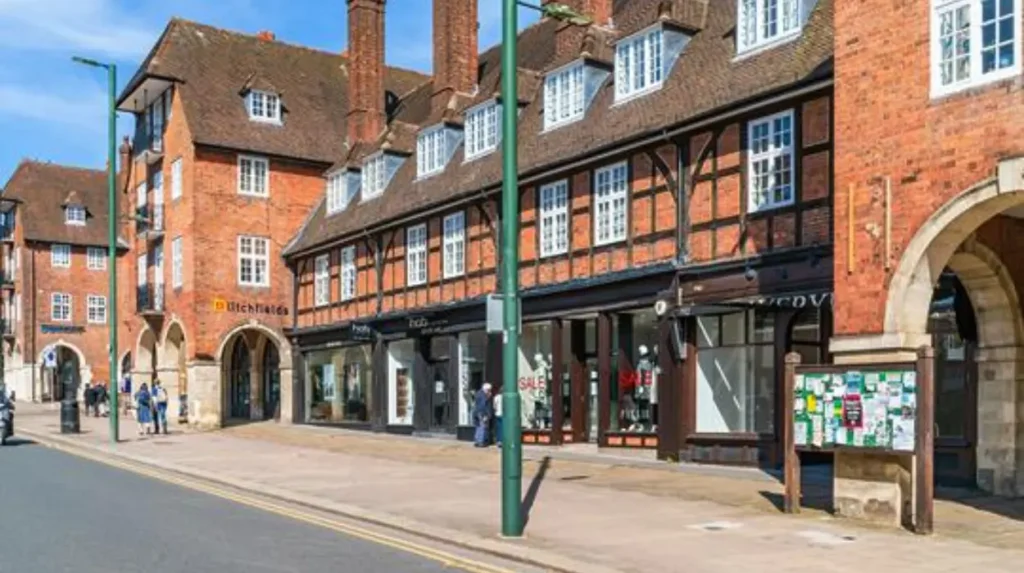
How did Barnet’s location help its market develop?
Barnet’s location north of London placed it on a major route between the capital and northern England. This position generated regular movement of travellers, livestock, agricultural goods and commercial traffic, giving the market access to both London consumers and surrounding rural producers.
Geography was fundamental to Barnet’s economic development.
Medieval London was the largest commercial centre in England. Communities north of London supplied the capital with agricultural products and livestock. A market town positioned along a major route benefited from this movement.
Barnet stood on high ground north of London. The surrounding area included agricultural land and settlements that relied on markets for exchanging produce.
The road through Barnet became part of the Great North Road. This route was one of Britain’s principal north-south highways before the development of modern motorways and railways.
Its importance increased Barnet’s exposure to passing traffic.
Travellers created demand for accommodation and services. Coaches required stopping points. Horses required stabling and replacement. Travellers required food and refreshments.
These needs supported inns and coaching businesses.
The town also provided services to local residents. A successful market needs both sellers and buyers. Barnet’s position allowed it to draw customers from surrounding settlements while also benefiting from passing travellers.
The combination created a commercial network.
Barnet’s location also reduced the distance between rural producers and London’s large consumer market. Farmers could bring livestock and agricultural products towards London while using Barnet as a place of exchange and trade.
This geographical advantage remained important for centuries.
When did Barnet receive its market charter?
Barnet received a market charter from King John in 1199. The charter formally established the right to hold a market, giving the settlement an important legal and economic foundation for regular trade and helping Barnet develop as a recognised medieval commercial centre.
The 1199 charter is central to Barnet’s market history.
King John granted the right to hold a weekly market at Barnet. Medieval market charters were important because they gave communities formal authority to organise commercial activity.
A market was more than a collection of temporary stalls. It created a regulated place where goods could be bought and sold.
The charter also strengthened Barnet’s identity as a trading settlement.
Regular markets encouraged merchants and producers to plan their journeys around market days. Customers also developed regular shopping patterns.
This created a cycle of economic activity.
More traders attracted more customers. More customers encouraged more traders. Supporting services then developed around the market.
The medieval market therefore acted as an economic anchor.
Barnet’s charter also needs to be understood within the wider development of medieval England. Markets became important centres for exchanging agricultural goods, livestock, food, household products and manufactured items.
The market connected rural production with local consumption.
It also helped establish a commercial hierarchy. Smaller settlements relied on larger market towns for goods and services. Barnet’s position gave it an important role within the surrounding area.
How did Barnet Fair strengthen the town’s economy?
Barnet Fair strengthened the town’s economy by attracting livestock traders, farmers, buyers and visitors from a wide area. Its annual activity created demand for accommodation, food, transport and services, extending Barnet’s commercial importance beyond the regular weekly market.
Barnet Fair became one of the town’s best-known historic commercial institutions.
The fair was associated particularly with livestock trading. Farmers and dealers travelled to Barnet to buy and sell animals.
Livestock markets required extensive supporting infrastructure.
Animals needed to be moved safely into the town. Traders needed space to conduct business. Buyers needed access to transport. Visitors required food, accommodation and other services.
The fair therefore generated secondary economic activity.
Public houses, inns, shops, carriers and other businesses benefited from increased visitor numbers. The event also connected Barnet with agricultural districts beyond its immediate neighbourhood.
Barnet Fair developed a wider reputation than an ordinary local market.
The fair also illustrates an important difference between a market and a fair. A market generally operates at regular intervals, such as weekly trading. A fair traditionally creates a larger periodic event that attracts traders and visitors from a wider area.
Barnet benefited from both systems.
The regular market provided continuity. The fair generated concentrated commercial activity.
Together, they reinforced the town’s identity as a place for trade.
What goods were traded in Barnet?
Barnet’s historic commercial activity centred strongly on livestock and agricultural trade, while the town also supported food, household goods, clothing, services and other everyday commerce. Its market connected rural producers with local consumers and traders serving the wider London region.
Agriculture shaped Barnet’s historic economy.
Livestock was particularly important. Cattle, sheep and horses formed part of the trade associated with Barnet Fair and the wider market economy.
Agricultural commerce created demand for related services.
Farmers needed transport. Livestock required handling and accommodation. Traders required places to conduct transactions.
The market also supported everyday retail trade.
Residents needed food and household necessities. Travellers needed provisions. Local businesses required materials and services.
This created a diverse commercial environment.
The exact range of goods changed over time as transport, manufacturing and consumer habits developed. Barnet’s commercial role therefore evolved rather than remaining fixed around one product.
Its most important economic function was its ability to connect different groups.
Farmers supplied goods. Traders distributed them. Residents purchased them. Travellers created additional demand.
The market provided the physical and institutional setting for these transactions.
How did coaching traffic increase Barnet’s importance?
Coaching traffic increased Barnet’s importance because the town stood on the Great North Road, where stagecoaches and travellers required stopping services. Inns, stables, food providers, carriers and other businesses benefited from the steady movement of people between London and northern destinations.
Before railways transformed British transport, stagecoaches were essential for long-distance passenger and mail travel.
The Great North Road carried substantial traffic between London and northern England. Barnet became one of the places where travellers stopped during these journeys.
Coaching created a service economy.
An inn provided accommodation and food. A stable provided care for horses. Coaching businesses managed vehicles, horses and passengers. Local traders supplied provisions.
The economic effect extended beyond the coaching companies themselves.
A busy road increased the number of potential customers for local businesses. Traders gained access to travellers who were not permanent residents.
Barnet’s commercial geography therefore depended on two overlapping markets.
The first was the local market, serving residents and nearby agricultural communities.
The second was the transport market, serving people travelling through the town.
This dual role helped Barnet remain commercially significant.
The road also improved connections with London. Goods could move towards the capital while people travelled in both directions.
Transport and trade reinforced each other.

How did Barnet’s inns contribute to its market-town economy?
Barnet’s inns supported the market-town economy by providing accommodation, food, stabling and meeting places for traders and travellers. Their services connected commercial activity with road transport, allowing Barnet to serve both local customers and people travelling along the Great North Road.
Historic inns were important economic institutions in market towns.
They provided more than overnight accommodation.
Travellers needed meals and refreshments. Coaches required horses and stabling. Traders needed places to meet. Commercial transactions often depended on face-to-face contact.
Barnet’s inns served these functions.
Their location along a major road increased their commercial value. Travellers passing through the town became customers for local businesses.
Inns also contributed to the social infrastructure of the market.
Market towns needed places where information could circulate. Traders needed to establish contacts. Farmers and merchants needed opportunities to negotiate.
The inn therefore formed part of the wider commercial system.
Barnet’s road traffic and market economy were mutually reinforcing. More traders increased demand for services. More services made the town more useful to traders.
This process helped consolidate Barnet as a regional centre.
How did agriculture support Barnet’s market?
Agriculture supported Barnet’s market by supplying livestock and other products from surrounding rural communities. The town provided a convenient commercial location where farmers, dealers and consumers exchanged goods, while transport links connected this local economy with London.
Barnet developed in a landscape where agriculture played an important economic role.
Farmers produced food and livestock for nearby communities and the expanding London market. A market town provided a structured place for exchange.
Barnet’s market therefore formed part of a larger agricultural supply network.
The relationship worked in both directions.
Farmers brought goods into Barnet. Traders distributed products to customers. Residents purchased food and household goods. London’s demand provided an additional commercial outlet.
Livestock trading was particularly important because animals represented valuable agricultural assets.
Markets allowed farmers and dealers to negotiate prices and transfer ownership.
Barnet Fair amplified this activity.
The presence of agricultural trade also encouraged other businesses. Equipment, transport, food, clothing and professional services all benefited from an active farming community.
Barnet’s historic economy was therefore broader than the market stalls themselves.
The market functioned as the central point within a network of production, transportation and consumption.
How did Barnet change when railways arrived?
Railways changed Barnet’s economic geography by providing faster and more reliable transport connections with London and surrounding areas. Railway access reduced dependence on long-distance road coaching while supporting commuting, population growth, property development and new patterns of commercial activity.
The arrival of railways transformed transport across Britain during the nineteenth century.
Barnet gained railway connections during this period, linking the district more closely with London and other destinations.
Railways changed the relationship between distance and economic activity.
People could travel farther within shorter periods. Goods could move more efficiently. Residential development became easier around railway stations.
Barnet’s economy therefore entered a new phase.
The town no longer depended primarily on road traffic for external connections. Rail became an additional transport system.
This did not eliminate the historic market economy.
Instead, it changed its environment.
Barnet increasingly became connected to London’s expanding metropolitan economy. People could live in Barnet while travelling to London for work.
Commercial activity also responded to population growth.
New residents required shops, services, housing and transport.
This process contributed to Barnet’s gradual transition from an independent market town towards an increasingly integrated part of Greater London.
Why did Barnet remain commercially important after the coaching era?
Barnet remained commercially important because its historic market, established businesses, transport connections and growing population created a durable economic base. Railway expansion and London’s growth changed the town’s function without removing its role as a local shopping and service centre.
The decline of stagecoach travel did not end Barnet’s commercial importance.
Economic centres survive when they adapt to new transport systems and changing consumer needs.
Barnet already possessed several advantages.
It had an established market. It had a recognisable town centre. It had commercial premises. It served surrounding communities. It had strong connections with London.
These assets supported continuity.
The nineteenth and twentieth centuries brought major changes in retailing and transport. Barnet became increasingly connected with metropolitan London.
The town’s role shifted from a primarily rural market centre towards a suburban commercial centre.
Its historic market tradition remained an important part of its identity.
This illustrates how market towns evolve.
The economic foundation does not remain unchanged. The function adapts to new circumstances.
Barnet moved from medieval market trading to agricultural commerce, coaching services, railway-connected trade and modern metropolitan retail.
What made Barnet different from an ordinary village?
Barnet differed from an ordinary village because its market charter, fairs, transport position and commercial services gave it a wider economic role. It served surrounding settlements rather than only its immediate residents, making it a regional centre for trade and exchange.
A village primarily serves its local population.
A market town serves a wider hinterland.
Barnet developed the characteristics of a market town through its formal market rights and regional connections.
Its weekly market attracted sellers and buyers. Its fair expanded the trading network. Its road connections brought travellers. Its inns and businesses provided supporting services.
These activities created a wider economic catchment.
The town therefore became a meeting point between rural production and urban consumption.
This distinction explains why Barnet’s history matters to understanding North London.
Modern Barnet forms part of Greater London, but its historic development followed the economic pattern of a market town.
Its older commercial geography remains visible in the town centre and market tradition.
Explore More Area Guide
Barnet Name Origin: The Story Behind Barnet, London
North London Moving Advice From Redpath Founder Dennis Rogers 2026
How did London’s growth affect Barnet’s development?
London’s growth increased Barnet’s commercial opportunities by expanding the nearby consumer market, improving transport demand and encouraging suburban development. Barnet gradually shifted from a rural market centre into a London-connected urban district while retaining important elements of its historic commercial identity.
London’s expansion transformed communities across its northern edge.
Barnet benefited from its proximity to the capital.
As London’s population increased, demand for housing, food, services and transport expanded.
Barnet became increasingly connected to this metropolitan economy.
Transport improvements accelerated the process.
Railways enabled commuting. Later road improvements increased private and commercial traffic.
The economic relationship with London became stronger.
Agricultural land was progressively affected by urban development. Residential areas expanded. Shops and services adapted to a growing population.
Barnet’s historic market therefore became part of a much larger urban economy.
Its original role had been regional trade between rural communities and London. Its later role increasingly involved serving residents within the expanding metropolitan area.
This transition explains why historic Barnet looks different from a medieval market town while still retaining its market-town heritage.
What is Barnet’s market-town legacy today?
Barnet’s market-town legacy remains visible through its historic town centre, market tradition, road pattern and commercial function. The town continues to serve local communities while its medieval charter and Great North Road connections provide the historical foundations for understanding its economic development.
Modern Barnet is part of North London, but its historical identity remains closely linked to commerce.
The market tradition provides a direct connection with the town’s medieval past.
The historic road network also helps explain Barnet’s location and development.
For visitors, these features provide a way to understand the town beyond individual buildings or attractions.
Barnet’s history is fundamentally connected with movement and exchange.
Farmers brought livestock. Traders sold goods. Coaches carried passengers. Inns served travellers. Railways connected residents with London. Modern transport continues that tradition of connectivity.
The scale and character of trade changed repeatedly, but the commercial function remained.
Barnet became important because several economic advantages reinforced each other over centuries.
Its market charter created formal trading rights. Its fair expanded commercial activity. Its Great North Road position generated traffic. Agriculture supplied goods. Inns and businesses served traders. Railways connected the town with London.
These factors explain why Barnet developed into an important market town rather than remaining a small roadside settlement.
Understanding this economic history also explains the character of modern Barnet. Its commercial identity is not a recent development. It is the result of more than eight centuries of organised trade, transport and regional exchange.
For tourists, the market and historic town centre provide a practical starting point for exploring this heritage. For residents, the same places show how Barnet evolved alongside North London. For visitors working remotely or travelling for business, the town’s modern services sit within a much older commercial landscape.
Barnet’s market-town story is therefore a history of adaptation. Medieval trading rights established the foundation. Agricultural commerce expanded the market. The Great North Road brought national movement through the town. Coaching strengthened the service economy. Railways changed the transport system. London’s expansion integrated Barnet into the capital’s metropolitan economy.
Why did Barnet become a market town?
Barnet became a market town because of its strategic position north of London, its market charter of 1199, agricultural trade, livestock sales and location on the Great North Road.