Barnet occupies a distinctive position within Greater London. It is a London borough, but its landscape, settlement pattern, transport network, historic development and visitor experience differ substantially from the central districts around Westminster, the City, Soho and Covent Garden.
- How is Barnet geographically different from Central London?
- Why does Barnet have a more suburban character than Central London?
- How does Barnet compare with Central London for population density?
- What types of neighbourhoods are found in Barnet?
- How does transport in Barnet differ from Central London?
- Does Barnet have more green space than Central London?
- What attractions make Barnet different from Central London?
- Is Barnet quieter than Central London?
- How does shopping in Barnet differ from Central London?
- How does food and dining in Barnet differ from Central London?
- Why is Barnet useful for digital nomads and business travellers?
- Is Barnet still part of London despite feeling suburban?
- What should visitors expect when travelling from Central London to Barnet?
- What is the main difference between Barnet and Central London?
The difference is primarily geographical and functional. Barnet sits in North London, extending towards Hertfordshire, while Central London contains the capital’s densest concentration of major commercial districts, national institutions, cultural attractions and historic landmarks.
Barnet is also much more varied than the term “suburb” suggests. The borough contains established town centres, residential neighbourhoods, green spaces, transport corridors, historic villages, shopping destinations, cultural venues and major visitor attractions. Its 2021 population was about 389,300, following a 9.2% increase from 2011.
Understanding these differences helps visitors plan realistic itineraries and helps residents, digital nomads and business travellers understand how Barnet functions within the wider London region.
How is Barnet geographically different from Central London?
Barnet is a large outer-London borough in North London, while Central London is the capital’s concentrated inner urban core. Barnet has more suburban neighbourhoods, open land and lower-density development, whereas central districts contain denser buildings, employment centres and major institutions.
The London Borough of Barnet occupies a substantial area in the northern part of Greater London. Its geography extends from established urban districts towards the northern edge of London, creating a transition between the capital’s built-up area and the countryside around Hertfordshire.
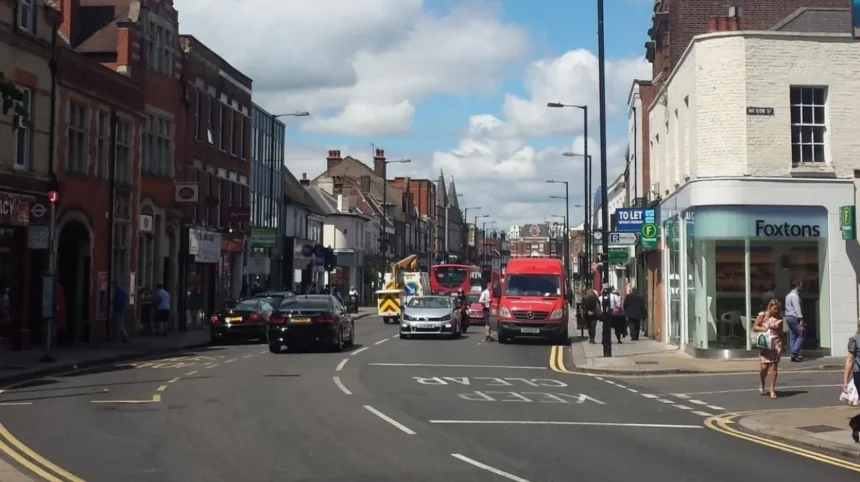
Central London has a different physical structure. Districts such as Westminster, the City of London, Holborn, Soho and Covent Garden contain closely spaced buildings, commercial premises, transport interchanges, cultural institutions and high pedestrian activity.
Barnet has a more dispersed urban pattern. High Barnet, Finchley, Golders Green, Hendon, Edgware, Mill Hill, Whetstone and other districts each have their own local centres.
This means visitors do not experience Barnet as one continuous central business district. Instead, they encounter a collection of neighbourhoods connected by roads, buses, railways and Underground services.
The geographical difference is particularly visible in open space. The Office for National Statistics identified Barnet as the eighth least densely populated of London’s 33 local authorities in 2021.
This lower density creates a different relationship between homes, streets, parks and commercial areas.
Why does Barnet have a more suburban character than Central London?
Barnet developed through villages, market activity, railways, roads and twentieth-century suburban expansion. Central London developed around older commercial, governmental, financial and cultural functions, producing a much denser urban environment with different land uses and movement patterns.
Barnet’s suburban character has deep historical roots rather than being a purely modern development.
High Barnet developed around an important route running north from London towards St Albans. Barnet Council records the area’s existence before the Norman Conquest and identifies its market as having existed in different forms and locations since at least the twelfth century.
The area’s location made it a stopping point for travellers. By the eighteenth century, Barnet had numerous coaching inns serving road traffic.
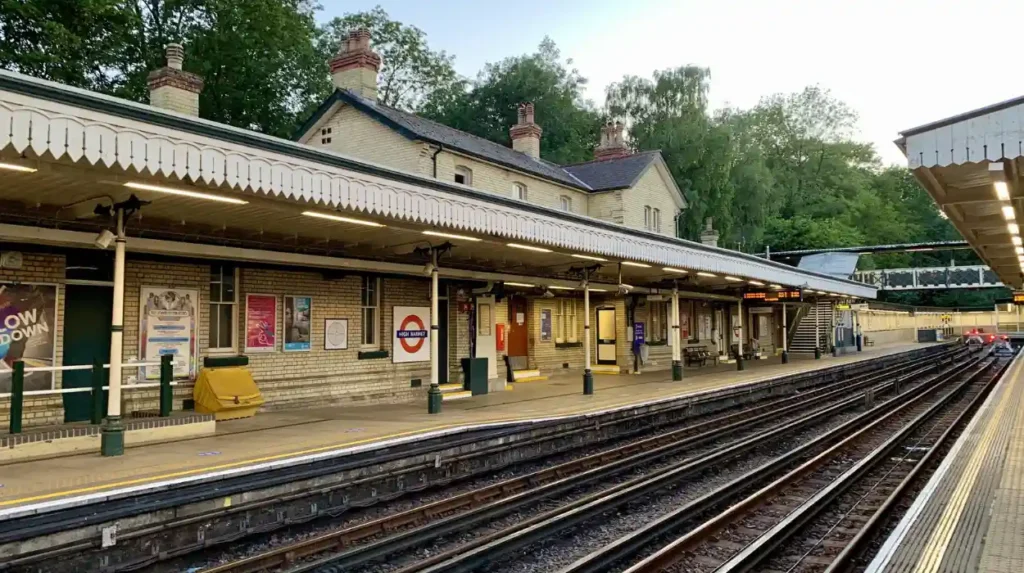
Railway development then changed the settlement pattern. Barnet Station opened in 1850, followed by New Barnet Station and other stations in the wider area. Railway infrastructure encouraged suburban housing development around stations.
The twentieth century brought further transport-led growth. Tram services and Underground expansion supported the development of residential streets and commuter neighbourhoods.
As you explore modern Barnet, you are crossing land shaped by centuries of movement, settlement and commerce. Read about the full to understand its origins.
Central London’s development followed a different pattern. Its historic role as the political, financial, commercial and cultural heart of the capital produced continuous high-density development.
Barnet therefore combines historic settlements with later suburban growth, while central districts contain a much more continuous urban core.
How does Barnet compare with Central London for population density?
Barnet has a lower population density than many central districts because its built environment contains more residential streets, open spaces and separated town centres. Central London concentrates people, offices, visitors and services within a much smaller and denser urban area.
Population statistics provide a useful way to understand this difference.
The 2021 Census recorded approximately 389,300 residents in Barnet. The borough’s population increased by around 33,000 between 2011 and 2021, representing growth of 9.2%.
Barnet’s population is large in absolute terms, but its land area and urban structure create a different density pattern from the central districts.
Central London attracts large daytime populations because offices, government buildings, shops, theatres, museums, universities, restaurants and tourist attractions operate within concentrated areas.
This creates a major distinction between residential population and daytime activity.
A visitor walking through Westminster or the City encounters significant numbers of workers and tourists alongside permanent residents. Barnet’s town centres also become busy, but activity is distributed across several locations.
The result is a more localised pattern of daily life.
For visitors, this means a Barnet itinerary often involves moving between individual neighbourhoods rather than walking continuously between major central attractions.
What types of neighbourhoods are found in Barnet?
Barnet contains distinct town centres and residential neighbourhoods, including High Barnet, Finchley, Golders Green, Hendon, Edgware, Mill Hill and Whetstone. Each has its own transport connections, commercial areas, housing patterns, green spaces and local attractions.
Barnet’s internal geography is one of its defining characteristics.
High Barnet has a historic market-town identity. Barnet Council describes High Barnet as the oldest town in Barnet and records the long history of its market.
Finchley developed through roads, railways, trams and suburban housing. Council historical records show that Finchley became a substantial suburb during the late nineteenth and early twentieth centuries.
Golders Green developed as a significant residential and commercial centre with strong public transport connections.
Hendon has a different character again, with major roads, residential districts, employment locations and the Royal Air Force Museum London.
Edgware sits towards the north-west of the borough and functions as an important commercial and transport centre.
Mill Hill combines suburban development with areas closer to open countryside.
Whetstone occupies another northern corridor, connecting Barnet’s residential communities with neighbouring parts of North London.
This structure contrasts with Central London, where districts often sit within a highly continuous urban environment.
For visitors, the practical lesson is simple. “Barnet” does not describe one uniform experience. The most suitable area depends on whether the visitor wants historic streets, shopping, museums, green space, local food, sport or transport connections.
How does transport in Barnet differ from Central London?
Barnet has strong radial transport connections into central London, particularly through the Northern line and national rail services, but journeys between outer neighbourhoods are less direct. Central London has a much denser network of Underground, rail, bus and walking connections.
Transport is one of the clearest practical differences between Barnet and the central districts.
The Northern line provides direct Underground connections from several Barnet areas towards central London. Barnet Council’s economic strategy states that Barnet has Underground access to Central London with journey times of 30 minutes or less on relevant routes.
The borough also has national rail connections. Stations including New Barnet, Oakleigh Park and Hadley Wood serve eastern parts of the borough, while Thameslink services serve locations including Hendon and Mill Hill Broadway.
These services are particularly useful for commuters and visitors travelling towards central employment districts.
Central London has a different transport advantage. Numerous Underground lines, railway terminals, bus routes and walking corridors converge within a relatively compact area.
Barnet’s transport system is more radial. Many routes point towards the centre rather than providing equally direct orbital connections between outer districts.
Barnet Council notes that buses are particularly important for orbital journeys because public transport options for some cross-borough journeys are more limited.
Visitors should therefore plan Barnet journeys around specific stations and destinations rather than assuming that every nearby neighbourhood is easily walkable.
Does Barnet have more green space than Central London?
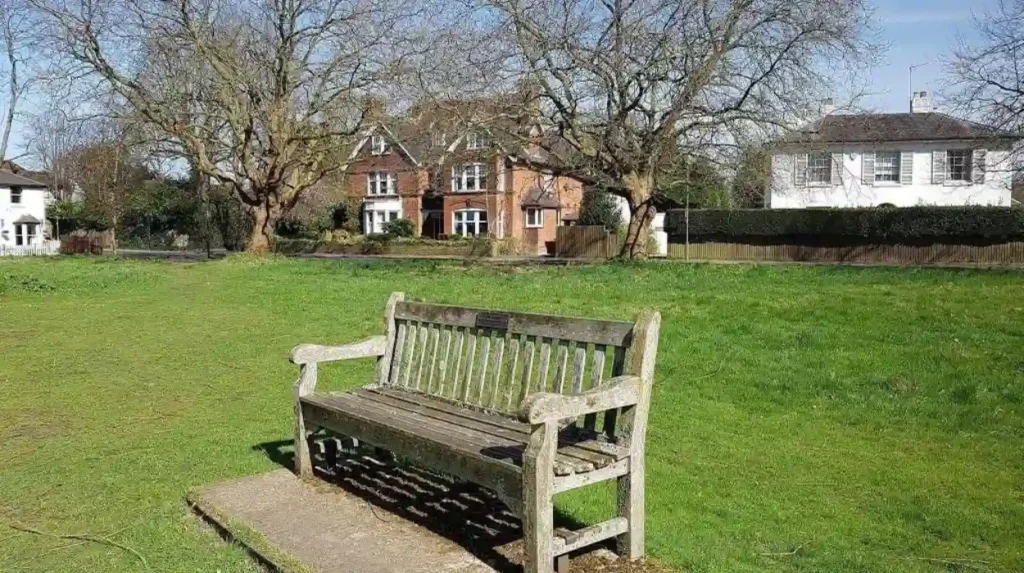
Barnet has a stronger suburban relationship with open land, parks and green spaces than the commercial core of Central London. Its lower-density development provides more visible separation between built-up neighbourhoods, roads and recreational landscapes across the borough.
Green space is an important part of Barnet’s identity.
The borough includes parks, playing fields, recreation grounds, allotments, woodland areas and protected open land. These spaces support walking, outdoor recreation and everyday community use.
Central London also has major parks and open spaces. Hyde Park, St James’s Park, Regent’s Park and Green Park demonstrate that the central area is not entirely built up.
The difference lies in how open space interacts with the wider settlement pattern.
In Barnet, green areas are embedded within suburban neighbourhoods and often sit close to residential streets. This creates a more spacious visual environment.
Nearby North London destinations also provide major green landscapes. Hampstead Heath, for example, is four miles from Trafalgar Square and contains grassland, ancient woodland, sports facilities, ponds and other recreational spaces.
Barnet therefore works well for visitors who want to combine London sightseeing with outdoor time without travelling far beyond Greater London.
The distinction also benefits digital nomads and business travellers. A workday in a local café, library or workspace can be combined with a nearby walk rather than requiring a journey into the central tourist districts.
What attractions make Barnet different from Central London?
Barnet offers museums, historic buildings, theatres, farms, sports venues, shopping destinations and outdoor attractions, but its attractions are distributed across neighbourhoods. Central London concentrates internationally recognised landmarks, museums, galleries, theatres and royal institutions within a much tighter area.
Barnet has a substantial visitor offer.
Visit London lists attractions in Barnet including the Royal Air Force Museum London, Barnet Museum, Artsdepot, Belmont Children’s Farm, Chickenshed Theatre, Stephens House and Gardens and Go Ape Cockfosters.
The Royal Air Force Museum London provides a major aviation-focused attraction. It is particularly relevant to visitors interested in military and aviation history.
Barnet Museum provides local historical context, while Artsdepot provides cultural programming in North Finchley.
Chickenshed Theatre adds a performing-arts dimension. Stephens House and Gardens provides historic and landscaped surroundings.
These attractions differ from Central London’s internationally recognised visitor cluster.
A first-time London visitor often builds a central itinerary around destinations such as the Houses of Parliament, Buckingham Palace, the Tower of London, the British Museum and the National Gallery.
Barnet’s attraction network instead supports area-based exploration.
This creates a useful distinction for repeat visitors. Barnet provides access to a different layer of London that focuses more strongly on local history, suburban culture, recreation and specialist attractions.
Is Barnet quieter than Central London?
Barnet generally has a less concentrated pattern of pedestrian and visitor activity than Central London because its commercial centres, residential areas and attractions are distributed across a larger geographical area. Busy periods still occur around stations, shopping areas, events and major visitor destinations.
The difference in activity is closely linked to land use.
Central London contains major tourist attractions, offices, theatres, shops, hotels and transport interchanges within compact districts. Large pedestrian flows are therefore common.
Barnet distributes activity between multiple centres.
High Barnet has its own commercial and historic core. Finchley contains several local centres. Golders Green, Hendon, Edgware and other districts also have established retail and service areas.
This distribution changes the visitor experience.
A person spending a morning in Barnet can explore a local centre, visit a museum or attraction, use a park and eat locally without entering the central tourist core.
The term “quieter” should therefore be understood as a difference in concentration rather than an absence of activity.
Major venues and shopping destinations still attract substantial numbers of people. Visit London’s Barnet listings include attractions, food and drink venues, shopping, open spaces and entertainment options.
How does shopping in Barnet differ from Central London?
Barnet’s shopping environment is centred on local high streets, town centres, specialist businesses and major suburban retail destinations. Central London provides a much larger concentration of flagship stores, department stores, luxury retail, visitor-oriented shopping streets and major commercial districts.
Barnet provides several different forms of shopping.
Local high streets serve everyday needs. These areas contain supermarkets, independent businesses, cafés, restaurants, professional services and smaller retailers.
Brent Cross adds a major regional shopping destination within the borough.
Central London operates at a different scale. Oxford Street, Regent Street, Covent Garden, Carnaby and surrounding districts attract domestic and international shoppers.
The difference is useful for visitors because shopping objectives determine the most practical destination.
A traveller seeking everyday goods, local food or neighbourhood businesses has strong options in Barnet.
A visitor seeking major flagship stores or a concentrated luxury retail itinerary is more likely to spend time in central districts.
Barnet’s shopping pattern also reflects its suburban population. Retail centres support residents as well as visitors rather than relying primarily on tourism.
How does food and dining in Barnet differ from Central London?
Barnet’s dining scene reflects its diverse residential population and neighbourhood-based commercial structure. Central London offers a larger concentration of restaurants, hotels, international dining concepts and destination venues within short walking distances of major tourist attractions.
Food is another area where geography affects the visitor experience.
Barnet contains restaurants, cafés, pubs and food businesses across numerous neighbourhood centres. Visit London lists venues including Bang Bang Oriental and other restaurants within its Barnet area guide.
This dispersed structure encourages visitors to choose restaurants close to a particular neighbourhood or attraction.
Central London offers greater concentration. A visitor can move between restaurants, cafés, pubs and bars across several adjoining streets without using public transport.
Barnet’s dining environment is therefore more closely linked to local communities.
Its diverse population also contributes to a broad range of cuisines and food businesses. The experience differs between districts, so visitors should treat High Barnet, Finchley, Golders Green, Hendon and Edgware as distinct food destinations rather than assuming that the entire borough has one dining identity.
Why is Barnet useful for digital nomads and business travellers?
Barnet provides residential neighbourhoods, local cafés, transport links, shopping centres, green spaces and community facilities that support flexible working and downtime. Its location allows travellers to reach central London while maintaining access to a less concentrated suburban environment.
Barnet can function as a practical base for people whose work does not require constant presence in Central London.
The borough’s transport connections provide access to major central employment districts. Its Northern line and rail services support journeys towards central London, while local centres provide everyday services closer to home or accommodation.
Digital nomads can combine remote work with neighbourhood-based activities.
A typical day can involve working from a suitable café or workspace, using local shops, taking a walk in a nearby open area and travelling into central London for an evening meeting or event.
Business travellers also benefit from the transport structure when accommodation or meetings are located in North London.
The key consideration is journey planning. Barnet’s geography means that a suitable base depends on the exact location of the workplace, station and accommodation.
Is Barnet still part of London despite feeling suburban?
Barnet is fully part of Greater London and is one of London’s 32 boroughs, plus the City of London. Its suburban character describes its urban form and location, not separation from London or a different administrative status.
The distinction between “London” and “suburban London” sometimes creates confusion.
Barnet is not outside London. The London Borough of Barnet is a London local authority and forms part of Greater London.
Its northern location creates stronger visual and functional links with suburban and semi-rural landscapes than visitors encounter in central districts.
The borough’s history explains this character. Historic roads, market activity, railway development and twentieth-century suburban expansion created the neighbourhood structure visible today.
Barnet therefore demonstrates the geographical diversity of London itself.
The capital is not one uniform urban environment. It includes dense central districts, inner-city neighbourhoods, suburban town centres, large parks and areas bordering the wider countryside.
Barnet is an important example of the outer-London component of this wider metropolitan structure.
Explore More Area Guide
Barnet Languages and Cultures: Exploring North London’s Diversity
Barnet vs Other North London Boroughs: Key Differences
What should visitors expect when travelling from Central London to Barnet?
Visitors travelling from Central London into Barnet should expect longer distances between attractions, more neighbourhood-based activity, greater suburban housing, more local town centres and stronger connections with open space. Transport planning is important because destinations are geographically dispersed.
The main adjustment is to itinerary design.
Central London supports highly concentrated sightseeing. Several major attractions can be visited within one walking route.
Barnet rewards a destination-based approach.
Visitors should identify a specific neighbourhood and combine nearby attractions, food and outdoor activities. High Barnet works well for historic exploration. Hendon provides access to the Royal Air Force Museum London. North Finchley connects visitors with Artsdepot. Other areas provide shopping, dining and green-space experiences.
This approach reduces unnecessary cross-borough travel.
It also exposes visitors to a different part of London’s history.
Barnet’s development from historic market activity through railway expansion and suburban growth is visible in its streets, stations and town centres.
For leisure travellers, this creates a useful alternative to the most heavily concentrated central sightseeing routes.
For residents, the same geography explains why different Barnet neighbourhoods function as individual local hubs.
What is the main difference between Barnet and Central London?
The main difference is urban structure. Barnet is a large, diverse outer-London borough built around several suburban town centres, residential districts, transport corridors and open spaces. Central London is denser and concentrates national institutions, commerce, tourism and culture.
Barnet’s difference from Central London is therefore not simply about distance.
It is about how the area is organised.
Central London operates as a highly concentrated metropolitan core. Barnet operates through multiple local centres connected to that core.
Barnet has historic market-town origins, railway-led suburban growth and extensive residential development. Its population reached about 389,300 in the 2021 Census, while its lower density compared with many London boroughs reflects its spacious suburban structure.
Its transport network connects these communities with Central London, while its museums, theatres, shopping areas, restaurants, parks and specialist attractions provide reasons to remain within the borough.
For visitors, the result is a different way to experience London. Central London provides concentrated landmarks and institutions. Barnet provides neighbourhood-scale London, historic settlements, suburban streets, local services, cultural venues and access to open space.
Understanding this distinction makes Barnet easier to navigate and places the borough within the broader story of how London developed beyond its historic central core.
What is the main difference between Barnet and Central London?
The main difference is urban structure. Barnet has suburban neighbourhoods, local town centres, residential streets and extensive open spaces, while Central London has denser development and a greater concentration of offices, attractions, cultural institutions and major landmarks.