Barnet is one of London’s most culturally and linguistically diverse boroughs. Its communities include long-established Jewish, Asian, Black, European and British populations alongside newer migrant communities. More than 90 languages are spoken across the borough, creating a distinctive multilingual cultural landscape.
- Why is Barnet considered culturally diverse?
- Which languages are spoken across Barnet?
- Which ethnic communities are represented in Barnet?
- Why is the Jewish community important to Barnet’s culture?
- What role do Indian and Gujarati cultures play in Barnet?
- What European cultures are represented across Barnet?
- How has migration shaped Barnet’s cultural identity?
- Which religions and faith cultures are represented in Barnet?
- Where can visitors experience Barnet’s cultural diversity?
- How does food reflect Barnet’s languages and cultures?
- How do Barnet’s communities influence local culture and arts?
- What does Barnet’s linguistic diversity mean for visitors?
- How is Barnet’s cultural diversity changing?
- Why does Barnet’s cultural and linguistic diversity matter?
The borough sits in north London and includes neighbourhoods such as Finchley, Hendon, Golders Green, Edgware, Burnt Oak, Colindale, Mill Hill and High Barnet. Each area has its own combination of languages, faith communities, businesses, food traditions and cultural institutions.
Understanding Barnet’s diversity requires looking beyond ethnicity alone. Language, country of birth, religion, national identity, migration history and community institutions all contribute to the borough’s cultural character.
The 2021 Census provides the main statistical foundation for understanding this diversity. Barnet Council reports that Barnet had approximately 389,300 residents in 2021 and that 44% of residents were born outside the United Kingdom.
Why is Barnet considered culturally diverse?
Barnet is culturally diverse because its population combines long-established British communities with residents connected to Europe, the Middle East, Asia, Africa and other regions. Census data records substantial ethnic, linguistic, religious and international-born populations across the borough.
The 2021 Census recorded 57.7% of Barnet residents as belonging to a White ethnic group, 19.3% to an Asian ethnic group, 7.9% to a Black ethnic group, 5.4% to a Mixed ethnic group and 9.8% to another ethnic group.
These categories contain many distinct communities. The Asian category includes communities with Indian, Iranian and other backgrounds. The White category includes White British, Irish and European identities. Black communities include residents with African and Caribbean heritage, while the Mixed category includes people identifying with more than one ethnic background.
Barnet’s international population is also significant. The council reports that 44% of residents were born in another country, compared with 39% in 2011. Countries represented in Barnet include Romania, Iran, Poland and many others.
The borough’s cultural diversity therefore reflects both historical settlement and more recent migration.
For visitors, this diversity is visible through restaurants, supermarkets, religious buildings, community centres, cultural events, schools, local businesses and multilingual services.
Barnet’s culture strategy for 2024–2029 also identifies culture as an important part of local identity, participation, placemaking and connections between people and places.
Which languages are spoken across Barnet?
Barnet is home to more than 90 spoken languages, with English remaining the main language for most residents. Romanian, Persian or Farsi, Polish, Gujarati and Portuguese are the five leading main languages after English in the borough.
The 2021 Census found that 77.1% of Barnet residents aged over three reported English as their main language. A further 95.9% of residents described themselves as proficient in English.
This distinction is important. A person’s main language is not the same as their ability to communicate in English. Many Barnet residents use another language at home while also speaking English fluently at work, school or in public services.
The five leading main languages after English are:
- Romanian, representing 3.0% of residents.
- Persian or Farsi, representing 2.3%.
- Polish, representing 1.5%.
- Gujarati, representing 1.4%.
- Portuguese, representing 1.0%.
These figures demonstrate the range of European, Middle Eastern and South Asian linguistic communities in Barnet.
The borough also has residents who speak languages such as Turkish, Arabic, Panjabi, Urdu, Bengali, Tamil, Mandarin, Cantonese, Russian, Spanish and French. These language groups reflect the wider patterns of migration into London. The ONS Census 2021 classification specifically identifies these languages and language families in its national data.
Language is particularly visible in areas with international shops, restaurants, community organisations and places of worship.
For travellers, this creates opportunities to experience different food cultures, religious traditions and community spaces without travelling outside London.
Which ethnic communities are represented in Barnet?
Barnet includes White British and Irish communities alongside Indian, Iranian, Jewish, Black African, Caribbean, European and other communities. The 2021 Census recorded White, Asian, Black, Mixed and Other ethnic groups throughout the borough.
Barnet’s ethnic profile is broader than the headline census categories suggest.
White British residents accounted for 36.2% of Barnet’s population in 2021. This represented a decline from 45.5% in 2011. The category of “Other ethnic group” increased substantially during the same period.
Asian communities represent 19.3% of Barnet’s population. This includes residents with South Asian backgrounds, such as Indian and Gujarati communities, as well as people connected to other Asian countries.
Barnet also has established Black communities. The 2021 Census recorded 7.9% of residents within the broad Black ethnic category. This includes Black African and Caribbean heritage.
Mixed and multiple ethnic identities represent another part of the borough’s demographic profile. The census recorded 5.4% of residents in the Mixed ethnic group.
The borough’s ethnic diversity has developed through different periods of migration and settlement. Some communities have longstanding links with particular neighbourhoods, while others are more geographically dispersed.
For visitors, ethnic diversity is often most apparent through local food, independent shops, cultural organisations, places of worship and community events.
Why is the Jewish community important to Barnet’s culture?
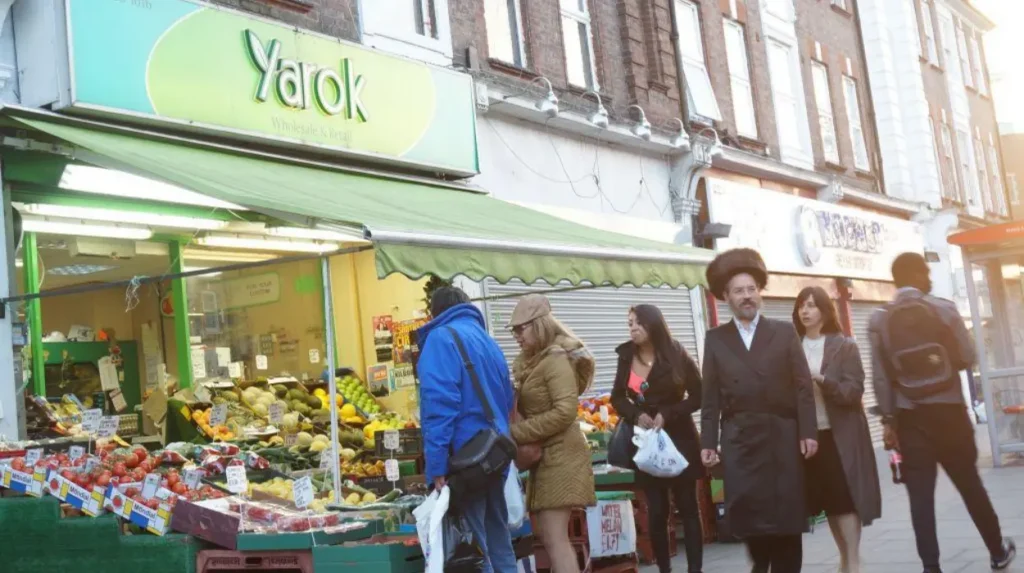
The Jewish community is a major part of Barnet’s cultural identity. In the 2021 Census, 14.5% of Barnet residents identified as Jewish, giving the borough the largest Jewish population of any London borough by proportion.
Jewish life has a particularly strong presence in parts of northern Barnet, including areas around Golders Green and Hendon.
The community includes religious institutions, schools, charities, businesses, food outlets and cultural organisations. These institutions contribute to the physical and social character of the borough.
The 2021 Census recorded 14.5% of Barnet residents as Jewish. The corresponding London figure was 1.7%, highlighting the distinctive concentration of Jewish residents in the borough.
Jewish cultural identity in Barnet is not limited to religious practice. It also includes food traditions, education, community organisations, family networks, Hebrew and other language use, cultural celebrations and historical connections.
Visitors exploring neighbourhoods such as Golders Green can encounter specialist food shops, bakeries, restaurants and community institutions associated with Jewish life.
The census also recorded Christianity as the largest religious affiliation overall, with 36.6% of residents identifying as Christian. Islam accounted for 12.2%, Hinduism for 5.7%, Buddhism for 1.1% and Sikhism for 0.4%.
These figures show that religious diversity extends well beyond one community.
What role do Indian and Gujarati cultures play in Barnet?
Indian and Gujarati communities contribute strongly to Barnet’s linguistic, commercial and cultural diversity. Gujarati is one of the borough’s five most common main languages, while Asian residents represented 19.3% of Barnet’s population in the 2021 Census.
Gujarati is particularly significant because it connects language with food, family networks, religious institutions, commerce and cultural traditions.
Barnet’s Indian communities are not culturally uniform. They include people with different regional, linguistic and religious backgrounds. Gujarati, Panjabi, Urdu, Bengali, Tamil and other languages represent different cultural histories.
Indian cultural influence can be encountered through restaurants, grocery shops, sweet shops, community associations, religious buildings and family businesses.
Food is one of the most accessible ways for visitors to experience this diversity. Indian restaurants and specialist food shops provide regional dishes, sweets, spices and ingredients associated with different parts of South Asia.
The community also contributes to Barnet’s wider business landscape. Family-owned enterprises and professional networks form part of everyday commercial life.
The borough’s cultural diversity therefore exists both through organised events and through ordinary neighbourhood activity.
What European cultures are represented across Barnet?
European cultures are strongly represented in Barnet, particularly through Romanian, Polish and Portuguese communities. Romanian is the borough’s most common main language after English, followed by Persian or Farsi, Polish, Gujarati and Portuguese.
Romanian is the leading non-English main language in Barnet. It accounted for 3.0% of residents in the 2021 Census.
The growth of the Romanian-born population was especially significant between 2011 and 2021. Barnet Council identifies Romania as the country of birth with the highest increase during that period, with a reported 200% increase.
Polish is another important European language in the borough. Polish communities form part of London’s wider Polish population and contribute to local retail, food and community life.
Portuguese is also among Barnet’s leading non-English main languages.
European cultural representation extends beyond these communities. Barnet has residents connected to countries across Central, Eastern, Western and Southern Europe.
The result is a multilingual European presence alongside Barnet’s longstanding British, Jewish, Asian, African and Middle Eastern communities.
How has migration shaped Barnet’s cultural identity?
Migration has played a central role in shaping modern Barnet. The 2021 Census recorded 44% of residents as born outside the United Kingdom, while countries including Romania and Iran recorded notable population growth between 2011 and 2021.
Migration changes the cultural composition of an area through settlement, family formation, employment, education and community institutions.
Barnet’s migration history includes older movements from Ireland and Jewish communities alongside newer migration from Europe, the Middle East, Asia and Africa.
The 2021 Census recorded 221,293 Barnet residents as born in the United Kingdom, representing 56.8% of the population.
The remaining population includes people born across many countries.
Iran is another country associated with significant population growth in Barnet. The council reports a 55% increase in residents born in Iran between 2011 and 2021.
These changes influence the borough’s language profile, food economy, religious institutions, community services and cultural programming.
For a visitor, migration history is therefore not an abstract demographic subject. It is visible in the businesses, languages and institutions encountered across Barnet.
As you explore the modern borough, you are also crossing land shaped by centuries of local change. Read the full to understand its origins and historical development.
Which religions and faith cultures are represented in Barnet?
Barnet contains Christian, Jewish, Muslim, Hindu, Buddhist and Sikh communities alongside residents who identify with no religion. The 2021 Census recorded Christianity at 36.6%, Judaism at 14.5%, Islam at 12.2% and Hinduism at 5.7%.
Religious affiliation is an important part of Barnet’s cultural landscape because places of worship often function as community institutions.
Christian communities include different denominations and congregations. Churches form part of the borough’s historic built environment.
Jewish communities have a particularly prominent presence, especially in northern neighbourhoods.
Muslim communities contribute mosques, community organisations, businesses and cultural activities.
Hindu communities contribute temples, religious organisations and cultural networks. Sikh communities also form part of Barnet’s religious landscape.
The 2021 Census recorded 20.2% of residents as having no religion, compared with 16.1% in 2011.
Religious identity should not be treated as identical to ethnicity or language. People from the same ethnic community can have different religious affiliations, while people sharing a religion can come from many ethnic and national backgrounds.
This distinction is important when describing Barnet accurately.
Where can visitors experience Barnet’s cultural diversity?
Visitors can experience Barnet’s cultural diversity through neighbourhood high streets, restaurants, specialist food shops, places of worship, museums, community organisations, arts venues and cultural events. Golders Green, Hendon, Burnt Oak, Colindale and High Barnet provide different cultural settings.
Cultural exploration works best when it includes ordinary neighbourhood spaces as well as formal attractions.
Golders Green is strongly associated with Jewish community life and has specialist food businesses and community institutions.
Hendon contains a wide mix of residential communities, restaurants, shops and religious institutions.
Burnt Oak and nearby areas provide another example of London’s multicultural suburban landscape, with businesses and residents representing different backgrounds.
Colindale has experienced significant residential development and population change. It also contains major cultural attractions, including the Royal Air Force Museum.
High Barnet provides a different experience. Its historic market-town character is connected to older layers of Barnet’s development.
Barnet Museum in High Barnet presents local history through collections and exhibitions. The Royal Air Force Museum in Colindale contains around 1.3 million objects held in trust for the public.
These institutions add historical context to the borough’s contemporary cultural diversity.
How does food reflect Barnet’s languages and cultures?
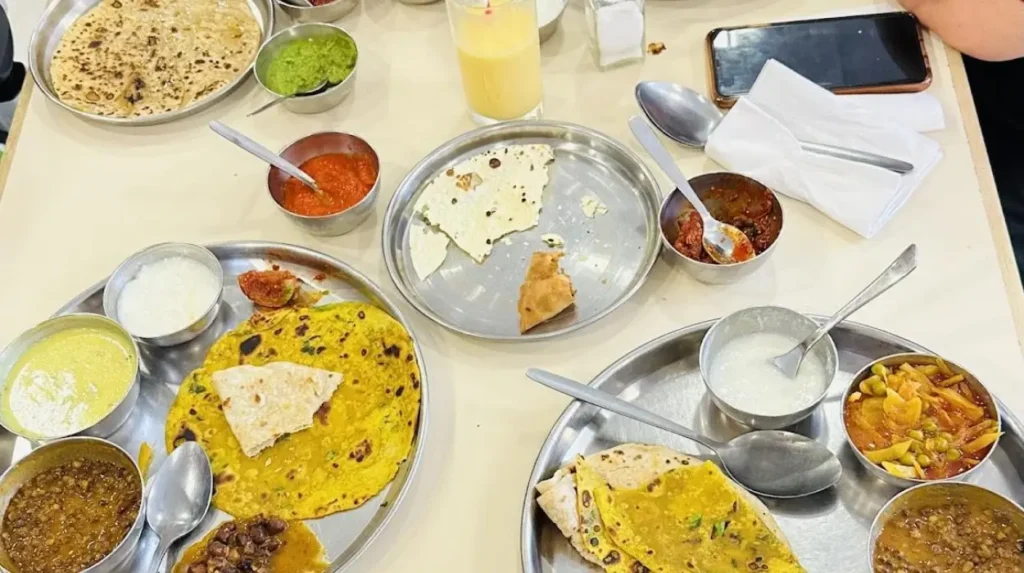
Food provides one of the clearest everyday expressions of Barnet’s cultural diversity. Restaurants, bakeries, supermarkets, specialist grocers and cafés reflect communities connected to Jewish, Indian, Romanian, Persian, Portuguese, Turkish and other culinary traditions.
Food businesses often preserve language and cultural identity through ingredients, recipes, religious requirements and specialist products.
Jewish food culture has a particularly visible presence in areas with established Jewish communities. Specialist bakeries, restaurants and food shops serve local residents and visitors.
South Asian food culture is also significant. Restaurants and shops offer regional cuisines, including Indian and Gujarati traditions.
European communities have introduced food businesses serving Romanian, Polish and Portuguese customers. These businesses often stock imported ingredients that are less common in mainstream supermarkets.
Persian or Farsi-speaking communities contribute another important culinary influence.
Food therefore provides a practical way to understand demographic statistics. A census records languages and ethnic groups. Local businesses show how those communities participate in everyday public life.
For visitors, exploring local food is also a useful way to move beyond a purely sightseeing-based understanding of Barnet.
How do Barnet’s communities influence local culture and arts?
Barnet’s communities influence local culture through arts participation, cultural organisations, events, education, heritage projects and community activity. Barnet Council’s 2024–2029 culture strategy specifically identifies involvement, infrastructure, interconnection, identity, inspiration and influence as six cultural priorities.
Culture in Barnet includes professional arts as well as community-led activity.
The borough’s cultural strategy recognises culture as a connector between people and places. It also aims to strengthen Barnet’s identity as a cultural destination.
Community participation is important because cultural activity does not exist only inside dedicated venues.
Libraries, community centres, schools, religious institutions, local associations and public spaces all provide settings for cultural activity.
Barnet’s museums provide another layer. Barnet Museum focuses on local heritage, while the Royal Air Force Museum connects Colindale with national and international aviation history.
The borough’s cultural infrastructure therefore combines local community identity with institutions that attract visitors from outside Barnet.
This combination creates opportunities for residents, tourists, digital nomads and business travellers to experience cultural activity during everyday visits.
What does Barnet’s linguistic diversity mean for visitors?
Barnet’s linguistic diversity means visitors encounter a borough where English is widely understood alongside many community languages. Cultural diversity is visible through food, shops, faith institutions, public spaces, community organisations and neighbourhood identities.
English remains highly accessible. The 2021 Census found that 95.9% of residents considered themselves proficient in English.
At the same time, more than 90 languages are spoken across Barnet.
This combination makes the borough distinctly multilingual without creating a separate language environment from the rest of London.
Visitors can therefore use English while also encountering Romanian, Persian or Farsi, Polish, Gujarati, Portuguese and many other languages in daily life.
For digital nomads and business travellers, multilingual neighbourhoods provide access to international food, shops and community services during time outside work.
For leisure travellers, the same diversity provides additional reasons to explore beyond conventional attractions.
For residents, linguistic diversity supports community networks and reflects the borough’s changing population.
Explore More Area Guide
Barnet vs Other North London Boroughs: Key Differences
Why Is Barnet a Suburban Part of London?
How is Barnet’s cultural diversity changing?
Barnet’s cultural profile continues to change through migration, population movement, demographic change and new community formation. Census evidence shows substantial changes between 2011 and 2021, including growth in international-born populations and changes in ethnic, religious and linguistic profiles.
The 2021 Census provides a clear comparison with 2011.
The proportion of White British residents fell from 45.5% to 36.2%. The proportion identifying with the broad “Other ethnic group” category increased by 153.5%.
Religious affiliation also changed. Christianity declined from 41.2% in 2011 to 36.6% in 2021, while the proportion reporting no religion increased from 16.1% to 20.2%.
The Jewish population remained a defining feature of Barnet, while Muslim and Hindu populations also represented substantial parts of the borough.
Language patterns changed alongside these demographic developments.
Romanian became the leading non-English main language, while Persian or Farsi, Polish, Gujarati and Portuguese also occupied prominent positions.
These figures demonstrate that Barnet’s cultural identity is dynamic rather than fixed.
Why does Barnet’s cultural and linguistic diversity matter?
Barnet’s cultural and linguistic diversity shapes its neighbourhood identity, food economy, community infrastructure, religious life, arts sector and visitor experience. Census data shows that international migration and multilingualism are established features of the borough’s population.
Barnet’s diversity has practical implications for local life.
Schools operate within multilingual communities. Businesses serve customers with different cultural backgrounds. Places of worship provide religious and social functions. Restaurants and food shops preserve culinary traditions. Community organisations support cultural connections.
The demographic data also explains why different parts of Barnet feel distinct.
A neighbourhood with a large Jewish population has a different cultural profile from an area with a growing Romanian community or a high concentration of South Asian residents.
These differences do not create isolated cultural zones. Communities overlap through schools, employment, transport, retail centres, parks and public services.
That interaction is central to understanding Barnet.
For tourists, it creates a borough where cultural exploration extends beyond major attractions. For residents, it forms part of everyday life. For digital nomads and business travellers, it provides access to a wide range of international services and food within a London suburban setting.
Barnet’s future cultural identity will continue to reflect demographic change, migration and community participation. The council’s 2024–2029 culture strategy provides a framework focused on participation, cultural infrastructure, connections, identity, education and the wider influence of culture.
The strongest evidence therefore comes from combining census statistics with the places, institutions and businesses that make those statistics visible.
What languages are spoken in Barnet?
Barnet is home to more than 90 languages. English is the main language for most residents, while Romanian, Persian or Farsi, Polish, Gujarati and Portuguese are among the most common non-English main languages.