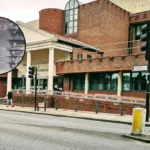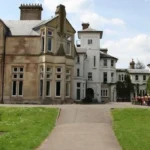
East Barnet is known for its historic village character, medieval origins, St Mary the Virgin Church, Pymmes Brook, Cat Hill, Oak Hill Park, green spaces and long-established local community. It combines historic buildings and landscapes with convenient London transport and suburban amenities.
- Why is East Barnet historically important?
- What is East Barnet Village known for?
- What is St Mary the Virgin Church known for?
- What is Pymmes Brook known for in East Barnet?
- Why is Oak Hill Park important to East Barnet?
- What is Cat Hill known for?
- How did East Barnet change from a rural settlement into a London suburb?
- What green spaces can visitors explore in East Barnet?
- How easy is East Barnet to reach?
- What makes East Barnet different from other parts of Barnet?
- What can visitors do in East Barnet?
- Why does East Barnet remain important today?
- What is East Barnet best known for overall?
The area forms part of the London Borough of Barnet in north London. It sits close to New Barnet, High Barnet, Oakleigh Park, Monken Hadley and Southgate. Its identity differs from the busier commercial centres nearby because the historic village remains an important reference point for the neighbourhood.
East Barnet is particularly notable because its history predates much of the surrounding suburban development. Barnet Council identifies East Barnet as the oldest part of Barnet, while the settlement’s name was already in use by 1294. The historic settlement developed around a crossing of Pymmes Brook.
For visitors, East Barnet offers a combination of heritage, open space, local architecture, walking opportunities and everyday village amenities. For residents and business travellers, the area provides access to parks, public transport, shops and surrounding north London destinations.
Why is East Barnet historically important?
East Barnet is historically important because it is the oldest part of Barnet, with a recorded name dating to 1294 and a settlement shaped by Pymmes Brook, medieval routes, parish institutions and centuries of rural development.
East Barnet’s historical importance comes from its early settlement pattern. Barnet Council states that the oldest part of Barnet is East Barnet and that the settlement gradually lost its earlier status as the centre of the manor and parish as Barnet developed further north.
The name East Barnet was recorded by 1294. The name helped distinguish the settlement from Chipping Barnet, which developed further north. This distinction remains useful when understanding why the modern Barnet area contains several separate historic centres.
Pymmes Brook was central to the development of East Barnet. The settlement grew around a crossing of the watercourse. A bridge called Katebrygge was recorded in 1406. Barnet Council links this historic crossing with the later names Cat Hill and the Cat Inn.
The local landscape was once significantly more rural than it is today. East Barnet Village remained rural into the 1920s, even after railway infrastructure began changing travel patterns in the wider district.
As you explore the modern neighbourhood, you are crossing land with a deep heritage. Read about the full [Insert Anchor Text for East Barnet History Article Here] to understand its origins.
What is East Barnet Village known for?
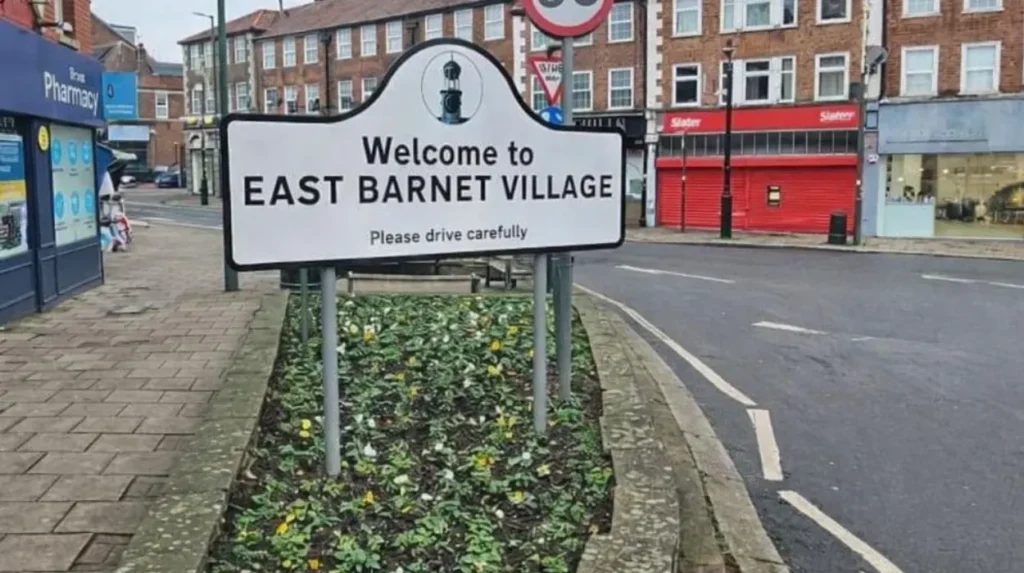
East Barnet Village is known for its historic settlement pattern, village centre, connections with Pymmes Brook, Cat Hill, the former Clockhouse, long-established roads and buildings, and its survival as a recognisable local centre within modern north London.
East Barnet Village provides one of the clearest expressions of the area’s identity. Its history is closely associated with the crossing of Pymmes Brook and the roads that developed around the settlement.
The village centre once contained a substantial house known as the Clockhouse. It had a small clock turret and stood at the centre of the historic settlement. The building was demolished in 1925.
Clockhouse Parade replaced the earlier building. Its design retained a direct connection with the past because the clock tower from the original house was reused as part of the new parade. This creates an unusual physical link between the historic village and its twentieth-century redevelopment.
The history of East Barnet Village also includes local education. An Anglican National School was established in 1822, while its present buildings opened in 1872. The development of roads such as Jacksons Road and Capel Road during the nineteenth century reflects the gradual transition from rural settlement to suburban neighbourhood.
The village therefore remains important not simply because of individual historic buildings, but because its street pattern and community functions preserve the character of an older settlement.
What is St Mary the Virgin Church known for?
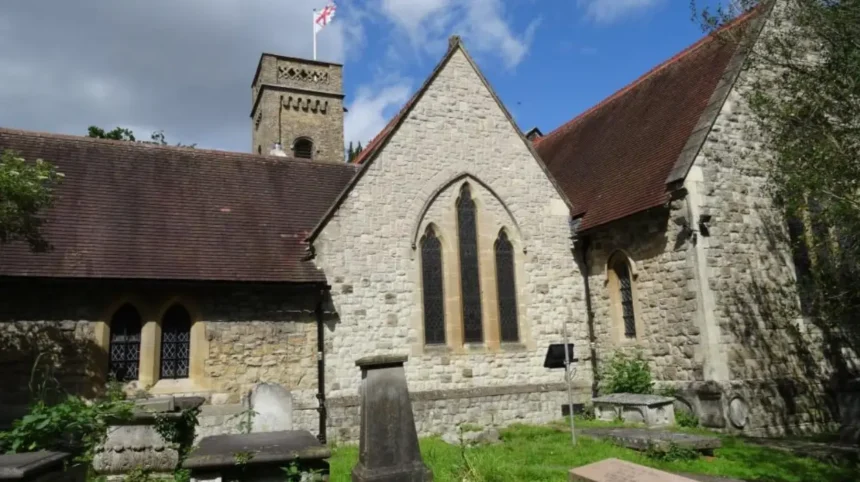
St Mary the Virgin Church in East Barnet is known for its medieval origins, Grade II listed status, early architectural fabric and long connection with the local parish. The church dates to about 1080 and remains a major heritage landmark.*
St Mary the Virgin Church stands on Church Hill Road and is one of East Barnet’s most significant historic buildings. Historic England records the church as Grade II* listed, recognising its special architectural and historic interest.
The church dates from approximately 1080. Historic England describes it as an early church originally built by a community of monks. The surviving structure includes an early single-cell arrangement with an apsidal eastern end. Later alterations expanded the building.
The church also demonstrates how medieval buildings evolved through later periods. A tower was added around 1828, while nineteenth-century work introduced further extensions and alterations.
The site has a long documentary record. Barnet Council’s parish records include East Barnet St Mary’s registers covering births, deaths and marriages from 1553 to 1900. These records provide evidence of the church’s continuing role in local community life over several centuries.
For visitors interested in architecture and local history, St Mary the Virgin is one of the most important places to understand East Barnet’s historical identity.
What is Pymmes Brook known for in East Barnet?
Pymmes Brook is known for shaping the original East Barnet settlement, providing the historic crossing around which the village developed and contributing to the area’s distinctive valley landscape, green spaces and long-standing connection between natural geography and urban development.
Pymmes Brook is an important geographical feature in East Barnet. The settlement developed around a crossing of the brook, making the watercourse part of the area’s original physical structure.
The historic bridge known as Katebrygge was recorded in 1406. Barnet Council connects this bridge with the later development of the names Cat Hill and Cat Inn. The connection illustrates how local geography influenced street names, landmarks and community identity.
The brook also influenced the character of the wider landscape. The valley historically supported woodland and open land before extensive suburban development changed the area.
The relationship between Pymmes Brook and Oak Hill is especially important. Oak Hill Park occupies land within the Pymmes Brook valley, linking East Barnet’s historic settlement geography with its modern green infrastructure.
This relationship gives the area a clear environmental dimension. The brook is not simply a historic reference point. It forms part of the landscape structure that separates built-up areas from open recreational spaces.
Why is Oak Hill Park important to East Barnet?
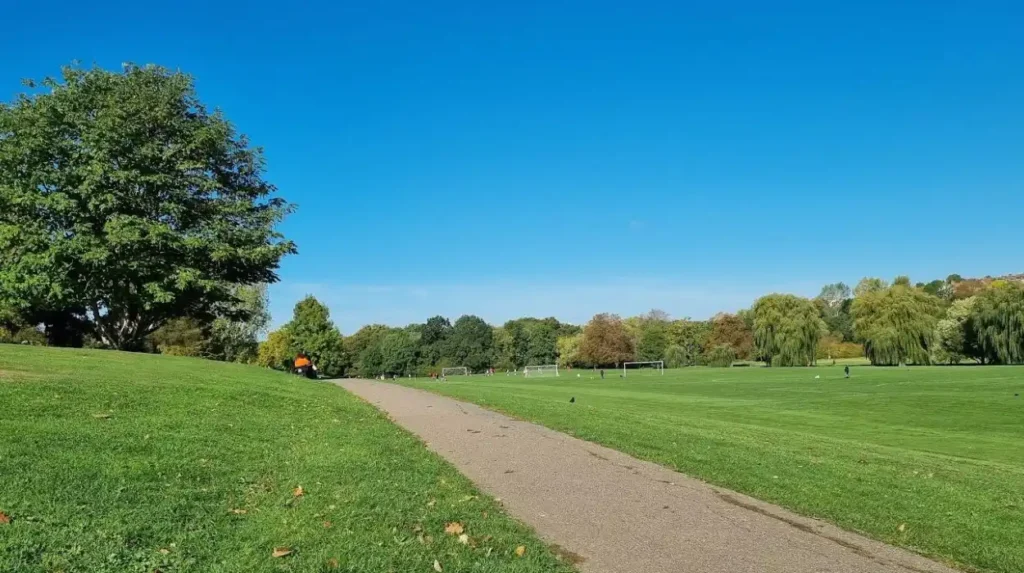
Oak Hill Park is important because it provides one of East Barnet’s principal public green spaces, combining gardens, sports facilities, woodland, wildlife interest and historic landscape connections with the Pymmes Brook valley.
Oak Hill Park is located on Parkside Gardens in East Barnet. Barnet Council records a wide range of facilities, including gardens, tennis courts, cricket, bowls, football, outdoor exercise equipment, children’s play areas, a café and wildlife interest.
The park has a significant historical connection with the landscape. Barnet Council states that the Pymmes Brook valley was once famous for its oak trees. These trees were associated with timber used in the construction of St Albans Abbey. Surviving descendants of those trees remain in Oak Hill Woods.
The land also passed through several stages of ownership and use. Church lands were sold in 1536, after which large estates were created. One became associated with Oak Hill Theological College. The Baring family owned the area from the 1860s until 1928.
East Barnet Council acquired the land in 1930, and Oak Hill Park opened to the public in 1933. The park has therefore served local recreational needs for more than nine decades.
For leisure visitors, the park provides an accessible way to experience the area’s green landscape without travelling far from the village centre.
What is Cat Hill known for?
Cat Hill is known as a distinctive East Barnet landmark whose name is connected with a medieval bridge over Pymmes Brook and the historic Cat Inn. Its location also forms part of the area’s traditional road and village landscape.
Cat Hill is one of the best-known local names associated with East Barnet. Its historical importance comes from the relationship between the hill, the old crossing of Pymmes Brook and the former Cat Inn.
Barnet Council records a bridge called Katebrygge in 1406. The council’s local history account states that this bridge probably gave its name to Cat Hill and the later Cat Inn.
The Cat Inn itself existed from the eighteenth century until 1955, when it was destroyed by fire. Its history forms part of the area’s changing commercial and social landscape.
Cat Hill also demonstrates how East Barnet’s historic geography survives through modern place names. The original rural settlement has developed into a built-up London neighbourhood, but historic names continue to identify important parts of the landscape.
For visitors, understanding Cat Hill provides useful context when walking between East Barnet Village, Church Hill and surrounding residential areas.
How did East Barnet change from a rural settlement into a London suburb?
East Barnet changed from a rural settlement into a London suburb mainly during the nineteenth and early twentieth centuries, as railways, roads, new housing, schools and local government infrastructure transformed the historic village and surrounding countryside.
East Barnet remained substantially rural until the twentieth century. Barnet Council records that there was no immediate housing boom after Barnet Station opened in 1850. The village retained its rural character into the 1920s.
This gradual development is important because East Barnet did not transform into a suburb in a single phase. Roads, schools, transport connections and housing expanded progressively.
The nineteenth century brought stronger connections with the wider London region. Railway development changed how residents could travel for work and services, while new roads provided access between neighbouring settlements.
Education also expanded. The National School established in 1822 and the later 1872 school buildings demonstrate the development of permanent community institutions.
The twentieth century brought more extensive housing development. Roads such as Jacksons Road and Capel Road were laid out during the 1880s, while other residential streets appeared as the surrounding land became increasingly urbanised.
The East Barnet war memorial provides another marker of twentieth-century community history. It was unveiled on 27 June 1920 and originally stood at a road junction before being moved around 1970.
The modern neighbourhood therefore combines several layers of development. Medieval settlement geography, nineteenth-century infrastructure and twentieth-century suburban housing remain visible within the same local area.
What green spaces can visitors explore in East Barnet?
Visitors can explore Oak Hill Park, Oak Hill Woods and Meadow and other local open spaces around East Barnet. These areas provide walking, recreation, sports facilities, gardens and opportunities to experience the neighbourhood’s relationship with its historic landscape.
East Barnet has a strong connection with public open space. Barnet Council’s parks directory identifies Oak Hill Park, Oak Hill Woods and Meadow and Oak Hill Golf Course among the area’s green destinations.
Oak Hill Park is the main recreational destination. Its facilities include gardens, sports areas, children’s play spaces, tennis courts, a café, an outdoor gym and wildlife interest.
Oak Hill Woods and Meadow extend the green character beyond the formal park. The woodland also has historical importance because Barnet Council links surviving oak trees with the ancient woodland landscape of the Pymmes Brook valley.
These spaces are relevant to several visitor groups. Leisure travellers can use them as part of a local walking itinerary. Residents use them for recreation and exercise. Digital workers can use cafés and public spaces as breaks between work sessions, while business travellers can incorporate the parks into short periods of downtime.
The green infrastructure also explains why East Barnet retains a suburban character despite being part of Greater London.
How easy is East Barnet to reach?
East Barnet is served by local bus routes and nearby rail connections, making the area accessible from surrounding north London districts. Routes serving East Barnet Village connect with neighbouring areas, while Oakleigh Park station provides Great Northern and Thameslink services.
Public transport is an important part of East Barnet’s modern identity. Transport for London lists East Barnet Village stops served by routes including 184 and 307. Other nearby services include 326, 383 and 626 at surrounding stops.
Oakleigh Park station provides another important transport connection. Transport for London records Great Northern and Thameslink services at the station, which is located on Oakleigh Park North near Alverstone Avenue.
The local bus network also connects the wider area with rail facilities. Transport for London lists route 383 between Oakleigh Park station and surrounding stops, creating an additional link between the village area and rail services.
For visitors, this transport structure supports short trips around north London. It also makes East Barnet practical for residents commuting to other parts of the capital.
The combination of buses, rail services and walkable local destinations contributes to East Barnet’s role as a residential and visitor-friendly part of north London.
What makes East Barnet different from other parts of Barnet?
East Barnet stands apart through its combination of an early village settlement, historic parish buildings, Pymmes Brook, green spaces, traditional place names and suburban development. Its identity is shaped by the survival of these features within modern Greater London.
East Barnet’s strongest distinguishing feature is the concentration of different historical layers within a relatively compact area.
The settlement predates the modern suburban borough. Its name was established by 1294, while St Mary the Virgin dates to approximately 1080. The village grew around Pymmes Brook and retained rural characteristics into the twentieth century.
Its green spaces add another defining feature. Oak Hill Park and Oak Hill Woods preserve elements of the landscape that once characterised the Pymmes Brook valley. The park’s opening in 1933 established a long-term public recreational role.
Transport adds a modern layer. Bus routes and nearby rail services connect East Barnet with surrounding districts and the wider London transport network.
The result is a neighbourhood known for continuity rather than a single attraction. East Barnet combines medieval origins, parish history, village architecture, green infrastructure, public recreation and suburban connectivity.
For tourists, that combination makes the area particularly relevant to visitors interested in local history rather than major central London attractions.
What can visitors do in East Barnet?
Visitors can explore the historic village, view St Mary the Virgin Church, walk around Oak Hill Park and its woodland, follow local streets shaped by historic development, and use East Barnet as a base for exploring neighbouring north London districts.
A visit can begin in East Barnet Village, where the historic settlement pattern provides context for the area’s development. The village connects naturally with Church Hill and the parish church.
St Mary the Virgin provides the strongest architectural heritage focus. Its Grade II* designation and early medieval origins make it one of the area’s most important historic landmarks.
Oak Hill Park provides the principal green-space experience. Visitors can explore gardens and recreational areas while learning about the historic oak woodland associated with the Pymmes Brook valley.
The local street network also offers opportunities for architectural observation. Roads established during the nineteenth century form part of the transition from rural village to suburban neighbourhood.
East Barnet works particularly well as a short local visit. It does not depend on one large attraction. Instead, its interest comes from the relationship between historic buildings, village streets, green spaces and transport connections.
Visitors staying elsewhere in north London can combine East Barnet with nearby New Barnet, High Barnet, Oakleigh Park and Monken Hadley, depending on their interests and available time.
Explore More Area Guide
What Is Chipping Barnet Known For? History, Markets & Attractions
Barnet Neighbourhoods With the Strongest Local Identity
Why does East Barnet remain important today?
East Barnet remains important because its historic village identity, protected heritage, public parks, transport links and established community infrastructure continue to shape everyday life while providing visitors with a distinctive north London destination.
East Barnet’s modern relevance comes from the survival of its historic structure alongside contemporary suburban life.
The area retains identifiable heritage landmarks, including St Mary the Virgin Church. Historic England’s Grade II* designation formally recognises the church’s architectural and historic importance.
Its public green spaces also have a long-term role. Oak Hill Park has served the public since 1933, while the surrounding woodland maintains a connection with the area’s older landscape.
Local records demonstrate the depth of community administration. East Barnet Urban District Council records survive for the period from 1875 to 1965, providing documentary evidence of local government before the modern London borough structure.
Transport continues to support the neighbourhood’s connection with the wider capital. Local bus routes serve the village, while Oakleigh Park provides Great Northern and Thameslink rail services.
East Barnet is therefore known for more than one landmark. Its defining character comes from the combined presence of an ancient settlement, medieval church, historic village centre, Pymmes Brook landscape, Cat Hill, Oak Hill Park and established suburban infrastructure.
For tourists, this creates a useful north London destination for heritage, green space and local exploration. For residents, it provides a neighbourhood where historic identity remains visible within everyday London life.
For digital nomads and business travellers, the same combination of transport, cafés, public spaces and nearby attractions creates practical opportunities for short work breaks and local downtime.
What is East Barnet best known for overall?
East Barnet is best known for its historic village origins, St Mary the Virgin Church, Pymmes Brook, Cat Hill, Oak Hill Park and its transition from rural settlement to established north London suburb. These features collectively define its local identity.
The strongest answer to the question “What is East Barnet known for?” is its combination of history and landscape.
The settlement’s name dates to 1294, and Barnet Council identifies East Barnet as the oldest part of Barnet. The village developed around Pymmes Brook, with the historic Katebrygge crossing helping shape later local names.
St Mary the Virgin Church provides the clearest architectural connection with the medieval past. Its origins date to about 1080, and Historic England lists it at Grade II*.
Oak Hill Park provides the main connection with public green space. Its history stretches through former estates and institutional land before becoming a public park in 1933.
The Clockhouse and Clockhouse Parade demonstrate how East Barnet’s historic centre changed while retaining physical references to the past. Cat Hill and the former Cat Inn provide further evidence of how historic geography and local landmarks shaped the identity of the village.
East Barnet is therefore best understood as a historic north London village landscape embedded within a modern suburban district. Its appeal comes from the connection between heritage, public green space, local architecture, transport and community history rather than from a single attraction.
What is East Barnet known for?
East Barnet is known for its historic village character, St Mary the Virgin Church, Pymmes Brook, Cat Hill, Oak Hill Park and its transition from a rural settlement into a north London suburb.