Chipping Barnet is known for its medieval market heritage, the Battle of Barnet, Barnet Fair, historic High Street, St John the Baptist Church, Barnet Museum, Barnet Physic Well and its position on the historic route north from London. It combines a historic market-town identity with a modern North London centre.
- What is Chipping Barnet best known for?
- Why is Chipping Barnet called Chipping Barnet?
- When did Chipping Barnet become a market town?
- What happened at the Battle of Barnet?
- Why is Barnet Market important to Chipping Barnet?
- What is Barnet Fair known for?
- Which historic buildings is Chipping Barnet known for?
- What can visitors learn at Barnet Museum?
- Why is Barnet Physic Well significant?
- How did roads and coaches shape Chipping Barnet?
- What is Chipping Barnet like today?
- Why should tourists visit Chipping Barnet?
- How does Chipping Barnet’s heritage remain relevant today?
What is Chipping Barnet best known for?
Chipping Barnet is best known for its historic market, Battle of Barnet heritage, long-established fair, historic church, museum, High Street and position on an important route north from London. These features give the town a distinctive identity within North London today.
Chipping Barnet is also called High Barnet. Barnet Council describes it as a historic town centre on the edge of London. The name “Chipping” refers to a market, reflecting the importance of trading to the settlement’s development.
The town developed around an important northbound route from London. Barnet Museum records that a major road north from London was established around 1100, helping Chipping Barnet develop at the junction with Wood Street.
Its identity therefore rests on several connected themes. The first is commerce, represented by Barnet Market. The second is medieval and military history, particularly the Battle of Barnet in 1471. The third is traditional entertainment and livestock trading, represented by Barnet Fair. The fourth is historic architecture and local heritage.
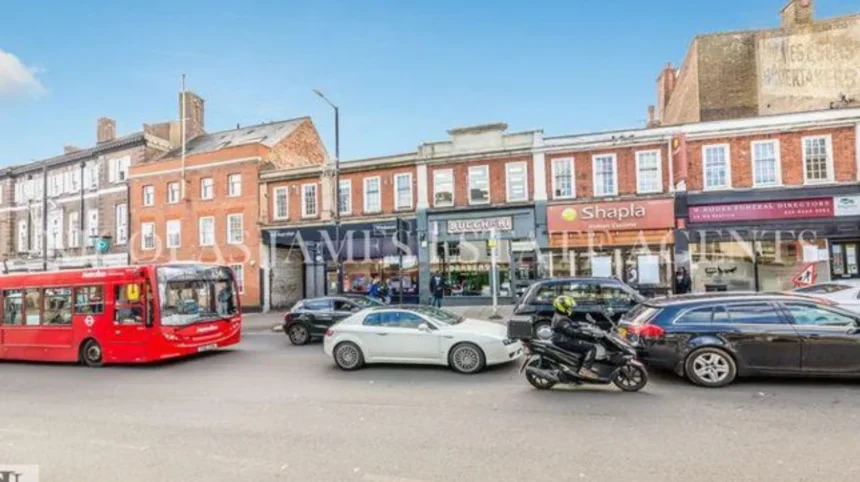
For visitors, these themes remain visible across the town centre. The High Street, St John the Baptist Church, Wood Street, Barnet Museum and the surrounding historic streets form a compact area for exploring Chipping Barnet’s past.
The modern town also contains independent shops, restaurants, cafés, bars, Chipping Barnet Library, The Spires shopping centre and Barnet and Southgate College. Barnet Council identifies more than 38,310 square metres of retail space within the town centre.

Why is Chipping Barnet called Chipping Barnet?
Chipping Barnet takes its name from its historic market function. “Chipping” derives from an old term associated with a market or marketplace, while Barnet identifies the settlement. The name distinguishes the historic market town from other settlements carrying the Barnet name.
The word “Chipping” is central to understanding the town’s identity. Barnet Council explains that it refers to a place with a market, while historical material from Barnet Museum connects the name with terms including cheap, meaning market.
Chipping Barnet became the established name for the market settlement, distinguishing it from East Barnet, another historic settlement in the wider area.
The settlement’s market function developed alongside its location on a major route. Travellers heading north from London passed through the area, creating demand for food, accommodation, livestock services, transport and other commercial activities.
This combination of road traffic and market trading shaped the town for centuries. The historic High Street remains a physical expression of that development.
The name is also important because Chipping Barnet is frequently referred to as High Barnet. Barnet Council’s planning material states that the town was also known as High Barnet by the seventeenth century and that both names have continued in use.
Visitors searching for Chipping Barnet, High Barnet or Barnet town centre are therefore generally referring to the same historic North London town-centre area.
When did Chipping Barnet become a market town?
Chipping Barnet became established as a market town during the medieval period, with King John granting a market charter in 1199. The market probably existed before the charter, making market trading one of the town’s oldest continuing characteristics.
King John granted the market charter in 1199 to the Abbey of St Albans, whose abbot was the lord of the manor. Barnet Council records that there could already have been a livestock market before the charter was issued.
The charter gave formal recognition to an established commercial activity. The market was originally associated with the junction where Wood Street meets the High Street.
By the late thirteenth century, the marketplace had become an important focal point near the church. Historical research held by Barnet Museum records references to buildings in the marketplace from 1261 and to Barnet Church from 1272.
The medieval market shaped the physical structure of Chipping Barnet. Traders required accessible public space, while travellers required inns, stabling and services.
The town’s commercial importance increased because of its location on the main road north from London. In the eighteenth and nineteenth centuries, the road carried large volumes of coach traffic.
Barnet Museum records that around 150 coaches a day travelled through the town during the late eighteenth and nineteenth centuries before the railway transformed local transport.
This created a strong relationship between market trading and hospitality. Inns provided accommodation and stabling, while other businesses supplied travellers and transport operators.
The historic market remains central to Chipping Barnet’s identity. The modern Barnet Market continues the commercial tradition that has defined the town for more than eight centuries.
What happened at the Battle of Barnet?
The Battle of Barnet was fought on 14 April 1471 during the Wars of the Roses. Edward IV’s Yorkist forces defeated the Lancastrian army commanded by the Earl of Warwick, helping Edward secure his position as king.
The Battle of Barnet is one of Chipping Barnet’s most important historical associations. It was fought during the Wars of the Roses, a series of dynastic conflicts between rival royal houses in fifteenth-century England.
The battle took place north of the town in 1471. Edward IV led the Yorkist army against Richard Neville, Earl of Warwick, known as the Kingmaker, who supported the Lancastrian cause and Henry VI.
Edward IV won the battle. Warwick was killed, and the victory strengthened Edward’s position on the English throne.
The battlefield is significant because the conflict formed part of a wider struggle for control of the monarchy. The battle therefore connects Chipping Barnet with national political and military history.
A monument associated with the battle stands at Hadley Highstone, near Kitts End Road. Barnet Museum records that a monument was erected in 1740 and later moved a short distance in 1840.
The exact battlefield landscape has also received archaeological attention. The Battle of Barnet Project involved Barnet Museum, Barnet Society and the Battlefields Trust, with archaeological investigation led by the University of Huddersfield.
As you explore the modern town, you are crossing an area shaped by centuries of development. Read about the full to understand its origins and historical transformation.
Why is Barnet Market important to Chipping Barnet?
Barnet Market is important because it represents more than eight centuries of commercial history. Its Royal Charter dates to 1199, and its continuing presence explains why Chipping Barnet developed as a market town and why “Chipping” remains part of its identity.
Barnet Market is one of the clearest connections between medieval Chipping Barnet and the modern town centre.
The market has existed in different forms and locations since at least the twelfth century. King John’s 1199 charter formally established the right to hold a weekly market.
The market later became particularly important to London’s meat trade. Barnet Council records that by the late Tudor period, Barnet’s market controlled the sale of much of London’s meat.
London butchers travelled to Barnet to buy cattle. The animals were then kept on nearby farms and brought into London as required.
This commercial system demonstrates how Chipping Barnet’s location affected its economic development. The town was not simply a local shopping centre. It formed part of a wider supply network connecting rural livestock production with London.
The market’s importance declined towards the end of the seventeenth century as competing markets developed. Smithfield in London and Hog Market in Finchley became increasingly important sources for meat trading.
Despite those changes, the market survived as part of the town centre. Barnet Council confirms that Barnet Market still operates today.
For tourists, the market provides an accessible way to experience the commercial tradition that shaped Chipping Barnet’s development.
What is Barnet Fair known for?
Barnet Fair is known for its long history, livestock trading, horse-related activities and traditional fairground culture. Queen Elizabeth I granted a charter for the fair in 1588, strengthening Barnet’s reputation as a major regional centre for animals and entertainment.
Barnet Fair is another major part of Chipping Barnet’s identity.
Queen Elizabeth I granted a charter for Barnet Fair in 1588. Barnet Museum records that the fair became associated with horse and cattle trading and later developed a pleasure-fair element.
The fair grew into an important commercial event. Historical accounts describe livestock arriving from different parts of Britain, while Barnet developed associated services for traders and visitors.
By the eighteenth century, the fair was also connected with horse racing. Its combination of commerce and entertainment helped make it one of the best-known events associated with Barnet.
The fair faced attempts at closure during the nineteenth and twentieth centuries. Concerns included disorder, petty crime and the disruption caused by large crowds and animals. Despite these pressures, the event survived.
Barnet Museum records that Barnet Fair continues to take place in early September.
The fair is historically significant because it demonstrates the different functions that a market town performed. Chipping Barnet was a place for trading, transport, livestock, social gatherings and entertainment.
Which historic buildings is Chipping Barnet known for?
Chipping Barnet is known for St John the Baptist Church, historic buildings along the High Street and Wood Street, early Georgian architecture and surviving structures within conservation areas. These buildings preserve the physical character of the former market town.
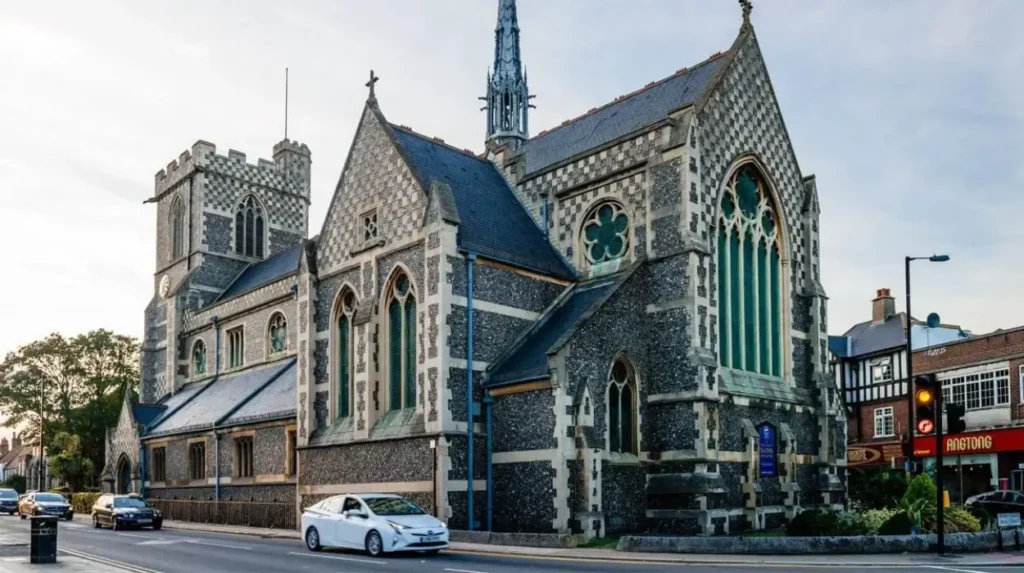
St John the Baptist Church, commonly known as Barnet Church, is one of the most prominent historic buildings in Chipping Barnet.
The church stands close to the historic marketplace and High Street. Its position reflects the traditional medieval relationship between a market and parish church.
Barnet Museum itself occupies an early Georgian house at 31 Wood Street. The museum states that the building forms part of the Wood Street conservation area.
The surrounding streets contain buildings from different periods. Their architectural variety reflects the town’s long development rather than a single planned architectural style.
The historic centre also changed significantly as transport modernised. The old medieval market hall and associated Middle Row once occupied the centre of the High Street. The structure was eventually demolished in 1889 after a fire.
The loss of these buildings illustrates how Chipping Barnet adapted to changing transport and commercial requirements.
Today, visitors can still identify the historic relationship between the church, market area, High Street and Wood Street. These elements provide the strongest visual expression of Chipping Barnet’s historic town-centre structure.
What can visitors learn at Barnet Museum?
Barnet Museum provides a local-history collection covering Chipping Barnet, East Barnet, New Barnet, Hadley and surrounding districts. Its artefacts and archives span from the Bronze Age to the modern period, making it a key starting point for understanding the area.
Barnet Museum is a free local history museum in Chipping Barnet. It opened in March 1938 and was established to preserve and present the area’s history.
Its collection contains hundreds of artefacts covering the history of Barnet and its residents. The museum also maintains an extensive archive and supports local and family-history research.
The collection covers a very broad chronological range. Visitors can explore material relating to ancient settlement, medieval Barnet, the Battle of Barnet, market history, Barnet Fair, transport, military history and everyday life.
The museum also plays an important research role. Its work extends beyond displaying objects because it records, preserves and interprets local history.
For visitors interested in Chipping Barnet’s identity, the museum provides useful context before walking through the town centre.
The museum is located on Wood Street, close to the historic core. Admission is free. Opening hours are limited and should be checked before visiting because the museum operates on specific days and times.
Why is Barnet Physic Well significant?
Barnet Physic Well is significant because its mineral spring became a popular attraction from the seventeenth century. The water was believed to have therapeutic properties, attracting visitors during a period when mineral-water resorts were becoming fashionable in England.
Barnet Physic Well provides a different aspect of Chipping Barnet’s heritage.
The spring became popular from the later seventeenth century through the eighteenth century. Visitors drank the mineral water because it was believed to have therapeutic qualities.
The well was connected to a wider historical interest in mineral springs. During this period, people visited wells and spas as part of established health and social practices.
The diarist Samuel Pepys recorded visits to the Barnet wells in 1664 and 1667. His diary provides an important contemporary reference to the site’s popularity.
The present structure dates from the twentieth century, but the history of the spring extends much further back.
Barnet Physic Well is therefore important because it shows that Chipping Barnet was not solely a market and transport centre. It also developed attractions that drew visitors for reasons connected with health and leisure.
For modern visitors, the well forms part of the town’s less obvious heritage. It is particularly relevant to travellers looking beyond the main shopping streets and major historical events.
How did roads and coaches shape Chipping Barnet?
Road transport shaped Chipping Barnet by turning the town into an important stopping point on the route north from London. Coaching traffic supported inns, stabling, food businesses, trades and services before railways changed regional travel patterns.
Chipping Barnet’s location was fundamental to its development.
An important route from London towards St Albans and northern England passed through the area. The road later formed part of the broader Great North Road, one of Britain’s major historic routes.
The town benefited from passing traffic because travellers required practical services.
Barnet Museum records around 150 coaches passing through the town each day during the late eighteenth and nineteenth centuries, alongside carts, animals and other traffic.
This traffic supported numerous inns. These establishments provided accommodation, food, drink and stabling for horses.
The transport economy also supported blacksmiths, wheelwrights, carriers, coach operators and other trades.
The High Street consequently became both a commercial centre and a transport corridor.
By the nineteenth century, traffic congestion became a significant issue. Barnet Council records that the area near St John’s Church became known as “the squeeze” because the market and buildings created a bottleneck for coaches travelling north.
The arrival and expansion of railway services eventually changed the town’s transport role. Road travel remained important, but the railway reduced the previous dependence on coaching routes.
What is Chipping Barnet like today?
Chipping Barnet today combines a historic market-town centre with modern shopping, dining, transport, education and community facilities. Its High Street, market, independent businesses, museum and historic buildings continue to give the area a distinct North London identity.
Modern Chipping Barnet retains the commercial role that defined its development.
Barnet Council identifies Barnet Market, The Spires Shopping Centre, Chipping Barnet Library, Barnet and Southgate College, independent shops, restaurants, cafés and bars among the town centre’s facilities.
The result is a town centre that serves both residents and visitors.
The historic core remains particularly useful for leisure travellers because several heritage features are close together. A visitor can combine the market with Wood Street, Barnet Museum, St John the Baptist Church and historic streets without travelling across a large geographical area.
The town is also connected to the wider London transport network through High Barnet Underground Station, which is on the Northern line. Barnet Council’s planning framework identifies High Barnet Tube Station as an important transport connection for the area.
This accessibility contributes to the town’s current role as a North London centre.
For digital nomads and business travellers, the town’s cafés, restaurants, retail facilities and transport connections provide practical places to spend several hours. The historic centre also offers an alternative to central London’s larger commercial districts.
Explore More Area Guide
Barnet Neighbourhoods With the Strongest Local Identity
Where Does Barnet Begin and End? Borough Boundaries Guide
Why should tourists visit Chipping Barnet?
Tourists should visit Chipping Barnet to explore a compact combination of medieval market heritage, Tudor fair history, Wars of the Roses history, historic architecture, local museum collections and modern North London amenities within one established town centre.
Chipping Barnet is particularly relevant to travellers interested in local history rather than only major London landmarks.
Its strongest attraction is the concentration of historical themes. The market represents medieval commerce. The Battle of Barnet represents fifteenth-century political and military history. Barnet Fair represents centuries of livestock trading and entertainment. Barnet Physic Well represents historic health tourism. The church and historic streets represent the town’s built heritage.
The town also provides access to everyday North London life. Visitors can combine heritage exploration with shopping, cafés, restaurants and local services.
A short visit can focus on the historic core. A longer visit can include the wider Barnet area, including Hadley and other nearby heritage locations.
The Barnet Museum is an especially useful starting point because its collection explains the development of the local area before visitors explore the streets themselves.
Chipping Barnet’s importance therefore comes from continuity. The same market-town identity that developed in the medieval period remains visible in the modern town centre.
How does Chipping Barnet’s heritage remain relevant today?
Chipping Barnet’s heritage remains relevant because its medieval market, historic roads, battlefield associations, fair tradition, buildings and museum continue to shape the town’s identity. Modern shopping, transport and community activity operate within this long-established historic framework.
Chipping Barnet demonstrates how an old market town can remain active within modern London.
Its history is not confined to isolated monuments. The historic market still operates, the town centre still functions commercially, and the road network continues to influence movement through the area.
The preservation of local heritage also supports education and research. Barnet Museum maintains collections, archives and historical publications covering the area from ancient periods to the present.
The town’s historical identity also supports tourism. Visitors can explore nationally significant events such as the Battle of Barnet while experiencing ordinary features of a functioning North London neighbourhood.
This combination makes Chipping Barnet different from a purely preserved historic site. It is a living town centre where historic structures, markets, transport connections, businesses and community facilities operate together.
For anyone asking what Chipping Barnet is known for, the strongest answer is therefore its market-town heritage and the layers of history that developed around it.
From the 1199 market charter to the 1471 battle, the 1588 fair charter, the coaching era, the Physic Well and the modern market, Chipping Barnet’s identity has been repeatedly shaped by movement, commerce and community.
What is Chipping Barnet famous for?
Chipping Barnet is famous for its medieval market, the 1471 Battle of Barnet, Barnet Fair, historic High Street, St John the Baptist Church, Barnet Museum and Barnet Physic Well.