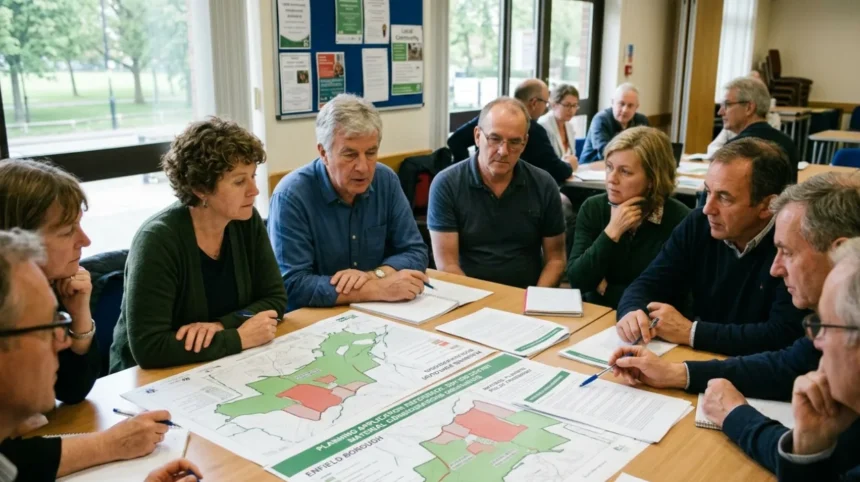
Objecting to Enfield green belt building plans means making a formal planning representation to Enfield Council, the Mayor of London, or the Planning Inspectorate when a proposal affects Green Belt land in the borough. The strongest objections rely on planning policy, site-specific evidence, and clear material planning considerations such as Green Belt harm, loss of openness, landscape damage, transport pressure, and conflict with Enfield’s Local Plan and the National Planning Policy Framework.
- What counts as a Green Belt objection?
- Which laws and policies apply?
- Where do you submit an objection?
- What should the objection say?
- What grounds work best?
- How do you write one effectively?
- What evidence makes objections stronger?
- What happens after you submit it?
- What is the best timing?
- What should North London residents remember?
What counts as a Green Belt objection?
A valid Green Belt objection is a planning-based statement that explains how a proposal conflicts with national and local policy. It focuses on openness, permanence, landscape character, policy compliance, and the specific impact of development on the site and surrounding area.
Green Belt policy is not about preserving views alone. It is a national planning policy designed to prevent urban sprawl and keep land permanently open, with openness and permanence identified as its essential characteristics. A strong objection identifies which Green Belt purpose is harmed and explains the mechanism of that harm, for example, loss of openness through housing, roads, fencing, lighting, hardstanding, or ancillary buildings.
In Enfield, objections often relate to draft Local Plan proposals and site allocations in places such as Crews Hill, Chase Park, Hadley Wood, and Whitewebbs, where residents and local groups have challenged the scale of Green Belt release. The key point is that a useful objection does not just say “I oppose this.” It states why the proposal fails the planning policy and what harm follows from approval.
Which laws and policies apply?
The main policy frameworks are the National Planning Policy Framework, Enfield’s Local Plan, and the London Plan. These documents set the rules for Green Belt release, planning balance, and the legal basis for objections.
The National Planning Policy Framework says the government attaches great importance to Green Belts and sets out five Green Belt purposes. It also states that when Green Belt release is necessary, plans should give priority to previously developed land, then consider the grey belt, then other Green Belt locations. That hierarchy matters because an objection can argue that a site does not satisfy the preferred sequence for release.
Enfield’s emerging Local Plan has been controversial because it includes significant growth ambitions and Green Belt-related allocations, with local campaign groups reporting proposals for thousands of homes on land currently treated as Green Belt. Local objectors also cite Enfield policy references such as BG6 and London Plan protections for Green Belt and open space, as reported in campaign material and planning commentary. A well-structured objection uses those policies alongside national policy to show that the proposal fails at more than one level.
Where do you submit an objection?
You submit an objection through Enfield Council’s planning system, usually via the planning portal, by email, or by letter if the application notice allows it. The application reference number, site address, and your name and address must be included.
Local planning objections are normally submitted on the council’s public access system or by email to the planning department, and many councils publish the application and a comments form on their website. Enfield-specific guidance published by residents’ groups shows that comments can also be sent directly to the council planning email address or by post for some applications, with the correct reference and subject line. That process is consistent with standard planning practice across England.
A public objection is normally visible on the planning portal, and local guidance warns residents not to include sensitive personal information in the comments box because representations become public records. That means your wording should stay professional, concise, and policy-led. The objective is to create a representation that an officer, committee member, or inspector can use without rewriting it.
What should the objection say?
A strong objection states the proposal, identifies the policy conflict, explains the harm, and ends with a clear request for refusal. It should use short factual paragraphs and material planning reasons only.
Start with the application reference, site address, and your interest, such as living nearby or using the area regularly. Then set out the main planning issues: Green Belt harm, loss of openness, visual impact, traffic generation, pressure on roads and services, biodiversity loss, and conflict with local and national policy. Each issue should be separate and supported by a specific explanation.
A good objection uses planning language rather than general frustration. For example, “The proposal results in inappropriate development in the Green Belt because it introduces built form, access roads, lighting, and hard landscaping that materially reduce openness” is stronger than “This will ruin the area”. The goal is to make the objection legible to decision-makers who must assess material considerations, not personal preference.
What grounds work best?
The strongest grounds are Green Belt harm, loss of openness, conflict with policy, traffic and highway pressure, landscape impact, and environmental harm. These grounds work best when tied to evidence from the site and surrounding roads.
Green Belt harm is the core ground. The NPPF defines the Green Belt’s essential characteristics as openness and permanence, so a proposal that introduces housing, access roads, lighting, parking, perimeter treatment, or servicing can be described as incompatible with those aims. In Enfield, objections often also focus on the cumulative effect of multiple parcels being released together, because repeated development fragments the landscape and weakens the Green Belt’s strategic function.
Transport and infrastructure concerns also matter if they are evidenced. An objection can refer to road capacity, junction pressure, bus access, walking routes, cycle safety, school places, drainage, and emergency access, but it should not rely on vague claims. If a proposal requires major new highways or intensified traffic movements, that strengthens the case that the scheme changes the character of the area and creates planning harm beyond the site boundary.
How do you write one effectively?
Write in a structured format: introduction, policy conflict, site harm, local impact, and conclusion. Keep each paragraph focused on one issue and use direct language that names the policy, the site, and the harm.
A practical structure works well. First, identify the application and state that you object. Second, explain the Green Belt policy conflict and why the site does not deserve release. Third, explain the local consequences, such as openness loss, ecological damage, increased traffic, and pressure on services. Fourth, end by asking for refusal or for the scale and layout to be reduced in line with policy.
Using references to the borough’s own planning process also helps. Enfield’s draft Local Plan and supporting consultation materials show that the council has moved through multiple stages of plan-making, including pre-publication work, consultation, and supporting impact assessment documents. An objection that refers to these stages shows that the writer understands the policy context and is not making a one-line protest.
What evidence makes objections stronger?
Evidence makes an objection stronger when it shows scale, location, and impact. Useful evidence includes maps, photographs, local road conditions, policy extracts, consultation documents, and examples of recent comparable schemes in Enfield.
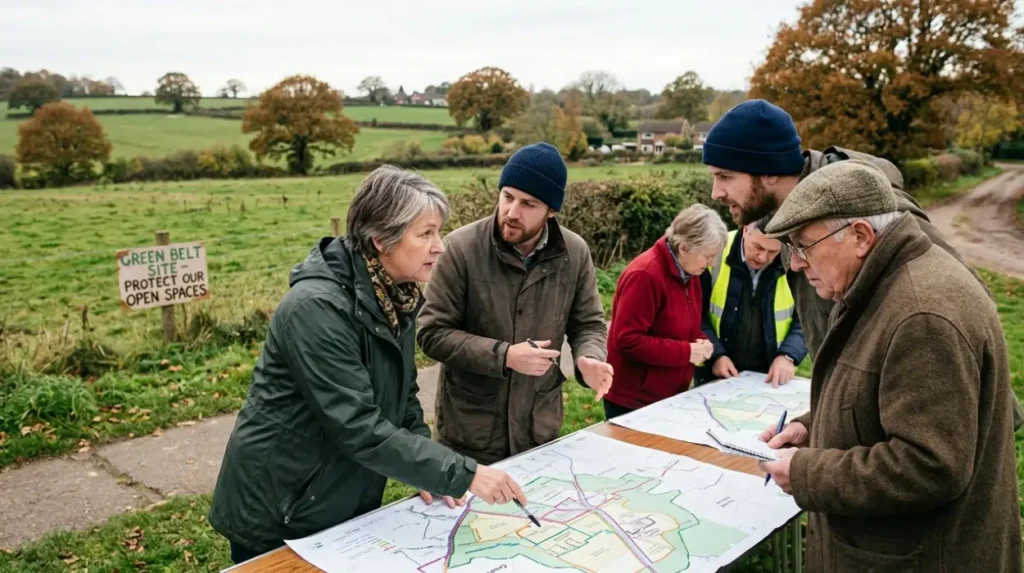
Evidence should be specific to the site. Photographs of open countryside, tree lines, hedgerows, wildlife corridors, flood-prone land, or views from public rights of way show what would change if the scheme proceeds. Maps can demonstrate how a proposal breaks the edge of the borough, joins up with other built areas, or encroaches into open land.
Local context also matters. Enfield has seen sustained public opposition to Green Belt development proposals, including reporting on plans around Crews Hill and Whitewebbs, and wider concern that Green Belt release could trigger additional development pressure. Citing that context does not replace site evidence, but it helps show that the proposal sits within a broader pattern of land-use change across the borough.
What happens after you submit it?
After submission, the council records your representation, publishes it on the planning file, and uses it when assessing the application or local plan proposal. If the case reaches the committee or examination, your objection becomes part of the decision record.
For planning applications, officers review all material representations before writing a report or recommendation. If the application goes to the committee, elected members can read the objections before the meeting. If the proposal is part of a local plan process, objections also inform consultation summaries and may be examined by an independent inspector.
The legal weight of your objection depends on the quality of the grounds. Personal dislike carries little weight, but policy conflict, Green Belt harm, and demonstrable local impact matter in planning law. In practice, repeated well-argued objections from many residents strengthen the public record and show the scale of opposition, which is why local groups encourage coordinated responses to Enfield’s planning proposals.
What is the best timing?
The best timing is before the consultation deadline, because late objections carry less procedural value. In local plan cases, the most important stage is the formal consultation window, followed by the examination stage if the plan progresses.
Planning consultations have deadlines, and comments submitted after the consultation can miss the most important phase of decision-making. For example, local campaign notices about Enfield consultations have urged residents to submit before the stated end date because comments after that point can be harder to rely on. The exact deadline depends on the application or plan stage, so the reference notice controls the timing.
For large Green Belt proposals, the process often extends over months or years. There may be consultation, committee review, mayoral involvement, and inspection or appeal stages. A resident who objects at each stage uses the planning system as intended, because each stage tests the scheme against a different decision threshold.
What should North London residents remember?
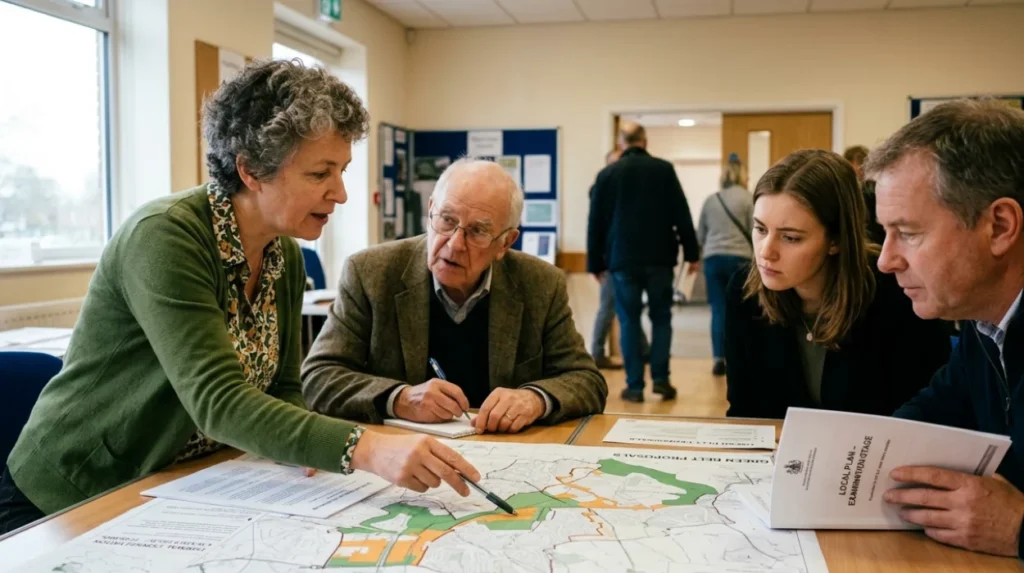
Residents in North London should treat Green Belt objections as policy submissions, not petitions. The best objection is concise, factual, locally specific, and tied to the National Planning Policy Framework and Enfield’s own planning documents.
That approach matters because planning officers and inspectors assess representations through material considerations, not emotion. If the site is in Enfield Green Belt, the objection should explain how the proposal conflicts with the national Green Belt purpose, the local plan strategy, and the wider effect on landscape and infrastructure. That framework works for individual applications and for larger borough-wide consultations.
Enfield’s Green Belt debate remains highly active, with continued public attention on major allocations and consultation responses. A well-prepared objection becomes part of that evidence trail and gives decision-makers a clear basis to refuse, modify, or properly scrutinize development proposals.
What does a Green Belt objection actually mean?
A Green Belt objection means formally opposing a development based on planning laws and policies, not just personal dislike.