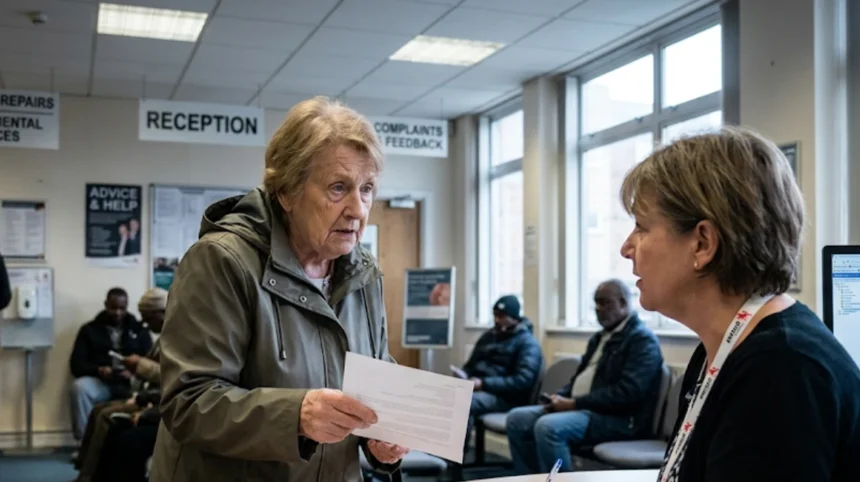
When Enfield Council closes a case without action, the complaint or service request is usually recorded as closed with no further steps taken by the council, but that does not end your options. You can ask for the reasons, use the council’s complaints process, and then escalate to the Local Government and Social Care Ombudsman if the issue remains unresolved.
- What does a case closed without action mean?
- Why does Enfield Council close a case?
- What happens after the council closes it?
- Can you challenge a no-action closure?
- What can the Ombudsman do?
- How does this affect different services?
- What should you ask the council for?
- What if the closure feels wrong?
- What this means for North London residents
- Evidence and process
- Final reading of the issue
What does a case closed without action mean?
It means the council has decided not to take the issue forward after review, triage, or investigation. In practice, that can mean the council found no fault, no evidence, no service failure, no legal basis for action, or that the matter sits outside its powers.
A local council case is a formal record of a report, complaint, request, or enforcement issue. In Enfield, that can include housing, planning, environmental health, council tax, parking, and other local services. When the council closes the case without action, it usually ends that internal file unless the resident challenges the decision through the complaints route or another review mechanism.
The phrase does not have one fixed legal meaning across every council service. For example, a planning complaint, a housing complaint, and a parking challenge follow different rules, but the common result is the same: the council does not take the action the resident wanted.

Why does Enfield Council close a case?
Enfield Council closes a case without action when it decides the issue does not require further council intervention. Common reasons include lack of evidence, no service failure, a matter already addressed, no council responsibility, or the case being better handled through a different process.
Councils are public bodies with limited legal powers. They can only act where law, policy, or delegated authority allows it. If a report does not show a breach of rules, a risk, or a duty to act, the council can close the case without further enforcement or remedy.
The Local Government and Social Care Ombudsman says councils should investigate complaints fairly and independently, and that fault only matters if it causes injustice. If the council believes there is no fault or no injustice, it can close the matter internally.
Enfield Council’s own complaints material states that it aims to complete complaint responses within 20 working days, which shows that many cases are handled within a managed internal process before closure. A closure without action can happen at first review, after investigation, or after the council decides the issue falls outside its remit.
What happens after the council closes it?
After closure, the council usually sends a decision or update, marks the file as complete, and takes no further step unless the resident challenges the outcome. The resident then moves into the complaints stage, requests a review, or escalates to the Ombudsman.
A closure notice or final response should explain the outcome. In complaint cases, that response is important because it creates the paper trail needed for escalation. If the council has already gone through its process and the resident remains unhappy, the next step is usually the Local Government and Social Care Ombudsman.
If the resident is still within the council’s complaint stages, they can ask for a review of the decision. If the council has not replied within a reasonable time, the Ombudsman says the resident can also complain at that point, and in most cases it treats “reasonable time” as up to 16 weeks.
For housing complaints, the Housing Ombudsman can apply where the issue concerns a registered social landlord or housing-related complaint within its jurisdiction. For general council matters, the Local Government and Social Care Ombudsman is the final stage.
Can you challenge a no-action closure?
Yes. You can challenge it by asking for the decision reasons, using the council’s complaints process, and escalating to the Ombudsman if the council has finished its process or failed to respond in a reasonable time.
The first step is to complain directly to the organisation. The Ombudsman says this gives the council the chance to fix the problem first. That matters because the Ombudsman usually expects the council to have dealt with the issue before it steps in.
A challenge works best when it is specific. The resident should identify the case number, date, officer team, issue, and the action requested. Clear evidence such as photos, letters, emails, dates, and names strengthens the challenge because councils close many files on the basis of insufficient evidence.
If the council has a complaints policy, the resident should use it before going outside the council unless the delay is already excessive. Enfield Council has published complaint-handling material showing a formal internal process and target timescale.
What can the Ombudsman do?
The Ombudsman can investigate whether the council acted with fault and whether that fault caused injustice. If it finds fault, it can recommend remedies, service improvements, and corrective action.
The Ombudsman is the final stage for complaints about councils and some other local public services. It is free and independent. It does not act as a court, but it does assess administrative fault and the impact on the complainant.
If the Ombudsman finds fault causing injustice, it can recommend that the council put things right for the affected person and improve procedures to prevent repeat failures. That can include apologies, reconsideration of a decision, financial redress, or process changes, depending on the case.
The Ombudsman also tracks compliance. Its guidance says councils must provide evidence that they have implemented recommendations, and late action is recorded as late. That is important for residents because a closed council file does not always mean the issue is permanently over if the Ombudsman later finds fault.
How does this affect different services?
The effect depends on the service involved. A closed planning complaint, housing complaint, parking case, or environmental report follows different rules, but each can still end with no further council action.
Planning complaints often involve the council’s judgment about whether development breached control rules or whether enforcement was justified. If the council decides not to act, the resident can complain about failure to take action and then approach the Ombudsman if the process is exhausted.
Housing complaints can involve repairs, landlord service, communication, or complaint handling. The Housing Ombudsman has jurisdiction where the matter concerns housing management or landlord responsibilities, and it applies its own complaint timelines and decisions.
For general council services such as council tax, some planning issues, and many service failures, the Local Government and Social Care Ombudsman is the key external route. The exact route depends on what the case was about, not only on the fact that it was closed without action.
What should you ask the council for?
Ask for the closure reason, the relevant policy, the evidence relied on, the decision maker, and the next review stage. Those details show whether the council followed its own process and whether an external complaint has a realistic basis.
A resident benefits from a written request that asks five things: the case reference, the reason for closure, the evidence used, the policy applied, and the appeal or complaint route. Those points are directly relevant because the Ombudsman examines fault, process, and injustice rather than simply disagreeing with a decision.
If the council has relied on a rule or threshold, the resident should ask for the exact wording of that rule. If the council has said “no action,” it should be possible to identify whether that means no breach, no enforcement basis, no resources, or no jurisdiction.
Enfield Council’s published complaints overview shows that complaints are handled within a defined process and target timetable, which makes the paper record important when challenging closure.
Explore More Help & Resources
How to escalate an unresolved housing application?
What happens when council marks a housing case resolved incorrectly?
What if the closure feels wrong?
If the closure feels wrong, treat it as a complaint about process and decision-making, not just the original issue. That approach gives the resident a stronger basis for review by the council and, later, the Ombudsman.
A wrong closure can involve missed evidence, poor communication, delay, failure to investigate, or failure to follow policy. The Advocacy People’s Ombudsman guidance lists service failures such as delay, poor record keeping, failure to take action, failure to follow procedures or the law, poor communication, and failure to investigate.
Those are the kinds of issues the Ombudsman can consider. The Ombudsman’s jurisdiction guidance says it looks at the nature of the fault, its significance, who else was affected, and the injustice experienced by the complainant.
That means a resident should frame the challenge around process as well as outcome. A council may still be entitled to decide not to act, but it must do so lawfully, with proper records, and with a fair explanation.
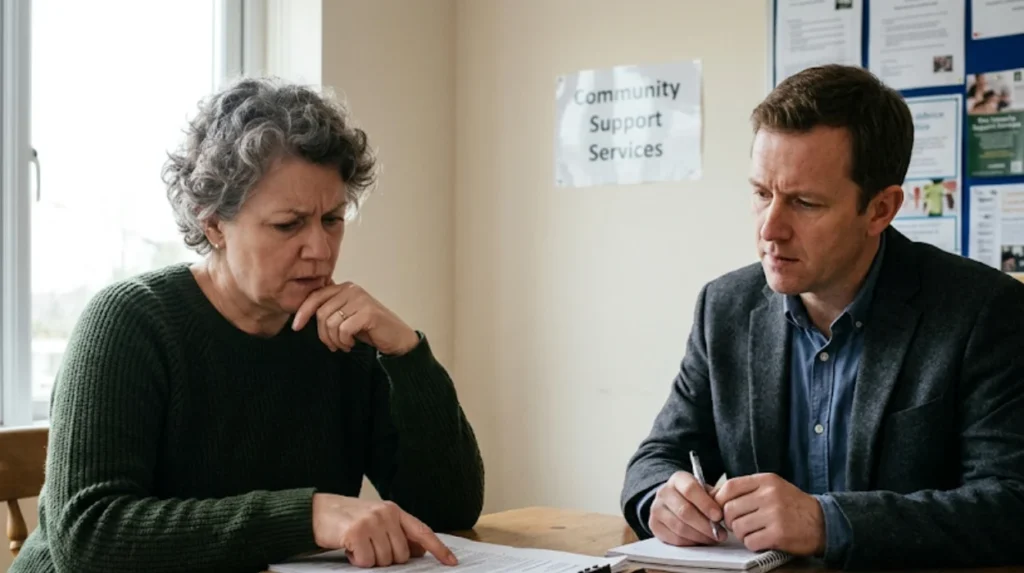
What this means for North London residents
For North London residents, a no-action closure is not the end of the road. It is the point where the issue becomes a complaints, review, or Ombudsman matter, and the strength of the case depends on evidence, policy, and delay.
In an area like Enfield, where residents often raise housing, planning, environmental, and council service concerns, the practical test is simple: did the council investigate properly and explain its decision clearly? If the answer is no, the resident has a route to challenge that outcome.
The most important document is the council’s written decision. Without it, residents lose the ability to show what happened, when it happened, and whether the council complied with its own process.
A closure without action can be lawful, but it must still be explainable. If the council’s reasons are unclear, inconsistent, or unsupported, the complaint can move to the Ombudsman for independent review.
Evidence and process
The strongest cases include dates, reference numbers, screenshots, photos, emails, and copies of previous complaints. Evidence matters because Ombudsman decisions focus on fault, impact, and whether the council followed the right process.
Residents should keep the original complaint, the council response, and any reminder messages. They should also note whether the council met its stated response times, because delay itself can be a complaint issue.
Where a case was closed quickly, the question is whether the council genuinely investigated or merely logged the report and stopped. Where a case was closed after a long delay, the question is whether the delay caused a missed remedy, lost evidence, or avoidable distress.
The Ombudsman’s published guidance confirms that a fault only becomes significant when it causes injustice, so showing impact is as important as showing error.
Final reading of the issue
When Enfield Council closes a case without action, it is usually saying it will not investigate further, enforce further, or provide the remedy requested. The resident’s next step is to demand reasons, use the complaints process, and escalate to the Ombudsman if the matter remains unresolved.
That is the core practical outcome. A no-action closure is an administrative endpoint inside the council, not always the final word for the resident.
For publication and search visibility, the central idea should stay clear: case closure without action means the council has ended its involvement, but the resident still has review rights if the process, evidence, or legality is disputed.
The key public bodies for escalation are the council itself, the Local Government and Social Care Ombudsman for most council services, and the Housing Ombudsman where housing jurisdiction applies.
What does it mean when Enfield Council closes a case without action?
It means the council has decided not to take any further steps regarding the complaint, report, or service request. The case is marked as closed, but residents may still challenge the decision through the council’s complaints process or an Ombudsman.