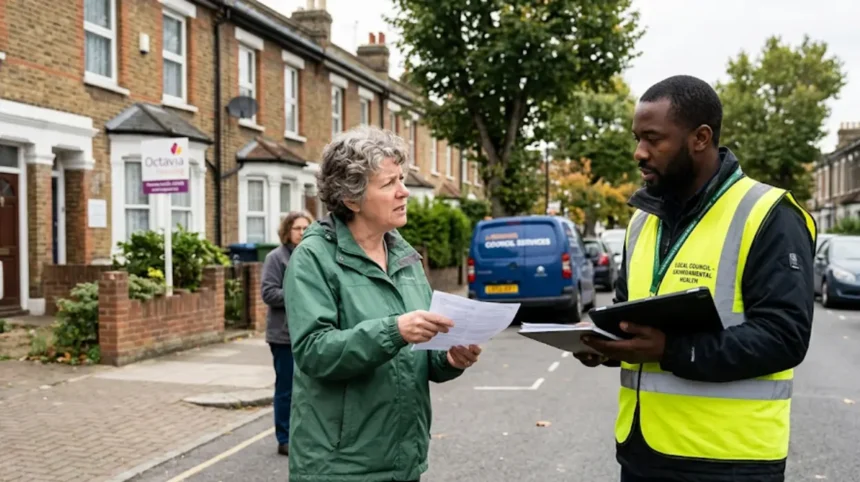
Your local North London borough council is the primary contact for neighbourhood disturbance complaints involving noise, anti-social behaviour, or nuisance. Contact the police if you feel threatened or believe a crime is occurring. Housing tenants should also contact their landlord for disturbances in or near council or housing association buildings.
- Who should you contact for neighbourhood disturbance complaints in North London?
- Which North London borough councils handle noise and disturbance complaints?
- What types of neighbourhood disturbances qualify for council intervention?
- How do you report a neighbourhood disturbance complaint effectively?
- When should you contact the police instead of your council for disturbances?
- What actions can councils take after receiving your complaint?
- What evidence do you need to support your neighbourhood disturbance complaint?
- What happens if your council doesn’t resolve your neighbourhood disturbance complaint?
Neighbourhood disturbance complaints cover noise from neighbours, construction sites, parties, anti-social behaviour, vandalism, and other nuisances that disrupt residential life. In North London, eight borough councils handle these complaints: Camden, Islington, Hackney, Haringey, Waltham Forest, Brent, Enfield, and Barnet. Each council operates under the Environmental Protection Act 1990, which grants them legal powers to investigate and address statutory nuisances.
Who should you contact for neighbourhood disturbance complaints in North London?
Contact your local North London borough council for noise and nuisance complaints. Call the police on 999 for emergencies or 101 for non-emergency criminal behaviour. Contact your landlord if you live in council or housing association property.
North London comprises eight local boroughs, each with its own environmental services team responsible for handling neighbourhood disturbance complaints. The Greater London Authority confirms that residents must contact their specific local London borough for noisy neighbours, road works, construction sites, pubs, or bars. Councils investigate complaints under Section 79 of the Environmental Protection Act 1990, which defines statutory nuisances including noise that unreasonably interferes with property use or harms health.
The government provides clear guidance on reporting antisocial behaviour, which includes noise, verbal abuse, drug use, vandalism, graffiti, and nuisance to neighbours. Who you report to depends on the behaviour type and location. Report to police if you feel threatened or believe the behaviour breaks the law. Report to your council if it affects your local area. Report to your landlord if you live in council or housing association property and the issue occurs in or near your building.
Some issues don’t qualify as antisocial behaviour but remain reportable. These include neighbourhood disputes, bin or parking issues, and one-off incidents. Councils still investigate these under environmental nuisance powers. Serious problems like domestic abuse or child safeguarding issues require different reporting pathways and should not be treated as standard antisocial behaviour.
Which North London borough councils handle noise and disturbance complaints?
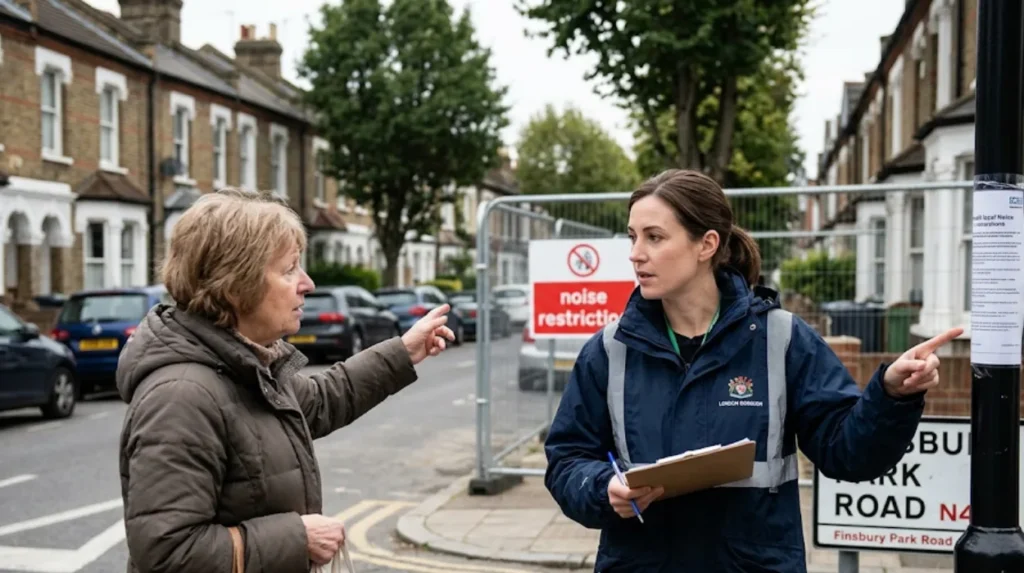
Eight North London boroughs handle complaints: Camden, Islington, Hackney, Haringey, Waltham Forest, Brent, Enfield, and Barnet. Each council operates a dedicated noise service with daytime and out-of-hours contact numbers.
Camden Council accepts noise and nuisance reports online through a Camden Account, covering noise, smoke, dust, odour, and light pollution. Their response service operates weekdays 9am-5pm, with out-of-hours coverage Monday-Thursday 8pm-2am, Friday 9pm-3am, Saturday 1pm-7pm and 9pm-3am, Sunday 10am-4pm and 8pm-2am. If online reporting fails, call 020 7974 4444 for call handler logging.
Islington Council’s Noise Service operates at 020 7527 7272 for office hours and night patrol: 8pm-2am Sunday-Thursday, 10pm-4am Friday-Saturday. The Public Protection Division sits at 222 Upper Street, London N1 1XR. Islington handles anti-social behaviour reporting electronically and by phone at the same number.
Hackney Council’s Noise Reporting Service accepts calls at 020 8356 3000 (9am-5pm Monday-Friday) and 020 8356 4455 (any other time). The out-of-hours service runs Thursday 8pm-Friday 2am, Friday 8pm-Saturday 5am, Saturday 9pm-Sunday 5am, Sunday 6:30pm-Monday 2am. Residents can also email info@hackney.gov.uk for call logging with reference numbers.
Haringey Council’s customer services team handles complaints at 020 8489 1000 (Monday-Tuesday 9am-5pm, Wednesday 10am-5pm, Thursday-Friday 9am-5pm). Outside these times, including weekends, call 020 8489 0000. The noise nuisance out-of-hours service operates Thursday-Sunday 6pm-2am only. Waltham Forest’s Customer Services phone is 020 8496 3000 outside working hours and weekends.
Brent Council’s noise abatement team contacts at 020 8937 1234, with additional housing contact at 020 8937 2400. Enfield Council’s Noise Service operates 24 hours a day, 7 days a week, 365 days a year. Barnet Council follows the same statutory framework as other North London boroughs under the Environmental Protection Act 1990.
What types of neighbourhood disturbances qualify for council intervention?
Councils intervene on statutory nuisances: noise unreasonably disrupting residence enjoyment or harming health. This includes neighbour noise, construction outside permitted hours, loudspeakers in streets, and intruder alarms. Councils do not cover traffic, aircraft, political protests, or military noise.
The Environmental Protection Act 1990 defines statutory nuisance as noise that unreasonably and significantly disrupts residential use or enjoyment, or causes/potentially causes health harm. Councils must investigate complaints meeting these criteria. Music, drinking dogs, construction noise, and loudspeakers fall under council powers.
Noise regulations are stricter between 11pm-7am. Councils issue warning notices for exceeding permissible levels during nighttime, even if noise doesn’t qualify as statutory nuisance. Non-compliance without valid excuse results in fixed penalty notices up to £110 and potential prosecution. Councils can issue formal noise warning notices 11pm-7am, with fines up to £1,000 for breaches.
Construction work by builders or contractors is permitted Monday-Friday 8am-6pm and Saturday 8am-1pm only, not Sundays or bank holidays. Work outside these hours constitutes nuisance noise reportable via online forms. Gardeners face fines up to £5,000 for mowing lawns during unsociable weekend hours under council noise regulations.
Councils do not cover traffic noise, aircraft noise, political protests, or military activities under statutory law. However, specific agencies handle these: Highway agencies for traffic, Heathrow Airport or RAF Northolt for planes, Transport for London for buses, Network Rail or Transport for London for trains. Vehicle noise issues including traffic and bus noise escalate to these respective agencies.
Anti-social behaviour includes both criminal and non-criminal conduct: noise, verbal abuse, harassment, threats, drug use, nuisance to neighbours, vandalism, graffiti, fly-tipping, littering, and discarded syringes. One-off incidents, neighbourhood disputes, and bin/parking issues may not qualify as antisocial behaviour but remain reportable.
How do you report a neighbourhood disturbance complaint effectively?
Submit an online report through your borough council’s website with location details, times, frequency, impact description, and a completed 14-day noise diary. Call during response hours for immediate witnessing. Provide evidence like recordings or witness statements.
Camden requires signing in or registering for a Camden Account to report online. If noise isn’t currently happening or occurs outside response hours, Camden contacts within 10 working days. During response hours, Camden aims to return calls within an hour to confirm ongoing noise, requiring assessment from inside your property.
Harrow Council mandates a 14-day noise diary attached to form submission as proof of ongoing problems. Reporters must provide: the noise source address or nearby location, incident times, frequency, how it affects you, the completed diary, and any supporting evidence. An officer reviews reports within five working days to decide on proceeding.
If councils proceed, they arrange visits to assess noise and contact the source or request further evidence. Confirmed nuisances receive abatement notices requiring resolution. Failure to follow abatement notices leads to fines. Islington accepts electronic anti-social behaviour reporting forms and phone contact at 020 7527 7272.
Hackney’s online reporting builds cases against persistently noisy premises by registering calls with reference numbers. Residents should speak to neighbours first if safe, using top tips for approaching neighbours available on council websites. Mediation through Mediation UK (0117 904 6661) helps neighbours understand each other and find solutions.
Evidence collection strengthens complaints: keep noise diaries recording dates, times, duration, and impact. Save audio/video recordings where legally permissible. Gather witness statements from other affected neighbours. Document previous attempts to resolve informally. This evidence supports council investigations and potential legal action.
When should you contact the police instead of your council for disturbances?
Contact police on 999 for emergencies involving threats, violence, injury, or crimes in progress. Call 101 for non-emergency criminal behaviour. Report online to Metropolitan Police or City of London Police for antisocial behaviour not requiring immediate response.
Police handle antisocial behaviour when you feel threatened or believe the behaviour breaks the law. An emergency occurs when a crime is occurring, someone is injured or threatened with harm, or there’s risk to life. Call 999 immediately in these situations.
For non-emergency incidents, call 101. City of London Police accept online antisocial behaviour reporting through their website. Metropolitan Police accept online reports through www.met.police.uk, web chat with Force Communications Room operators, or 101.
Threats of violence or harassment require immediate police calls to 999. Frequent arguments or shouting from adults could indicate domestic abuse requiring different reporting pathways. Children making frequent noise might signal safeguarding issues like abuse or neglect, not standard antisocial behaviour.
Metropolitan Police ward teams prioritise anti-social behaviour and work with neighbourhood policing teams. They rely on information from councils and landlords to keep communities safe. Housing estates in Lambeth report antisocial behaviour via call centre 020 7926 6000 or online forms.
Bexley Council recommends calling 101 or reporting online via Metropolitan Police website for incidents already happened without immediate response needs. This avoids overwhelming emergency services while ensuring proper documentation.
Explore More Help & Resources
How can councils handle persistent neighbour noise?
What counts as anti-social behaviour in residential areas?
What actions can councils take after receiving your complaint?
Councils issue abatement notices requiring nuisance resolution. They can impose fixed penalty notices up to £110 for non-compliance, prosecute offenders, and fine up to £1,000 for nighttime noise breaches. Councils witness noise during response hours and assess from inside your property.
When councils confirm statutory nuisance, they issue abatement notices requiring issue resolution. Failure to follow abatement notices leads to fines. Councils impose fixed penalty notices up to £110 for non-compliance without valid excuse. Prosecution occurs for serious or repeated breaches.
Nighttime noise breaches (11pm-7am) carry fines up to £1,000 for failing to comply with warning notices. Councils issue formal noise warning notices during these hours even for non-statutory nuisance noise. Gardeners face separate fines up to £5,000 for weekend lawn mowing during unsociable hours.
Camden may approach neighbours to resolve problems if evidence gathered during assessment supports it and safety is confirmed. Follow-up action triggers contact within 10 working days. Councils cannot attend sites if callers don’t answer return calls during response hours.
Harrow arrives for visits to assess noise after deciding to proceed with investigations. Councils contact sources or request further evidence during visits. This on-site assessment determines whether noise meets statutory nuisance thresholds.
Councils work with local police and social housing landlords to address antisocial behaviour differently across areas. This multi-agency approach combines environmental powers with criminal law enforcement for comprehensive neighbourhood protection.
What evidence do you need to support your neighbourhood disturbance complaint?
Complete a 14-day noise diary documenting dates, times, duration, and impact. Provide source address, incident frequency, and description of effects. Include audio/video recordings, witness statements, and records of previous informal resolution attempts.
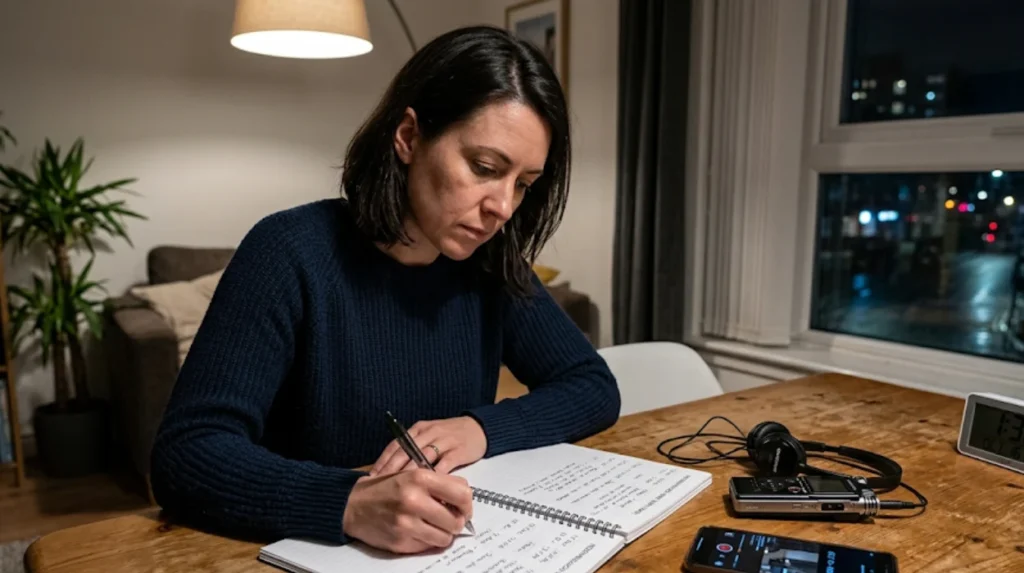
Harrow requires the 14-day noise diary attached to form submissions as mandatory proof of ongoing problems. The diary demonstrates the problem’s持续性 and pattern, essential for statutory nuisance classification. Record each incident’s date, start time, end time, duration, noise type, and how it affected your daily life.
Reporters must specify the noise source address or nearby location if exact address unknown. Include incident times showing when occurrences happen. Document how frequently the noise happens—daily, weekly, specific days. Describe how it affects you: sleep disruption, work interference, health impact, or enjoyment reduction.
Submit any relevant evidence supporting your complaint. Audio recordings capture noise levels and character. Video recordings show source and context. Witness statements from other affected neighbours strengthen claims by demonstrating community impact. Photos show related issues like vandalism or littering.
Keep records of previous informal resolution attempts: notes from conversations with neighbours, dates of mediation requests, or correspondence with landlords. This shows you tried resolving before council intervention, which councils consider when assessing complaint seriousness.
Camden requires assessment from inside your property during response hours. This means council officers need access to witness noise affecting you directly. Prepare your property for visits by ensuring officers can hear noise clearly.
What happens if your council doesn’t resolve your neighbourhood disturbance complaint?
You can take private legal action under the Community采取行动 Act 2015. Contact Mediation UK for neighbour dispute resolution. Report unresolved issues to the Local Government and Social Care Ombudsman at 0300 061 0614 if council service fails.
The government guide confirms residents can take their own legal action if councils don’t resolve issues. Private legal action under the Community采取行动 Act 2015 allows individuals to seek court orders for nuisance resolution without council intervention. This requires hiring a solicitor and potentially attending court.
Mediation through Mediation UK (0117 904 6661) helps neighbours understand each other and find mutually acceptable solutions. Mediation works when both parties cooperate and seek resolution without formal enforcement. Councils provide top tips for approaching neighbours on their websites to facilitate informal discussions.
The Local Government and Social Care Ombudsman handles complaints about council service failures at PO Box 4771, Coventry CV4 0EH, phone 0300 061 0614, website www.lgo.org.uk. The Ombudsman investigates whether councils followed proper procedures and acted reasonably.
Housing tenants can contact the Housing Ombudsman Service at PO Box 1484, Unit D, Preston PR2 0ET, email info@housing-ombudsman.org.uk, website www.housing-ombudsman.org.org for landlord-related disputes. This covers council and housing association property issues.
Persistent complaints build cases against repeatedly noisy premises. Hackney registers calls with reference numbers to document patterns. Multiple reports over time demonstrate ongoing nuisance requiring enforcement action.
What is considered a neighbourhood disturbance in North London?
A neighbourhood disturbance includes excessive noise from neighbours, loud parties, construction work outside permitted hours, anti-social behaviour, vandalism, harassment, fly-tipping, graffiti, and other nuisances that affect residents’ quality of life.