Key Points
- Industrial Action Scheduled: More than 1,500 Arriva North London bus drivers are set to begin strike action on 14 August over unsafe working conditions during extreme weather.
- Extreme Heat Risks: Temperatures inside driver cabs have reportedly exceeded 40 degrees Celsius during London’s fifth heatwave of the summer, causing heatstroke, exhaustion, dehydration, and severe dizziness.
- Cooling System Deficiency: Most Arriva North London buses rely on basic air cooling systems rather than full air conditioning, dropping internal cab temperatures by merely two to three degrees.
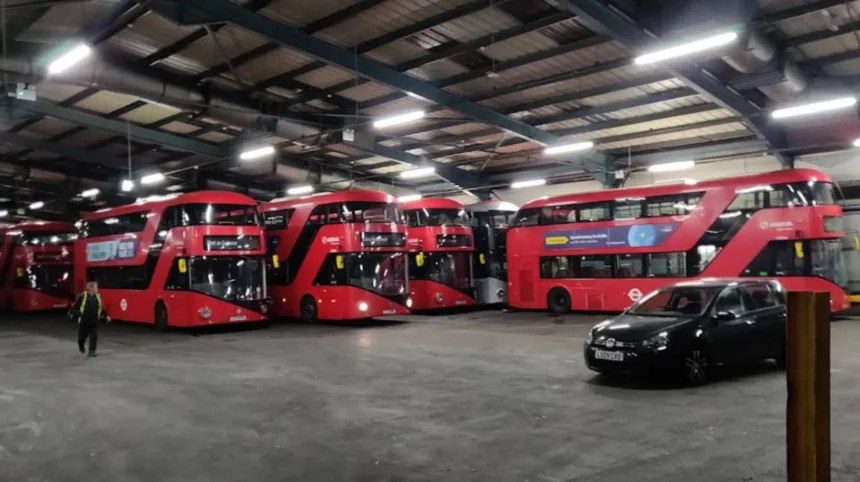
- Eight Garages Affected: Walkouts will impact depots in Barking, Edmonton, Enfield, Grays, Palmers Green, Stamford Hill, Tottenham, and Wood Green across North London, East London, and Essex.
- Union Demands Action: Unite the Union General Secretary Sharon Graham warned that heat risks put both transport workers and the general public in danger, demanding immediate upgrades from Arriva.
- Management Bullying Allegations: Union representatives and bus drivers allege they have faced bullying from Arriva North London management when attempting to raise legitimate safety concerns regarding cab temperatures.
North London (North London News) August 13, 2026 – More than 1,500 bus drivers employed by Arriva North London are scheduled to launch industrial action on 14 August following an ongoing dispute regarding unbearable and dangerous working conditions during severe summer heatwaves. The walkout comes as London experiences its fifth prolonged heatwave of the summer season, with ambient temperatures reaching highs of 35 degrees Celsius across the capital. Transport workers across eight major depots are protesting what they describe as the employer’s persistent failure to protect staff from extreme cab temperatures, which regularly exceed 40 degrees Celsius and present severe physical health risks to drivers and passengers alike.
- Key Points
- Why Are Arriva North London Drivers Taking Industrial Action?
- How Effective Are the Current Cooling Systems on Arriva Buses?
- What Impacts Have Drivers Experienced on the Job?
- Which Garages and Areas Are Directly Affected by the Strike?
- What Is the Background to the Arriva Hot Weather Dispute?
- How Will the Arriva Bus Strike Affect Passengers and the Capital?
Why Are Arriva North London Drivers Taking Industrial Action?
The decision to initiate multi-day strike action stems directly from heat-related health hazards that bus drivers face during operational shifts. Drivers operating across North London, East London, and Essex report that working inside driver cabs during peak weather conditions creates an environment that triggers heat exhaustion, severe fatigue, dehydration, and dizziness.
Since Wednesday of this week, official weather readings across the capital have surpassed 30 degrees Celsius for the fifth distinct period this summer. Bus drivers have reported that the glass-heavy design of driver cabs acts like a greenhouse, causing internal temperatures to climb past 40 degrees Celsius. According to statements released by Unite the Union, these working conditions pose immediate danger to operators who are responsible for navigating heavy passenger vehicles through busy urban traffic.
As reported by media officer press statements from Unite the Union, General Secretary Sharon Graham stated that:
“The heatwave this week has caused even more problems for our members at Arriva North London, who have once again faced doing a demanding job in unbearable conditions. No worker should be made ill by their job. This problem is raised year after year and as the summers get hotter it can no longer be swept under the carpet. Arriva can afford to act on this serious issue, which puts both drivers and the general public at risk and it must make this a priority.”
How Effective Are the Current Cooling Systems on Arriva Buses?
A central point of contention in the dispute is the equipment installed inside the vehicles. Most buses currently operated by Arriva North London are fitted with basic air cooling mechanisms rather than comprehensive air conditioning units.
During extreme weather conditions, such as the current heatwave affecting Londoners, air cooling systems only manage to reduce cab temperatures by approximately two to three degrees Celsius. As a consequence, the temperature inside driver compartments remains dangerously elevated. Drivers report that small auxiliary fans provided in cabs do little to circulate fresh air and merely move ambient hot air around the enclosed compartment.
What Impacts Have Drivers Experienced on the Job?
The physical toll of these conditions has already resulted in medical absences among staff. Unnamed bus drivers surveyed by Unite the Union provided accounts detailing the direct health consequences suffered during previous heatwaves earlier this summer.
As reported by union representatives documenting worker accounts, one Arriva driver was formally signed off work for five consecutive days after suffering from acute heatstroke during the late June heatwave.
Another Arriva North London bus driver stated that:
“The buses don’t have air conditioning. They think by putting a little fan in the cab helps – it doesn’t, the cab’s temperature is hotter than being outside. Something needs to be done. I have suffered with migraines and when it’s hot they get worse.”
Furthermore, staff members and union representatives allege that raising these safety issues with line managers has led to friction within depots. Representatives from Unite reported that members have experienced workplace bullying from Arriva North London management after officially bringing concerns about hot weather working conditions to light.
Which Garages and Areas Are Directly Affected by the Strike?
The planned industrial action involves staff across eight major bus garages operating under the Arriva North London banner. The affected depots serve extensive commuter networks spanning North London, East London, and parts of Essex.
Affected Arriva North London Garages:
- Barking (East London)
- Edmonton (North London)
- Enfield (North London)
- Grays (Essex)
- Palmers Green (North London)
- Stamford Hill (North London)
- Tottenham (North London)
- Wood Green (North London)
The strike action is anticipated to cause widespread service disruptions across routes managed by these eight facilities, affecting thousands of daily passengers who rely on Arriva services for local travel and commuter connections.
What Is the Background to the Arriva Hot Weather Dispute?
The dispute over bus cab temperatures reflects long-standing concerns regarding driver welfare and transport infrastructure adapting to changing climate patterns in the United Kingdom. Over recent years, summer heatwaves in London have grown increasingly frequent and intense, exposing structural deficiencies in older fleet models operating across the capital’s public transport network.
Historically, surface transport vehicles in London were designed primarily to retain heat during cold winter months rather than dissipate extreme ambient heat during summer months. While newer electric and hybrid bus models ordered by Transport for London (TfL) contractors often feature improved climate control technologies, older diesel and hybrid vehicles in the Arriva North London fleet remain reliant on traditional ventilation or basic air cooling apparatus.
Unite the Union has repeatedly raised the issue of cab temperatures during annual safety reviews, contending that transport operators have failed to invest in necessary fleet retrofits or structural air conditioning systems. According to union claims, Arriva North London management has consistently deferred systemic upgrades despite annual recurring heatwaves, leading directly to the current impasse and the decision by drivers to mandate industrial action.
How Will the Arriva Bus Strike Affect Passengers and the Capital?
The industrial action by over 1,500 Arriva North London drivers is projected to create immediate operational disruptions for commuters, local businesses, and public transport networks across North London, East London, and Essex.
Impact on Passengers and Local Commuters
Passengers relying on Arriva routes served by the eight affected garages will face reduced service frequencies, route cancellations, and severe overcrowding on alternative public transport options, including underground and rail services. Vulnerable passengers, including the elderly and those with health conditions, may experience heightened travel risks during high temperatures if forced to wait longer at unsheltered bus stops or travel on heavily congested alternative routes.
Impact on Transport Operations and Policy
The strike action is expected to place renewed scrutiny on Transport for London (TfL) service standards and contractual requirements for private fleet operators. If the walkout leads to sustained route closures, pressure will likely mount on transport authorities to establish mandatory temperature ceilings for driver cabs across all contracted bus operators in London. Furthermore, the dispute may accelerate demands from transport unions across the broader United Kingdom for standardized vehicle specifications requiring fitted, heavy-duty air conditioning in all public service vehicle driver compartments.