Key Points
- Cancellation of Strike Action: Approximately 1,500 bus drivers at Arriva North London have decided to endorse a new agreement and put an end to any further industrial action planned for the autumn period.
- Retrofitting Air Conditioning System: Arriva in collaboration with TfL plans to install retrofitted air conditioning units in all of their buses by May 2027, removing existing inefficient air-cooling systems.
- 35 Minutes Cab Condition: It has been agreed upon that in case air conditioning is not working in a diesel or hybrid bus, the driver will only need to drive for 35 minutes before sending the bus back to the depot.
- Working in Extreme Heat: The dispute has worsened due to the fact that during heatwaves, driver cabs had reached temperatures ranging from 40 to 48.5 degrees centigrade, which poses serious threats to health.
- Routes and Depots Affected: The agreement includes bus drivers working on 42 different routes that operate out of eight depots, namely Barking, Edmonton, Enfield, Grays, Palmers Green, Stamford Hill, Tottenham, and Wood Green.
- Live Strike Mandate: Unite the Union will continue to retain a live strike mandate for 11 months and also enforce biweekly maintenance run out checks and quick defect fixes.
North London (North London News) September 8, 2026 – Hundreds of bus drivers across North London have formally cancelled further strike action after their employer, Arriva North London, agreed to install air conditioning across its bus fleet by May 2027 and implement immediate workplace protections against extreme cab temperatures.
- Key Points
- Why Did North London Bus Drivers Take Strike Action This Summer?
- What Are the Key Terms of the Arriva and TfL Agreement?
- Why Is Unite Keeping Its Strike Mandate Active?
- Background of the Particular Development After the News
- Prediction: How This Development Can Affect London Bus Drivers and Passengers
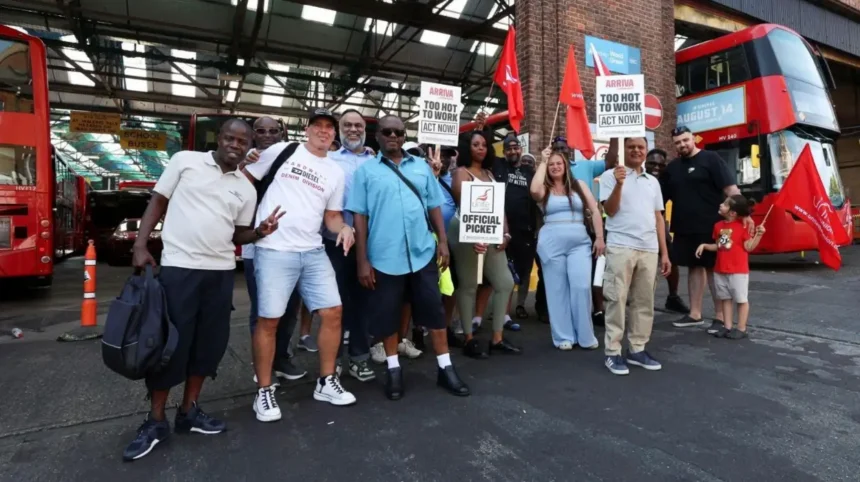
As reported by local media and industrial correspondents, around 1,500 bus drivers represented by Unite the Union voted by 667 to 339 to accept a “significantly improved” deal following extensive negotiations. The agreement resolves a series of walkouts that disrupted 42 public bus routes operating out of eight key garages in Barking, Edmonton, Enfield, Grays, Palmers Green, Stamford Hill, Tottenham, and Wood Green.
Why Did North London Bus Drivers Take Strike Action This Summer?
As reported by Joanna Partridge of The Guardian, bus drivers initiated industrial action in mid-August after claiming Arriva failed to act on long-standing complaints regarding poor working conditions in hot weather. Drivers reported that excessive in-cab heat during summer heatwaves caused temperatures inside uncooled driver cabs to soar to 40°C, with some union branch officials reporting spikes as high as 48.5°C.
Unite the Union argued that the lack of proper air conditioning put both transport workers and the general public at risk of road accidents, as staff faced extreme fatigue, dehydration, heat exhaustion, and heat stroke behind the wheel. Most of Arriva’s current fleet relies on passive air-cooling systems, which only reduce internal temperatures by 2°C to 3°C during extreme weather.
As reported by Dag Tirsén of The Militant, Tara Nash, secretary for the Unite branch at the Enfield garage, stated that
“Some drivers have faced 48.5 degrees Celsius on the bus, and in the winter there is poor heating. The bosses have got away with this too long, but not anymore”.
What Are the Key Terms of the Arriva and TfL Agreement?
As detailed in statements released by Unite the Union, the negotiated settlement introduces immediate interim safeguards alongside long-term mechanical retrofits across Arriva North London’s fleet.
Under the terms of the agreement, Arriva and Transport for London (TfL) have committed to equipping vehicles with full air conditioning by May 2027. To protect staff while retrofitting takes place, interim measures have been established:
- The 35-Minute Rule: If climate control or air conditioning fails on a diesel or hybrid bus, drivers are only required to complete 35 minutes of driving before the vehicle is removed from service and returned to the depot. For electric vehicles, systems are expected to be effective within minutes, making the 35-minute allowance unnecessary under normal operations.
- Defect Repair Protocol: Vehicles with faulty heating or cooling systems must be repaired before being returned to service, ending the practice of reallocating defective buses to other drivers.
- Winter Weather Protections: The 35-minute limit will also apply to cold weather working if heating systems fail, replacing a previous rule requiring drivers to remain out for an hour.
- Continuous Audits: Arriva will implement bi-weekly run-out checks and scheduled maintenance audits to ensure climate systems remain fully functional throughout the year.
As reported by Socialist Worker, Peter Skinner, lead shop steward at Wood Green bus garage, confirmed that the latest offer represented a “very significant improvement” forced by member solidarity on picket lines.
As stated by Sharon Graham, General Secretary of Unite the Union:
“Unite will leave no stone unturned to fight for workers. Thank you to all our members at Arriva North who stood together to achieve this landmark win. Unite is determined that the conditions of bus drivers are improved in London and beyond. We expect bus operators to treat workers with dignity and respect and will be ensuring that this happens”.
As reported by Barnet Post, Onay Kasab, Unite National Lead Officer, added:
“This is an excellent win for our members, who stood together on picket lines to fight for and win an agreement that means that drivers are not simply expected to sweat it out. We have secured an agreement with concrete immediate measures, ongoing action to ensure repairs are carried out in a timely fashion and a target for fitting all buses with air conditioning. Unite members have once again shown the value of collective union action”.
Why Is Unite Keeping Its Strike Mandate Active?
Despite cancelling scheduled walkouts, Unite announced it is not rescinding its legally binding strike mandate, which remains active for 11 months.
The union confirmed this mandate will allow representatives to hold Arriva management accountable if there are delays in fitting air conditioning or failures in adhering to the 35-minute defect return rules. Under UK labor laws, the active mandate allows the union to call further strike action across the 42 affected routes with ten days’ notice.
Background of the Particular Development After the News
The dispute over cabin temperatures in London buses is rooted in the structural specifications of the capital’s public transport fleet amidst changing regional weather patterns. Historically, red double-decker buses operating within Transport for London’s franchised network were specified without comprehensive driver-cab refrigeration units. Instead, vehicles relied on forced-air ventilation or air-cooling mechanics designed for temperate climates, which prove ineffective when ambient outdoor temperatures exceed 30°C.
Over recent years, driver representatives across various private bus operators contracted by TfL—including Arriva, Go-Ahead, and Stagecoach—have raised concerns regarding excessive windshield solar gain, which creates a greenhouse effect inside driver cabs. While newer electric vehicles ordered under TfL’s zero-emission transition come fitted with integrated climate control systems, hundreds of older diesel and hybrid double-deckers remain in service without dedicated cab air conditioning. The victory by Arriva North London staff marks the first time a London bus operator and TfL have formally committed to retrofitting existing vehicle stock following direct industrial action over heat conditions.
Prediction: How This Development Can Affect London Bus Drivers and Passengers
This settlement is expected to have immediate and far-reaching impacts on both transport operations and public transit policy across Greater London:
- For Passengers: The cancellation of strikes brings immediate stability to 42 bus routes servicing thousands of daily commuters across North and East London. Furthermore, the requirement to withdraw vehicles with broken cooling or heating after 35 minutes ensures safer driving conditions, directly reducing the risk of heat-related accidents on public roads.
- For Bus Drivers: The establishment of a maximum 35-minute threshold for defective cabs sets a contractual safety standard for transport staff, protecting drivers from prolonged heat exhaustion and dehydration.
- For TfL and Other Bus Operators: The landmark agreement establishes a major precedent for the broader London bus network. Transport for London and other private franchise operators are likely to face heightened demands from Unite to standardize cab air conditioning across all remaining non-conditioned buses in Greater London, accelerating retrofitting schedules network-wide.