Key Points
- Victim Identified: Shalev Ben Yakar, a 22-year-old Israeli national visiting London, was the target of the assault.
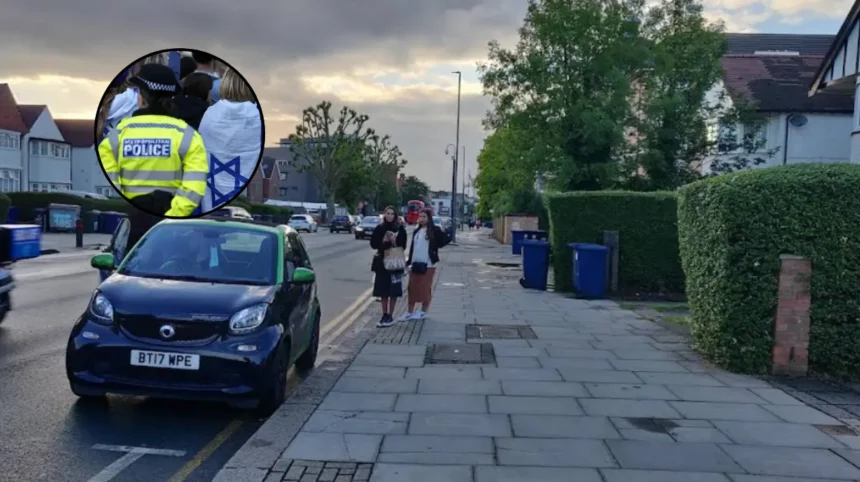
- Location and Timing: The incident occurred in the early hours of Monday morning on Golders Green Road, North London.
- The Aggressors: A group of five or six men, described as wearing tracksuits and speaking Arabic, allegedly carried out the attack.
- Triggering Event: The victim was reportedly targeted after being overheard speaking Hebrew on a mobile phone.
- Nature of Attack: Ben Yakar was chased and subjected to a physical beating, which he described as being “kicked like an animal.”
- Injuries Sustained: The victim required hospitalisation for injuries to his face, neck, and back.
- Police Investigation: The Metropolitan Police are officially treating the incident as a hate crime.
- Community Impact: The attack has significantly heightened security concerns within the Jewish community in Golders Green.
Golders Green (North London News) May 20, 2026 — A 22-year-old Israeli man was hospitalised following a violent street assault in Golders Green, North London, which the Metropolitan Police are investigating as a targeted antisemitic hate crime. Shalev Ben Yakar was allegedly chased and beaten by a group of up to six men after they overheard him speaking Hebrew on a phone call. The incident, occurring in one of London’s most prominent Jewish neighbourhoods, has triggered a surge of concern regarding the safety of Jewish residents and visitors in the capital.
- Key Points
- How did the antisemitic attack in Golders Green unfold?
- What were the injuries sustained by Shalev Ben Yakar?
- How are the Metropolitan Police responding to the Golders Green assault?
- What has been the reaction from the North London Jewish community?
- Background of the Golders Green Antisemitic Development
- How will this development affect the Jewish community and international visitors?
How did the antisemitic attack in Golders Green unfold?
As reported by The Jewish Chronicle, Shalev Ben Yakar had stepped out of his flat on Golders Green Road at approximately 2:00 am on Monday.
According to the victim’s testimony, he exited the building to take a phone call from friends in South America, choosing to speak outside so as not to disturb his sleeping flatmates.
While Ben Yakar was speaking Hebrew on the call, he was approached by a group of five or six men. As documented by journalist Lee Harpin of Jewish News, the victim stated that the men were wearing tracksuits and speaking Arabic amongst themselves. Before the physical violence began, the group reportedly confronted him with a direct question regarding his identity.
As Ben Yakar told The Daily Mail, the attackers asked him: “Are you Jewish?” When the victim attempted to distance himself from the group, the confrontation escalated into a pursuit.
Ben Yakar was chased down the street before being caught and subjected to a sustained physical assault.
What were the injuries sustained by Shalev Ben Yakar?
The physical toll of the attack was severe. Ben Yakar described the experience to reporters as being “kicked like an animal” while he was on the ground. The assailants focused their strikes on his upper body and head.
According to reports from The Evening Standard, the 22-year-old was subsequently taken to a local hospital. Medical staff treated him for significant bruising and soft tissue injuries to his face, neck, and back.
While his injuries were not deemed life-threatening, the psychological impact and the sheer brutality of the unprovoked attack have been highlighted by community advocates.
How are the Metropolitan Police responding to the Golders Green assault?
The Metropolitan Police confirmed they were called to the scene following reports of a group of men assaulting a lone individual.
A spokesperson for the force stated that the incident is being treated as a hate crime due to the reported nature of the verbal exchange preceding the violence.
As noted by The Times, no arrests have been made at this stage. Detectives are currently reviewing CCTV footage from businesses along Golders Green Road and are appealing for any witnesses who may have been in the area at 2:00 am to come forward.
The police have also increased “reassurance patrols” in the Golders Green and Hendon areas to provide a visible presence to the local Orthodox Jewish community.
What has been the reaction from the North London Jewish community?
The attack has sent shockwaves through Golders Green, a district known globally as a hub for the UK’s Jewish population.
Community security organisations, including the Community Security Trust (CST), have expressed their “deep concern” over the brazen nature of the assault.
In a statement provided to The Telegraph, a spokesperson for the CST noted:
“This is a cowardly and disgusting attack on a young man who was doing nothing more than speaking on his phone. The fact that he was targeted for his language and his perceived religion is a stark reminder of the threats facing our community.”
Local residents have expressed a mixture of anger and fear. Many have pointed out that Golders Green Road is usually considered a safe environment, but the timing and motive of this attack suggest a level of premeditated hostility that is difficult to guard against.
Background of the Golders Green Antisemitic Development
The assault on Shalev Ben Yakar does not occur in a vacuum. It follows a documented trend of rising antisemitic incidents across Greater London over the past several years.
Golders Green, as the heart of the British Jewish community, has frequently been a flashpoint for such tensions.
Statistically, according to data released by the Metropolitan Police and the CST, hate crimes against Jewish individuals often spike in correlation with geopolitical tensions in the Middle East.
However, community leaders argue that this specific attack highlights a more persistent, domestic brand of antisemitism where the mere sound of the Hebrew language acts as a trigger for violence.
Historically, Golders Green has maintained its own community safety measures, such as the Shomrim (a voluntary neighbourhood watch group), which works alongside the Metropolitan Police.
The area has seen previous high-profile incidents, including the vandalism of Jewish-owned businesses and verbal harassment, but the physical hospitalisation of a visitor in a “wolf-pack” style attack represents an escalation that has put local authorities on high alert.
How will this development affect the Jewish community and international visitors?
This development is likely to have a profound impact on several distinct groups:
1. Local Residents and the Orthodox Community: The immediate effect will be a perceived loss of “safe space” within Golders Green. Residents may become more hesitant to display outward signs of their faith or speak Hebrew in public, particularly late at night. There will likely be a significant demand for increased permanent police presence and private security funding for the area’s residential streets.
2. International Visitors and Tourists: For Israeli nationals and the wider Jewish diaspora visiting London, this incident serves as a chilling warning. It may lead to a decline in “faith-based tourism” to North London or prompt visitors to exercise extreme caution, potentially hiding their identity or language while in public spaces—a phenomenon often described as “defensive assimilation.”
3. Policy and Law Enforcement: The Metropolitan Police will face renewed pressure to demonstrate that they can protect minority communities effectively. If no arrests are made in a case with such a clear motive and location, it may erode trust between the community and the police. Conversely, a swift and successful prosecution could serve as a vital deterrent against future hate-motivated “street thuggery.”
4. Social Cohesion in London: The description of the attackers as a group of men speaking Arabic suggests the potential for heightened inter-communal tensions. Without careful handling by community leaders on both sides, such incidents risk damaging the delicate social fabric of North London, leading to further polarisation and a cycle of retaliatory fear.