Key Points
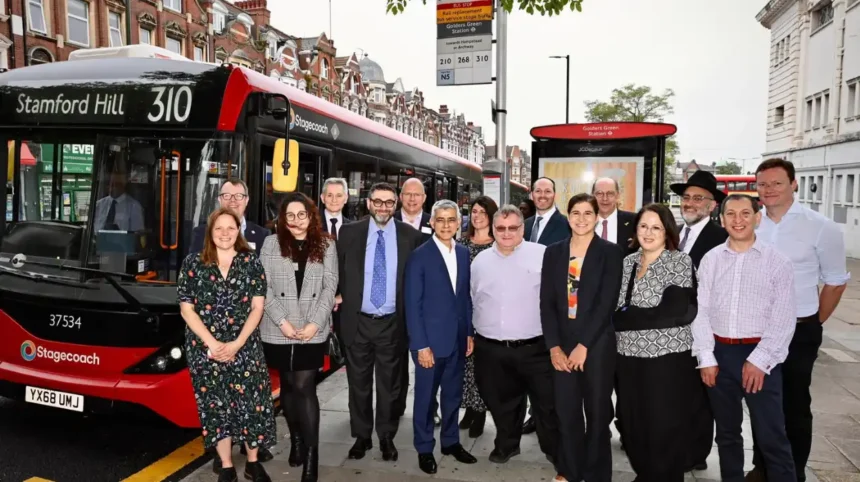
- Transport for London (TfL) has announced plans to reroute the 310 bus service, which connects the North London Jewish communities of Golders Green and Stamford Hill, after reporting an annual loss of £2.6m.
- TfL currently contracts stagecoach to operate the service for £3.3m annually, but the route generated only £690,000 in revenue between April 2025 and March 2026.
- First launched as a two-year trial in September 2024 following a 15-year community campaign, the service established a direct link between the two neighbourhoods without requiring a transfer at Finsbury Park station.
- TfL has made the service permanent but opted to divert it through Holloway via the Nag’s Head shopping centre, departing from its previous route through Crouch End, Hornsey, and Stroud Green.
- Public feedback from a TfL consultation revealed that 47 per cent of surveyed residents felt the change would impact them negatively, with 48 per cent stating they would use the service less frequently.
- TfL defended the service’s continuation, maintaining that link-focused routes often do not recoup full operating costs but provide vital civic value.
Golders Green (North London News) September 29, 2026 – Transport for London has confirmed it will alter the routing of the 310 bus service operating between Golders Green and Stamford Hill in an effort to mitigate an annual financial shortfall of £2.6m, whilst making the previously experimental transit link permanent.
- Key Points
- Why is Transport for London rerouting the 310 bus service?
- How was the direct connection between Golders Green and Stamford Hill created?
- What do consultation results reveal about passenger sentiment towards the changes?
- How does Transport for London justify maintaining the financially loss-making route?
- Background of the particular development
- Prediction: How will this development affect passengers and the local community?
Why is Transport for London rerouting the 310 bus service?
According to operational details provided by Transport for London, the transit authority contracts operator Stagecoach to run the 310 route at a cost of £3.3m per year. However, fare revenues collected between April 2025 and March 2026 reached just £690,000, leaving a deficit of £2.6m over the 12-month period.
To improve passenger take-up and reduce journey durations, transit managers decided to alter the bus’s itinerary. Under the updated plan, the service will run via the Nag’s Head shopping centre in Holloway, bypassing its former path through Crouch End, Hornsey, and Stroud Green which had been in operation up until September 5. By redirecting buses through busier commercial districts like Holloway, transport planners aim to boost ticket sales and improve overall schedule efficiency.
How was the direct connection between Golders Green and Stamford Hill created?
The introduction of the 310 service in September 2024 followed a 15-year campaign led by local community members seeking a direct public transport link between the predominant Jewish populations in Golders Green and Stamford Hill. Prior to the route’s inception, passengers travelling between the two areas were forced to change transport links at Finsbury Park station.
The route was initially introduced as a two-year trial to evaluate demand. Following public engagement exercises, TfL decided to make the route permanent, albeit with the structural modifications to its geographical trajectory.
What do consultation results reveal about passenger sentiment towards the changes?
Data gathered from a Transport for London public consultation highlighted significant opposition among local residents regarding the planned route adjustments.
In response to the survey, 47 per cent of respondents stated they believed the rerouting would negatively affect them, compared to 37 per cent who anticipated a positive impact. Furthermore, 48 per cent of survey participants indicated they would use the 310 bus service less frequently once the diversion via Holloway was implemented.
How does Transport for London justify maintaining the financially loss-making route?
Despite the considerable operating deficit, transport authorities have maintained that the route’s broader societal utility justifies its ongoing operation.
As reported by transport reporters evaluating official TfL statements, a spokesperson for Transport for London stated that
“The route 310 provides valuable direct links to the communities it serves and, like many similar routes that serve primarily to provide links rather than meet high-volume demand, does not currently recoup its operating costs.”
Background of the particular development
The 310 bus route was established to address long-standing transport gaps between North London’s major Orthodox Jewish hubs in Barnet and Hackney. For over a decade and a half, local community organisations and residents advocated for a single, unbroken journey options that bypassed busy interchange hubs such as Finsbury Park station, which many elderly or vulnerable travellers found difficult to navigate.
When TfL implemented the two-year trial in September 2024, it marked a significant policy response to community requests for targeted social infrastructure. However, bus operations across Greater London face ongoing financial pressure to balance community transport needs against system-wide budget constraints. Routes designed primarily to connect specific cultural hubs rather than high-density commuter corridors frequently rely on cross-subsidisation from higher-volume urban routes. The £2.6m deficit on the 310 service highlighted the balance TfL must maintain between fiscal management and public transit accessibility.
Prediction: How will this development affect passengers and the local community?
The decision to make the 310 route permanent ensures that the direct link between Golders Green and Stamford Hill remains intact, preserving access for residents who rely on the service for family, social, and religious connections.
However, the diversion through Holloway via the Nag’s Head shopping centre is likely to alter travel times and patterns for regular users. Passengers in Crouch End, Hornsey, and Stroud Green will lose direct access to this specific service, requiring them to use alternative local bus routes. While TfL anticipates that the busier Holloway corridor will attract higher overall passenger volumes to help offset the £2.6m annual deficit, the survey indicating that 48 per cent of existing users plan to use the service less frequently suggests there may be an initial drop in patronage among the route’s original user base. The long-term viability of the altered route will depend on whether new ridership through Holloway offsets potential decreases in passengers from the bypassed neighbourhoods.