Key Points
- Dr Majid Saeed, principal dentist at High Barnet Dental Practice, has launched a platform called Odenta to address the national shortage of accessible NHS dental appointments.
- The system matches registered patients with practices that have spare NHS capacity in real time using automated alerts, texts, and emails.
- The service is completely free of charge for patients seeking NHS treatment, with operational costs funded by booking fees from private emergency and cosmetic consultations.
- More than 50 dental practices across the United Kingdom, including areas in London, Manchester, and Birmingham, have signed up since the site went live.
- Over 70 patients have successfully secured NHS dental appointments through the website since its launch.
- The platform allows patients to search locally or opt to travel further afield to secure treatment in areas facing severe NHS dental shortages.
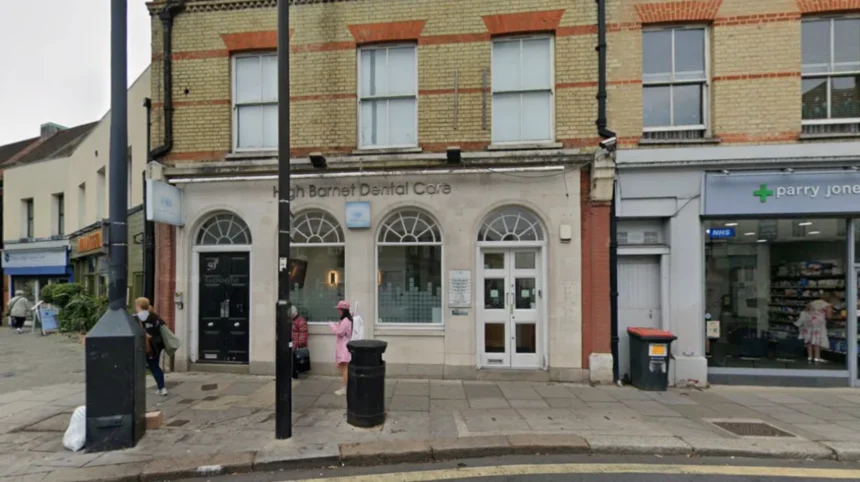
Barnet (North London News) November 3, 2026 – A new digital platform designed to bridge the gap between patients struggling to access NHS dental care and practices with unfilled capacity has been launched by a High Barnet practitioner. As reported by Nick Jones of the Barnet Society, Dr Majid Saeed, principal dentist at the High Barnet Dental Practice, has developed Odenta, an automated online network aimed at alleviating the nationwide difficulty of securing state-funded dental appointments.
- Key Points
- How Does the Odenta Platform Work to Connect Patients with NHS Dentists?
- What Driven the Creation of the Odenta Network in High Barnet?
- How Is the Free NHS Matching Service Financed?
- What Has Been the Response to Odenta Since Its Launch?
- Why Are NHS Dental Appointments Difficult to Secure Across the UK?
- Background of NHS Dental Provision and Capacity Mismatches
- Prediction: How This Development May Affect Patients and NHS Dental Practices
How Does the Odenta Platform Work to Connect Patients with NHS Dentists?
As reported by Nick Jones of the Barnet Society, the Odenta platform operates as an automated matching service between dental practices and members of the public searching for care. Patients register on the website free of charge and can select their preferences for appointment locations. When a participating dental practice lists spare capacity for state-funded treatment, the platform’s automated architecture immediately notifies suitable applicants.
Dr Saeed explained the mechanism behind the network, stating:
“Our system is fully automated, so when a practice has spare NHS appointments, patients are informed immediately, by alerts, text or email, so there is an immediate pathway between the two.”
The service is configured to notify patients of openings in their immediate vicinity, whilst also giving users the option to view available slots further afield if they are willing to travel.
What Driven the Creation of the Odenta Network in High Barnet?
As reported by Nick Jones of the Barnet Society, the initiative was developed in response to a daily localized imbalance between patient demand and clinical availability. Dr Saeed estimated that on any single day in and around High Barnet, there could be up to a dozen or more patients attempting to secure an NHS dental appointment without success.
This local predicament mirrors a broader pattern observed across the United Kingdom, where patients frequently report severe difficulties in registering with or booking treatment through NHS dental services. Simultaneously, practices that retain NHS contracts occasionally experience last-minute cancellations or short-term unfilled slots that go unutilised due to a lack of immediate communication channels with searching patients.
Outlining his motivations for launching the network, Dr Saeed stated:
“My aim in building this platform is to match patients with available appointments and I wanted to ensure we tackled the pressures people are under when looking for an NHS dentist and help them free of charge.”
How Is the Free NHS Matching Service Financed?
As reported by Nick Jones of the Barnet Society, Odenta provides its core NHS matching service to patients without charging a user fee. To sustain the infrastructure and operation of the automated platform, the business model relies on commercial streams generated through private dentistry bookings.
When participating dental surgeries use the Odenta platform to fill short-notice private emergency slots or non-NHS dental procedures, the practice pays a booking fee to the platform. Revenue generated from these private clinical connections subsidises the automated notification system for NHS patients, keeping the state-funded search service free at the point of delivery for the public.
What Has Been the Response to Odenta Since Its Launch?
As reported by Nick Jones of the Barnet Society, the website officially went online in August and has seen steady uptake from both clinical practices and the general public over its initial months of operation.
In its first four months, well over 50 dental practices joined the Odenta network. Whilst initially established around London, registration has expanded nationally, with practices signing up from major regional centres including Manchester and Birmingham.
Regarding the platform’s early outcomes and adoption rates, Dr Saeed stated:
“In just four months the response has been so encouraging.”
He further estimated that since the launch, the website has directly facilitated NHS appointments for over 70 patients who had previously been struggling to obtain care.
Why Are NHS Dental Appointments Difficult to Secure Across the UK?
As reported by Nick Jones of the Barnet Society, the broader context surrounding the platform involves structural pressures on primary care dental contracts. Dr Saeed, who has practiced at the High Barnet Dental Practice for two decades, highlighted the financial and operational challenges currently facing surgeries operating within the state framework.
Addressing the economic factors affecting service availability, Dr Saeed stated:
“NHS practices are expensive to run because NHS contracts have not kept up with inflation. They can be challenging, but where Odenta can help is by instantly matching any available appointments with the demand which we know is there and when there are patients prepared to travel who might well find appointments outside their immediate area.”
Dr Saeed noted that his 20 years of continuous service at the High Barnet practice have given him direct exposure to the distress experienced by individuals who are unable to access timely primary dental care.
Background of NHS Dental Provision and Capacity Mismatches
The crisis in NHS dental access has been a central feature of public health policy discussions across the United Kingdom in recent years. Primary dental services in England operate under General Dental Services (GDS) contracts, structured around Units of Dental Activity (UDA). Dental practices are commissioned by NHS England to deliver a set quota of UDAs annually.
However, factors such as rising operational overheads, laboratory costs, and inflationary pressures have led a growing number of practices to scale back their NHS commitments or transition entirely to private practice models. Consequently, large regions across England have developed into so-called “dental deserts”, where no local practices are accepting new adult or child NHS patients.
Despite these widespread access shortages, administrative friction often results in localized inefficiency. Surgeries frequently encounter last-minute cancellations, short-term practitioner availability, or unfulfilled contract hours that remain unfilled simply because practices lack an automated real-time method to communicate emergency openings to patients outside their immediate registered database. The emergence of third-party digital networks like Odenta represents an algorithmic attempt by primary care clinicians to resolve these distributional inefficiencies without altering the underlying statutory contract structures.
Prediction: How This Development May Affect Patients and NHS Dental Practices
Impact on Patients
If platforms like Odenta achieve broader adoption across the healthcare sector, patients seeking NHS dental treatment may experience a reduction in the administrative friction associated with finding care. Rather than manually contacting dozens of local surgeries by telephone or waiting indefinitely on registration lists, patients will increasingly rely on real-time, automated notifications.
However, because the system relies on existing unfilled capacity rather than creating new clinical hours, it may also incentivize greater geographical mobility among patients. Individuals in severe dental pain or requiring routine NHS treatment may routinely choose to travel outside their immediate towns or boroughs to secure appointments in surrounding areas where spare capacity exists.
Impact on Dental Practices and Primary Care Systems
For dental surgeries maintaining NHS contracts, automated matching tools are likely to decrease the financial loss associated with missed appointments and short-notice cancellations. By filling open slots rapidly via automated alerts, practices can optimize their contract delivery and maintain projected UDA targets more consistently.
Over time, if third-party scheduling platforms demonstrate sustained success in balancing localized supply and demand, NHS commissioning bodies and policymakers may face increased pressure to integrate similar automated real-time slot allocation technologies directly into official national frameworks, such as NHS 111 or the NHS App infrastructure.