Key Points
- Barnet Coroner’s Court ruled that veteran broadcaster Dame Jenni Murray, 75, died from bronchopneumonia caused by severe chest injuries sustained in a vehicle crash.
- The collision happened on 4 March 2026 on Wildwood Road near Hampstead Heath after oncoming headlights dazzled her, causing her to hit two parked cars.
- Dame Jenni was taken to Royal Free Hospital with multiple rib fractures, a fractured sternum and a collapsed lung. Her condition later deteriorated, and she died under palliative care on 12 March 2026.
- The Metropolitan Police investigated the collision and later closed the case with no further action against anyone involved.
- Dame Jenni Murray was a prominent voice in British radio for more than three decades and was the long-standing presenter of a flagship programme focused on women’s issues.
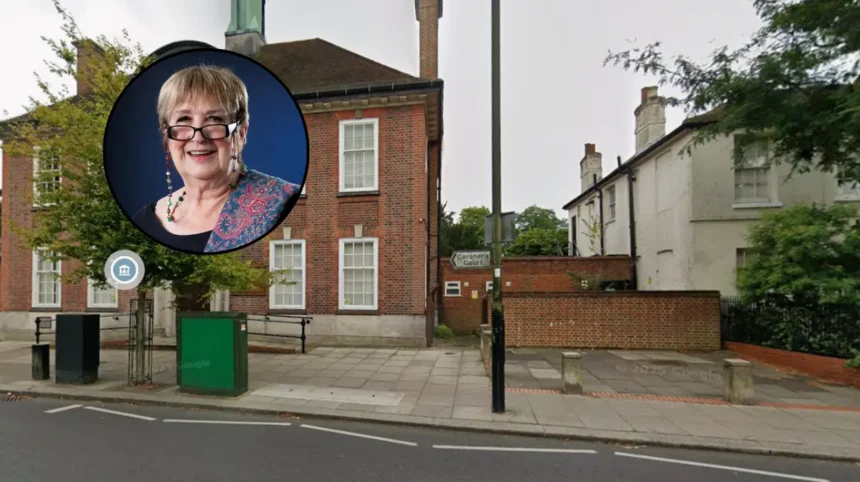
Barnet (North London News) August 28, 2026 – A formal inquest held at Barnet Coroner’s Court has officially determined that celebrated veteran broadcaster Dame Jenni Murray died as a direct consequence of medical complications following a road traffic collision in north London earlier this year. The long-standing voice of British radio passed away in hospital at the age of 75 after severe chest trauma triggered a fatal respiratory infection. The area coroner for north London presided over the proceedings, carefully examining clinical evidence, police findings, and statements from medical staff to establish the definitive chain of events.
- Key Points
- How Did the Wildwood Road Collision Occur?
- What Clinical Measures Were Taken During Her Hospital Care?
- How Will Dame Jenni Murray Be Remembered in British Media?
- Background of Road Safety Concerns on Wildwood Road
- Predictions: How Will This Inquest Affect Elderly Driving Standards and Road Safety Policies?
The inquest established that the primary cause of death was bronchopneumonia, a severe pulmonary infection that developed as a direct result of multiple physical injuries. During the collision, Dame Jenni suffered multiple fractures to her ribs, a fractured sternum, and a collapsed lung. These physical injuries severely compromised her respiratory system, leaving her highly vulnerable to secondary hospital-acquired infections. Medical testimony presented to the court detailed how the physical trauma directly led to the onset of the fatal condition.
A consultant at the Royal Free Hospital provided extensive evidence regarding the timeline of her clinical care, detailing her initial emergency admission and the subsequent decline of her vital functions. The consultant noted that while the primary impact of the crash was physical, the development of pneumonia following severe blunt chest trauma is a recognized and critical medical risk in elderly patients. The coroner subsequently concluded that the fatal infection was inextricably linked to the initial injuries sustained on the road.
How Did the Wildwood Road Collision Occur?
The incident took place on the evening of 4 March 2026 along Wildwood Road, a quiet thoroughfare bordering Hampstead Heath in north London. The broadcaster was driving her vehicle shortly before 8:00 pm when she was suddenly blinded by the bright headlights of an oncoming car. The temporary loss of visibility caused her to lose control of the steering, resulting in a collision with two stationary vehicles parked along the roadside.
Despite the force of the impact and the severe internal injuries she sustained, Dame Jenni was initially able to exit her damaged vehicle without assistance. However, evidence submitted to the court indicated that she had no clear recollection of the events immediately preceding or following the crash due to shock and trauma. Emergency medical services were promptly dispatched to the scene, and she was transported to the Royal Free Hospital for urgent diagnostic imaging and care.
Following the collision, the Metropolitan Police launched a comprehensive investigation into the events on Wildwood Road to determine if any criminal liability or driving offences were involved. Officers inspected the scene, evaluated the positioning of the parked vehicles, and assessed the environmental conditions at the time of the crash. Upon reviewing all available evidence, police investigators formally closed the inquiry without taking further action against any party involved.
What Clinical Measures Were Taken During Her Hospital Care?
Upon her arrival at the Royal Free Hospital, attending clinical teams swiftly identified the full extent of her injuries, which included several broken ribs and a fracture to her upper sternum. The acute presence of a collapsed lung significantly impaired her ability to oxygenate her blood naturally. Doctors immediately placed her on non-invasive mechanical ventilation to assist her breathing and reduce the physical workload on her damaged chest cavity.
As her condition remained critical, specialists made the decision to transfer her to the hospital’s intensive care unit for constant monitoring and specialized intervention. Despite intensive therapy, mechanical breathing support, and round-the-clock clinical observation, her health began to experience a marked deterioration as bronchopneumonia rapidly set in across her compromised lungs.
By 10 March 2026, formal clinical assessments indicated a severe and irreversible decline in her respiratory function. In consultation with medical specialists and her family, the care team transitioned her management strategy to a palliative approach focused entirely on comfort and pain relief. Dame Jenni passed away peacefully on the afternoon of 12 March 2026. Her husband attended the inquest proceedings via video link to hear the coroner’s final determinations.
How Will Dame Jenni Murray Be Remembered in British Media?
Dame Jenni Murray was widely recognized as a monumental figure in British broadcasting, having spent more than three decades shaping the landscape of public service radio. She was best known as the longest-serving presenter of a flagship radio programme dedicated to exploring women’s health, politics, and social equality. Throughout her career, she earned a reputation for combining formidable journalistic rigor with profound empathy, frequently bringing previously taboo or sensitive topics into mainstream national debate.
Her extensive contributions to journalism, media, and public health awareness were recognized at the highest level when she was appointed a Dame Commander of the Order of the British Empire (DBE) in 2011. Beyond her duties behind the microphone, Dame Jenni served as a dedicated advocate for health charities and acted as a prominent mentor to emerging female journalists across the media sector. The conclusion of her inquest marks the formal end of an exhaustive investigation into the tragic circumstances surrounding the loss of one of the United Kingdom’s most respected broadcasting voices.
Background of Road Safety Concerns on Wildwood Road
The stretch of Wildwood Road running alongside Hampstead Heath has long been a focal point for local transport discussions regarding night-time visibility and roadside parking. Characterized by narrow lanes, mature trees, and a lack of consistent modern street lighting, the road presents notable visual challenges for drivers during evening hours. The contrast between oncoming vehicle headlights and dark tree canopy lines has frequently been cited in local council traffic assessments as a driver distraction factor.
In recent years, increased levels of high-density roadside parking along the Heath perimeter have reduced the effective width of the carriage, leaving minimal margin for error if a driver experiences sudden glare or blinding from opposing traffic. While traffic collisions along the thoroughfare remain relatively infrequent, municipal reviews have periodically considered measures such as low-glare street illumination, speed reduction zones, and designated parking bays to mitigate night-time hazards for residents and motorists alike.
Explore More Barnet News
Barnet Pupils Celebrate Outstanding GCSE Results Success: London Borough Barnet 2026
Barnet Council Validates New Local Planning Applications, Barnet 2026
Predictions: How Will This Inquest Affect Elderly Driving Standards and Road Safety Policies?
The coroner’s formal findings in this high-profile case are likely to reignite public debate among road safety advocacy groups, automotive organizations, and policy-makers regarding driver safety and headlight glare standards. Particular focus is expected to center on the growing problem of modern vehicle headlight intensity, specifically the widespread transition to high-luminance LED systems. Automotive safety researchers have increasingly noted that intense headlight glare disproportionately affects older drivers, whose eyes take significantly longer to recover from sudden visual impairment at night.
For the general motoring public, particularly senior drivers, this development may accelerate calls for stricter regulatory oversight on vehicle headlight alignment and brightness limits across the UK. Furthermore, the case highlights the severe health risks associated with blunt chest trauma in older demographics, potentially prompting healthcare providers and emergency trauma units to review early-intervention protocols for preventing hospital-acquired respiratory infections like bronchopneumonia in elderly accident victims. Transport authorities may also re-evaluate lighting infrastructure on semi-rural urban roads like Wildwood Road to minimize visual risks for night-time motorists.