Key Points
- 125-Year Cultural Legacy: KOKO in Camden, North London, marks 125 years since its architectural inception in 1900.
- Star-Studded Lineup History: The legendary venue has hosted iconic global figures, including Madonna, Prince, Amy Winehouse, and Charlie Chaplin.
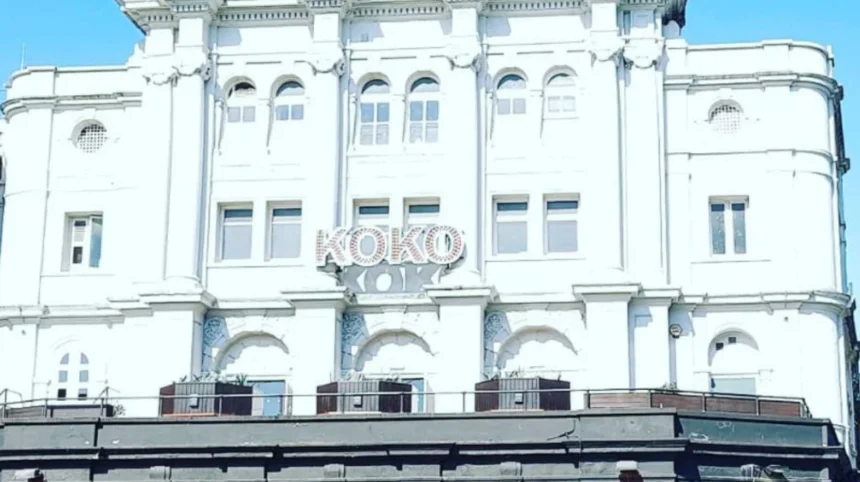
- Architectural Masterpiece: Designed by famous theatre architect W. G. R. Sprague, the venue features Classical architecture, a distinctive red exterior, and a landmark copper dome.
- Multitude of Re-identities: Across its century-plus lifespan, the venue has operated under multiple titles, including the Camden Theatre, the Camden Hippodrome, the Music Machine, and Camden Palace.
- Modern Evolution: Following a major multi-million-pound restoration, KOKO operates as a state-of-the-art multi-level performance, recording, and entertainment complex capacity of up to 1,500 people.
Camden (North London News) September 16, 2026 – How has a single North London venue managed to remain at the epicentre of global entertainment for a century and a quarter? As reported by the news team at London Now, KOKO, located prominently on Camden High Street, is celebrating 125 years of rich musical and theatrical history. Known globally for its distinctive red exterior and large copper dome, the iconic Grade II-listed performance space has brought live music and cultural entertainment to Londoners continuously since its initial opening at the turn of the 20th century. Capable of accommodating up to 1,500 patrons, the venue remains a cornerstone of British music culture, having hosted landmark performances by international music royalty ranging from Madonna and Prince to local icon Amy Winehouse.
- Key Points
- What Is the History Behind Camden’s Most Iconic Live Music Space?
- Which Global Superstars Have Performed at KOKO Over the Decades?
- How Has KOKO Adapted to Modern Music Industry Demands?
- Background of the Particular Development
- Prediction: How This Development Can Affect London’s Music Community and Local Businesses
What Is the History Behind Camden’s Most Iconic Live Music Space?
How did a Victorian theatre transform into one of Europe’s premier music venues? The historical foundation of KOKO dates back to 1900, when it originally opened its doors as the Camden Theatre. The landmark building was crafted by the renowned theatre architect W. G. R. Sprague and designed in a striking Classical architectural style. The venue was formally opened on 26 December 1900 by the celebrated actress Ellen Terry, instantly establishing the venue as a premier destination for dramatic arts in London.
According to archival documentation cited by historical publications, the space quickly evolved to meet changing public demands. In 1909, it was rebranded as the Camden Hippodrome Theatre, operating as a variety theatre before converting two years later into the Camden Hippodrome Picture Theatre to serve the early motion picture generation. By 1945, the venue shifted purposes again, becoming a BBC radio theatre where legendary comedic acts, including The Goon Show, recorded regular broadcasts.
Which Global Superstars Have Performed at KOKO Over the Decades?
Why do world-famous artists choose this Camden venue for historic career moments? Over its 125-year existence, the venue has served as a launching pad and intimate playground for iconic performers. During its period as the Music Machine in the late 1970s, it became an essential hub for the UK’s emerging punk rock movement, hosting legendary shows by The Clash, The Sex Pistols, and The Damned.
As reported by London Now, the venue took on the moniker Camden Palace in 1982, becoming synonymous with the New Romantic movement and pioneering electronic club culture. It was during this era that Madonna chose the venue for her debut UK performance in 1983. In subsequent decades, after undergoing a major rebrand to KOKO in 2004, the stage hosted unique performances by Prince, Coldplay, Lady Gaga, Kanye West, Oasis, and Camden’s own Amy Winehouse.
How Has KOKO Adapted to Modern Music Industry Demands?
What keeps a 125-year-old venue relevant in the modern music industry? Following a catastrophic roof fire in January 2020 and subsequent structural challenges, the venue underwent a comprehensive, multi-million-pound structural redevelopment led by founder Oliver Bengough.
Reopening its doors as an expanded cultural complex, the updated venue features state-of-the-art acoustics, a multi-tier live performance auditorium, intimate broadcast suites, and public social spaces such as Café KOKO. Furthermore, recent enhancements marking its 125th milestone include the addition of new state-of-the-art recording studio facilities, seamlessly bridging live performance and music creation under one historic dome.
Background of the Particular Development
The continuous survival and modernization of KOKO represents a rare success story within the United Kingdom’s night-time economy. Over the past two decades, independent music venues across Great Britain have faced severe economic pressures from rising property rents, redevelopment rezonings, noise complaints, and increased operational overheads. According to industry tracking by the Music Venue Trust, hundreds of grassroots and independent cultural spaces across London have shuttered permanently since the mid-2000s.
KOKO’s survival is anchored in a continuous strategy of structural reinvestment and brand evolution. When the building was acquired in 2004 by Mint Entertainment, it transitioned from the decaying Camden Palace into a fully modernized, multi-purpose venue. The extensive restoration preserved its historic Grade II-listed architectural assets—including the original Victorian proscenium arch, fly tower, and iconic copper dome—while installing modern sound, lighting, and hospitality facilities. Despite suffering significant structural damage during a 2020 restoration fire, ownership secured private financing to complete a total overhaul, transforming KOKO from a single-stage venue into a 50,000-square-foot membership, recording, and performance ecosystem.
Explore More Camden News
Gracie Group Scales Urban Regeneration Expansion in Camden 2026
Camden Council Opposes Menangle Road Housing Proposal In Camden 2026
Prediction: How This Development Can Affect London’s Music Community and Local Businesses
The continued operation and ongoing development of KOKO at its 125-year milestone is expected to have direct economic and cultural implications for several key stakeholder groups across North London:
- Impact on Local Business Owners and Camden’s High Street: KOKO’s continuous operation guarantees sustained footfall for surrounding hospitality, retail, and transportation services. With a nightly venue capacity of up to 1,500 attendees, adjacent restaurants, bars, late-night eateries, and independent shops on Camden High Street benefit from a reliable influx of night-time economy spending.
- Impact on Performing Artists and the UK Music Ecosystem: The introduction of upgraded recording studio infrastructure within the venue allows artists to create, broadcast, and perform within a single unified facility. This provides both mid-tier and elite touring acts with access to top-tier technical equipment in Central London, reinforcing the city’s standing as a premier global hub for music production and performance.
- Impact on Concertgoers and Nightlife Patrons: The preservation of KOKO ensures that audiences retain access to a heritage performance space that meets contemporary safety, sound, and comfort standards. Furthermore, the diversification of KOKO’s programming—spanning live acoustic sets, electronic club nights, and multi-media events—provides a broader range of cultural experiences for domestic and international visitors alike.