Key Points
- Application Submitted: A formal full planning submission has been registered with Enfield Council to intensify the usage of a traditional domestic house.
- Proposed Works: The scheme details the conversion of a Class C3 single-family dwelling house into a multi-occupant house in multiple occupation (HMO), complete with a single-storey rear extension, an expanded rear dormer window, and an acoustic boundary fence.
- Stricter Rules: Because of an active borough-wide Article 4 Direction, developers in Enfield must secure formal full planning approval rather than exploiting permitted development shortcuts for shared accommodation.
- Rising Numbers: Community data reveals that local HMO planning requests have surged dramatically from roughly 15 to 20 per month to an average of 45 to 50 submissions monthly.
- Policy Gaps: Planning inspectors have ordered immediate modifications to the emerging Enfield Local Plan to formalise stricter anti-clustering rules, noise mitigations, and explicit space standards.
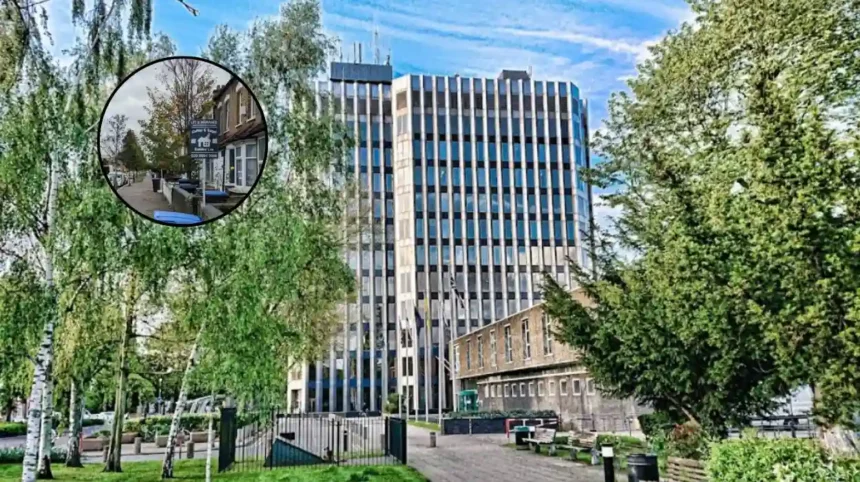
Enfield (North London News) July 3, 2026 — An expansive full planning application has been submitted directly to the London Borough of Enfield seeking formal authorization to convert a traditional single-family residential property into a multi-room House in Multiple Occupation (HMO). The application, catalogued under local authority tracking reference 26/02687/FUL, targets the property situated at 74 Elsinge Road, Enfield, EN1 4PF. The ambitious structural modification outlines a comprehensive plan to significantly increase the interior density of the traditional home through the erection of a single-storey rear extension alongside a majorly expanded rear loft dormer. To systematically mitigate the structural issues associated with dense co-living environments, the blueprint integrates an acoustic fence boundary line, a covered external canopy, dedicated cycle racks, and formal waste refuse units designed to address longstanding local residential anxieties.
- Key Points
- What Do The Specific Building Specifications Reveal About The Elsinge Road Extension?
- How Are Local Campaign Groups Reacting To The Sudden Increase In HMO Conversions across Enfield?
- What Planning Policies Must A Developer Navigate To Secure HMO Consent Inside The Borough?
- Why Has The Independent Planning Inspector Intervened In Enfield’s Emerging Local Housing Strategy?
- Background of the Particular Development
- The Prediction: How This Development Can Affect Local Residents And Landlords
What Do The Specific Building Specifications Reveal About The Elsinge Road Extension?
As detailed by local architectural planning documents processed by the Enfield Council development management team, the application intends to shift the legal status of the land from a standard Use Class C3 single dwelling house to a denser multi-occupancy layout.
A meticulous breakdown of the master plan confirms that the physical intensification relies heavily on extending the ground-floor footprint and utilising the roof space.
The proposed single-storey rear extension will build past the original rear brick boundary wall to provide the square footage necessary for communal spaces, matching parallel requests found on the council register such as the 6-metre deep extension filed for 4 Carterhatch Road under reference 26/02655/PRH.
To protect immediate neighbours from the inevitable increase in ambient sound caused by multiple independent households sharing one domestic plot, the plans detail the installation of an acoustic fence along vulnerable boundary lines.
The developer has also included a covered patio canopy and designated external spaces to compartmentalise resident movement.
The internal layout relies on reconfiguring standard reception rooms and bedrooms into individual private letting units, supported by common amenities that must strictly line up with Enfield’s revised housing guidelines.
How Are Local Campaign Groups Reacting To The Sudden Increase In HMO Conversions across Enfield?
As reported by data analysts representing the independent community coalition Better Homes Enfield, there has been a significant acceleration in the volume of local family houses being purchased and retrofitted by developers.
In a public circular published by the group, representatives stated that during the initial phases of the Local Plan review, HMO planning submissions averaged between 15 and 20 individual files monthly.
However, newer analysis indicates that the rate has spiked sharply to between 45 and 50 applications per month, with approximately 80 per cent of those files successfully gaining official council approval.
The rapid proliferation of these schemes has drawn scrutiny from long-term residents who fear the loss of traditional housing stock.
Better Homes Enfield argued that poorly converted or badly located HMOs can cause serious problems, including overcrowding, poor living conditions, loss of family housing, pressure on parking, and harm to the living conditions of neighbours.
The group explicitly criticised the municipal administration for submitting its draft Local Plan without a standalone, comprehensive HMO policy, calling the omission a serious mistake that left local communities exposed to speculative structural developments.
What Planning Policies Must A Developer Navigate To Secure HMO Consent Inside The Borough?
As explained by Martin Gaine, chartered town planner and managing director at specialized agency Just Planning, converting a house in this region involves high regulatory hurdles due to long-term legislative adjustments.
In an industry briefing detailing recent permissions granted under Policy DMD5 of the Enfield Development Management Document, Gaine observed that like many London boroughs, Enfield has removed permitted development rights for the change of use from a single dwellinghouse to a smaller HMO. This was achieved through a borough-wide Article 4 Direction that has remained active for over a decade.
According to technical documentation published by London property consultancy Bashkal, applications face automatic refusal if they break strict geographical concentration limits.
Specifically, under the council’s current 20 per cent concentration rule, conversions will be rejected if the total number of HMOs exceeds one-fifth of the total properties along that specific road.
Furthermore, a strict “one-in-five sandwich rule” prevents developers from isolating a standard family home directly between two existing multi-occupancy properties.
The interior rooms must also strictly adhere to the London Plan D6 space rules, ensuring every single bedroom provides clear natural light and distinct window views.
Why Has The Independent Planning Inspector Intervened In Enfield’s Emerging Local Housing Strategy?
As confirmed in an official memo issued by the government’s independent Planning Inspector during the statutory examination of Enfield Council’s upcoming developmental framework, the local authority has been ordered to immediately rewrite its overarching residential strategies.
The Inspector explicitly stated that the council’s submitted plan lacked a specific, modernised HMO framework and required main modifications to address the gap.
The government intervention mandates that Enfield’s updated policies must properly address the quality of accommodation, deal more clearly with clustering and excessive concentrations, address impacts such as overlooking as well as noise and disturbance, and be clearer about parking standards.
Local civic groups have welcomed this ruling, noting it forces the borough to establish enforceable legal grounds to assess high-density applications like the one currently proposed at 74 Elsinge Road.
Background of the Particular Development
The structural change of the Enfield suburban housing market dates back to 2012, when the local authority enacted its initial Article 4 Direction to curb the unregulated spread of shared housing units.
Traditionally, UK planning laws allowed landlords to convert standard properties into small HMOs (housing up to six unrelated individuals) via Permitted Development rights, bypassing the local planning committee entirely.
By removing these rights borough-wide, Enfield forced all such proposals into the full planning system, requiring detailed architectural plans and acoustic statements.
Despite these barriers, macroeconomic pressures—including high interest rates, rising construction costs, and a severe shortage of affordable rental accommodation across Greater London—have driven intense investor demand for properties in outer boroughs.
Enfield’s relative affordability compared to inner London has made it a prime target for high-density conversions.
This economic reality triggered the recent conflict during the Enfield Local Plan Examination, where community groups successfully fought to reinstate strict, enforceable anti-clustering measures into the borough’s long-term planning framework.
The Prediction: How This Development Can Affect Local Residents And Landlords
For existing Enfield homeowners and long-term families, the ongoing trend toward high-density HMO conversions is likely to place increased pressure on local infrastructure.
If schemes like the one at Elsinge Road are approved without strict oversight, immediate neighbours may experience reduced street parking availability and increased strain on municipal waste collection systems. Property values for immediate semi-detached structures could also face adjustments if the character of specific streets shifts from permanent family residences to transient rental options.
Conversely, for the expanding demographic of young professionals, healthcare workers at North Middlesex Hospital, and low-income renters, the successful delivery of modernised, acoustically insulated HMO units offers a crucial source of managed, accessible housing.
For private landlords and property developers, the Planning Inspector’s recent mandate means the era of speculative conversion is ending.
Landlords must prepare for higher upfront design costs, strict internal space minimums, and mandatory outlays for soundproofing and communal infrastructure if they hope to secure planning approval under Enfield’s incoming, highly scrutinized housing framework.