Key Points:
- The planned strike by over 1,500 bus drivers from North London and Essex on Friday, 4 September 2026, has been formally postponed after late talks.
- Arriva North London made a “much-improved offer” to Unite the Union in regards to ensuring worker safety because of the extremely hot temperature inside the bus cabins.
- The issue revolves around the safety of the drivers while working in bus cabins because of the extremely high temperature in the summer season caused by the inefficient cooling system in buses.
- More than 40 vital bus routes in eight depots including Barking, Edmonton, Enfield, Grays, Palmers Green, Stamford Hill, Tottenham, and Wood Green will run normally on Friday while workers take their vote on the offer.
- Union officials have clarified that the new terms will be put forward to a ballot by union members soon.
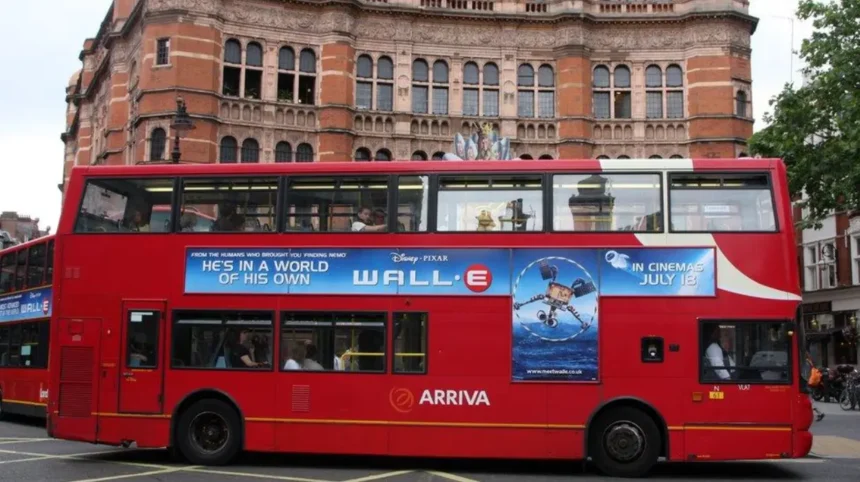
North London (North London News) September 2, 2026 – London commuters and bus passengers across the capital and parts of Essex have been spared severe transport disruption this week after a planned strike involving more than 1,500 bus drivers was officially called off. Industrial action, which was scheduled to take place on Friday, 4 September 2026, was suspended following intensive talks between bus operator Arriva North London and representatives from Unite the Union.
As reported by Ed Cunningham of Time Out, the long-running dispute has seen drivers at eight key bus depots—Barking, Edmonton, Enfield, Grays, Palmers Green, Stamford Hill, Tottenham, and Wood Green—vote to challenge their day-to-day working conditions. The planned 24-hour walkout threatened to paralyse over 40 vital bus services, including daytime routes, night buses, school transportation, and Superloop express networks spanning North, East, and Central London.
However, after Arriva North London submitted a revised agreement that directly targets the core grievances raised by staff, union officials confirmed that the strike would be paused while members review the terms.
What Are the Core Working Conditions Behind the Dispute?
The ongoing industrial dispute between Unite and Arriva North London focuses primarily on heat levels and safety conditions inside bus cabs during summer months. As reported by ITV News London, bus drivers have repeatedly raised concerns that temperatures in driver cabs can soar beyond 40°C during hot weather, with drivers likening the sealed compartments to “an oven or a greenhouse”.
Union representatives argue that operating heavy vehicles in such excessive heat creates severe health and safety risks, including heatstroke, severe fatigue, dehydration, and dizziness, which directly imperil both the drivers and the travelling public.
As reported by The Independent, the union highlighted that the majority of buses in the Arriva North London fleet rely on basic air-cooling systems rather than full air conditioning units. This equipment has proven inadequate during severe heatwaves, leading to trade union demands for immediate modifications to fleet cooling systems and better working protections for staff.
What Have Union Leaders Said About the Revised Offer?
Following the negotiations, trade union leadership confirmed that the employer’s latest proposal was substantial enough to justify putting the strike on hold to allow for a democratic vote.
As reported by Holly Brencher of London Now, Sharon Graham, the General Secretary of Unite, stated:
“Unite is determined that the conditions of bus drivers are improved in London and beyond. We expect bus operators to treat workers with dignity and respect and will be ensuring that this happens.”
Adding further detail on behalf of the negotiating team, as reported by ATV Today, Onay Kasab, Unite’s national lead officer, stated:
“Following an improved offer which deals with the issues raised by Unite members, the offer will now go out to ballot over the coming days.”
The result of this forthcoming ballot will determine whether the workforce formally accepts the updated agreement or resumes planned industrial action later in the autumn.
What Routes and Services Would Have Been Affected?
Had the walkout proceeded on 4 September, severe transit gaps would have occurred across the network. As listed by The Independent, affected routes included key daytime numbers such as 19, 29, 34, 41, 66, 67, 76, 102, 103, 121, 141, 149, 150, 158, 175, 191, 192, 217, 221, 243, 248, 254, 259, 279, 307, 313, 329, 341, 349, 370, 375, 377, 616, 675, as well as Superloop lines SL1 and SL2, local routes W3, W4, and W6, and night bus services N19, N29, N41, and N279.
Addressing the potential disruption, Lorna Murphy, director of buses at Transport for London (TfL), previously stated to The Independent:
“We know that any disruption to London’s bus network can have a significant impact on our customers, and we’re working closely with Arriva to help customers travel during these periods of strike action.”
With the suspension of the 4 September action, all listed services are scheduled to run normally on Friday.
What Is the Background to This Industrial Dispute?
The conflict over cab working conditions has escalated throughout the summer. Drivers originally announced a schedule of up to 26 days of targeted strike action spanning August, September, and October following the failure of initial talks.
An earlier wave of industrial action took place between 25 August and 28 August, following a brief pause in mid-August when a previous offer was voted down by members who determined it did not adequately resolve the issue of extreme heat in cabs. The dispute has unfolded against a backdrop of record-breaking climate conditions in the United Kingdom, where extreme heatwave events have repeatedly pushed urban infrastructure and public transport systems past their operational limits.
Unite has consistently maintained that Arriva, as a major profit-generating transit provider, holds both the financial resources and the duty of care to retrofit or upgrade its vehicle fleets to ensure safe working conditions for its frontline workforce.
What Are the Future Predictions for London Passengers and Bus Operators?
The immediate outlook for London’s public transport network depends entirely on the outcome of the upcoming union ballot.
If members of Unite vote to accept the “significantly improved offer” submitted by Arriva North London, it will formally end the dispute, averting remaining strike dates earmarked for late September and October. This outcome would provide long-term stability for commuters, school children, and shift workers across North and East London who rely on these 40-plus routes daily.
Conversely, should the workforce deem the new terms insufficient during the ballot process, the union is expected to reactivate its strike mandate. Further walkouts during autumn would not only disrupt bus passengers but could also exacerbate wider transport strain across the capital, particularly on dates that coincide with scheduled maintenance and partial closures on the London Underground’s Piccadilly line.
Beyond this immediate dispute, the conflict is likely to force Transport for London and private bus operating companies across the United Kingdom to establish strict, standardized temperature controls and mandate full air conditioning systems in all future fleet procurements to adapt to warming summer climates.