


Barnet played an important supporting role in medieval London as a market settlement, religious centre, agricultural trading point and strategic stop on the major route between London and St Albans. Its location north of London connected the capital with wider regional markets, estates and communities.
- Why was Barnet important to medieval London?
- How did Barnet’s medieval location connect London with St Albans?
- When did Barnet’s medieval market begin?
- What did Barnet’s medieval market sell?
- How did religion shape medieval Barnet?
- Who controlled Barnet during the medieval period?
- What happened at Barnet during the Peasants’ Revolt?
- Why was the Battle of Barnet important to medieval London?
- How did the Great North Road make Barnet significant?
- What medieval buildings can visitors still see in Barnet?
- How did medieval Barnet influence the later development of North London?
- Why does Barnet’s medieval history matter to visitors today?
The medieval history of Barnet is closely connected with transport, trade, landholding and royal authority. The settlement that became High Barnet developed along an important northbound route. Barnet Council records that the route from London towards St Albans was significant by the 11th century, while the market existed in various forms from at least the 12th century.
Barnet was not a medieval borough of London in the modern administrative sense. It was a settlement outside the medieval City of London. Its importance came from its position within the wider economic and transport system surrounding the capital.
For visitors today, this history explains why High Barnet developed around a road junction, market area and church. It also explains the area’s later importance as a coaching settlement and its continuing concentration of historic sites.
Why was Barnet important to medieval London?
Barnet was important because it stood on a major route north from London, developed a market, supported agricultural trade and connected the capital with St Albans and surrounding settlements. Its location gave it commercial, transport and strategic significance throughout the medieval period.
Medieval London depended on connections with the surrounding countryside. The city required food, livestock, raw materials and other goods from settlements beyond its walls. Roads linking London with northern parts of England therefore had economic importance.
Barnet occupied a useful position on one of these routes. The medieval settlement developed along the route towards St Albans, an important historic town to the north-west. Barnet Council identifies the northbound route from London towards St Albans as an important route by the 11th century.
The settlement’s role was therefore broader than that of a small local village. Travellers passed through it, traders used its market and surrounding agricultural communities supplied goods.
Barnet’s later market history demonstrates the strength of this economic connection. The market was established in various forms and locations from at least the 12th century, with a formal market charter granted by King John in August 1199.
The location also influenced the physical development of Barnet. High Barnet grew around the junction of the principal north-south route and Wood Street. That road connected the settlement eastwards and westwards with other routes.
Historic England describes Wood Street as part of an important medieval east-west route connecting Chipping Barnet with the old Roman Watling Street and Watford. The junction with the High Street formed the medieval Market Place.
This road network gave Barnet a role within the wider economy surrounding medieval London.
How did Barnet’s medieval location connect London with St Albans?
Barnet occupied a strategic position on the route between London and St Albans, allowing people, livestock and goods to move through the settlement. This northbound connection supported trade, travel and communication between London, Hertfordshire and communities beyond the capital.
The road between London and St Albans was one of the foundations of Barnet’s medieval development. St Albans was an important settlement with a major religious institution, commercial activity and connections extending across Hertfordshire and beyond.
Barnet sat between London and this northern centre. The route encouraged settlement around the road because travellers required places to trade, rest and obtain provisions.
The landscape also influenced the route. High Barnet developed on elevated ground, making the settlement particularly prominent along the northbound road. Historic England’s assessment of the 1471 battlefield records contemporary descriptions of High Barnet standing on a hill with a broad plain suitable for military movement.
The same topographical qualities that later affected military activity also contributed to Barnet’s importance as a road settlement.
Wood Street added another dimension. It connected the medieval centre towards the old Roman Watling Street and Watford. This meant Barnet was connected to more than one important route.
The modern visitor walking along High Barnet therefore encounters a street pattern with origins in medieval movement and commerce.
As you explore the modern site, you are crossing land with a deep heritage. Read about the full to understand how the settlement developed before and after the medieval period.
When did Barnet’s medieval market begin?
Barnet’s market existed in various forms from at least the 12th century, with King John granting a market charter in August 1199. The charter gave formal recognition to commercial activity that had already developed around the strategically located settlement.
The market is central to understanding Barnet’s medieval importance. A medieval market was more than a place for buying everyday goods. It provided a recognised location for commercial exchange and connected producers, traders and consumers.
Barnet Council states that the market existed in different forms and locations from at least the 12th century. It also records the possibility of a livestock market before King John’s charter of August 1199.
A royal market charter was significant because it formalised the market’s status. King John issued the charter in 1199, establishing an important legal foundation for the market.
The original market was located around the point where Wood Street divided from the High Street. This location reflects Barnet’s relationship with the road network. Traders could access the market directly from the routes passing through the settlement.
The market’s importance continued well beyond the medieval period. By the Tudor period, Barnet had become a major centre for livestock trading connected with London. Barnet Council records that the market later controlled a large share of London’s meat trade, with London butchers travelling to Barnet to purchase cattle.
This later development demonstrates the long-term economic importance of the medieval market foundation.

What did Barnet’s medieval market sell?
Barnet’s medieval market served local and regional trade, with livestock becoming particularly important over time. Cattle and other agricultural products connected Barnet with London’s demand for food and with farming communities across the surrounding countryside.
Medieval Barnet existed within an agricultural landscape. Farms, manors and villages surrounded the settlement, producing food and livestock for nearby populations.
The market provided a commercial meeting point between rural producers and people travelling through the area. Livestock trading became one of Barnet’s defining economic activities in later centuries.
Historic England identifies the medieval Market Place at the junction of Wood Street and the High Street and notes its later role in London’s cattle and horse trades.
This connection between Barnet and London’s food supply became especially visible after the medieval period. By the late Tudor period, Barnet’s market had become highly significant to London’s meat trade.
The medieval market therefore formed part of a much longer commercial tradition.
For modern visitors, the current market area is useful because it sits within the historic centre of the settlement. The present appearance differs substantially from the medieval town, but the commercial function of the area has deep historical roots.
How did religion shape medieval Barnet?
Religion shaped medieval Barnet through parish life, church building and connections with local manorial authority. St John the Baptist developed as a chapel of ease in High Barnet, while East Barnet retained the older parish church and religious centre.
Medieval communities were closely organised around religious institutions. Churches provided places for worship, burial, community gatherings and aspects of local administration.
St John the Baptist in High Barnet has medieval origins. Barnet Council’s heritage material identifies the church as a 13th-century chapel of ease serving the growing settlement, associated with St Mary the Virgin in East Barnet.
A chapel of ease was a church building established to provide worship for people who lived some distance from a parish church. Its existence reflects the growth and geographical needs of the local population.
The church stood close to the junction of Wood Street and the High Street. This placed a religious building directly within the emerging commercial and transport centre.
The current building contains later rebuilding, so visitors should distinguish the present structure from its medieval origins. Barnet Council records that the church was rebuilt in the 15th century and extensively reconstructed in the 19th century.
The church nevertheless remains an important marker of Barnet’s medieval townscape.
Who controlled Barnet during the medieval period?
Barnet was shaped by manorial and ecclesiastical authority, with the Abbot of St Albans holding the manor. This relationship connected Barnet with one of medieval England’s most important religious institutions and influenced local rights and administration.
Landholding was central to medieval society. A manor was a territorial estate governed through a lord who held rights over land, resources and aspects of local administration.
Barnet’s history was strongly connected with the Abbey of St Albans. Barnet Council records that the Abbot of St Alban’s was the manorial lord and that local inhabitants challenged his authority during the Peasants’ Revolt of 1381.
The relationship with St Albans demonstrates Barnet’s position within a wider regional network. St Albans was not simply a nearby town. Its abbey was a powerful religious and landholding institution.
The inhabitants’ actions in 1381 also show that medieval Barnet had an active local community with interests in land, resources and customary rights.
According to Barnet Council, local people armed with cudgels and bows forced the Abbot of St Albans to sign a charter granting rights to hunt, fish and mill their own corn. Those rights were later overturned after the revolt.
Although the Peasants’ Revolt belongs to the late medieval period rather than the period when Barnet’s market was first established, it provides important evidence of local tensions between communities and manorial authority.
What happened at Barnet during the Peasants’ Revolt?
Barnet became involved in the Peasants’ Revolt of 1381 when local inhabitants challenged the authority of the Abbot of St Albans. Their actions reflected wider medieval disputes over manorial rights, economic obligations and control of local resources.
The Peasants’ Revolt began in 1381 and spread across parts of England. It involved opposition to taxation, local authority and aspects of the feudal social order.
Barnet’s participation was connected specifically with the authority of the Abbot of St Albans. The local community challenged manorial control and secured concessions concerning hunting, fishing and corn milling.
These rights were economically important.
Corn milling, for example, was closely connected with food production. Control over mills could generate income for a manorial lord while restricting where tenants processed grain.
Hunting and fishing also had legal and social significance because access to natural resources was governed by customary and manorial rights.
The Barnet episode therefore reveals how the settlement was connected to the wider political and economic structures of medieval England.
It also shows that Barnet’s importance was not solely commercial. Its inhabitants participated in broader struggles over authority and local rights.
Why was the Battle of Barnet important to medieval London?
The Battle of Barnet on 14 April 1471 was important because it was a decisive engagement in the Wars of the Roses fought close to London. Edward IV defeated the Earl of Warwick, strengthening Yorkist control and protecting his position in the capital.
The Battle of Barnet was fought on Easter Day, 14 April 1471, during the Wars of the Roses. The conflict involved competing claims to the English throne by the Houses of York and Lancaster.
Edward IV, the Yorkist king, faced Richard Neville, Earl of Warwick, commonly known as the Kingmaker. Warwick had previously supported Edward but later switched sides and helped restore Henry VI to the throne.
Edward returned to England in 1471 and moved towards London. The armies met near Barnet.
The battlefield was located north of High Barnet, around the area historically known as Gladmore Heath. The exact battlefield location has been debated because the medieval landscape has changed substantially. Historic England nevertheless recognises the Battle of Barnet as a registered battlefield.
The battle had direct implications for London because control of the capital was central to the wider struggle for the English crown.
Edward’s victory at Barnet was followed by further military action that helped secure Yorkist authority. Warwick was killed during the battle.
Barnet’s location therefore gave it military significance in addition to its commercial and transport functions.
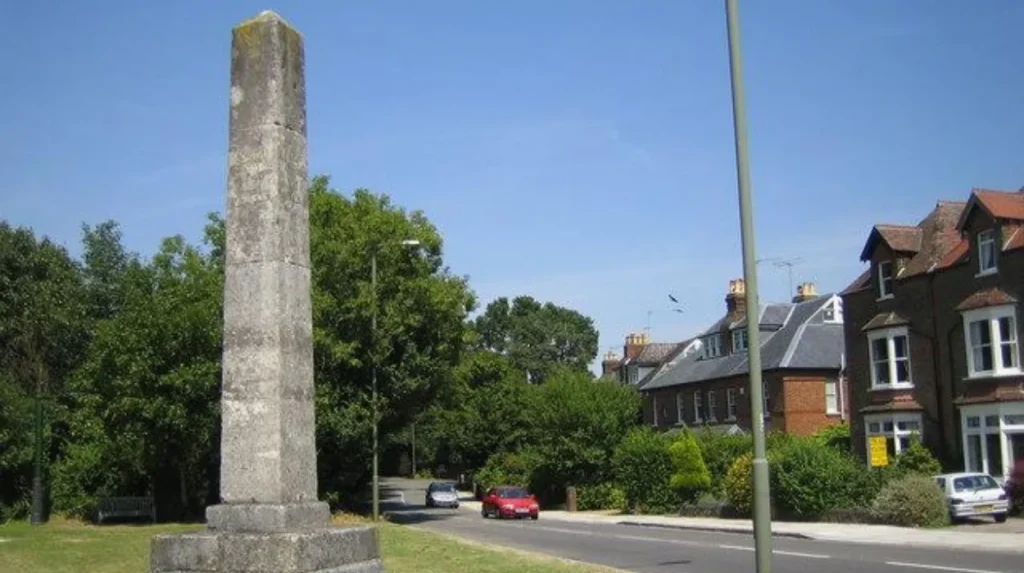
How did the Great North Road make Barnet significant?
The Great North Road made Barnet a major route settlement because it carried travellers between London and northern destinations. Its position on elevated ground supported its development as a market, trading centre and later coaching stop.
The road system remained the foundation of Barnet’s importance after the medieval period.
Historic England identifies the High Street as part of the route connecting London with St Albans, while Wood Street linked the settlement towards Watling Street and Watford.
This created a crossroads effect. Goods could enter the settlement from surrounding agricultural areas, while travellers could continue towards London or northern destinations.
The road also helped transform Barnet into a later coaching centre. Barnet Council records that by 1756 the town had 25 inns serving coaches and travellers.
The coaching era was much later than the medieval period, but it demonstrates the long-lasting geographical importance of the route.
The underlying reason remained consistent: Barnet occupied a strategically useful position north of London.
What medieval buildings can visitors still see in Barnet?
Modern Barnet retains several reminders of its medieval development, although many surviving buildings have later structures. St John the Baptist, the historic road layout, the market area and the registered battlefield provide the strongest connections with medieval Barnet.
Visitors should distinguish between surviving medieval fabric and sites with medieval origins.
St John the Baptist is particularly important. Barnet’s heritage information identifies it as a 13th-century chapel of ease, while the existing building incorporates later alterations and reconstruction.
The church’s location is also significant. It stands at the junction of Wood Street and the High Street, close to the historic market centre.
The medieval street pattern provides another historical clue. Wood Street developed as an important route connecting Chipping Barnet with Watling Street and Watford.
The battlefield provides a different type of heritage experience. The Battle of Barnet site is protected as a registered battlefield by Historic England.
Historic England’s Barnet heritage hub identifies 10 listed heritage entries associated with the medieval period from AD 1066 to AD 1540. This figure also demonstrates that much of the borough’s listed heritage belongs to later periods, so medieval Barnet is best understood through a combination of surviving structures, archaeological evidence, street patterns and documented history.
Explore More Area Guide
Historical Figures Connected With Barnet: Key People
Barnet Before Greater London: Hertfordshire, Middlesex and 2026
How did medieval Barnet influence the later development of North London?
Medieval Barnet established the foundations for later commercial and transport growth by combining a strategic road position, market activity, religious institutions and connections with surrounding agricultural communities. These foundations helped Barnet remain an important settlement as London expanded northwards.
The medieval settlement created a durable urban framework.
The market established Barnet as a place where commercial activity concentrated. The roads brought travellers and goods through the settlement. The church provided an institutional focus. Manorial administration connected the community with wider regional authority.
These functions continued in modified forms for centuries.
Barnet’s later livestock trade demonstrates the persistence of the market tradition. Its coaching industry demonstrates the continuing importance of the road network. Railway development in the 19th century then created another phase of expansion.
The transformation from medieval market settlement to modern North London suburb was therefore gradual.
For tourists, this makes Barnet historically significant beyond its famous battlefield. The area’s medieval importance was built through everyday functions such as trading, travelling, worshipping and managing land.
Why does Barnet’s medieval history matter to visitors today?
Barnet’s medieval history explains the area’s market, church, road network and battlefield heritage. Understanding these connections allows visitors to interpret High Barnet as a historic route settlement rather than viewing its surviving landmarks as isolated buildings or sites.
Barnet’s medieval importance is best understood as a combination of functions.
Its market connected the settlement to regional agriculture and London’s demand for food. Its roads connected London with St Albans and Watling Street. Its church reflected the growth of the local population. Its relationship with the Abbey of St Albans linked the community to powerful medieval institutions.
The Battle of Barnet added a major political and military dimension in 1471.
Together, these elements explain why Barnet occupies an important position in the history of North London.
Modern visitors can still trace some of this history through High Barnet’s streets, the church of St John the Baptist, the historic market area and the registered battlefield landscape. Historic England’s local heritage resources also provide a framework for understanding how Barnet changed from the medieval period through the post-medieval era and into the modern borough.
Barnet’s medieval role was therefore not that of a district inside medieval London. It was a strategically positioned settlement outside the capital that helped connect London with the northern countryside, St Albans and wider regional networks.
That position created the foundations for its long-term importance.
What role did Barnet play in medieval London?
Barnet served as an important settlement outside medieval London. Its position on the route between London and St Albans supported travel, trade, livestock markets and communication with surrounding agricultural communities.


